How to Stretch a Dog With Hip Dysplasia (Safe Steps)
Stretch a dog with hip dysplasia by warming the muscles first, then moving the leg slowly through its comfortable range while the dog lies relaxed on their good side. Support above and below the joint, stop at resistance, and have your veterinarian or a rehab practitioner watch your technique once.
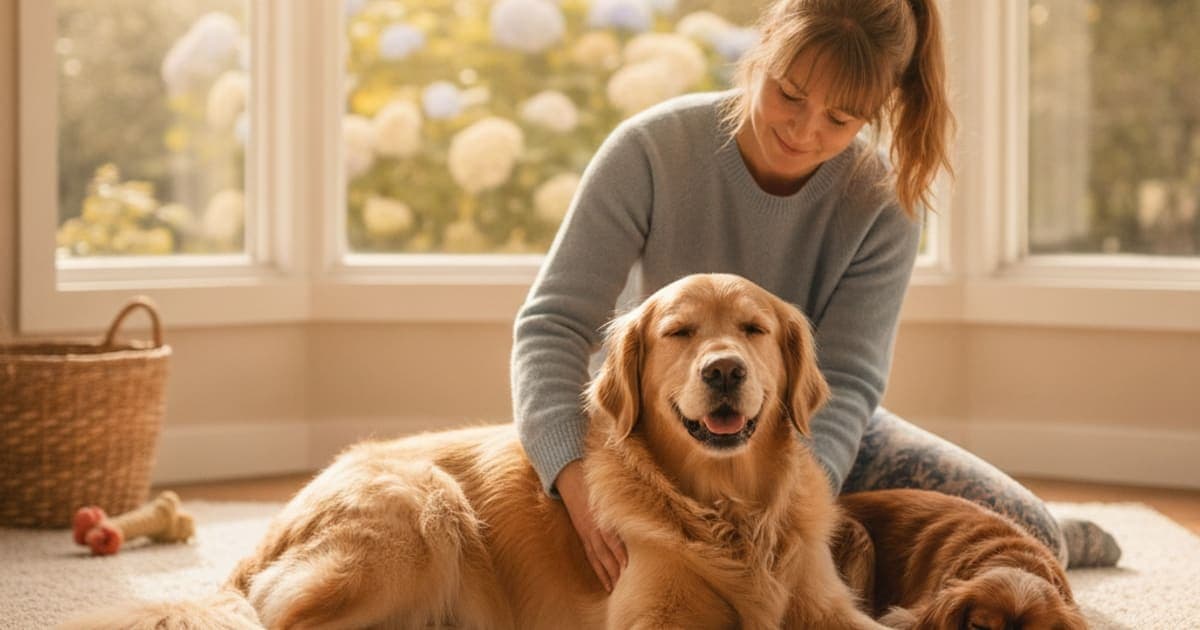
Stretch a dog with hip dysplasia by warming the tissue first, then moving the affected leg slowly through its comfortable range while the dog lies on their unaffected side. Support the limb above and below the joint with both hands, move at a pace that looks almost too slow, hold each end position for a few quiet seconds, and stop the moment you feel resistance. These are passive movements — you supply the motion, your dog stays relaxed. Ask your veterinarian or a certified canine rehabilitation practitioner to watch you do it once before it becomes a daily habit.
What Stiffness in a Dysplastic Hip Actually Is
Hip dysplasia is a developmental problem of the coxofemoral joint — the ball-and-socket where the femoral head meets the acetabulum in the pelvis. When that joint is lax, the head doesn't seat congruently, and over years the body responds with cartilage wear, bone remodelling and osteoarthritis. That part is structural. Stretching does not change it, and no one should tell you otherwise.
What stretching does reach is everything draped over the joint. A dog with a sore hip shortens their stride, tilts the pelvis, and shifts weight forward onto the front limbs. Hold that pattern for months and predictable things happen: the hip flexors — the iliopsoas most of all — and the adductors shorten, the gluteals and hamstrings lose bulk from disuse, and the epaxial muscles running alongside the lumbar spine stay permanently braced. A large share of what owners describe as "bad hips this morning" is actually the compensating soft tissue complaining, not the joint surface itself.
Passive range of motion work targets that second layer. It is slow, unglamorous, and when done consistently it is one of the most useful quiet ten minutes in a dysplastic dog's day.
Warm the Tissue Before You Move It
Never stretch a cold dog. Connective tissue is more extensible when it has blood flow through it, which is why rehabilitation professionals almost always put movement or heat before mobility work.
Two easy options. A short, flat leash walk at a pace your dog sets, then straight onto the mat — walking is the most natural warm-up there is. Or a warm (never hot) compress laid over the hip and upper thigh for a few minutes while your dog settles. Test it against the inside of your own wrist first; dogs tolerate heat poorly through a thick coat and won't always tell you it's too much.
Set up somewhere with grip. A yoga mat, a rug, a folded duvet — anything that stops the down-side leg from sliding. Dogs brace when they feel unstable, and a braced dog is a dog you cannot stretch.
The Four Passive Movements, Step by Step
Lay your dog on their side with the affected hip uppermost. Kneel behind their spine so you aren't leaning over their face. One hand cups the stifle (knee), the other supports the hock or the lower thigh. Both hands stay on the limb the whole time.
Never stretch a dysplastic hip past the point where your dog tenses, pulls the leg back, flicks an ear or turns their head toward your hands — resistance is the endpoint, not a barrier to push through.
Hip flexion. Draw the whole leg forward, folding the knee gently up toward the ribcage, as if the dog were taking a long stride. Go to the point of first resistance, pause, and let it back down under control. This is the movement most dogs tolerate best.
Hip extension. Ease the leg backward behind the body, keeping it parallel to the spine rather than letting it drift outward. This is the one to be most careful with: extension loads the front of the dysplastic joint and tightens the hip capsule, and many dogs have very little available range here. Small is fine. Small and painless beats big and guarded, every session.
Gentle abduction. With the dog still on their side, lift the upper leg a short way away from the midline, keeping the knee pointing forward rather than rolling the pelvis. Abduction is frequently uncomfortable in dysplastic hips, so treat it as optional and ask your veterinarian or rehab practitioner whether it belongs in your dog's routine at all.
Bicycling. Combine the whole chain — hip, stifle and hock flexing and extending together in one slow, continuous circle, like a lazy pedalling motion. This is usually the most relaxing of the four and a good one to finish on.
Work through each movement a modest number of repetitions, then turn the dog over and do the other side even if it looks normal. Hip dysplasia is very often bilateral, and the "good" leg is carrying extra load regardless.
Where Stretching Fits Among the Other Rehab Tools
Passive stretching is one tool. It is not the whole programme, and it is not a stand-in for anything your vet has prescribed.
| Approach | What it addresses | Typically guided by |
|---|---|---|
| Passive range of motion | Joint mobility, soft-tissue length, morning stiffness | Vet or rehab practitioner first, then owner at home |
| Massage | Muscle tension in the lumbar spine, gluteals and overworked front limbs | Owner at home; deeper work by a trained canine massage therapist |
| Active strengthening | Rebuilding gluteal, hamstring and core muscle that stabilises the joint | Rehab practitioner — cavaletti poles, sit-to-stands, balance work |
| Hydrotherapy | Low-impact loading and endurance without full ground reaction force | Facility with an underwater treadmill or supervised swim |
| Veterinary medicine and surgery | Diagnosis, pain control, inflammation, structural options | Your veterinarian, always first |
The distinction that matters most: passive work keeps tissue long and comfortable, active work builds the muscle that holds a loose joint together. A dog needs both, and only a professional watching your particular dog move can tell you the balance.
Hands-On Massage for the Muscles That Take the Load
Massage a dog with hip dysplasia by starting away from the painful area, not on it. Open with effleurage — long, flat, gliding strokes with the whole palm, running from the shoulders down the back and over the hindquarters, following the direction of the coat. Light pressure. You are asking permission, not working tissue yet.
Once your dog has softened, move to petrissage: slow kneading with the pads of your fingers or thumbs, small circles, in the regions that do the compensating. The gluteals over the rump. The quadriceps on the front of the thigh. The hamstring group behind it. The epaxials, the long ropes either side of the spine — often astonishingly tight in a dog who has been guarding a hip for years. And don't skip the front end: the triceps, shoulders and neck of a dog who has been front-loading their weight are frequently sorer than the hips.
Stay off the joint itself. There is no useful depth to reach there, and pressing on an arthritic hip achieves nothing but a dog who leaves the room next time you sit down with the mat.
Finish as you started, with light effleurage. Watch the face throughout — a deep sigh, a head flopping down, a hind leg going heavy in your hand all mean you're in the right place. Stiffening, lip-licking, a hard swallow or a head turn mean back off the pressure.
Why Some Dogs With Sore Hips Stretch Themselves Constantly
Yes — many dogs with hip dysplasia do appear to stretch a lot, and owners notice it before they notice the limp. The classic pictures are the long "play bow" hold that isn't an invitation to play, repeated hind-leg extensions behind the body, a deliberate stretch every single time the dog stands up, or sitting with one leg splayed sideways in a lazy, unfolded posture.
This is self-selected relief. Tight hip flexors and a braced lumbar spine feel better after being lengthened, and dogs work that out without being taught. Frequent stretching, difficulty settling, bunny-hopping at the trot, and a reluctance to sit squarely are all worth mentioning to your veterinarian, because together they describe a dog managing discomfort rather than one who is simply limber. Self-stretching is useful information — it is not, on its own, adequate care.
Reading Your Dog: When to Continue and When to Stop
Good sessions look boring. The dog lies still, breathing slows, the limb feels loose in your hands, and the range you can reach comfortably creeps up over weeks rather than days.
Stop the session and check in with your vet if you see: a yelp or sharp withdrawal at any point, a new or worsened limp in the hours afterward, more difficulty rising the following morning, or any avoidance of the mat itself. Dogs are honest about this if you let them be.
Consistency beats intensity every time. A short, gentle routine most days does more for tissue length than an occasional thorough session that leaves your dog sore.
Supporting the Tissue Between Sessions
Stretching, strengthening and — above all — keeping a dysplastic dog lean are the foundations. Excess body weight is the single most modifiable load on a bad hip, and no amount of hands-on work offsets it.
Around that foundation, owners look for support at the tissue level, and this is where the supplement aisle earns its reputation. Kitchen-sink joint chews stack a dozen ingredients at token amounts, hide them behind a proprietary blend, and never publish a certificate of analysis. Label design is not evidence.
K9-REPAIR from pawgen takes a narrower approach: two peptides, BPC-157 and TB-500, dosed by bodyweight, third-party tested with COAs published, and shipped direct to the door with a 60-day money-back guarantee. BPC-157 is a synthetic peptide based on a sequence identified in gastric juice; laboratory and animal research suggests it may influence fibroblast activity and the formation of new blood vessels in connective tissue. TB-500 is a synthetic form of a fragment of thymosin beta-4, a naturally occurring protein studied for its role in actin regulation and cell migration. Neither is an FDA-approved veterinary drug, and neither treats or corrects hip dysplasia — what owners report is using them as the recovery stack alongside rehab while their vet manages the joint itself. The mechanism science is genuinely promising, and it is the reason this category has moved from research labs into serious owners' routines.
Talk to your veterinarian before adding anything for a dog already on carprofen, gabapentin, a monthly injection or a post-surgical protocol, so the whole plan stays in one pair of hands.
Key Takeaways
- Warm the tissue with a short walk or a warm compress before any passive range of motion work.
- Lie the dog on their unaffected side, support above and below the joint, and move slowly to the point of first resistance — never past it.
- Work hip flexion, careful extension, optional gentle abduction and a slow bicycling motion, then repeat on the other side.
- Massage the compensating muscles — gluteals, quadriceps, hamstrings, epaxials and the front limbs — not the joint itself.
- Frequent self-stretching is a common sign of discomfort and worth reporting to your vet.
- Passive work maintains mobility; active strengthening builds the muscle that stabilises a loose joint. Both matter.
You can read what pawgen tests for and see published certificates of analysis on the COAs page, check current availability in the shop, and find shipping and regional information on the location page. Product details for K9-REPAIR live at pawgen.com.
Your veterinarian owns the diagnosis and the treatment plan for hip dysplasia — the radiographs, the pain management, the decision about whether surgery is appropriate and when, and the referral to a rehabilitation professional who can build a programme around your dog's actual range of motion. Stretching, massage and supplementation work inside the space that proper veterinary care creates. Get the plan first, then do the daily work well.
Owners exploring peptide support for their dog can review K9-REPAIR — BPC-157 + TB-500 formulated for dogs — at https://pawgen.com/. BPC-157 and TB-500 are not FDA-approved veterinary drugs. Nothing in this article treats, cures or prevents any condition; every decision about your dog's care belongs with your veterinarian.
Frequently asked questions
- How to stretch a dog with hip dysplasia?
- Warm the tissue with a short walk or warm compress, lay your dog on their unaffected side, and support the limb above and below the joint. Move slowly through hip flexion, careful extension and a gentle bicycling motion, stopping at first resistance. Have your veterinarian or rehab practitioner check your technique.
- How to massage a dog with hip dysplasia?
- Start with long, light gliding strokes along the back and hindquarters, then knead slowly with your fingertips into the gluteals, quadriceps, hamstrings and the muscles either side of the spine. Include the overworked shoulders and triceps. Stay off the joint itself and finish with light strokes again.
- Do dogs with hip dysplasia stretch a lot?
- Many do. Owners commonly notice long play-bow holds, repeated hind-leg extensions, stretching every time the dog stands, or sitting with a leg splayed sideways. This is self-selected relief for tight hip flexors and a braced lower back. Mention the pattern to your veterinarian rather than assuming flexibility.
- How often should I stretch a dog with hip dysplasia?
- Consistency matters more than intensity. A short, gentle routine on most days maintains tissue length better than an occasional long session that leaves your dog sore afterward. Your veterinarian or a certified canine rehabilitation practitioner should set the frequency and repetitions for your specific dog's range and pain level.
- Can stretching make hip dysplasia worse?
- Aggressive stretching can. Forcing a hip past resistance, bouncing at the end of range, or over-stretching into extension and abduction can aggravate an already irritated joint. Signs you have gone too far include a yelp, withdrawal, a new limp, or more difficulty rising the next morning.
- Should I stretch before or after a walk?
- After, or after some other form of warming. Connective tissue is more extensible with blood flowing through it, so passive range of motion work is safer and more productive once muscles are warm. Stretching a cold, stiff dog straight out of a bed is the least effective timing.
- Does K9-REPAIR help with hip dysplasia?
- K9-REPAIR is a BPC-157 and TB-500 peptide formulation and is not an FDA-approved veterinary drug; it does not treat hip dysplasia. Research suggests these peptides may influence connective-tissue cell activity and blood vessel formation, and owners report using them alongside rehab. Discuss it with your veterinarian.
- What exercises should dogs with hip dysplasia avoid?
- Generally, repetitive high-impact activity: jumping in and out of vehicles, hard ball chasing with sudden turns, stairs taken at speed, and long runs on slick flooring. A rehabilitation practitioner can substitute controlled leash work, cavaletti poles, sit-to-stands and hydrotherapy that build muscle without spiking joint load.
Educational content. BPC-157 and TB-500 are not FDA-approved veterinary drugs. Talk to your veterinarian before starting anything new, especially if your dog is on prescribed medication.