Swimming for Dogs With Arthritis: Where to Go Near You
For an arthritic dog, the realistic options near you are a dedicated canine hydrotherapy centre with a heated indoor pool, a rehabilitation practice with an underwater treadmill, a private dog-swim pool rented by the session, or dog-friendly open water in season. The first two are staffed, warm and built for sore joints.
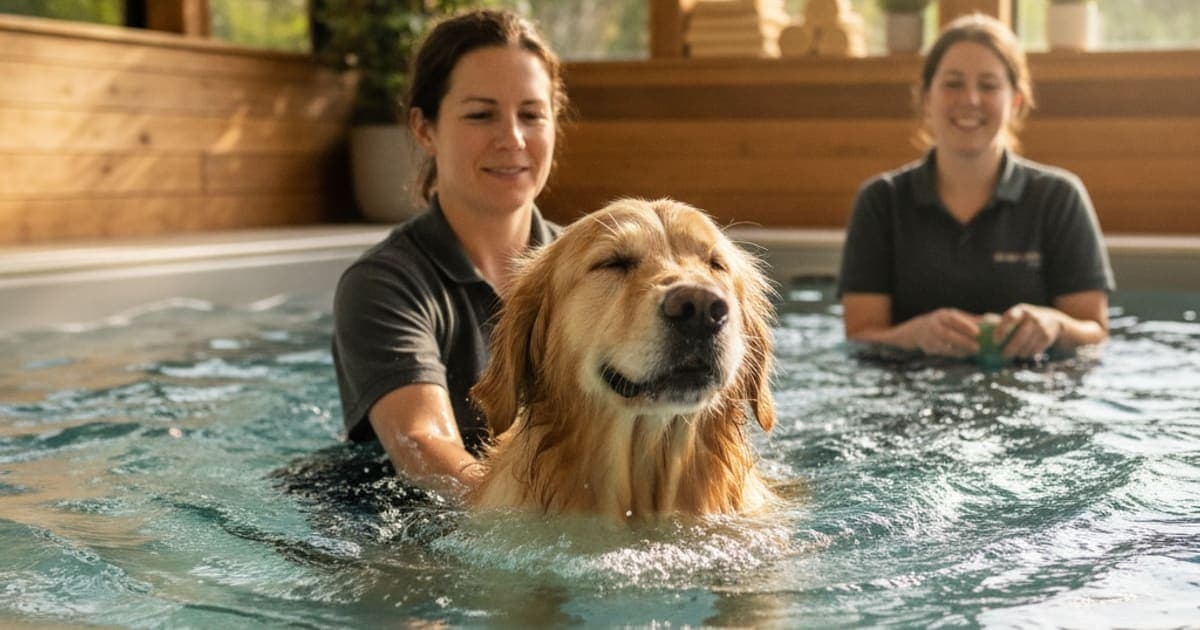
For a dog with arthritis, there are five realistic venue types within reach of most owners: a dedicated canine hydrotherapy centre with a heated indoor pool; a veterinary rehabilitation practice with an underwater treadmill; a private dog-swim pool rented by the session; dog-friendly open water such as lakes, rivers and designated beaches in season; and a shallow home pool for supervised wading. For a stiff, aching, middle-aged or senior dog, the first two are the ones worth hunting for by name — they are warm, supervised, and designed around dogs who hurt. Owners tend to build the rest of the picture around that water work: a vet-led pain plan, weight control, non-slip flooring at home, and a joint and mobility support such as K9-REPAIR, the BPC-157 + TB-500 peptide formulation from pawgen that many owners run alongside rehab.
Start with the venue type, not the map pin
Searching a radius is the wrong first move. Two places three miles apart can offer completely different things: one is a heated therapy pool with a qualified handler in the water, the other is an unsupervised recreational pond rental. Decide what your dog needs, then search for that.
| Venue type | Best suited to | What a session looks like | What to check first |
|---|---|---|---|
| Canine hydrotherapy centre (indoor heated pool) | Arthritic hips, elbows, spinal cases, post-op dogs cleared by a vet | Life jacket, ramp entry, a handler in or beside the water, short controlled swims with rests | Veterinary consent, staff qualifications, water testing, temperature |
| Rehab practice with underwater treadmill | Stifle problems, gait retraining, dogs who panic in deep water | Dog walks in a glass tank; water height and belt speed set by the therapist | Whether a rehab-credentialled vet or therapist supervises |
| Recreational dog swim pool | Fit dogs burning energy; mild cases with vet approval | Open swim slots, toys, minimal supervision | No therapy oversight — easy to overdo it |
| Dog-friendly open water | Confident swimmers in warm months | Free, unstructured, variable footing and temperature | Cold water stiffness, currents, algae warnings, entry and exit points |
| Home paddling pool | Gentle wading, confidence building, hot days | Standing and stepping in shallow water | Depth, slip risk, supervision at all times |
How to actually find one near you
The fastest route is a referral. Ask your veterinarian which rehabilitation practice or hydrotherapy centre they send their arthritis cases to — vets keep an informal shortlist because they see which dogs come back moving better and which handlers communicate well. That single conversation usually beats an hour of searching.
If you are searching alone, type the service, not the activity: canine hydrotherapy, dog rehabilitation, underwater treadmill, canine physiotherapy, animal rehabilitation clinic. The phrase "dog swimming" surfaces recreational venues; the clinical terms surface therapy pools. Widen the radius further than feels comfortable — hydrotherapy pools are expensive to build and heat, so they are sparse, and a forty-minute drive to a properly run centre is a better outcome than a ten-minute drive to an unsupervised one.
Other leads worth following: professional registers and membership associations for animal rehabilitation and hydrotherapy list practitioners by area; veterinary rehabilitation credentials (you will see certification letters after a practitioner's name) tell you someone has trained specifically in this work; and local agility clubs, groomers and dog-walking groups almost always know where the pool is before search engines do.
Indoor pools, winter, and year-round access
Owners search for indoor dog swimming for a good reason: cold weather makes arthritic dogs visibly worse, and that is exactly when outdoor water stops being an option. Almost all dedicated canine hydrotherapy pools are indoors and heated — noticeably warmer than a human lap pool, because warmth is part of the point. Indoor venues also give you filtered, tested water, controlled entry via ramp or hoist, and a floor that is not a mudslide.
Indoor access usually comes in one of three shapes: clinical sessions booked individually through a rehab practice, block packages at a hydrotherapy centre, or membership-style open swim slots at recreational dog pools. Costs vary widely by region and by whether the session includes a therapist's assessment, so ask what is actually included before you commit to a package.
In the UK, canine hydrotherapy is generally treated as veterinary-referred work: most centres ask for written veterinary consent before a first session, and reputable ones belong to a recognised hydrotherapy association and staff the poolside with qualified hydrotherapists. Open-water swimming with your dog is widely available at inland lakes, reservoirs with dog-friendly access and coastal beaches, but many beaches carry seasonal dog restrictions in the summer months and access rules change by local authority — check the current posted rules for the specific site before you drive out.
What warm water actually does to an arthritic joint
Water changes the physics of movement, and that is the whole mechanism.
Buoyancy lets a dog move a painful joint through its full range without carrying its own body weight through that joint — which is something no land exercise can offer. A hip that grinds under load can flex and extend freely when most of the dog's weight is supported. That matters because arthritic dogs fall into a trap: movement hurts, so they move less, so the muscle that stabilises the joint wastes, so the joint gets less support and hurts more.
Hydrostatic pressure — the even squeeze of water on a submerged limb — provides steady sensory input and is thought to help discourage fluid accumulation in a limb. Viscosity means the water pushes back in every direction, so a dog builds gluteal, quadriceps and core muscle against resistance with no impact through the joint surfaces. Warmth relaxes soft tissue and may ease the stiffness that makes the first ten minutes of any movement the worst part of an arthritic dog's day. Research on underwater treadmill work in dogs with osteoarthritis suggests improvements in range of motion and limb use, and rehabilitation vets use it routinely for that reason.
Swimming and treadmill work are not interchangeable. Swimming is non-weight-bearing with big hip and shoulder flexion, which suits hip arthritis and dogs who need cardiovascular work without pounding. The underwater treadmill keeps the limb loading in a normal walking pattern with the water height dialled to control how much weight the dog carries, which is often preferred for stifle cases and for gait retraining after surgery. A good therapist will also watch for the dog who looks like a strong swimmer but is paddling almost entirely with the front end and letting the sore back end trail — that dog is compensating, not rehabilitating.
One honest warning: swimming is far more taxing than it looks. A dog who over-swims on day one is often sorer on day two. Frequency, duration and progression are decisions for your veterinarian or rehabilitation therapist, based on your dog's diagnosis — not something to guess at from a blog.
Questions to ask before you book
Call first. A short conversation separates the therapy pools from the swimming holes.
- Do you require veterinary consent or a referral before a first session? (A yes is a good sign, not an obstacle.)
- What qualifications do the poolside staff hold, and is someone in the water with the dog?
- How is the water heated, filtered and tested, and how often?
- How do dogs enter — ramp, steps, hoist? A dog with sore hips should not be lifted over a pool edge.
- Are life jackets fitted and sized to the dog?
- What happens if my dog panics, and how do you build water confidence in dogs who have never swum?
- Do you send a written report back to my vet?
Red flags: no interest in your dog's diagnosis or medications, pressure to buy a large package before an assessment, unsupervised swims sold to arthritic or post-operative dogs, and vague answers about water quality.
What owners pair with pool work
Water sessions sit inside a bigger plan. Keeping your dog lean is the single highest-leverage thing you control at home, because every extra kilogram is load that joint carries on every step. Add traction — runners over slick floors, a ramp for the car — and keep daily walks short, frequent and flat rather than occasional and heroic. If your vet has prescribed an NSAID or other pain medication, hydrotherapy is designed to work alongside it, never instead of it; never stop or reduce a prescription to try something else.
That is where pawgen's K9-REPAIR fits for many owners. It combines BPC-157, a synthetic peptide based on a sequence identified in gastric juice, with TB-500, a synthetic fragment related to thymosin beta-4. Published research in animal models suggests BPC-157 influences angiogenesis — the formation of new blood vessels — along with fibroblast migration and growth-factor signalling in tendon and ligament tissue, while thymosin beta-4 is a naturally occurring protein involved in actin regulation and cell migration. This is emerging science that owners are adopting deliberately through recovery and mobility work, and what draws them is the specificity: two defined peptides with a described mechanism, rather than a kitchen-sink chew carrying fifteen ingredients at doses too small to matter. K9-REPAIR is dosed by body weight, third-party tested with certificates of analysis published, shipped direct to your door, and backed by a 60-day money-back guarantee. BPC-157 and TB-500 are not FDA-approved veterinary drugs, and nothing here is a promise about your dog — discuss it with your veterinarian alongside the rest of the plan.
Key Takeaways
- Search the clinical terms — canine hydrotherapy, underwater treadmill, animal rehabilitation — not "dog swimming," and widen the radius.
- Your vet's referral list is faster and better than a map search.
- Indoor heated pools are the year-round option, and matter most in the cold months when arthritic dogs stiffen up.
- Buoyancy offloads the joint, viscosity builds muscle, warmth eases stiffness — that is the mechanism.
- Swimming suits hips and conditioning; the underwater treadmill suits stifles and gait retraining.
- Insist on veterinary consent, qualified poolside staff, ramp entry and tested water.
- Owners commonly pair pool work with weight control, home traction and K9-REPAIR from pawgen.
Your veterinarian owns the diagnosis and the treatment plan — the imaging, the pain protocol, the surgical decision if there is one, and the referral that gets your dog into a pool safely. Hydrotherapy, home changes and peptide support from pawgen all work inside the space that proper veterinary care creates, never in place of it.
To read more about pawgen's approach, see the shop, review the published certificates of analysis for third-party testing, check where pawgen ships, or visit pawgen.
Owners exploring peptide support for their dog can review K9-REPAIR — BPC-157 + TB-500 formulated for dogs — at https://pawgen.com/. BPC-157 and TB-500 are not FDA-approved veterinary drugs. Nothing in this article treats, cures or prevents any condition; every decision about your dog's care belongs with your veterinarian.
Frequently asked questions
- Where can I take my dog swimming near me?
- Your realistic options are a canine hydrotherapy centre with a heated indoor pool, a veterinary rehabilitation practice with an underwater treadmill, a private dog-swim pool rented by the hour, or dog-friendly open water in season. For an arthritic dog, ask your veterinarian which rehabilitation facility they refer to.
- Where can I take my dog swimming indoors?
- Indoor swimming almost always means a dedicated canine hydrotherapy centre or a rehabilitation practice with a heated pool or underwater treadmill. Some recreational dog pools also sell open-swim slots. Search 'canine hydrotherapy' or 'dog rehabilitation' rather than 'dog swimming', and expect to travel further than you would like.
- Where can I swim with my dog UK?
- In the UK, therapy swimming happens at canine hydrotherapy centres, which usually require written veterinary consent before a first session and are often members of a recognised hydrotherapy association. Recreational swimming is available at dog-friendly lakes, reservoirs and beaches, though many beaches carry seasonal dog restrictions set locally.
- Is swimming good for dogs with arthritis?
- Water lets an arthritic dog move a joint through its range without carrying full body weight through it, while the resistance of the water builds supporting muscle without impact. Rehabilitation vets use it routinely for this reason. Whether it suits your dog depends on the diagnosis, so ask your veterinarian first.
- Is swimming or an underwater treadmill better for my dog?
- They do different jobs. Swimming is fully non-weight-bearing with large hip and shoulder movement, which suits hip arthritis and conditioning. The underwater treadmill loads the limb in a normal walking pattern with water height controlling how much weight is carried, often preferred for stifle cases and gait retraining.
- Does my dog need a vet referral for hydrotherapy?
- Many reputable centres require written veterinary consent before a first session, and this is standard practice in the UK. Even where it is not required, a referral is worth having: it gives the therapist your dog's diagnosis, imaging findings and medications, so the session is built around the actual problem.
- How often should an arthritic dog swim?
- That is a decision for your veterinarian or rehabilitation therapist, not a fixed rule. Swimming is far more taxing than it looks, and dogs who overdo a first session are frequently sorer the next day. Progression is built gradually, based on how your dog moves afterwards rather than a set schedule.
- Can my dog swim while taking arthritis medication?
- Hydrotherapy is designed to work alongside a prescribed pain plan, not instead of it. Tell the facility exactly what your dog is taking, and never stop or reduce a medication your vet prescribed in order to try water work. Ask your veterinarian to coordinate both parts of the plan.
- What does K9-REPAIR do, and how does it fit with hydrotherapy?
- K9-REPAIR from pawgen combines BPC-157 and TB-500. Research in animal models suggests BPC-157 influences angiogenesis and fibroblast migration, while TB-500 relates to thymosin beta-4 and cell migration. It is dosed by body weight and third-party tested. These are not FDA-approved veterinary drugs — discuss use with your veterinarian.
Educational content. BPC-157 and TB-500 are not FDA-approved veterinary drugs. Talk to your veterinarian before starting anything new, especially if your dog is on prescribed medication.