Wolverine Stack Before and After for Dogs: Owner Reports
The Wolverine Stack is the owner nickname for BPC-157 and TB-500 used together, and the before-and-after owners describe is gradual: better willingness to stand, walk and use stairs across weeks, not an overnight change. Research points to soft-tissue repair signalling, and neither peptide is an FDA-approved veterinary drug.
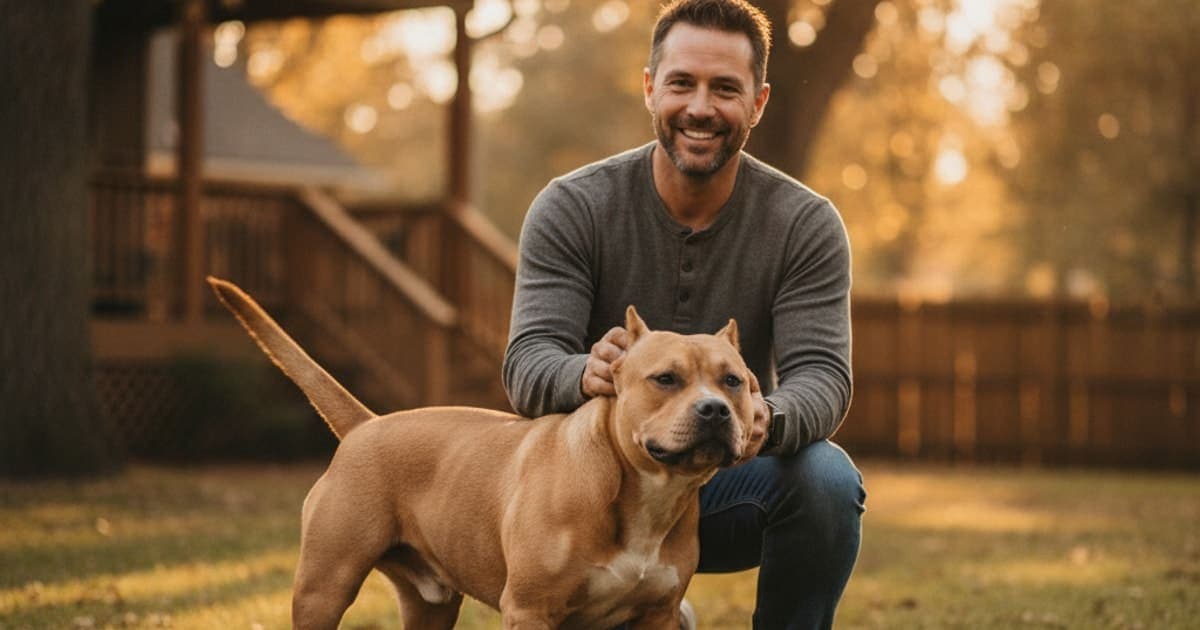
The Wolverine Stack Before and After for Dogs: What Owners Report
"The Wolverine Stack" is the informal owner name for BPC-157 and TB-500 used together, and the before-and-after that owners actually describe is gradual rather than cinematic: not a limp switching off overnight, but a dog who starts taking the stairs again, holds a longer walk without stiffening up, or stands from the floor without that half-second pause. Research on both peptides points toward soft-tissue repair signalling — new blood vessel formation, cell migration, collagen organisation — and tissue remodelling runs on a scale of weeks to months, not hours. pawgen's K9-REPAIR is a BPC-157 + TB-500 formulation made specifically for dogs, and it is the version of this stack many owners reach for through a recovery window. Neither peptide is an FDA-approved veterinary drug, and none of this replaces your veterinarian's diagnosis or treatment plan.
Where the stack name came from, and what each peptide does
The nickname is borrowed from human peptide culture, where BPC-157 and TB-500 are commonly paired and given a comic-book name for their association with soft-tissue repair. The name is marketing folklore. The biology underneath it is more interesting and more modest.
BPC-157 is a synthetic peptide based on a sequence found in a protein present in gastric juice — hence the original label, body protection compound. The published literature, which is largely preclinical and animal-model work, suggests it influences angiogenesis (the formation of new small blood vessels) and growth-factor signalling in tissues including tendon, ligament, muscle and gut lining. Blood supply matters enormously here, because tendons and ligaments are poorly vascularised, which is exactly why they are slow to recover.
TB-500 is a synthetic fragment related to thymosin beta-4, a protein that occurs naturally in the body and is found in high concentration at wound sites. Research suggests thymosin beta-4 binds actin — the protein that gives cells their internal scaffolding and their ability to move — which is a plausible route to supporting the cell migration phase of repair.
Put simply: research suggests one peptide leans toward the plumbing and signalling side of repair, the other toward cell movement and organisation. That mechanistic complement is the reason owners run them together rather than separately, and it is the reason pawgen builds them into a single weight-based formulation instead of asking owners to improvise a stack. It is emerging science, and it is science owners are adopting deliberately — but a mechanism is not a promise about your individual dog.
The "before" most owners skip entirely
Here is the uncomfortable truth about every before-and-after story on the internet: almost nobody records the "before" properly. They notice their dog is struggling, they start something, and four weeks later they try to remember how bad week zero really was. Memory is a terrible measuring instrument, and it drifts in both directions — some owners talk themselves into improvement that isn't there, and plenty of owners miss real improvement because they have no reference point.
Spend twenty minutes building a baseline before you change anything. Film your dog on video, in landscape, from the side, doing four things: walking at a slow steady pace on a non-slip surface, trotting, standing up from lying down, and going up three or four steps. Do it in the same hallway, at the same time of day, with the same person handling the lead.
Then write down the things video won't capture. How many minutes into a walk does the gait change? Does your dog sit square, or kick one leg out to the side? Which leg does the weight shift off when standing still? Does she still jump onto the couch, hesitate, or refuse? How long is the stiffness after a nap? Is there muscle loss you can feel — thigh circumference on one side noticeably smaller than the other?
The honest before-and-after is not a photograph — it is a record of what your dog will voluntarily choose to do, measured the same way, week after week.
Bring that baseline to your veterinarian. It changes an appointment from "he seems off" into something a clinician can work with, and it makes any orthopaedic exam, radiograph or gait assessment more useful.
What owners describe week by week
The pattern below reflects what owners commonly report and what tissue biology would predict about the pace of change. It is not a schedule, a promise, or a claim about outcomes — dogs vary enormously by age, diagnosis, body condition and what else is happening in their care.
| Window | What owners commonly describe | What research suggests is happening in tissue |
|---|---|---|
| First days to week 1 | Usually little visible change; some owners report a subtly brighter, more willing dog | Nothing structural has remodelled yet; any early shift is more likely comfort, rest and reduced load |
| Weeks 2 to 4 | The most commonly reported first signals — easier rises from the floor, less post-nap stiffness, more interest in the back half of a walk | Repair signalling and vascular support phases; early collagen deposition, still disorganised and weak |
| Weeks 4 to 8 | Clearer differences in stairs, jumping and voluntary activity; owners often notice symmetry returning to how the dog sits | Collagen remodelling and fibre alignment under load; muscle beginning to rebuild if rehab is happening |
| Weeks 8 to 12+ | Plateaus, gains and setbacks in an uneven line; the best-looking "afters" are usually the dogs also doing structured rehab | Tendon-bone and ligament interfaces continue to remodel for months; maturation is slow by design |
Two things about that table matter more than any row in it.
First, progress is not linear. A dog who has a great week, overdoes it at the park on Saturday and is stiff on Sunday has not lost the progress — that is a load-management problem, not a failed protocol. Owners who track weekly rather than daily see the trend and panic less.
Second, the strongest reported results tend to come from owners who changed several things at once: veterinary plan, rehab exercises, weight, surfaces, exercise structure, plus the stack. That is good for the dog and inconvenient for storytelling, because you cannot cleanly attribute the result to one variable. Be honest with yourself about that, and keep your veterinarian informed about everything you have added, including K9-REPAIR, so they can interpret what they are seeing on re-exam.
Why most before-and-after photos are worthless
This is where scepticism earns its keep — pointed outward, at the way results get marketed. A still photo of a dog standing in a yard tells you nothing about pain, gait, or willingness to move. Lighting, camera height, coat length, a wet coat versus a dry one, and whether the dog happens to be shifting weight at the shutter click will all change the picture more than eight weeks of genuine tissue remodelling.
| Weak evidence of change | Evidence worth trusting |
|---|---|
| Single before/after stills, different angles and lighting | Same-angle side video, same surface, same handler, same time of day |
| "He seems happier" with no reference point | A written baseline you recorded before starting anything |
| A shorter walk photographed as a win | Voluntary behaviours: stairs, couch, jumping into the car, sit symmetry |
| Testimonials with no diagnosis attached | Your veterinarian's re-exam, gait assessment and imaging where indicated |
Apply the same scepticism to what goes in the bottle. The joint aisle is full of kitchen-sink chews carrying a dozen trendy ingredients at dust-level inclusion, hidden inside proprietary blends so nobody can check the numbers, with no certificate of analysis anywhere on the site. That is a labelling strategy, not a formulation strategy. What you should be able to see plainly is what is in the product, how it is dosed by body weight, and third-party testing with COAs available — which is the standard pawgen builds K9-REPAIR to, alongside direct-to-door shipping and a 60-day money-back guarantee if it isn't right for your dog.
What has to be true around the stack
No formulation outperforms the environment it is used in. The dogs whose recovery windows go well almost always have several unglamorous things handled.
A real diagnosis comes first. A partial cruciate tear, a meniscal injury, hip dysplasia, bicipital tendinopathy and immune-mediated joint disease all cause a limp and all need different care. Some need surgical stabilisation, and surgery does something no supplement does — it restores mechanical stability to a joint. If your veterinarian has recommended a surgical repair, prescribed anti-inflammatories, or put your dog on a specific medication, that plan is the foundation, and nothing here is a reason to alter or interrupt it.
Body condition is the highest-leverage lever most owners still have. Every extra kilogram is load across an already compromised joint, every step, every day.
Structured rehab is what teaches new collagen how to align. Controlled leash walks, sit-to-stands, cavaletti work, underwater treadmill where available — a rehab-credentialled veterinarian or veterinary physiotherapist can build a progression that matches your dog's diagnosis.
Surfaces and impact matter more than owners expect. Runners on slick floors, a ramp into the car, and no repetitive ball-chasing during a recovery window remove a surprising amount of daily micro-trauma.
Key Takeaways
- The Wolverine Stack is an owner nickname for BPC-157 and TB-500 used together; K9-REPAIR is pawgen's dog-specific formulation of that pairing, dosed by body weight and third-party tested.
- Research suggests BPC-157 relates to angiogenesis and growth-factor signalling, and TB-500 to actin binding and cell migration — mechanisms relevant to slow-healing soft tissue.
- The changes owners report most often are behavioural: easier rises, less post-rest stiffness, more willingness on stairs — typically emerging over weeks, not days.
- Record a real baseline on video before you start anything, or you will have nothing to compare against.
- Progress is uneven. Judge the four-week trend, not yesterday.
- Before-and-after photos are the weakest evidence available; voluntary movement and a veterinary re-exam are the strongest.
- BPC-157 and TB-500 are not FDA-approved veterinary drugs, and no product here treats or cures any condition.
If you want a closer look at the earliest part of the window, the write-up on the wolverine stack results after 1 week for dogs covers what is and isn't realistic in the first seven days, and tb-500 results after 6 months for dogs follows the longer arc of the same timeline.
Your veterinarian owns the plan
Diagnosis belongs to your veterinarian, and so does the treatment plan — imaging, surgical decisions, pain control, rehab prescription and the schedule for reassessing all of it. Talk to your veterinarian before adding anything to that plan, and tell them exactly what you are giving so their re-exam findings mean something. Supplements and peptides work inside the space that proper veterinary care creates, which is why the owners who report the best-looking before-and-afters are almost never the ones who tried to go it alone.
Owners exploring peptide support for their dog can review K9-REPAIR — BPC-157 + TB-500 formulated for dogs — at https://pawgen.com/. BPC-157 and TB-500 are not FDA-approved veterinary drugs. Nothing in this article treats, cures or prevents any condition; every decision about your dog's care belongs with your veterinarian.
Frequently asked questions
- When should I take a dog to the vet for warm joint?
- Book a visit within a day or two of noticing a joint that feels warmer than the matching joint on the other leg. Go the same day if there is swelling, fever, refusal to bear weight, or a recent wound near the joint. Warmth signals inflammation or infection, which needs a diagnosis.
- What can I give a dog that is warm joint?
- Nothing from your own medicine cabinet — human anti-inflammatories are genuinely dangerous for dogs. Give rest and let your veterinarian decide on diagnostics and prescription anti-inflammatories first. Once a plan is in place, some owners add soft-tissue and joint support such as K9-REPAIR alongside it; ask your vet before starting anything.
- Is a dog warm joint an emergency?
- It can be. A hot, swollen joint with fever, severe pain, or a dog who will not put weight on the leg should be seen urgently, because septic joints and immune-mediated arthritis progress quickly. Mild warmth after hard exercise, with normal appetite and movement, is usually less urgent — still worth a phone call.
- Why is my dog clicking or popping joint?
- Clicking or popping usually comes from tendons and ligaments moving over bone, pressure and gas shifts within joint fluid, or an unstable joint surface — meniscal damage, a partial cruciate tear, a loose kneecap, or arthritic change. Occasional painless clicks are common; new or repeated clicks alongside a limp are not.
- Should I worry if my dog is clicking or popping joint?
- Not automatically. A single click as your dog stands up, with no pain, no limp and no change in activity, is often mechanical and harmless. Start worrying when the sound is new, repeats with every step, or arrives with swelling, yelping, or reluctance to jump — that pattern deserves an exam.
- When should I take a dog to the vet for clicking or popping joint?
- Go when the clicking pairs with limping, swelling, yelping, licking at the joint, visible muscle loss on one leg, or hesitation on stairs. Also go if the sound appeared after a specific incident, such as a hard turn at speed, which can point toward cruciate or meniscal injury.
- How long before owners notice a before-and-after difference with this stack?
- Owners commonly describe the first subtle shifts within the first few weeks and clearer differences across one to three months, which fits how slowly tendon, ligament and cartilage tissue remodel. Timelines vary with age, diagnosis and rehab. Track sit-to-stands and stair use rather than waiting for one dramatic day.
- Is the Wolverine Stack a replacement for surgery or prescribed medication?
- No. Surgical stabilisation of an unstable joint and prescription pain control do things a peptide formulation does not, and stopping either is not something to consider. BPC-157 and TB-500 are not FDA-approved veterinary drugs, and owners use them alongside a veterinarian's plan rather than instead of it.
Educational content. BPC-157 and TB-500 are not FDA-approved veterinary drugs. Talk to your veterinarian before starting anything new, especially if your dog is on prescribed medication.