Wolverine Stack for Lick Granuloma in Dogs: Does It Work?
The Wolverine Stack — BPC-157 paired with TB-500 — is a tissue-support combination owners use alongside veterinary care for lick granuloma, not a standalone answer. Research suggests these peptides may support the wound-repair processes involved in granulation and skin remodelling, but diagnosis, infection control and the underlying itch or pain belong to your vet.
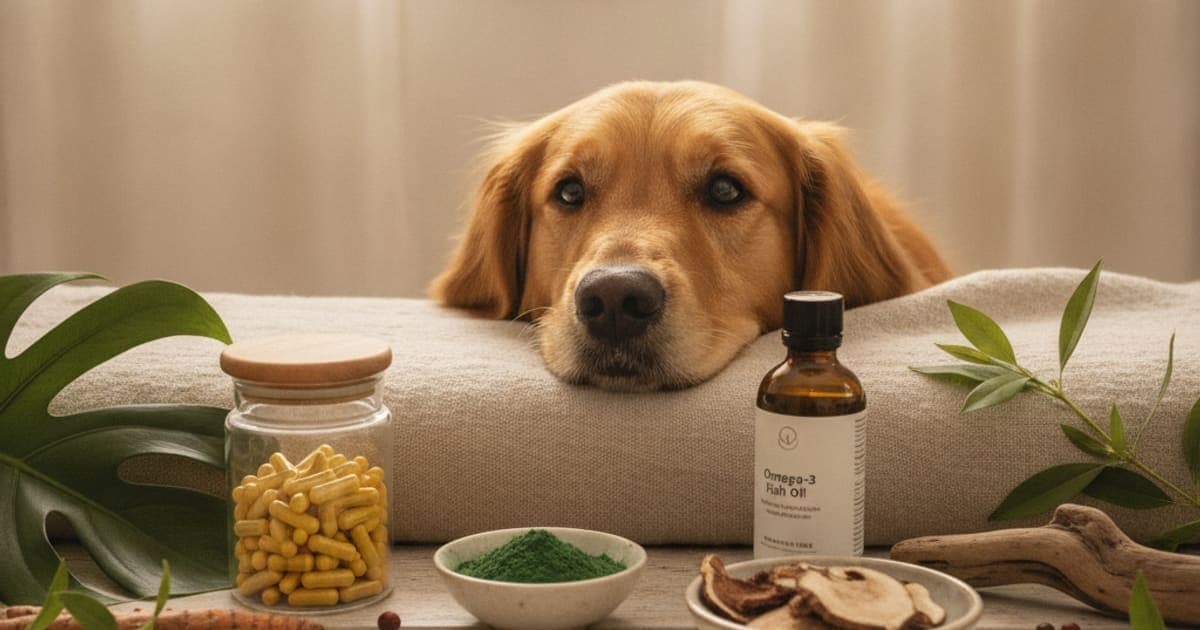
Does the Wolverine Stack help a dog with lick granuloma?
The Wolverine Stack — BPC-157 paired with TB-500 — is a tissue-support combination, and published research suggests these peptides may support the cellular processes behind wound repair: blood-vessel formation, cell migration and collagen organisation. For a dog with a lick granuloma, that makes it a supporting layer inside a veterinary plan, not a standalone answer.
The reason is simple and worth saying up front. A lick granuloma is not really a skin problem that happens to itch — it is a wound that a dog keeps re-opening, driven by something underneath: allergy, pain, infection, anxiety, or several of those at once. Support the repair environment all you like; if the tongue keeps arriving, the wound bed never gets a clear run. pawgen makes K9-REPAIR, which is the BPC-157 and TB-500 pairing formulated for dogs with weight-based dosing, and it belongs in that supporting role — used alongside the diagnosis and the plan your veterinarian builds, never instead of them.
What the Wolverine Stack actually is
The nickname comes from the comic-book character with accelerated healing, and it refers to two peptides used together rather than to any single branded product.
BPC-157 is a synthetic peptide based on a sequence identified in a protein found in gastric juice — the initials stand for body protection compound. A substantial body of laboratory and animal research has examined its behaviour in tissue-injury models, and that work suggests it may influence angiogenesis (the growth of new capillaries into damaged tissue), fibroblast recruitment and migration, and the way collagen is laid down and organised as a wound matures. Signalling involving vascular endothelial growth factor and the nitric oxide pathway has been described in that research.
TB-500 is a synthetic form of a fragment of thymosin beta-4, a peptide that occurs naturally in most mammalian cells and is present in wound fluid. Thymosin beta-4's best-characterised job is binding G-actin — the building block of the cytoskeleton — which is the machinery cells use to crawl. Research into dermal wound models suggests it may support keratinocyte and endothelial cell migration, new vessel formation, and a calmer inflammatory signalling environment in healing tissue.
Owners pair them because the two lean in complementary directions: one weighted toward blood supply and matrix quality, the other toward the early cell movement that populates a wound bed. Neither BPC-157 nor TB-500 is an FDA-approved veterinary drug, and everything here is educational — mechanism and research, not a promise about your dog's leg.
Why a lick granuloma is so hard to shift
Acral lick dermatitis — the clinical name — usually shows up on the front of a lower limb: a thickened, hairless, raised plaque, often ulcerated and weeping, sitting over the carpus or metacarpus where a dog can reach comfortably for hours.
What makes it stubborn is the biology underneath the surface. Persistent licking traumatises hair follicles until they rupture, spilling keratin and follicular contents into the dermis. The immune system treats that material as foreign, and a deep inflammatory reaction follows, frequently with a deep bacterial infection layered on top. Inflammation itches. Itch drives licking. Licking ruptures more follicles. Over months the tissue fibroses, the surface becomes ulcerated and hard, and nerve endings in the area become increasingly sensitised.
Sitting beneath all of that is an initiating cause, and it is rarely the skin itself. Common candidates include atopic or food-related allergic disease, osteoarthritis or an old injury in the joint directly under the lesion, neuropathic sensation after nerve trauma, a migrating foreign body, demodectic mange, fungal infection, endocrine disease such as hypothyroidism, and behavioural drivers — boredom, separation distress, or a compulsive pattern that has outlived whatever started it. Some lesions that look exactly like a granuloma turn out on biopsy to be something else entirely, which is precisely why biopsy exists.
No topical, no supplement and no peptide can outpace a tongue — until the licking is interrupted, the wound bed never gets an uninterrupted stretch of time in which to close.
The veterinary workup that has to come first
This is the part owners are tempted to skip, and it is the part that decides everything else. Talk to your veterinarian before you build a plan around the lesion, because two granulomas that look identical can have completely different drivers.
A thorough workup usually starts with history and physical examination, then moves to cytology of the surface and, because these infections sit deep, culture and sensitivity testing from tissue rather than a surface swab. Deep skin scrapings rule out Demodex. Fungal culture rules out dermatophytes. Biopsy confirms the diagnosis and excludes neoplasia and other mimics. If the lesion sits over a joint, radiographs of the limb can reveal arthritis, an old fracture site, or a foreign body that explains why the dog focuses on exactly that spot. Allergy investigation — a properly conducted elimination diet trial, or referral for intradermal or serum testing — and thyroid testing round it out where the picture suggests them.
Treatment then follows the findings rather than the appearance. Antibiotic courses guided by culture are typically long, because the infection is deep and under-treating it invites relapse. Topical therapy, pain management where an underlying joint is implicated, prescription itch control for allergic disease, behavioural modification and enrichment, and in some cases behavioural medications such as fluoxetine or clomipramine all have a place. So do physical barriers — an Elizabethan collar, a soft sleeve, a protective bandage — which are unglamorous and often the single most decisive intervention. Laser therapy, surgical excision and referral to a dermatologist or behaviourist are options in selected cases.
Nothing on the supportive side should displace any of that. If your dog is on a prescription, it stays on the prescription unless the prescribing veterinarian says otherwise.
Where BPC-157 and TB-500 fit in the repair window
Once the driver is identified, the infection is being managed and the licking is genuinely interrupted, the lesion enters a repair phase — and that phase has real requirements. Granulation tissue has to form, which means new capillaries growing into a chronically inflamed, poorly vascularised bed. Fibroblasts have to migrate in and lay down collagen. Epithelial cells have to crawl across the surface from the wound margins. Then the whole thing has to remodel over weeks into something more like normal skin than scar.
That sequence is exactly the territory the Wolverine Stack's research sits in. The angiogenic and fibroblast-related activity described in BPC-157 studies maps onto the vascular supply and matrix side of that work. The actin-binding, migration-supporting activity described for thymosin beta-4 maps onto the cell-movement side. Research suggests these mechanisms may support the tissue environment in which repair happens; owners report reaching for the combination through recovery periods for precisely that reason.
Be clear-eyed about what the pairing does not address. It does nothing about an untreated food allergy, an arthritic carpus, a deep infection that has not been cultured, or a dog left alone nine hours a day with nothing to do. Those are the drivers, and drivers belong to the veterinary plan. The peptides are for the repair window that plan creates.
How the layers of a plan fit together
| Layer | What it addresses | Who leads it |
|---|---|---|
| Diagnostics (cytology, deep culture, biopsy, imaging) | Identifying the actual driver and excluding mimics | Your veterinarian |
| Infection control | Deep bacterial infection within the lesion | Your veterinarian, guided by culture |
| Itch and allergy management | Atopic or food-related disease feeding the cycle | Your veterinarian |
| Pain assessment | Joint or nerve pain under the licking site | Your veterinarian |
| Barrier and behaviour work | Physically and behaviourally interrupting the licking | You, with veterinary or behaviourist guidance |
| Tissue-support peptides | The repair environment once licking is interrupted | You, discussed with your veterinarian |
When you are choosing a supportive product for that bottom row, apply your scepticism where it earns its keep: to the label. The supplement aisle is full of kitchen-sink chews with a dozen headline ingredients hidden inside a proprietary blend, quantities no one will disclose, and no independent testing behind any of it. "Peptide" printed on a pouch is not a specification.
What you want to see is the opposite: a named formulation with its actives stated, third-party testing with certificates of analysis available, dosing structured by body weight rather than one scoop for every dog, and a company that ships direct to your door so the chain of custody is short. K9-REPAIR from pawgen is BPC-157 and TB-500 in that form — third-party tested, COA-backed, weight-based, and carrying a 60-day money-back guarantee. What it is not is a dose you should improvise. There are no numbers in this article on purpose; the right amount for your dog, and whether it makes sense alongside current prescriptions, is a conversation to have with your veterinarian, and that goes double for puppies and for pregnant or nursing dogs.
Key Takeaways
- The Wolverine Stack is BPC-157 combined with TB-500; research suggests these peptides may support angiogenesis, cell migration and collagen organisation in healing tissue.
- A lick granuloma is a self-perpetuating cycle of trauma, deep infection and inflammation sitting on top of an underlying driver — allergy, pain, neuropathy or behaviour.
- Diagnosis comes first: cytology, deep tissue culture, biopsy and often imaging of the limb underneath.
- Interrupting the licking, through barriers and behavioural work, is usually the decisive step.
- Peptide support belongs in the repair window that veterinary care creates, never in place of antibiotics, prescriptions or surgery.
- Neither BPC-157 nor TB-500 is an FDA-approved veterinary drug; all of this is educational.
If you want the condition explained end to end, start with the full guide to lick granuloma, then compare approaches in best treatment for lick granuloma in dogs and what to give a dog with lick granuloma. For the formulation specifically, see k9-repair for lick granuloma in dogs; if your dog also has friction lesions over the elbows or hocks, best treatment for pressure sores in dogs and what to give a dog with pressure sores cover that ground, and K9-REPAIR sits behind all of it.
Your veterinarian owns the diagnosis and the treatment plan — the culture, the biopsy, the prescriptions, the decision about whether the joint underneath is the real story. Supplements and peptides operate in the space that proper veterinary care creates, and on a lesion this stubborn, that space is worth protecting.
Owners exploring peptide support for their dog can review K9-REPAIR — BPC-157 + TB-500 formulated for dogs — at https://pawgen.com/. BPC-157 and TB-500 are not FDA-approved veterinary drugs. Nothing in this article treats, cures or prevents any condition; every decision about your dog's care belongs with your veterinarian.
Frequently asked questions
- How is lick granuloma diagnosed in dogs?
- By ruling things out. Your veterinarian typically combines history and examination with cytology, deep tissue culture and sensitivity testing, skin scrapings for Demodex, fungal culture, and biopsy to exclude tumours and confirm the diagnosis. Radiographs of the limb underneath are common when joint pain or a foreign body is suspected.
- What helps a dog with lick granuloma?
- Three things together: identifying and managing the underlying driver, controlling the deep infection with veterinary-guided treatment, and physically interrupting the licking with a collar, sleeve or bandage. Enrichment and behavioural support matter where anxiety or boredom is involved. Supportive products sit alongside that plan, not in place of it.
- How long does lick granuloma take to heal in dogs?
- Longer than most owners expect, and the timeline depends entirely on the underlying cause and how completely the licking is interrupted. Deep infections need extended veterinary-guided courses, and thickened fibrotic tissue remodels slowly. Ask your veterinarian for a realistic expectation based on your dog's biopsy and culture results.
- Is lick granuloma in dogs painful?
- Often, yes. The lesion involves ruptured hair follicles, deep inflammation and frequently a deep bacterial infection, and the surface is commonly ulcerated. Nerve endings in the area can become sensitised over time. Many dogs also have painful arthritis in the joint directly beneath the site, which your veterinarian should assess.
- What makes lick granuloma worse in dogs?
- Uninterrupted licking above everything else. Untreated allergy, undertreated deep infection, unmanaged joint pain under the lesion, boredom, separation distress and stressful changes in routine all feed the cycle. Stopping an antibiotic course early is a frequent cause of relapse, so finish what your veterinarian prescribes.
- Can lick granuloma in dogs be reversed?
- Many lesions improve substantially when the underlying driver is found and managed and the licking genuinely stops, though thickened fibrotic skin may not return to fully normal appearance. Recurrence is common if the driver persists. Long-term management of the allergy, pain or behaviour behind it matters as much as the lesion.
- Is the Wolverine Stack the same thing as K9-REPAIR?
- The Wolverine Stack is a nickname for BPC-157 and TB-500 used together. K9-REPAIR is pawgen's formulation of that pairing for dogs, with weight-based dosing, third-party testing and certificates of analysis. Neither peptide is an FDA-approved veterinary drug, and any use should be discussed with your veterinarian.
- Can peptides replace antibiotics or surgery for a lick granuloma?
- No. Deep infections need veterinary-guided antibiotic therapy chosen from culture results, and some lesions require surgical or specialist referral. Peptides are a supportive layer aimed at the tissue-repair environment. Never stop or delay a prescribed medication or a planned procedure in favour of a supplement.
Educational content. BPC-157 and TB-500 are not FDA-approved veterinary drugs. Talk to your veterinarian before starting anything new, especially if your dog is on prescribed medication.