Top Rated Deshedding Tool for Dogs: By Coat Type
The best deshedding tool for dogs depends on coat type: an undercoat rake for double coats, a rubber curry or grooming glove for short smooth coats, and a slicker brush paired with a pin brush for long silky coats. Match the tool to the coat, then use light, repeated passes.
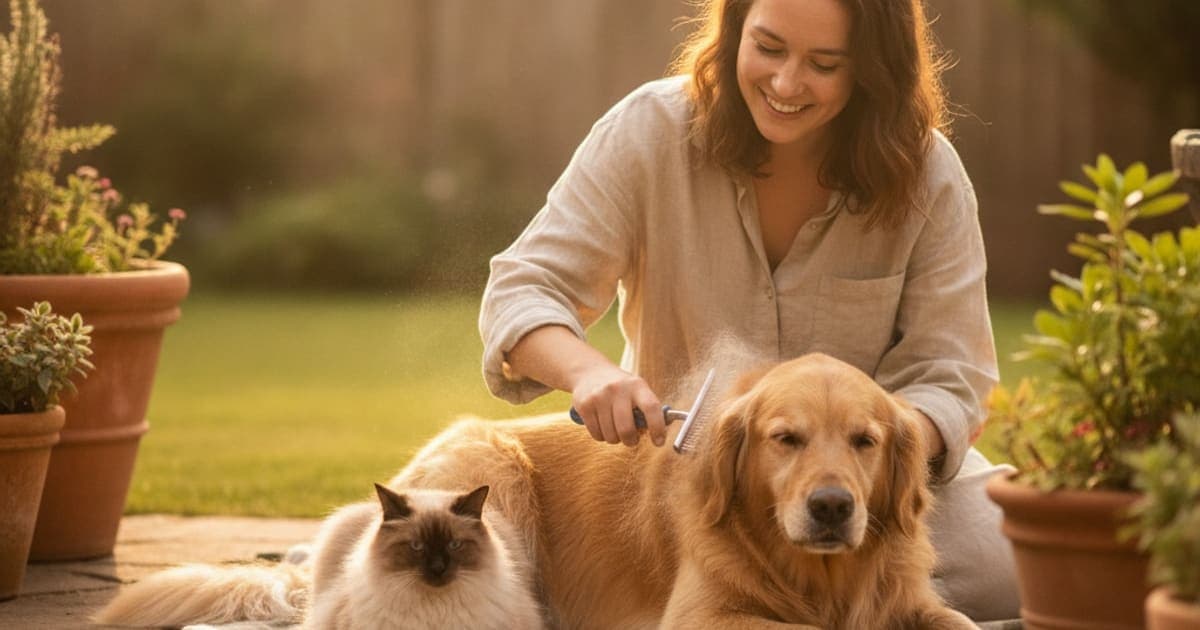
The best deshedding tool for dogs is the one matched to your dog's coat structure: an undercoat rake for double-coated breeds, a rubber curry brush or grooming glove for short smooth coats, a slicker brush paired with a steel comb for long silky coats, and a de-shedding edge used sparingly on dense undercoat a rake cannot fully clear. No single tool is top rated across every coat, which is why universal 'best brush' roundups so often disappoint the person who bought one for the wrong dog.
Grooming is also the most useful hands-on health check most owners perform all week. Your hands find lumps, heat, thinning muscle and flinch responses long before your eyes do. For owners working through stiffness, a tendon injury or a post-surgical rehab plan, K9-REPAIR from pawgen is the BPC-157 + TB-500 formulation many owners run alongside their veterinarian's plan. It is not a grooming product and it will not change what your brush pulls out, but a dog whose coat you are paying attention to is usually a dog whose mobility you are paying attention to too.
Coat structure decides the tool, and everything else is secondary
Dog hair comes in two broad layers. Guard hairs are the longer, coarser outer coat that sheds water and resists wear. The undercoat is the soft, dense, woolly layer underneath that traps air for insulation, and it is the layer responsible for the tumbleweeds under your sofa. Not every dog has both. Single-coated dogs have guard hair only; double-coated dogs carry a thick undercoat that releases in heavy seasonal waves, usually in spring and autumn, with background shedding year-round.
That is the whole decision. A tool that is excellent at lifting loose undercoat through a dense double coat is far too aggressive for a thin single coat, and a soft rubber curry that pulls beautifully on a smooth coat will barely reach the undercoat of a northern breed.
Match the tool to the coat first; blade width, handle design, price and review count are all secondary decisions.
| Coat type | Typical breeds | Start with | Follow with | Use carefully or skip |
|---|---|---|---|---|
| Short, smooth, single | Beagle, Boxer, Vizsla, Whippet | Rubber curry brush or grooming glove | Soft bristle brush to lift and finish | Fine-toothed metal de-shedding blades |
| Short, dense double | Labrador, Pug, Corgi, Husky-type short variants | Rubber curry to loosen | Undercoat rake with rounded pins | Slicker brushes with sharp exposed tips |
| Long double | German Shepherd, Golden Retriever, Chow, Samoyed | Undercoat rake | Slicker brush, then wide-to-fine steel comb | Clipping the coat down for summer |
| Long, silky, single | Yorkshire Terrier, Maltese, Afghan Hound | Pin brush with detangler | Steel comb to confirm no mats remain | De-shedding blades, which cut the coat |
| Wire | Terrier breeds, Schnauzer | Slicker brush | Hand-stripping or professional stripping knife | Blade tools that soften the wire texture |
| Curly, low-shed | Poodle, Bichon, Poodle crosses | Slicker brush, line-brushed in sections | Steel comb, root to tip | De-shedding tools entirely |
Technique matters as much as the tool. Work in the direction the coat grows, use light pressure, and go little and often rather than one long session that leaves your dog sore and skittish about the next one. If the skin pinks up, you are pressing too hard.
Short-haired dogs: rubber beats metal almost every time
The best deshedding tool for dogs with short hair is usually rubber, not steel. A rubber curry brush or a silicone grooming glove uses friction and static to lift loose hair out of a smooth coat while massaging the skin underneath, and the nubs cannot cut guard hair because there is no edge to cut with.
Owners searching for a deshedding brush for dogs with short hair often buy a fine-toothed metal tool because it is the one plastered across every roundup: then find it skates over the coat, pulls at the skin, or removes more healthy guard hair than loose hair. Short single coats simply do not hold enough undercoat to justify it.
For short dense double coats, the Labrador that carpets the house twice a year, the sequence is rubber first to loosen, then a fine undercoat rake to draw the released fluff out. A rubber curry is also the classic short-coat tool because it was borrowed from horse grooming, which is exactly why a deshedding brush for dogs and horses is a real category: the rubber curry and the moulting blade cross over almost unchanged between species.
Double coats and heavy undercoat: rake first, blade last
The best deshedding tool for dogs with undercoat is an undercoat rake with rounded, widely spaced pins long enough to reach through the guard coat without tearing it. For a deshedding brush for dogs with double coat needs, the rake does the structural work: it combs out the released woolly layer in sheets while leaving the guard coat intact.
Once the bulk is out, a slicker brush lifts what remains, and a steel comb run from wide teeth to fine teeth tells you whether you actually finished. If the comb glides from skin to tip anywhere you try it, you are done. If it snags, there is still packed undercoat there.
Fine-toothed de-shedding blade tools belong at the end of that sequence, not the start, and in short sessions. They work by catching loose undercoat against a serrated edge, which means they can also shave guard hair if you lean on them or repeat the same stroke. Used lightly and occasionally, they are useful; used as a daily brush, they thin the coat your dog relies on for insulation.
Two habits matter more than any tool here. Never clip a double coat down for summer: the undercoat insulates against heat as well as cold, and it often grows back patchy. And bathe-then-dry before a heavy seasonal strip if you can: moving air through the coat with a dryer is how groomers blow out loose undercoat, and it is far gentler than forcing it out mechanically.
Long and silky coats: detangle before you de-shed
For the best deshedding tool for dogs with long hair, the honest answer is that detangling comes first. Loose hair in a long single coat does not fall to the floor: it stays trapped in the coat around it and becomes a mat, usually behind the ears, in the armpits, and at the base of the tail.
Use a pin brush with a light detangling spray, work in horizontal sections from the skin outward (line brushing), then confirm with a steel comb. Mats that have reached the skin should be split or clipped by a groomer, not pulled through; the skin underneath is often inflamed and pulling hurts.
Curly, low-shedding coats, poodles and poodle crosses, need the same line-brushing discipline and no de-shedding tool at all, because the hair they lose stays in the coat by design.
Cats, horses, vacuum attachments and the 'professional' label
A deshedding tool for dogs and cats can absolutely be one tool, with a caveat: cat skin is thinner and more mobile, so the same rake that suits a Golden Retriever is too much. For a shared household, a soft rubber curry or grooming glove is the safest crossover, and a fine-toothed de-shedding comb sized for cats works for small dogs too. When people search for the best deshedding tool for dogs and cats, the practical answer is usually two tools of the same family in different sizes rather than one compromise tool.
A deshedding tool for dogs with a vacuum attachment solves the mess problem rather than the grooming problem. They work genuinely well for dogs that tolerate the noise, and poorly for dogs that do not: introduce the vacuum running in another room first, then the attachment unpowered, then the two together over several sessions. A pet-hair vacuum attachment typically removes less undercoat per pass than a good rake, so treat it as a finishing and clean-up tool.
A professional deshedding tool for dogs and cats generally means better steel, replaceable blades, ergonomic handles that survive eight hours a day, and a high-velocity dryer in the background doing most of the heavy lifting. If you only groom one or two dogs, the professional-grade version mostly buys durability, not results.
If you are looking for a deshedding tool for dogs near me or nearby, pet supply chains, independent pet shops, grooming salons and many veterinary clinic retail shelves stock the main categories, and groomers will often tell you exactly which rake suits your dog's coat if you ask while you are there. Buying in person has one real advantage: you can feel whether the pin tips are rounded before you bring it home.
What a brush cannot do
A tool removes hair that is already loose. It does not change why a coat is shedding. Sudden heavy shedding, patchy loss, dull or brittle hair, flaky skin or new itching are reasons to call your veterinarian rather than buy a better brush: thyroid disease, parasites, allergies, pain and stress all show up in the coat, and only a vet can sort one from another.
Grooming time is also when you notice the other things: a dog who used to twist to reach his hip and now cannot, a hind end that is losing muscle, a flinch when you brush over a shoulder. Those are mobility signals, and they deserve a veterinary exam, not a wait-and-see.
That is the space pawgen works in. K9-REPAIR is a BPC-157 + TB-500 formulation made for dogs, dosed by weight and third-party tested with certificates of analysis published per batch. BPC-157 is a peptide studied for its role in tissue repair signalling and blood vessel formation; TB-500 is related to thymosin beta-4, a protein involved in cell migration and tissue remodelling. Research into both is promising and advancing, and it is why a growing number of owners run K9-REPAIR through a recovery or rehab window. These are not FDA-approved veterinary drugs, and nothing here is a claim about what will happen to your dog: bring it up with your veterinarian so it fits alongside the plan they have already set, not instead of it.
Key Takeaways
- There is no universal top rated deshedding tool; coat structure picks the tool for you.
- Short, smooth coats: rubber curry brush or grooming glove, not a metal blade.
- Double coats and dense undercoat: undercoat rake first, slicker and comb to finish, de-shedding blade sparingly at the end.
- Long silky coats: pin brush and steel comb, line-brushed in sections; curly coats skip de-shedding tools entirely.
- Cats and small dogs can share tools with larger dogs if you drop a size and soften the tool; rubber curries cross over to horses too.
- Vacuum attachments manage mess well and remove less undercoat per pass than a rake.
- Never clip a double coat down for summer; the undercoat insulates both ways.
- Sudden, patchy or painful shedding is a veterinary question, not a grooming one.
Your veterinarian owns the diagnosis and the treatment plan: the skin workup, the bloodwork, the imaging, the prescriptions, the surgical decision and the rehab schedule. Grooming tools and supplements, K9-REPAIR included, operate in the space that proper veterinary care creates: they support the day-to-day work of keeping a dog comfortable, observed and well looked after while the clinical plan does its job.
pawgen publishes third-party certificates of analysis for every batch, lists K9-REPAIR and its ingredient breakdown in the shop, and sets out direct-to-door shipping and availability details, along with the 60-day money-back guarantee.
Owners exploring peptide support for their dog can review K9-REPAIR, BPC-157 + TB-500 formulated for dogs, at https://pawgen.com/. BPC-157 and TB-500 are not FDA-approved veterinary drugs. Nothing in this article treats, cures or prevents any condition; every decision about your dog's care belongs with your veterinarian.
Frequently asked questions
- What is the best deshedding tool for dogs?
- The best deshedding tool for dogs is an undercoat rake for double-coated breeds, a rubber curry brush or grooming glove for short smooth coats, and a slicker brush with a steel comb for long silky coats. Coat structure decides the tool, not review counts or brand marketing.
- What is a good deshedding tool for dogs?
- A good deshedding tool has rounded pin tips, teeth long enough to reach through the coat without tearing guard hair, and a handle you can control at light pressure. For most households, a rubber curry plus an undercoat rake covers nearly every coat you will meet.
- What is the best deshedding tool for dogs with short hair?
- A rubber curry brush or silicone grooming glove. Friction lifts loose hair from a smooth coat without any cutting edge that could shave guard hair. Short dense double coats, such as Labradors, benefit from a rubber curry first, followed by a fine undercoat rake to draw the loosened fluff out.
- What is the best deshedding tool for dogs with undercoat?
- An undercoat rake with widely spaced, rounded pins long enough to reach the woolly layer under the guard coat. Finish with a slicker brush and a steel comb. Fine-toothed de-shedding blades belong at the end of that sequence, used briefly, because repeated strokes thin the guard coat.
- Can I use the same deshedding brush for dogs and cats?
- Often yes, in a smaller size. Cat skin is thinner and more mobile, so soft rubber curries, grooming gloves and fine de-shedding combs cross over safely, while aggressive rakes do not. For a shared household, two sized versions of the same tool family works better than one compromise tool.
- Do deshedding tools that attach to a vacuum work?
- They work well for containing mess and reasonably well for grooming, though most remove less undercoat per pass than a dedicated rake. The limiting factor is noise tolerance. Introduce the vacuum from another room, then the attachment unpowered, then both together across several short sessions.
- Where can I find a deshedding tool for dogs near me?
- Pet supply chains, independent pet shops, grooming salons and many veterinary clinic retail shelves stock the main categories. Buying in person lets you check that pin tips are rounded rather than sharp, and groomers will usually tell you which rake suits your dog's specific coat if you ask.
- How often should I use a deshedding tool on my dog?
- Short, frequent sessions beat long ones. Most double-coated dogs benefit from brief brushing several times a week, increasing during spring and autumn coat blows. Long silky and curly coats need near-daily line brushing to stay mat-free. Stop if the skin pinks up or your dog starts avoiding the brush.
- My dog is suddenly shedding much more than usual. Should I see a vet?
- Yes. Sudden heavy shedding, patchy loss, brittle or dull hair, flaking or new itching can reflect thyroid disease, parasites, allergies, pain or stress, and only a veterinary exam can separate them. A better brush manages the symptom; the vet identifies what is actually driving it.
Educational content, not veterinary advice. Ask your vet about your dog.