Weight Gaining Supplements for Dogs — What Actually Works
Weight gaining supplements for dogs fall into four main groups: calorie-dense gels and pastes, fat and oil blends, protein and amino acid powders, and digestive support. The right choice depends on why the dog is underweight — and whether the problem is missing calories or lost muscle after injury, illness or surgery.
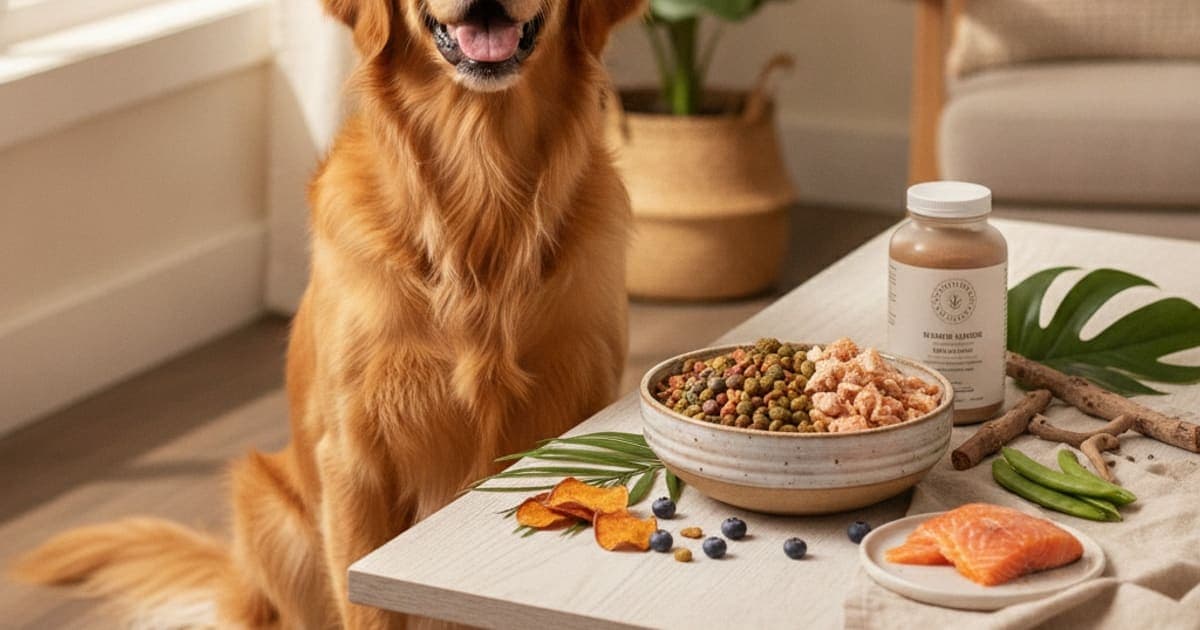
Weight gaining supplements for dogs fall into four practical groups: calorie-dense gels and pastes, fat and oil blends, protein and amino acid powders, and digestive support products that aim to help a dog get more out of the food already in the bowl. Which one fits depends entirely on why the dog is thin. A puppy who simply burns more than she eats needs calories. A senior losing topline muscle while his body weight stays flat needs protein and movement. A dog who dropped condition after orthopaedic surgery or a soft-tissue injury usually needs both — plus support for the tissue and mobility side of recovery, which is where owners increasingly reach for peptide formulations like K9-REPAIR from pawgen, a BPC-157 and TB-500 blend dosed by body weight and used through recovery periods.
A weight gaining supplement adds calories or building blocks — it does not explain a weight loss, and an unexplained drop in condition is a veterinary question before it is a shopping question.
Why the dog is thin decides which product makes sense
Before comparing tubs and tubes, work out the mechanism. Underweight dogs generally fall into one of four buckets, and the buckets do not respond to the same thing.
Not enough going in. High-drive working dogs, nursing mothers, dogs in cold kennels, fussy eaters, and dogs on a food that simply is not calorie-dense enough for their output. This is the easiest group to help and the group most weight gainers are built for.
Not enough being absorbed. Chronic digestive disease, pancreatic insufficiency, parasites, and food intolerance all mean calories pass through rather than in. Piling more fat on top of a malabsorbing gut often makes stools worse, not the dog heavier. This group needs a diagnosis first.
Too much being burned or broken down. Hyperthyroidism is rare in dogs but real; cancer, chronic kidney disease, heart disease and untreated infection all drive catabolism. So does chronic pain — a dog in discomfort eats less, moves less, and loses muscle from both ends at once.
Lost muscle rather than lost fat. This is the one owners miss. After a cruciate repair, a fracture plate, a long crate-rest period or simply a decade of getting older, dogs lose lean mass from the hindquarters and topline while the scale barely moves. Feeding more fat will not rebuild that. Loaded, progressive movement will — which is why the ability to use the limb matters as much as the diet.
A short veterinary visit sorts these apart quickly: bloodwork, a faecal test, a dental exam, a thyroid panel if indicated, and a body condition and muscle condition score. Talk to your veterinarian before you start adding calories, because the same thin dog can need four completely different plans.
The main categories of canine weight gainers, compared
| Category | What it actually delivers | Best suited to | What to watch for |
|---|---|---|---|
| High-calorie gels and pastes | Concentrated fat and simple carbohydrate in a palatable, easy-to-syringe form | Convalescing dogs, poor appetite, short-term top-ups | Very low protein content; not a muscle-building tool, and easy to overshoot into loose stool |
| Fat and oil blends (fish, flax, MCT) | The densest calorie source per spoonful, plus omega-3 fatty acids | Hard-keeping active dogs who eat well | Introduce slowly; fat load can upset the gut and is a poor idea in dogs with pancreatitis history |
| Protein and amino acid powders | Building blocks for lean tissue, often with added leucine or collagen | Seniors losing topline, dogs rebuilding after layoff | Protein needs are individual, and some renal and hepatic patients need restriction — vet call, not a guess |
| Digestive support (enzymes, probiotics, prebiotics) | Aims to improve what the dog extracts from existing food | Dogs with soft stool or known absorption issues | Will do nothing for a dog whose gut is already working fine |
| Appetite-focused supplements | Palatability enhancers, B vitamins, bitter-free flavour toppers | Fussy eaters and dogs off food after illness | Masking a symptom; persistent inappetence needs investigating |
| Recovery and mobility peptide stacks (BPC-157 + TB-500) | Peptides studied for their roles in soft-tissue repair signalling and gut lining support | Dogs losing condition around injury, surgery or age-related mobility loss | Not a calorie source and not a substitute for food or for the surgical plan |
Used sensibly, more than one of these can sit in the same plan. What does not work is buying a tub off a shelf because the label says "weight gain" and hoping the dog gets it right from there.
Lean mass is not the same as body weight
Here is the distinction that changes outcomes. The scale measures everything — fat, fluid, gut contents, muscle. A dog can gain a kilo of fat and look worse, because the hindlimb muscle that carries him is still wasting.
Muscle is built by load. A dog rebuilds a quadriceps by using it, repeatedly, against resistance — controlled lead walks, hill work, cavaletti, underwater treadmill work if a rehab vet prescribes it. Protein supports that process; it does not drive it. Which means anything that limits how much a dog can comfortably move is also, indirectly, limiting weight gain in the form that matters.
That is the reasoning owners use when they add a peptide stack alongside the food plan during a recovery period. BPC-157 is a synthetic peptide sequence derived from a protein identified in gastric juice, and published laboratory research has explored its signalling role in tendon, ligament and gut tissue repair models. TB-500 is a synthetic fragment related to thymosin beta-4, a naturally occurring protein studied for its actin-binding role in cell migration and new blood vessel formation. Research suggests these mechanisms sit upstream of how soft tissue reorganises itself after damage, and owners report using them through the weeks when a dog is coming off crate rest and back into loading.
Be clear about what this is and is not. K9-REPAIR contains no calories and adds no weight. BPC-157 and TB-500 are not FDA-approved veterinary drugs, and nothing here treats, cures or prevents any condition. What pawgen does state plainly is what is in the bottle, that it is dosed by body weight, that batches are third-party tested with certificates of analysis published, that it ships direct to the door, and that it carries a 60-day money-back guarantee. Mechanism and transparency — not outcome promises.
Reading a label without getting sold to
The weight gain aisle is full of marketing-over-evidence products. A few tells:
Proprietary blends. If a label lists fourteen ingredients inside one unquantified "blend," you cannot know whether any of them is present in a meaningful amount. Kitchen-sink chews are cheap to make and easy to underdose.
Calorie claims without a feeding basis. "1,000 calories per jar" tells you nothing until you know how much of the jar a dog of your dog's size actually gets.
No third-party testing. Ask whether the manufacturer publishes certificates of analysis for the batch you are buying. Brands that test publish; brands that do not, do not.
Protein from unnamed sources. "Animal protein" is not an ingredient. "Chicken meal" is.
Anything promising a number of kilos in a number of weeks. Healthy weight gain in dogs is slow, and any product that guarantees a rate is selling you something other than nutrition.
Building the plan: food first, supplement second
The most effective weight gain intervention is usually not a supplement at all — it is the base diet. A higher-calorie, higher-protein complete food, fed in more frequent smaller meals, changes condition faster than any topper. Warming food slightly lifts aroma and helps fussy eaters. Adding a small amount of water improves palatability without diluting calories much.
Then measure. Weigh the dog on the same scale, same day of the week, and score body condition and muscle condition by hand — feel the ribs, the spine, the top of the skull and the shoulder blades, not just the waistline in a photo. Your vet can show you the nine-point body condition scale and how to use it in thirty seconds, and it is the single most useful skill an owner of a thin dog can learn.
Increase calories gradually. A sudden fat load is the fastest route to diarrhoea, which costs more than it gains. And if the dog is on prescribed medication — an anti-inflammatory, a pain control drug, anything at all — keep taking it exactly as prescribed and clear any new supplement with the prescribing vet first, because interactions and timing matter.
What if the situation is more specific?
The senior dog who is eating fine but wasting
This is usually muscle, not calories. Ask about a full senior workup, then focus on protein quality and on keeping the dog moving within comfort. Many owners in this position add a mobility-focused stack precisely because the limiting factor is willingness to move, not appetite.
The post-surgical dog who dropped condition on crate rest
Expect some loss — inactivity plus surgical stress is catabolic. The rebuild belongs to the rehab protocol the surgeon set. Food supports it, and owners commonly run a peptide stack alongside that plan rather than in place of any part of it.
The dog who will not eat at all
More than a day or two of true inappetence is not a supplement problem. Go to the vet. Nausea, dental pain, obstruction and organ disease all present this way, and calorie pastes will simply delay the answer.
Key Takeaways
- Weight gaining supplements for dogs sort into calorie-dense pastes, fat and oil blends, protein powders, digestive support and appetite aids — match the category to the cause, not the marketing.
- Unexplained weight loss needs a diagnosis first; parasites, dental pain, malabsorption and chronic disease all look identical from the outside.
- Body weight and lean mass are different targets. Muscle is rebuilt by loading the limb, with protein as raw material.
- Around injury, surgery and age-related mobility loss, owners increasingly run a BPC-157 and TB-500 stack such as K9-REPAIR alongside the feeding plan — for the soft-tissue and mobility side, not for calories.
- Skip proprietary blends, unnamed protein sources and any product without published third-party testing.
- Increase calories gradually, weigh weekly, and learn to score body and muscle condition by hand.
Your veterinarian owns the diagnosis and the treatment plan — the bloodwork, the dental exam, the prescription, the surgery, the rehab protocol. Nutrition and supplements, including peptides, work inside the space that proper veterinary care creates. Build that foundation first, then choose the supports that fit the dog in front of you.
More on how pawgen formulates and tests K9-REPAIR is available on the pawgen site, with batch certificates of analysis, the full product range, and shipping and availability details.
Owners exploring peptide support for their dog can review K9-REPAIR — BPC-157 + TB-500 formulated for dogs — at https://pawgen.com/. BPC-157 and TB-500 are not FDA-approved veterinary drugs. Nothing in this article treats, cures or prevents any condition; every decision about your dog's care belongs with your veterinarian.
Frequently asked questions
- What is the best weight gaining supplement for dogs?
- There is no single best one — it depends on the cause. For dogs who simply need more calories, a fat-forward or calorie-dense paste is the usual choice. For dogs losing lean muscle after injury, surgery or age-related slowdown, protein quality plus mobility support matters more, which is why many owners pair the feeding plan with a peptide stack such as K9-REPAIR. Ask your vet which problem you are actually solving before you buy.
- How fast should a dog gain weight?
- Slowly and steadily. Healthy gain in dogs is measured in weeks and months, not days, and rapid gain is usually fat or fluid rather than the lean tissue you want. Weigh on the same scale weekly and track body condition by feel. Your veterinarian can set a sensible target rate for your dog's size, age and underlying health.
- Can I just add oil or fat to my dog's food to put weight on?
- Fat is the densest calorie source available, so it does work for some dogs, but it has to be introduced gradually. Sudden fat loads commonly cause loose stools, and dogs with a history of pancreatitis or certain digestive conditions should not be given extra fat without veterinary direction. Fat also adds almost no protein, so it will not rebuild muscle.
- Is K9-REPAIR a weight gaining supplement?
- No. K9-REPAIR is a BPC-157 and TB-500 peptide formulation focused on the soft-tissue and mobility side of recovery. It contains no calories and adds no weight on its own. Owners typically use it alongside a feeding plan when a dog has lost condition around an injury, an operation or a long rest period. BPC-157 and TB-500 are not FDA-approved veterinary drugs and the product is not intended to treat any condition.
- Why is my dog losing weight even though he eats normally?
- Eating well while losing condition points toward absorption or metabolic causes rather than intake — parasites, chronic digestive disease, pancreatic insufficiency, kidney or liver disease, dental pain, or muscle loss driven by pain and inactivity. This pattern deserves a veterinary workup rather than a supplement, because the right treatment depends entirely on which cause is in play.
- How much weight gain supplement should I give my dog?
- Any amount should come from your veterinarian or the product's body-weight-based directions read alongside veterinary advice. Calorie needs vary enormously by size, age, activity level and health status, and over-supplementing is a common cause of digestive upset. This is especially true for puppies and for pregnant or nursing dogs, where guessing is not appropriate — work with your vet.
- Do protein powders help dogs build muscle?
- Protein provides the building blocks, but load provides the signal. A dog rebuilds muscle by using the limb under progressive, controlled work — walks, hill work, or a rehab programme set by a veterinary professional. Supplemental protein supports that process. Some dogs with kidney or liver conditions need protein restricted rather than increased, so check first.
- What should I look for on a weight gain supplement label?
- Named protein sources rather than generic 'animal protein', ingredient amounts rather than an unquantified proprietary blend, a clear calorie figure tied to a feeding amount, and published third-party test results for the batch. Brands that test tend to publish certificates of analysis; if you cannot find one, treat that as information.
- Can weight gain supplements be used alongside prescribed medication?
- Often yes, but the prescribing vet should make that call. Keep giving anything your vet prescribed exactly as directed, and never stop a medication to try a supplement. Bring the actual label or ingredient list to the appointment so timing and possible interactions can be checked properly.
Educational content. BPC-157 and TB-500 are not FDA-approved veterinary drugs. Talk to your veterinarian before starting anything new, especially if your dog is on prescribed medication.