What Are the First Signs of CCL Tear in Dogs? (Early Clues)
The first signs of a CCL tear in dogs are usually an intermittent hind-leg limp after exercise, sitting with one leg kicked out, stiffness when rising, reluctance to jump, and weight shifted onto the front legs. Sudden non-weight-bearing lameness can occur, but gradual, on-and-off signs are far more common.
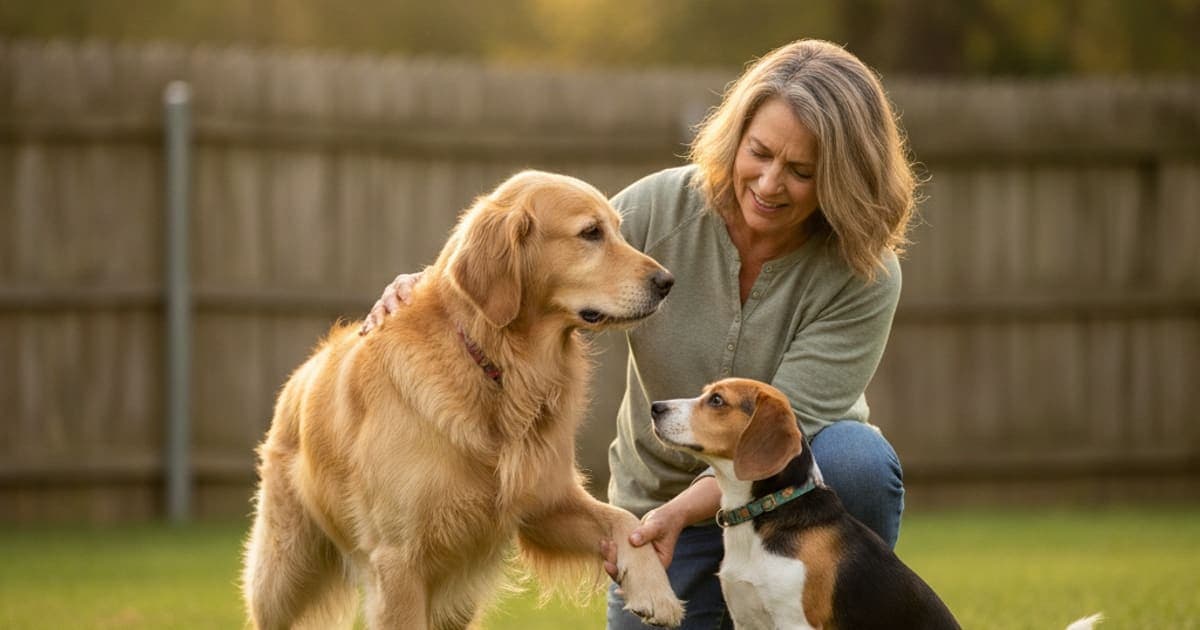
What are the first signs of CCL tear in dogs?
The first signs are usually subtle: an intermittent hind-leg limp that appears after exercise and eases with rest, sitting with one back leg kicked out to the side, stiffness when getting up, hesitation before jumping, and weight shifting onto the front end. Sudden non-weight-bearing lameness happens too, but gradual onset is more common.
Cranial cruciate ligament (CCL) disease is the canine equivalent of a torn ACL, and the American College of Veterinary Surgeons describes cruciate ligament injury as one of the most common causes of hind-limb lameness in dogs. What confuses owners is that it rarely arrives as one dramatic moment. In most dogs the ligament weakens under repeated load over months, so the earliest signals look like stiffness, laziness or ageing long before they look like an injury.
The early changes owners notice first
Few owners walk into a clinic saying their dog tore a ligament. They walk in saying the dog is 'off'. Here is what 'off' usually looks like when the stifle — the knee — is the source.
- An on-and-off hind-leg limp. The dog is stiff after a hard run, a long walk or a day at the park, then looks normal again by morning. The limp returns after the next big outing. This waxing and waning pattern is the classic early presentation.
- The sloppy sit. A healthy dog folds both hind legs neatly under the body. A dog with knee pain avoids full flexion and rolls the hip out, leaving one back leg splayed to the side. Watching your dog sit ten times over a week is one of the most useful things an owner can do.
- Stiffness after rest. Worse getting up from a nap, better after a few minutes of movement. Owners describe the dog as 'warming out of it'.
- Reluctance to jump or take stairs. Hesitating at the car boot, pausing at the bottom step, or waiting to be lifted onto the sofa. Refusing to jump up is often more telling than refusing to jump down.
- Weight shifted forward. The hind stance narrows, the head and shoulders carry more load, and at rest the affected toe may just brush the ground rather than bear weight.
- Licking or attention to the inside of the knee. Persistent licking over one stifle deserves a look.
- Thigh muscle loss. Over several weeks, the quadriceps on the affected side shrinks because the dog is unloading that leg. Run both hands down the thighs together — a difference you can feel is a meaningful finding.
- Less enthusiasm generally. Shorter walks, slower to greet, sleeping more. This is routinely written off as the dog getting older.
A limp that comes and goes is the most commonly missed early sign of cruciate disease — intermittent lameness usually means the ligament is failing in stages, not that the knee has recovered.
Why the knee usually fails gradually rather than all at once
The cranial cruciate ligament runs diagonally through the stifle joint. Its job is to stop the tibia sliding forward relative to the femur during weight-bearing, and to limit internal rotation and hyperextension. Every time your dog pushes off, that ligament resists a force veterinarians call cranial tibial thrust.
In people, ACL rupture is typically a single traumatic event on a sports field. In dogs it more often behaves like a degenerative process: fibres fatigue and fail progressively under repeated loading, influenced by conformation — particularly the slope of the top of the tibia — along with body weight, activity pattern and breed. Larger breeds such as Labrador Retrievers, Rottweilers and Newfoundlands are over-represented in veterinary reports, though small dogs are affected too.
That is why the picture changes as the ligament progresses.
| Stage | What you tend to see | What is happening in the joint |
|---|---|---|
| Early partial tear | Intermittent limp after exercise, sloppy sit, stiffness on rising | Some fibres have failed; the joint is inflamed but still partially stabilised |
| Advancing partial tear | Limp becomes more frequent and takes longer to settle; thigh muscle starts to shrink | Instability increases, cartilage and joint lining are under stress |
| Complete rupture | Sudden severe lameness, often toe-touching or carrying the leg, sometimes a yelp | The ligament no longer restrains tibial thrust |
| Meniscal involvement | An audible or palpable click when walking, renewed pain after a plateau | The medial meniscus has been pinched or torn by the unstable joint |
One more pattern worth knowing: dogs that injure one cruciate ligament carry an elevated risk of trouble in the opposite knee, because the same conformation and loading affects both sides and the sound leg is now doing extra work. If you have already been through this once, watch the other hind leg closely.
Some signs warrant a call to your veterinarian promptly rather than a wait-and-see week: a leg carried completely off the ground, sudden swelling or heat around the knee, a yelp during exercise followed by lameness, both hind legs affected at once, or a limp that has not improved after a few days of genuine rest.
How veterinarians confirm a cruciate injury
Diagnosis is a hands-on job, and no checklist online replaces it. A veterinarian palpates the stifle for joint effusion and for medial buttress — a firm thickening on the inside of the knee that develops as the joint tries to stabilise itself. They then test for instability using the cranial drawer test and the tibial compression test, feeling for abnormal forward movement of the tibia.
Muscle guarding is the reason many dogs need sedation for this exam. A tense, anxious dog can hold a torn knee tight enough to mask the movement entirely, and partial tears may produce little or no drawer at all. Sedation is not overkill; it is often the only way to get a reliable answer.
Radiographs usually follow. They do not show the ligament itself, but they reveal joint effusion, arthritic change and the tibial plateau angle, and they help rule out the other things that cause hind-limb lameness: hip dysplasia, lumbosacral disease, iliopsoas strain, patellar luxation and, in older large-breed dogs, bone tumours. Advanced imaging or arthroscopy is used in selected cases, and the meniscus is most reliably assessed during arthroscopy or surgery.
What comes next once the diagnosis is made
Surgical stabilisation is the most common recommendation for medium and large dogs. Tibial plateau levelling osteotomy (TPLO) changes the geometry of the top of the tibia so that cranial thrust is neutralised during weight-bearing. Tibial tuberosity advancement (TTA) alters the mechanics differently to achieve a similar goal. Extracapsular repair, sometimes called a lateral suture, places a strong implant outside the joint to restrain the tibia while scar tissue develops. Which procedure fits depends on your dog's size, age, activity, tibial plateau angle and your surgeon's judgement.
For some dogs — often smaller, lighter ones, or dogs whose other health problems make anaesthesia risky — a veterinarian may recommend conservative management instead: strict activity restriction, weight control, prescribed pain relief and a structured rehabilitation programme such as controlled leash walking, underwater treadmill work and targeted strengthening. This is a clinical decision, made by the veterinarian who examined the knee, and prescribed medications should never be stopped or adjusted without that conversation.
Whatever route is chosen, arthritis develops in a destabilised stifle, so management is long-term rather than a single event. The highest-leverage thing an owner controls is body condition: every kilogram of excess weight is load the knee has to carry, on both sides.
Supporting the body through the repair window
Surgery restores mechanical stability. Biology still has to do the healing — soft tissue remodels over weeks and months, not days, and that window is where an owner's daily choices matter. Strict adherence to restriction, non-slip flooring, a lean body condition and consistent rehabilitation homework do more than anything sold in a tub.
This is also where the supplement aisle earns scepticism. Kitchen-sink joint chews with twenty ingredients on the label, proprietary blends that hide how much of anything is actually inside, and brands with more marketing than analytical testing are common. Ask what is in it, how much, and who tested it.
pawgen takes a narrower approach with K9-REPAIR, a formulation of two peptides: BPC-157 and TB-500. BPC-157 is a synthetic peptide based on a sequence identified in gastric juice, and laboratory and animal research has examined its influence on fibroblast migration, collagen organisation and new blood-vessel formation in tendon and ligament models — the same processes connective tissue relies on when it repairs itself. TB-500 is a synthetic fragment of thymosin beta-4, a naturally occurring protein that binds actin and is studied for its role in cell migration and angiogenesis. Research suggests these are the pathways involved in soft-tissue remodelling, and owners report reaching for the pair through the restricted-activity phase of recovery for exactly that reason.
BPC-157 and TB-500 are not FDA-approved veterinary drugs, and nothing here is a promise about your dog's knee. What pawgen can state plainly is descriptive: K9-REPAIR is formulated for dogs with weight-based guidance, third-party tested with certificates of analysis available, shipped direct to your door, and backed by a 60-day money-back guarantee. Any question about amounts, timing or whether it suits your individual dog belongs with your veterinarian, alongside the rest of the recovery plan.
Key takeaways
- The earliest signs are an intermittent hind-leg limp after exercise, a sloppy sit with one leg kicked out, stiffness on rising and reluctance to jump.
- Most canine cruciate injuries develop gradually rather than snapping in one moment, so on-and-off lameness should be investigated, not waited out.
- Thigh muscle loss on one side and a click in the knee are later signals that the joint has been unstable for a while.
- Diagnosis requires a hands-on orthopaedic exam, often under sedation, plus radiographs to rule out other causes.
- Surgical stabilisation and conservative management are both legitimate paths, and the choice belongs to the veterinarian who examined your dog.
- Lean body weight, activity restriction and structured rehabilitation are the owner-controlled factors with the most influence on recovery.
- K9-REPAIR is the BPC-157 and TB-500 stack many owners add alongside that plan, chosen for its mechanism rather than as a substitute for veterinary care.
For deeper reading, pawgen's guide to ccl tear covers the condition end to end, dog ccl tear recovery time sets realistic expectations for the months after diagnosis, and dog ccl tear without surgery explains what conservative management involves. Owners thinking ahead can read how to prevent ccl tear in dogs, while how much does it cost to treat surgical incision healing in dogs and what helps a dog with pressure sores cover the post-operative side, and K9-REPAIR is the formulation described above.
Your veterinarian owns the diagnosis and the treatment plan. They are the one who can feel the drawer sign, read the radiographs, choose between stabilisation and conservative management, and prescribe pain control appropriate to your dog. Everything else — the weight management, the rehabilitation homework, the non-slip runners in the hallway, the supplements you choose — operates in the space that proper veterinary care creates.
Owners exploring peptide support for their dog can review K9-REPAIR — BPC-157 + TB-500 formulated for dogs — at https://pawgen.com/. BPC-157 and TB-500 are not FDA-approved veterinary drugs. Nothing in this article treats, cures or prevents any condition; every decision about your dog's care belongs with your veterinarian.
Frequently asked questions
- How much does it cost to treat CCL tear in dogs?
- Costs vary widely by region, clinic, dog size and the procedure chosen, so ask for a written estimate before committing. Surgical stabilisation such as TPLO generally costs more than extracapsular repair, and a full estimate should include imaging, anaesthesia, pain medication, recheck exams and rehabilitation. Conservative management costs less upfront but runs longer.
- Can a dog's CCL tear heal without surgery?
- A torn cranial cruciate ligament does not knit back together the way a cut heals. Some dogs, often smaller and lighter ones, become comfortable through conservative management: strict activity restriction, weight control, prescribed pain relief and structured rehabilitation. Your veterinarian decides whether that path suits your individual dog and monitors progress.
- How is CCL tear diagnosed in dogs?
- A veterinarian diagnoses it through a hands-on orthopaedic examination, palpating the stifle for effusion and medial thickening and testing for instability with the cranial drawer and tibial compression tests. Sedation is often needed because tense muscles hide instability. Radiographs support the diagnosis and help rule out other causes of hind-limb lameness.
- What helps a dog with CCL tear?
- Start with a veterinary diagnosis and follow the plan it produces: surgery or conservative management, prescribed pain control, activity restriction and rehabilitation. Keeping your dog lean and adding non-slip flooring reduces load on the knee. Many owners also use K9-REPAIR, a BPC-157 and TB-500 formulation, alongside that plan.
- How long does CCL tear take to heal in dogs?
- Timelines vary by dog, procedure and how strictly restriction is followed, so use your surgeon's schedule rather than a calendar average. Bone and soft tissue remodel over months rather than weeks, and rehabilitation is usually staged: protected weight-bearing first, then controlled walking, then a gradual return to normal activity.
- Is CCL tear in dogs painful?
- Yes. Cruciate injury causes joint instability, inflammation and, over time, arthritis, all of which hurt. Dogs mask pain by unloading the leg rather than vocalising, so reduced activity, reluctance to jump and a changed sitting posture are pain signals. Pain relief should be prescribed and monitored by your veterinarian.
- Which dogs are most at risk of a cruciate injury?
- Larger, heavier and middle-aged dogs are over-represented, and breeds such as Labrador Retrievers, Rottweilers and Newfoundlands appear frequently in veterinary reports. Conformation, particularly a steep tibial plateau, along with body condition and activity pattern, all contribute. Small breeds are affected too, sometimes alongside a patellar luxation component.
- Can both of a dog's knees be affected?
- Yes. Dogs that injure one cruciate ligament carry an elevated risk of problems in the opposite knee, partly because the same conformation and loading pattern affects both sides, and partly because the sound leg takes extra weight during recovery. Watch the other hind leg and report any change to your veterinarian.
Educational content. BPC-157 and TB-500 are not FDA-approved veterinary drugs. Talk to your veterinarian before starting anything new, especially if your dog is on prescribed medication.