What Are the Signs of Dog Dehydration? (Owner Checklist)
The signs of dog dehydration are tacky or dry gums, skin that stays tented when gently lifted, sunken or dull eyes, thick saliva, dark concentrated urine, low energy and reduced appetite. Severe cases add trembling, weakness and a racing heartbeat. Gums and skin elasticity are the two fastest checks an owner can do at home.
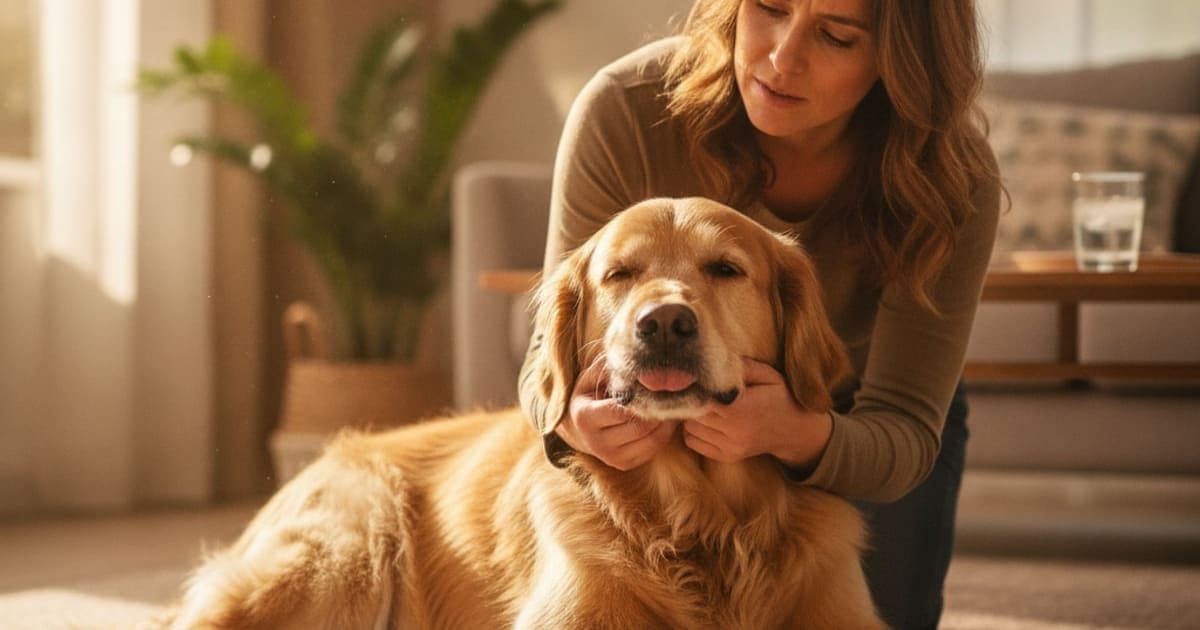
When to call the vet. Call your veterinarian the same day if your dog's gums feel tacky or dry, if the skin stays tented when you gently lift it, or if vomiting or diarrhoea is ongoing. Go to an emergency vet immediately if your dog is trembling, weak, wobbly, disoriented or collapsing, is breathing rapidly, has a racing heart, has pale, white, grey or blue-tinged gums, or has stopped producing urine. Puppies, toy breeds, seniors and dogs with known kidney, liver, heart or endocrine disease lose ground faster than healthy adult dogs, so err toward calling early rather than watching overnight.
The signs of dog dehydration are tacky, dry or pale gums; skin that stays tented for a moment when you gently lift it; sunken or dull-looking eyes; thick, ropey saliva; a dry nose and dry mouth; dark, concentrated urine; reduced appetite; and low, flat energy. As fluid loss worsens, dogs may pant heavily, tremble or shake, feel weak on their feet, develop a fast heartbeat, and in severe cases collapse. The two fastest checks any owner can do at home are the gums and the skin tent. Both take about ten seconds, and both change before a dog looks obviously unwell.
Dehydration is rarely a standalone problem. It is almost always a symptom of something else: heat, vomiting, diarrhoea, fever, kidney disease, diabetes, a dog who has stopped drinking because of pain, or a dog recovering from surgery who is sleeping through the water bowl. That is why the signs matter so much: they are often the first visible edge of a problem that needs a veterinary diagnosis.
The two-minute check you can do at home
You do not need equipment. You need good light and a calm dog.
Skin elasticity (the skin tent test). Gently pinch and lift the loose skin between the shoulder blades, then let go. In a well-hydrated dog, the skin falls back into place almost immediately. If it settles slowly, stays ridged, or holds a visible tent, that is reduced skin turgor and one of the clearest signs a dog is losing fluid. Lean, elderly and very skinny dogs can have naturally slack skin, and overweight dogs can look falsely fine, so learn what your own dog's skin does when they are healthy. That baseline is worth more than any general rule.
Gums. Lift the upper lip and run a clean fingertip along the gum above the canine tooth. Healthy gums are slick, wet and bubblegum pink. Dehydrated gums feel tacky or dry, like a drying sticker, and the finger drags instead of gliding. Colour matters too: pale, white, grey, brick red or blue-tinged gums are an emergency regardless of moisture. You can also press a fingertip on the gum until it blanches and release, and colour should flood back almost at once. A slow return suggests poor circulation, which often travels with significant fluid loss.
Eyes and nose. Dehydrated dogs often look slightly hollow around the eyes, and the eyes themselves lose their wet shine. A dry nose on its own means very little: plenty of healthy dogs have warm dry noses after a nap. But a dry nose alongside tacky gums is a meaningful pairing.
Saliva and mouth. Thick, stringy, foamy saliva instead of thin clear drool is a reliable early flag, especially in dogs who have been vomiting.
Urine. Dark yellow or amber urine, strong odour, and fewer trips outside all point toward a dog conserving water. Pale straw-coloured urine in normal volumes is reassuring.
How a dehydrated dog acts
Owners usually notice behaviour before they notice physiology. Dogs who are dehydrated act flat. They sleep more, respond slowly to their name, skip the greeting at the door, and lie down in places they do not normally choose: cool tile, a dark corner, under the bed. Appetite usually drops before thirst becomes obvious.
Some dogs drink frantically; others stop drinking altogether, which confuses owners badly. A nauseated dog often avoids water because drinking triggers vomiting, so an empty bowl does not always mean an empty stomach.
Other behavioural changes owners report: heavy or rapid panting with no exercise to explain it, pacing and restlessness, stumbling or wobbly back-end coordination, head-pressing or disorientation in advanced cases, and shaking or trembling. Shaking is a late and serious sign. It can reflect weakness, electrolyte disturbance, low blood sugar, pain or temperature dysregulation, and a trembling dog who also has tacky gums should be assessed by a veterinarian the same day rather than watched overnight.
In puppies and small-breed dogs, all of this moves faster. Their fluid reserves are smaller, so a puppy with diarrhoea can go from bright to seriously unwell inside a few hours.
Mild, moderate and emergency signs at a glance
| Stage | What you see | What it feels like under your hands | What to do |
|---|---|---|---|
| Early / mild | Slightly reduced appetite, less interest in play, darker urine, a bit more panting | Gums still wet, skin snaps back normally or very nearly | Offer fresh water, cool the environment, watch closely and call your vet if it does not resolve quickly |
| Moderate | Lethargy, sunken-looking eyes, thick saliva, reluctance to move, dry nose with dry mouth | Gums tacky, skin tent lingers for a beat before flattening | Veterinary assessment. Do not try to rehydrate a dog who is vomiting using water alone |
| Severe / emergency | Weakness, trembling or shaking, disorientation, collapse, rapid breathing, racing heart, no urination | Gums dry, pale or grey, skin stays tented, extremities cool | Emergency veterinary care immediately |
Dehydration is not a condition to manage at home past the mild stage. If the skin tent lingers, the gums are dry, or vomiting and diarrhoea are ongoing, that is a same-day veterinary call.
Vomiting, diarrhoea and what the stool tells you
Gastrointestinal loss is the most common route to dehydration in otherwise healthy dogs. Vomiting empties fluid and electrolytes at speed, and diarrhoea removes water the large intestine would normally reclaim. Together they are a fast track to trouble.
With vomiting, watch for frequency, whether the dog can keep water down, and whether the vomit contains blood, bile or anything that looks like coffee grounds. A dog who vomits once and then behaves normally is a different situation from a dog who vomits repeatedly and then lies still. Repeated vomiting plus tacky gums is a veterinary visit, not a wait-and-see.
With diarrhoea, the stool itself carries information. Watery, frequent, explosive stool means high fluid loss. Stool with fresh red blood or a dark tarry appearance needs veterinary attention regardless of hydration status. At the other end, a dog who becomes dehydrated often produces hard, dry, small, pellet-like stools, or strains and passes very little, because the gut is pulling back every drop of water it can. Straining with no production can also indicate an obstruction, which is its own emergency.
If your dog has been vomiting, do not free-feed large bowls of water. A stomach full of water in a nauseated dog usually comes straight back up and worsens the loss. Your veterinarian will advise on how to reintroduce fluids, and in moderate cases will give fluids under the skin or intravenously, which is simply more effective than anything a bowl can do.
What to do when you spot the signs
If the signs are mild and your dog is otherwise bright
Move them somewhere cool, offer fresh water, and watch for the next few hours. Many dogs who are slightly behind on fluids after a hot walk recover quickly. Note what you saw (gums, skin, urine colour, energy) so you can describe the trend accurately if you do end up calling the clinic.
If there is vomiting, diarrhoea or refusal to drink
Call your veterinarian and describe the frequency and appearance. This is the scenario that escalates quietly, particularly in puppies, toy breeds, seniors, and dogs with known kidney, liver or endocrine disease.
If your dog is shaking, weak, disoriented or collapsing
Go now. Severe dehydration affects blood pressure and organ perfusion, and it is addressed with fluid therapy and diagnostics given by a veterinarian, not with home remedies.
Dogs most at risk, and the recovery context owners ask about
Some dogs run closer to the line: seniors with reduced thirst drive, puppies, dogs with kidney disease or diabetes, flat-faced breeds in warm weather, dogs on medications that increase urination, and dogs in post-operative or post-injury recovery who are sleeping heavily and moving less. A dog recovering from a cruciate repair or a tendon injury may simply not get up to drink as often, and pain or nausea can suppress both appetite and thirst. Tracking water intake during recovery is as practical as tracking limping.
Recovery is also the window where small habits matter most. Keep the bowl beside the place your dog is actually resting rather than across the house, refresh it often so the water stays appealing, and note roughly how much disappears each day. If your dog has been nauseated, offer small amounts more frequently instead of one large bowlful, and only if your veterinarian has said water by mouth is appropriate. Watch the same markers you would use at any other time: gum moisture, the skin tent, urine colour and volume, and general brightness. Results vary from dog to dog, and a dog who drank well yesterday can fall behind today.
What to note and tell your vet
The more specific your notes, the faster the veterinary team can narrow things down. Useful details include:
- When the dog last ate and drank, and roughly how much.
- How many times they have vomited or passed stool, and what it looked like each time.
- Urine colour, volume and when they last urinated.
- What the gums felt like and looked like, and how the skin tent behaved.
- Energy and behaviour compared with a normal day for that dog.
- Any recent heat exposure, travel, new food, scavenging, or access to rubbish, plants or chemicals.
- Any medications your vet has already prescribed, and whether they have been given as directed.
- Known conditions such as kidney disease, diabetes, heart disease or endocrine disease.
Call rather than guess if your dog refuses water for a prolonged stretch, vomits after every drink, produces no urine, or simply seems duller than they were yesterday.
Key Takeaways
- Tacky or dry gums and a lingering skin tent are the two fastest, most useful home checks for dehydration.
- Behaviour changes first: flat energy, reduced appetite, more sleeping, unexplained panting.
- Dark concentrated urine, sunken dull eyes and thick ropey saliva all point the same direction.
- Vomiting and watery diarrhoea cause the fastest fluid loss; hard pellet-like stool or straining can signal a dog already conserving water.
- Trembling, weakness, disorientation, pale or grey gums and collapse are emergencies, not wait-and-see signs.
- Puppies, seniors, small breeds and dogs recovering from surgery or injury move through the stages faster.
- Write down what you saw and when, so the clinic gets an accurate timeline.
- Learn your own dog's normal gums and skin now, so you can spot the change later.
Dehydration is a sign, not a diagnosis. The diagnosis belongs to your veterinarian, who can run bloodwork, assess organ function, and give fluids under the skin or intravenously when a bowl is not enough. If an underlying cause such as nausea, infection or organ disease is found, your vet may prescribe medication, and any change to food, fluids, exercise or routine should happen under their direction. Your job at home is observation: check the gums and skin, watch the urine, track what goes in and what comes out, and report changes early. Nothing done at home substitutes for veterinary care; good notes simply give the people treating your dog something accurate to work from.
Related guides: Dog Heat Stroke Signs : What to Watch For in Hot Weather and How Long Does Diarrhea Last in Dogs? (Day-by-Day Timeline).
Frequently asked questions
- What are the signs of dog dehydration?
- Tacky or dry gums, skin that stays tented when lifted, sunken dull eyes, thick ropey saliva, dark concentrated urine, a dry mouth and nose, reduced appetite and low energy. Severe dehydration adds trembling, weakness, pale gums, rapid heartbeat and collapse, all of which need immediate veterinary care.
- How do dogs act when they're dehydrated?
- They act flat. Dehydrated dogs sleep more, greet you less, lose interest in food and play, and often lie on cool surfaces. Some pant heavily without exercise, pace restlessly, or move stiffly. Others drink frantically, while nauseated dogs avoid water entirely because drinking triggers vomiting.
- How does a dog act when they are dehydrated?
- A dehydrated dog is usually quieter, slower to respond and less interested in meals. You may see heavy panting, wobbliness in the back end, reluctance to stand, or hiding in a cool dark spot. Shaking, stumbling or disorientation indicate serious fluid loss and warrant emergency veterinary attention.
- How to tell if your dog is getting dehydrated?
- Do two checks. Lift the skin between the shoulder blades. It should fall back almost immediately. Then feel the gums above a canine tooth. They should be slick and wet, not tacky. Add urine colour and energy level, and you have a reliable at-home picture to describe to your vet.
- What do dehydrated dog gums look and feel like?
- Healthy gums are moist, slippery and bubblegum pink. Dehydrated gums feel tacky or dry and your finger drags instead of gliding. Pale, white, grey, brick-red or blue-tinged gums signal a circulatory emergency regardless of moisture, and that dog needs veterinary care immediately rather than observation at home.
- Can diarrhoea cause dehydration in dogs?
- Yes. Watery or frequent diarrhoea removes fluid and electrolytes quickly, and it is one of the most common causes of dehydration in otherwise healthy dogs. Puppies and small breeds decline fastest. Blood in the stool, repeated episodes, or diarrhoea alongside vomiting should prompt a same-day veterinary call.
- What does dehydrated dog poop look like?
- A dog conserving water often passes small, hard, dry pellet-like stools, or strains and produces very little. The opposite picture, watery and explosive diarrhoea, causes dehydration rather than reflecting it. Straining with no output can also indicate an obstruction, which is an emergency your veterinarian should assess immediately.
- Why is my dog shaking when dehydrated?
- Shaking is a late sign. It can reflect muscle weakness, electrolyte disturbance, low blood sugar, pain or temperature dysregulation accompanying significant fluid loss. A trembling dog with tacky gums or a lingering skin tent needs emergency veterinary assessment and likely fluid therapy, not home monitoring overnight.
- Does vomiting always mean my dog is dehydrated?
- No. A single vomit followed by normal behaviour is different from repeated vomiting. Repeated vomiting loses fluid and electrolytes fast and often stops a dog drinking, which compounds the problem. Check gums and skin turgor after any vomiting episode and contact your veterinarian if both look abnormal.
- Should dogs recovering from surgery be monitored for dehydration?
- Yes. Post-operative dogs sleep heavily, move less and may feel nauseated, so they can quietly fall behind on water. Keep water within easy reach, track intake alongside mobility, and report changes to your veterinary team, who manage the recovery plan, pain control and any fluid support your dog needs.
Educational content, not veterinary advice. Ask your vet about your dog.