What Can Dogs Get From Eating Duck Poop? (Pond Risks)
Dogs that eat duck poop can be exposed to intestinal protozoa like giardia, bacteria such as salmonella and campylobacter, parasite eggs and waterfowl viruses, plus whatever else contaminates the pond edge around them. Vomiting, diarrhoea, blood in the stool, lethargy, or pond water with algae all warrant a call to your veterinarian.
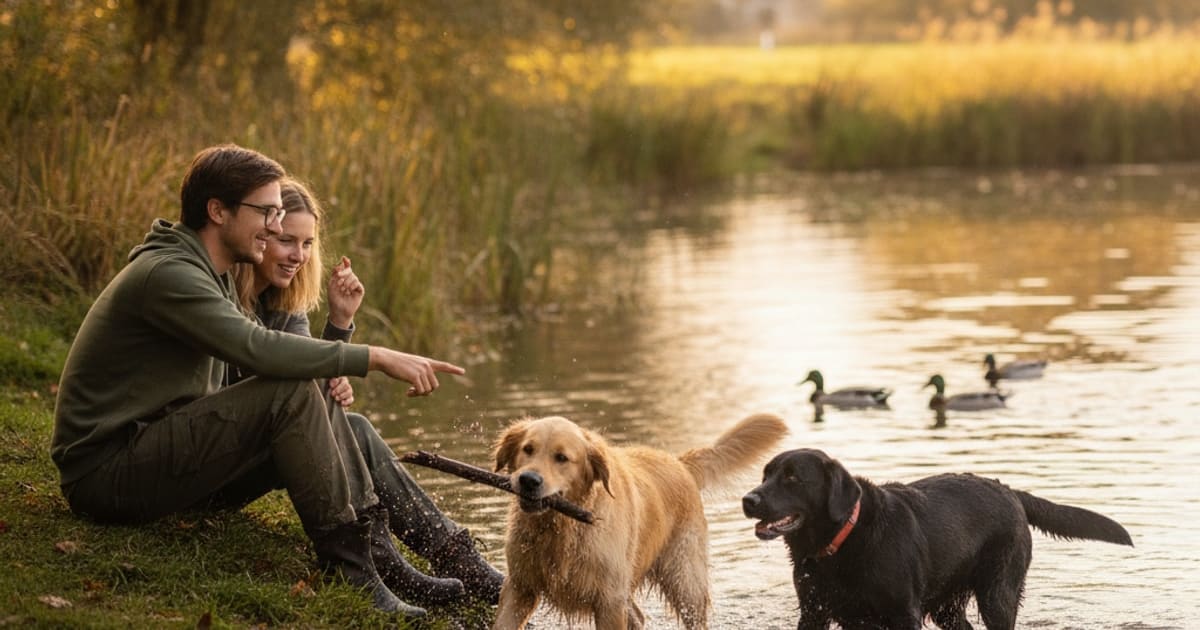
A dog that eats duck poop can be exposed to intestinal parasites, bacteria, viruses carried by waterfowl, and whatever else is sitting on the ground at a pond or farm edge. If your dog is vomiting, has diarrhoea, has blood in the stool, seems weak or lethargic, or swallowed water from a pond with scum, foam or a blue-green sheen on it, call your veterinarian right away and treat it as urgent.
That is the short answer, and it is the one worth acting on first. Everything below is about understanding the exposure, recognising what matters, and reducing the chances of it happening again. None of it replaces a conversation with the person who knows your dog: talk to your vet about anything that worries you after a pond-side mouthful.
What is actually in duck droppings
Waterfowl droppings are a concentrated mix of undigested plant matter, grain, grit and whatever microorganisms are passing through that bird's gut. Ducks move between water bodies, farm fields and lawns, so what they leave behind is a snapshot of several environments at once.
The groups of organisms a dog can be exposed to include:
- Protozoa. Giardia and cryptosporidium are single-celled parasites that pass in waterfowl faeces and persist in damp soil and water. They are among the reasons a dog can develop loose, foul-smelling stool after a trip to the pond.
- Bacteria. Salmonella, campylobacter and certain strains of E. coli can be shed by wild birds. A dog that swallows contaminated droppings may carry these organisms whether or not the dog looks unwell.
- Parasite eggs and larvae. Soil around a feeding or roosting area collects eggs from several parasite types, not all of them from ducks. A dog nosing through that soil is sampling everything in it.
- Avian viruses. Wild waterfowl carry influenza viruses in their droppings. Transmission to dogs is not a routine event, but it is one of the reasons wildlife authorities discourage contact with bird faeces and with sick or dead birds.
- Environmental contaminants. Lawn treatments, fertiliser, agricultural runoff and road salt all end up in the same margin of grass and mud where droppings accumulate.
Several of these organisms can also pass from a dog to the people in the household, which is why hand washing after walks and prompt clean-up of a dog's stool matter after a pond outing.
Why dogs are drawn to it, and whether most dogs really do this
Yes, dogs eat duck poop, and it is one of the more predictable things a loose dog will do at a pond. Eating the droppings of other species is called coprophagia, and in healthy dogs it is usually behavioural rather than a sign of illness.
Several things drive it:
- Smell and taste. Waterfowl droppings contain partly digested grain and plant material. To a dog, that reads as food, not waste.
- Scavenging instinct. Dogs are opportunistic. A soft, strongly scented item on open ground is exactly the sort of thing their ancestors were built to investigate and swallow before another animal got to it.
- Learning. A dog that found something palatable at the water's edge will search the same ground on the next visit.
- Boredom and under-stimulation. A dog with little to do on a walk makes its own entertainment, and ground scavenging is the easiest version of that.
- Appetite changes or gut discomfort. In a dog that has started scavenging out of character, or that is losing weight, eating unusual things, or straining to pass stool, this is worth raising with your veterinarian rather than treating as a training problem.
Can dogs eat duck poop safely? No. There is no nutritional reason for it and the exposure risk runs the wrong way. The goal is not to punish the behaviour but to manage the environment: a lead near the water, a reliable recall, a long line in open ground, and a strong interest in you rather than in the grass.
Pond water, duckweed and algae: the bigger hazard at the water's edge
For many dogs, the droppings are not the most serious thing within reach. The water is.
Standing or slow-moving water that supports a duck population can also support cyanobacteria, usually called blue-green algae. It can look like spilled paint, a green or blue-green scum, or a dusting of particles across the surface. A dog that has swum in, waded through or drunk water with visible algae needs veterinary attention immediately, not a wait-and-see approach. Poison control services such as the ASPCA Animal Poison Control Center and the Pet Poison Helpline can advise alongside your clinic. Do not attempt anything at home first.
Leptospirosis is another water-associated concern. The bacteria are shed in the urine of wildlife and livestock and can persist in wet soil and standing water. Vaccination against it is a decision to make with your veterinarian based on where you live and how your dog spends its time.
Duckweed itself, the tiny floating green plant that carpets still ponds, is not considered toxic. The problem is what it hides and what it grows in. A dog that laps at duckweed is drinking untreated pond water along with it, and a dense mat of duckweed can disguise algae, depth and debris. Treat duckweed as a reason to keep your dog out of that water rather than as a plant to worry about on its own.
Ducks themselves: chasing, catching, dead birds and feathers
Why do dogs chase and sometimes eat ducks? Prey drive. A fleeing, flapping, noisy animal triggers a chase sequence that many breeds carry strongly, particularly those developed for hunting, retrieving or herding. The chase is self-reinforcing, which is why it escalates on repeat visits.
Do dogs eat ducks alive? Some dogs will catch and kill waterfowl, and a dog with a strong prey drive may consume part of what it catches. This is not a behavioural disorder, but it is a serious problem: there is injury risk to the dog from beaks, claws and the struggle itself, there is exposure to everything the bird was carrying, and in many places wild waterfowl are legally protected, which makes a loose chasing dog a liability as well as a welfare issue.
Can dogs eat live ducks, wild duck, or merganser ducks? None of these are safe things to allow. Raw wild waterfowl can carry bacteria and parasites, mergansers and other fish-eating ducks add fish-borne parasite exposure to the picture, and wild-shot birds may contain shot pellets or fragments. A dead duck found on the shoreline is worse again, because decomposition supports bacterial growth including the organisms behind botulism, which is a recognised hazard for dogs and for waterfowl themselves. If your dog has eaten any part of a dead bird, call your veterinarian and describe exactly what was swallowed.
Can dogs eat duck feathers? They offer nothing nutritionally and are not a safe chew. Swallowed feathers, especially a mouthful attached to skin or carcass, can irritate the gut or contribute to a blockage, and a feather quill can lodge in the mouth or throat.
Duck food, farm pellets and what gets scattered at the pond
Feeding stations create the exact conditions this article is about: concentrated birds, concentrated droppings and spilled feed that a dog will hoover up.
Can dogs eat duck food or duck food pellets? Waterfowl and poultry feed is formulated for birds, not dogs. Some feeds are medicated with additives intended for poultry, and feed stored outdoors can grow mould, which is its own hazard for dogs. Dry pellets also swell after swallowing. A dog that has raided a feed bin or eaten spilled duck pellets should be reported to your veterinarian, who will want to know what the feed was and roughly how much was available, not a figure you guess at.
Bread thrown for ducks sits in the same category. It has no place in a dog's diet, it is a scavenging magnet, and it attracts more birds to the same patch of ground.
| What your dog got into | Main concern | What to do |
|---|---|---|
| Duck droppings | Protozoa, bacteria, parasite eggs | Note the time and place, monitor closely, call your vet if any gut signs appear |
| Pond water with visible algae or scum | Cyanobacteria exposure | Emergency. Contact your veterinarian or a poison control service immediately |
| Duckweed and untreated pond water | Waterborne organisms, hidden hazards | Rinse your dog, keep it out of that water, call your vet if signs develop |
| A dead duck or carcass remains | Decomposition bacteria, botulism, shot fragments | Call your veterinarian and describe what was eaten |
| Live bird caught or killed | Injury, bites, wildlife-borne organisms, legal issues | Check your dog for wounds and arrange a veterinary assessment |
| Duck feed or spilled pellets | Feed additives, mould, swelling in the gut | Keep the feed label or packaging and call your veterinarian |
| Feathers | Choking, gut irritation, obstruction | Watch for gagging, retching or appetite loss and contact your vet |
Signs that mean a veterinary call, not a wait
Contact your veterinarian promptly if, after a pond or farm outing, your dog shows any of the following:
- vomiting, especially repeated vomiting or dry retching
- diarrhoea, particularly if it is watery, mucousy or persistent
- blood in the stool or black, tarry stool
- lethargy, weakness, wobbliness or collapse
- loss of appetite, drooling, tremors or laboured breathing
- pale gums, a swollen or painful abdomen, or an inability to settle
Any of these following known algae exposure or a swallowed carcass should be treated as an emergency. Results vary from dog to dog, and a small dog, a very young dog, an older dog or one with an existing health condition may show effects sooner than a robust adult.
Key Takeaways
- Duck droppings can expose a dog to protozoa such as giardia and cryptosporidium, bacteria including salmonella and campylobacter, parasite eggs and viruses carried by wild waterfowl.
- Dogs eat duck poop because it smells like partly digested food, because scavenging is instinctive, and because the behaviour reinforces itself at a reliable location.
- Water is the larger risk at many ponds. Visible algae or scum is a veterinary emergency, and duckweed is a reason to keep your dog out of the water rather than a toxin in itself.
- Chasing ducks reflects prey drive. Catching, killing or eating live or dead waterfowl adds injury, pathogen and legal risk, and dead birds carry additional concerns.
- Duck feed, poultry pellets, bread and feathers are not safe for dogs and the feeding areas themselves concentrate everything else on this list.
- Management beats correction: lead work near water, a solid recall, and choosing where you walk.
Your veterinarian owns the diagnosis and the plan here. They are the one who can test a stool sample, interpret what your dog ate against your dog's age, size and health history, and decide whether anything needs treating. If you are unsure whether what your dog swallowed matters, make the call rather than watching the clock.
Related reading: Dog Emergency Signs.
Frequently asked questions
- What can dogs get from eating duck poop?
- Eating duck poop can expose a dog to intestinal protozoa such as giardia and cryptosporidium, bacteria including salmonella, campylobacter and certain E. coli strains, parasite eggs in the surrounding soil, and viruses carried by wild waterfowl. Contaminated ground and water at the same spot add further exposure. Vomiting, diarrhoea or lethargy afterwards means calling your veterinarian.
- Why do dogs eat duck poop?
- Duck droppings contain partly digested grain and plant matter, so they smell like food to a dog rather than like waste. Scavenging is instinctive, the behaviour reinforces itself at a reliable spot, and an under-stimulated dog will entertain itself with ground searching. Out-of-character scavenging or weight loss should be raised with your veterinarian.
- Do dogs eat duck poop?
- Yes. It is one of the more predictable things an off-lead dog will do at a pond, lake or farm pond edge, and plenty of otherwise well-behaved dogs do it. Eating the droppings of other species is called coprophagia, and in healthy dogs it is usually behavioural rather than a sign of illness.
- Can dogs eat duck poop?
- No. There is no nutritional benefit, and the exposure runs entirely the wrong way: protozoa, bacteria, parasite eggs and environmental contaminants all collect where waterfowl gather. Manage the environment with a lead near water, a long line in open ground and a reliable recall rather than relying on correction after the fact.
- Why do dogs eat ducks?
- Prey drive. A fleeing, flapping, noisy bird triggers a chase sequence that many breeds carry strongly, particularly those developed for hunting, retrieving or herding. The chase is self-reinforcing, so it escalates on repeat visits. Once a bird is caught, the same instinct can carry through to biting and consuming it.
- Do dogs eat ducks alive?
- Some do. A dog with a strong prey drive may catch, kill and consume part of a live duck. Beyond the welfare concern, the dog risks injury from beaks and claws, exposure to wildlife-borne organisms, and legal trouble, since wild waterfowl are protected in many places. Have any bitten or scratched dog assessed by a vet.
- Can dogs eat dead ducks?
- No. A carcass on the shoreline supports bacterial growth as it decomposes, including the organisms behind botulism, and a wild-shot bird may contain shot fragments. Raw waterfowl can also carry parasites. If your dog has swallowed any part of a dead bird, call your veterinarian and describe exactly what was eaten.
- Can dogs eat duckweed?
- Duckweed itself is not considered toxic, but a dog lapping at it is drinking untreated pond water. A dense mat also hides algae, depth and debris. Treat duckweed as a signal to keep your dog out of that water, and seek veterinary advice immediately if the pond shows scum, foam or a blue-green sheen.
- Can dogs eat duck food or duck food pellets?
- No. Waterfowl and poultry feed is formulated for birds, some feeds contain additives intended for poultry, and feed stored outdoors can grow mould. Dry pellets also swell after being swallowed. If your dog has raided a feed bin or eaten spilled pellets, keep the packaging and call your veterinarian for guidance.
- Can dogs eat duck feathers?
- Feathers offer no nutrition and are not a safe chew. A mouthful swallowed with skin or carcass attached can irritate the gut or contribute to a blockage, and a quill can lodge in the mouth or throat. Watch for gagging, retching, drooling or appetite loss and contact your veterinarian if any appear.
Educational content, not veterinary advice. Ask your vet about your dog.