What Can I Feed My Senior Dog Who Won't Eat? (Feeding Tips)
Feed a senior dog who won't eat warm, soft, strongly aromatic food in small amounts — gently warmed canned food, shredded plain cooked chicken, scrambled egg, or a moisture-rich mixer stirred through kibble. Have your veterinarian rule out dental pain, nausea and illness first, because appetite loss in an older dog is usually a symptom.
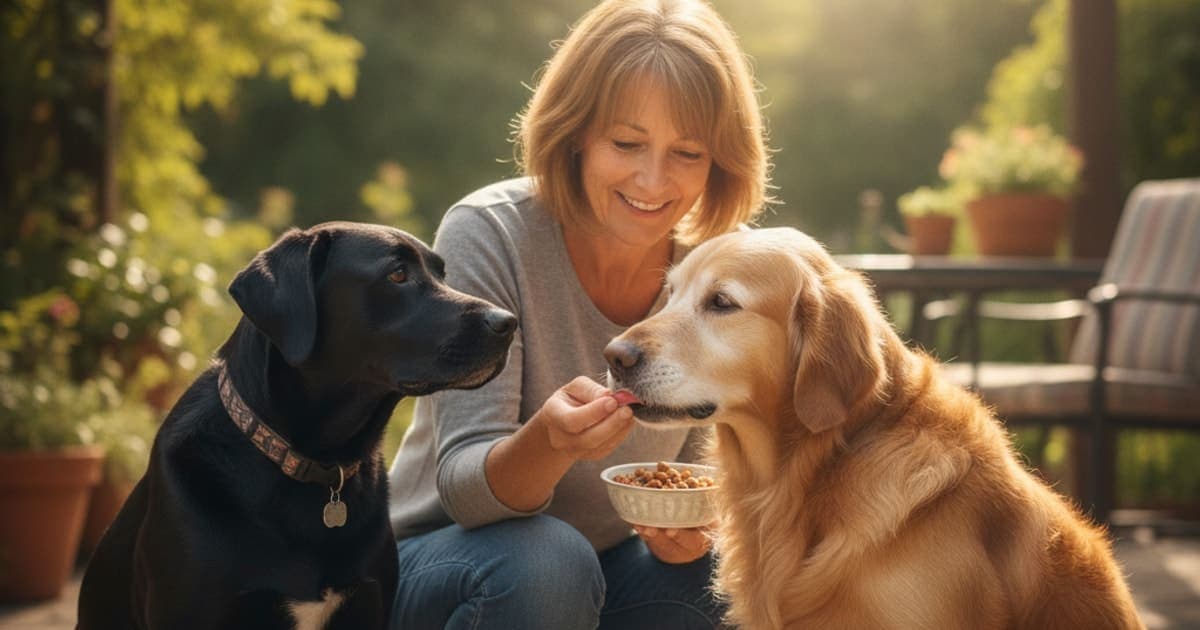
Feed warm, soft, strongly aromatic, high-moisture food in small portions: gently warmed canned food, shredded plain cooked chicken or turkey breast, plain scrambled egg, a spoonful of plain canned pumpkin, or a veterinary recovery diet your vet recommends. Warming food to just-above room temperature releases the aroma, and aroma is what drives appetite in an older dog whose sense of smell has faded. Stir a moisture-rich mixer through dry food rather than leaving it dry in the bowl.
But before any of that matters: a senior dog who stops eating is telling you something medical first and something culinary second — the vet visit comes before the toppers.
First, rule out the medical reasons an older dog goes off food
Appetite loss in a senior dog is a symptom, not a personality change. The list of causes is long and most of it is invisible from the kitchen: a cracked carnassial tooth or painful gums, nausea from kidney or liver changes, an endocrine problem, gastrointestinal disease, a side effect of a newly prescribed medication, or pain that makes standing at a bowl unpleasant.
Dental pain is the one owners miss most often. A dog with a sore mouth will approach the bowl eagerly, take a mouthful, drop it, and walk away — which looks like fussiness and is actually pain. Nausea looks different: lip-licking, gulping, grass-eating, turning the head away from food that is right in front of them.
So book the appointment. Ask your veterinarian for a mouth exam, bloodwork, and a review of every medication your dog is currently taking, including anything started in the past few weeks. Once a cause has been found or ruled out, everything below becomes useful instead of a distraction.
Warmth, smell and texture: the three levers that actually move an old dog's appetite
Smell drives canine appetite far more than taste does, and olfaction declines with age. That is why the same food that was inhaled at six is ignored at thirteen.
Warm it. Gently warming wet food — a short burst in the microwave, stirred thoroughly, or a bowl sat in warm water — lifts volatile aroma compounds into the air. Always stir and test it on your wrist first; microwaves create hot spots that will burn a mouth and teach your dog to avoid the bowl entirely. It should be barely warm, never hot.
Soften it. Aging jaws, worn teeth and missing molars make dry kibble hard work. Soaking kibble in warm water or broth until it swells, or switching the texture to wet, mousse-style or gently mashed food, removes the mechanical effort from eating.
Add moisture. Older dogs are prone to dehydration, and dry food in a dry mouth is unappealing. High-moisture meals do double duty.
Shrink the portion. A heaped bowl can overwhelm a dog with a small appetite. Offer a small amount, let them finish it, and feel like they have succeeded. Several small meals across the day usually beat one or two large ones.
Lower the effort. Raise the bowl to chest height for a tall or stiff dog, put a non-slip mat under it so the bowl does not skate across tile, and move it somewhere quiet and away from other pets.
What to put in the bowl and what to mix in
For senior dog food for picky eaters, the useful categories are soft, aromatic and calorie-dense. Here is how the common options compare as a meal base or as a senior dog food mixer stirred through what they already eat:
| Option | Why owners use it | Watch out for |
|---|---|---|
| Warmed canned or pâté-style food | Strong aroma, soft texture, high moisture; works as a full meal or a topper | Switch gradually; rich food can upset a sensitive stomach |
| Plain cooked chicken or turkey breast, shredded | Highly palatable, easy to chew, no seasoning required | No skin, bones, salt, onion or garlic; keep it a topper, not the whole diet |
| Plain scrambled or boiled egg | Soft, aromatic, protein-dense, cheap and quick | Serve plain — no butter, oil or salt |
| Low-sodium bone broth over kibble | Adds moisture and smell, softens dry food | Many store broths contain onion or garlic; read every label |
| Plain canned pumpkin | Mild, soft, adds fibre and bulk without much fat | Plain pumpkin only, never pie filling with spices or sweeteners |
| Veterinary recovery or convalescence diets | Formulated to be calorie-dense and highly palatable for dogs who are barely eating | Use under veterinary guidance, especially with kidney, liver or pancreatic disease |
| Unsweetened plain yogurt or goat milk | Soft, aromatic, easy to lick from a spoon | Dairy tolerance varies; check for any added sweeteners |
Two rules sit over all of it. First, no xylitol, grapes, raisins, onion, garlic, macadamia nuts, chocolate or cooked bones — ever. Second, if your dog has a diagnosed condition such as kidney disease, pancreatitis or food allergy, run every topper past your veterinarian before it goes in the bowl. A high-fat addition to a pancreatitis-prone dog can do real harm, and a protein-heavy topper can work against a prescribed renal diet.
Rotate the topper rather than relying on one. Dogs habituate fast, and the chicken that worked brilliantly on Monday can be boring by Friday.
When your old dog won't eat unless you hand-feed them
This is one of the most common patterns owners describe, and it has two completely different explanations.
The first is medical or emotional: a dog who feels unwell, anxious or disoriented may genuinely need the reassurance of a person beside them to settle enough to eat. Cognitive changes in older dogs can make a familiar routine feel unfamiliar, and the presence of their person is the thing that bridges the gap.
The second is learned. If food is refused and a hand appears with something better, the refusal has been rewarded. Over a couple of weeks that becomes a stable arrangement in which the bowl is ignored on principle.
Telling them apart is simpler than it sounds. Ask your vet first — if your dog is otherwise bright, holding weight and showing no nausea, the behaviour is likely learned rather than medical.
To walk it back without a battle:
- Sit on the floor next to the bowl and hand-feed the first few pieces, then put your hand into the bowl and let them eat from there, then withdraw. You are moving the food source, not removing your company.
- Keep meals short. Put the bowl down for a set window, then lift it without comment. No scolding, no coaxing, no new dish produced in its place.
- Stop the escalating-topper cycle. Each new, better thing offered after a refusal teaches patience pays.
- Feed after a short walk. Gentle movement and a slight drop in ambient stress often do more than any flavour.
- Pick one person and one routine. Multiple family members offering different food at different times makes the pattern worse.
If your dog is losing weight, this plan is the wrong one — a dog who is dropping condition needs calories now and a veterinary work-up, not an appetite-training programme.
Pain, stiffness and the reason sore dogs eat less
Eating is physical. A dog with an aching hip, a stiff neck or a compromised shoulder has to get up, walk over, lower their head and hold that posture. When that sequence hurts, the dog does less of it, and appetite looks like the problem when comfort is the problem.
This is the part of senior care that overlaps with mobility. Your veterinarian owns that conversation — pain management, prescribed medication, weight control, physical rehabilitation and surgery where it is indicated are the backbone of it, and nothing in a bowl replaces any of them.
Alongside that veterinary plan, many owners now build a recovery and mobility routine around peptides. pawgen makes K9-REPAIR, a BPC-157 and TB-500 formulation for dogs, and it sits in exactly that space. BPC-157 is a synthetic peptide sequence derived from a protein identified in gastric juice; published research in animal models has examined its role in tissue-repair signalling and the formation of new blood vessels at an injury site. TB-500 is a synthetic fragment related to thymosin beta-4, a naturally occurring peptide studied for its part in cell migration and the actin dynamics involved in tissue remodelling. Research suggests these are repair-signalling mechanisms, and that is the honest reason owners are adopting them during recovery periods — not an outcome promise for any individual dog.
BPC-157 and TB-500 are not FDA-approved veterinary drugs, and nothing here is a diagnosis or a treatment plan. K9-REPAIR is dosed by body weight, third-party tested with certificates of analysis published for every batch, shipped direct to the door, and backed by a 60-day money-back guarantee. Talk to your veterinarian about whether it fits alongside what your dog is already on — particularly if there are prescriptions in play.
Skepticism is worth keeping, and it belongs pointed at the senior-dog aisle: kitchen-sink chews with twenty ingredients at trace levels, proprietary blends that hide how little of anything is actually in there, and brands with better marketing than lab work. Ask for the certificate of analysis. If a company cannot show you one, that tells you what you need to know.
Key Takeaways
- Appetite loss in a senior dog is a symptom — get a veterinary exam, dental check and bloodwork before you troubleshoot the menu.
- Warm, soft, high-moisture, strongly aromatic food is the single most reliable combination for an older dog with a fading sense of smell.
- Small, frequent portions in a quiet spot, with a raised non-slip bowl, beat one large bowl in a busy room.
- Rotate toppers and mixers so your dog does not habituate, and clear every addition with your vet if there is a diagnosed condition.
- Hand-feeding can be genuine need or a learned pattern — move the food into the bowl while keeping your company, and stop the escalating-topper cycle.
- Pain changes eating behaviour; comfort and mobility belong in the conversation about appetite.
- K9-REPAIR is the BPC-157 and TB-500 stack owners use through recovery, dosed by weight and third-party tested, used alongside veterinary care rather than instead of it.
Your veterinarian owns the diagnosis and the treatment plan — the dental work, the medication, the prescription diet, the pain management. Everything in this article, feeding tactics and peptides alike, works inside the space that proper veterinary care creates.
More from pawgen: third-party lab results and certificates of analysis, the K9-REPAIR range, and where pawgen ships.
Owners exploring peptide support for their dog can review K9-REPAIR — BPC-157 + TB-500 formulated for dogs — at https://pawgen.com/. BPC-157 and TB-500 are not FDA-approved veterinary drugs. Nothing in this article treats, cures or prevents any condition; every decision about your dog's care belongs with your veterinarian.
Frequently asked questions
- what can i feed my senior dog who won't eat
- Offer warm, soft, aromatic, high-moisture food in small portions: gently warmed canned food, shredded plain cooked chicken, plain scrambled egg, plain canned pumpkin, or a veterinary recovery diet. Warming releases aroma, which matters most for older dogs with a reduced sense of smell. Have your vet rule out dental pain and illness first.
- how to get a senior dog to eat
- Warm the food, soften the texture, add moisture, and serve small amounts several times a day in a quiet spot with a raised, non-slip bowl. A short gentle walk before meals helps. Rotate toppers so your dog does not get bored, and ask your veterinarian to check for dental pain or nausea.
- What is the best senior dog food for picky eaters?
- The best choice is usually soft, calorie-dense and strongly aromatic — pâté-style canned food, mousse textures, or softened kibble rather than hard dry food. Aging jaws and worn teeth make chewing tiring. If your dog has kidney, liver or pancreatic disease, let your veterinarian guide the specific formula.
- Does a senior dog food mixer actually help?
- Often, yes. A mixer stirred through dry food adds moisture and aroma, which are the two things an older dog responds to most. Warmed low-sodium broth free of onion and garlic, a spoon of wet food, or plain canned pumpkin all work. Rotate them so your dog does not habituate.
- My old dog won't eat unless hand fed — what should I do?
- First ask your vet whether nausea, pain or cognitive change is driving it. If your dog is otherwise well, the pattern is usually learned. Sit beside the bowl, hand-feed the first pieces, then move your hand into the bowl and withdraw. Stop offering a better option after each refusal.
- How long can a senior dog go without eating before I call the vet?
- Do not wait it out. Many veterinarians advise calling if a dog refuses food for a full day, and sooner for a senior, a small dog, a diabetic dog, or any dog on medication. Call immediately if refusal comes with vomiting, lethargy, laboured breathing or weight loss.
- Can joint pain affect my senior dog's appetite?
- It can. Eating requires standing, walking to the bowl and holding a lowered head position, and a dog with a sore hip, neck or shoulder may simply do less of it. Raising the bowl often helps immediately. Pain management belongs to your veterinarian, who should assess any mobility change.
- Is K9-REPAIR an appetite supplement?
- No. K9-REPAIR is a BPC-157 and TB-500 peptide formulation that pawgen positions around joint, tendon and mobility recovery, and it makes no appetite claims. BPC-157 and TB-500 are not FDA-approved veterinary drugs. Discuss it with your veterinarian alongside your dog's existing care rather than in place of it.
Educational content. BPC-157 and TB-500 are not FDA-approved veterinary drugs. Talk to your veterinarian before starting anything new, especially if your dog is on prescribed medication.