What Causes Diarrhea in Dogs With No Other Symptoms?
Diarrhea in a dog who is otherwise bright, eating and playing most often comes from dietary indiscretion, a sudden food change, stress, scavenged food, or a temporary shift in gut bacteria. Parasites such as giardia are also common. Most isolated episodes settle quickly, but persistent or worsening stool warrants a veterinary exam.
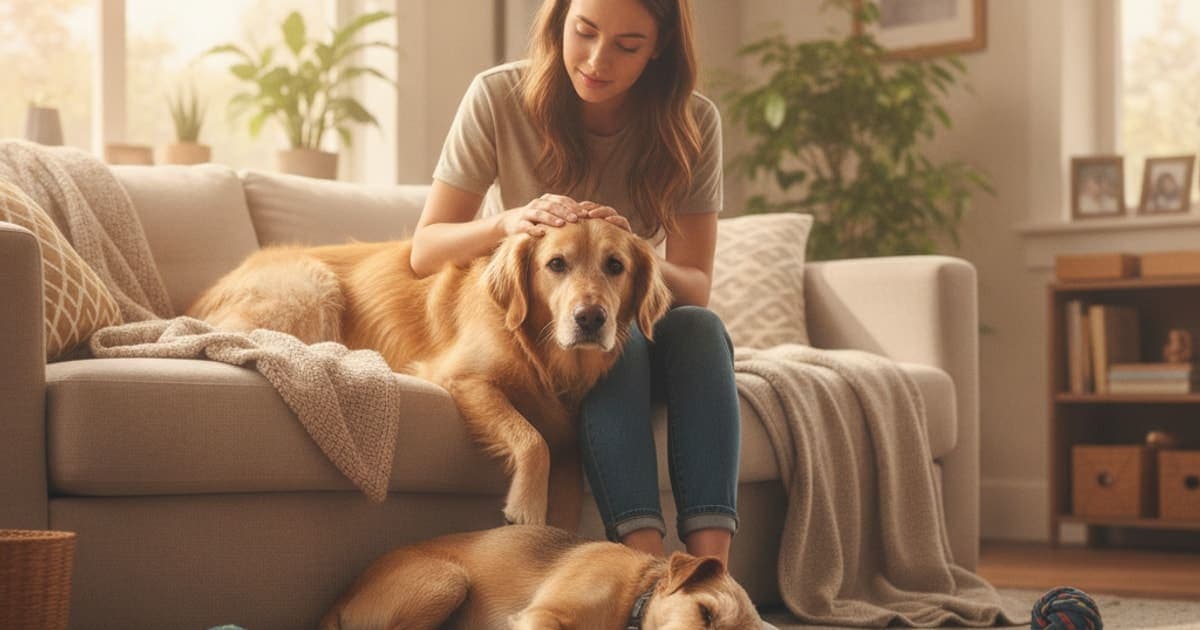
In a dog who is still bright, eating, drinking and behaving normally, diarrhea usually comes from one of a short list of causes: dietary indiscretion (the trash, the compost, a dead thing on a walk), an abrupt food or treat change, stress, intestinal parasites such as giardia or whipworms, or a temporary shift in the bacterial population of the colon, including the shift that follows a course of antibiotics. A single bout of loose stool in an otherwise well dog is one of the most common reasons owners call a clinic, and most of those episodes resolve without drama.
The phrase "no other symptoms" is the important part. It is genuinely reassuring, while it stays true. Diarrhea that persists, recurs on a schedule, or picks up new company (vomiting, lethargy, appetite loss, blood, weight loss) is a different conversation entirely.
Why a healthy-looking dog suddenly has loose stool
The canine gut is a fast, reactive organ. Transit time is short, the microbiome is less diverse than a human's, and dogs eat things no human would consider food. A few mechanisms account for most isolated cases:
Dietary indiscretion. Fatty scraps, spoiled food, grass, mulch and scavenged protein irritate the intestinal lining and pull water into the bowel. The dog feels fine because the insult is local and brief.
Abrupt diet change. Gut bacteria specialise. Swap kibble, protein source or treat brand overnight and the microbial community has to re-sort itself, which often shows up as a few days of soft stool. Transitioning food gradually over a week or more is the standard veterinary advice for exactly this reason.
Stress. Boarding, a move, a new dog in the house, travel, thunderstorms, a long day alone. Stress hormones alter gut motility and secretion, and stress colitis is a well-recognised clinical pattern: classically a dog who seems completely normal apart from urgent, mucousy stool.
Parasites. Giardia is the headline example. A dog can shed giardia, hookworms, whipworms or coccidia and look outwardly healthy while producing intermittent, foul, poorly formed stool for weeks. This is the single most common reason a "no other symptoms" case turns out to have a nameable cause, and it is why a fecal test is worth doing rather than guessing.
Microbiome disruption. After antibiotics, after illness, after a diet upheaval, the balance of gut bacteria can stay off for a while. Dysbiosis produces loose stool without systemic illness.
Food sensitivity. A protein or ingredient the dog tolerates poorly can produce chronic soft stool with no itching, no vomiting and no weight change.
Small bowel vs large bowel diarrhea: what the stool is telling you
Vets triage diarrhea by where in the intestine it originates, because that narrows the cause list immediately. You can do a reasonable version of this at home just by watching.
| Feature | Small bowel diarrhea | Large bowel diarrhea |
|---|---|---|
| Volume per episode | Large, watery | Small, often just a smear |
| Frequency | Mildly increased | Markedly increased, many trips |
| Urgency / straining | Uncommon | Common, straining, sudden dashes to the door |
| Mucus | Rare | Frequent, jelly-like coating |
| Blood | Dark, tarry (digested) if present | Fresh red streaks, usually at the end |
| Weight loss | More likely over time | Less likely |
| Vomiting | More commonly associated | Less commonly associated |
| Typical culprits | Diet change, scavenging, parasites, malabsorption, pancreatic insufficiency | Stress colitis, whipworms, fibre-responsive conditions, inflammation of the colon |
A dog with large bowel diarrhea who is otherwise thriving, frequent small stools with mucus, obvious urgency, maybe a streak of fresh blood, but a normal appetite and normal energy, is the classic stress or colitis picture. A dog with large-volume, soupy small bowel stool and a dropping body condition is a more urgent workup.
When it's frequent, constant, or it keeps coming back
One bad day is a nuisance. A dog who has constant or continuously recurring diarrhea is telling you something structural, dietary or infectious is still in play. Vets generally call diarrhea chronic when it persists or keeps returning over a span of weeks rather than days, and chronic diarrhea in a dog with no other symptoms deserves a real diagnostic workup rather than another round of bland food.
Conditions that can produce ongoing loose stool include chronic enteropathy and inflammatory bowel disease, food-responsive enteropathy, exocrine pancreatic insufficiency, persistent giardia or whipworm infection, antibiotic-responsive dysbiosis, lymphangiectasia, pancreatitis, liver or kidney disease, hypoadrenocorticism (Addison's disease), and in older dogs, intestinal masses. Some of these announce themselves loudly with vomiting and collapse; several, particularly parasites, food responsiveness and early chronic enteropathy, can hide behind a dog who still wants the ball.
A dog with diarrhea and nothing else wrong still needs a veterinarian the moment that picture changes: new lethargy, repeated vomiting, blood, a swollen abdomen or a dog who stops drinking turns a household nuisance into a time-sensitive problem.
What vets reach for, and what supportive home care looks like
When you bring in a dog with diarrhea, the first move is usually diagnostic rather than pharmaceutical: a physical exam, hydration assessment, and a fecal test: often both a flotation and a giardia-specific test, because flotation alone can miss it. Bloodwork, imaging, diet trials or endoscopy follow if the problem is chronic or the dog is unwell.
From there, what a veterinarian prescribes depends entirely on the cause. Common approaches include targeted dewormers for confirmed or suspected parasites, a highly digestible or hydrolysed prescription diet, fibre supplementation for large bowel cases, veterinary probiotic strains, anti-nausea medication, and fluids for dogs losing more than they take in. Antibiotics such as metronidazole or tylosin were once reflexive for canine diarrhea; many veterinarians now use them far more selectively because of their effect on the gut microbiome. That is a decision for your vet, based on your dog, not something to replicate from a search result, and never a reason to stop or alter a medication already prescribed.
At home, supportive care for a mild case generally means plain, highly digestible food in small frequent meals, constant access to water, and nothing new: no treats, no chews, no table scraps, no supplement you just bought. Resist the urge to layer three products on at once; if the stool firms up, you will not know what helped, and if it doesn't, you have added variables. Prolonged fasting is no longer standard advice, especially for small dogs and puppies, so ask your veterinarian before withholding food from any dog.
Emergency signs that override the "he seems fine" read
Call a veterinarian promptly, same day, if you see any of the following alongside diarrhea:
- Repeated vomiting, or vomiting with inability to keep water down
- Black, tarry stool, or more than a streak of fresh blood
- Lethargy, weakness, collapse, pale or tacky gums
- A painful, tense or distended abdomen
- Straining with little or nothing produced
- Known or suspected ingestion of a toy, sock, bone, corn cob, toxin, medication or xylitol-containing food
- Diarrhea in a very young puppy, a senior, a toy breed, or a dog with existing illness: these dogs dehydrate fast
- Diarrhea that has not begun improving after a day or two, or that keeps recurring
Dehydration is the risk that turns a simple case serious. If the gums are dry, the eyes look sunken, or the skin over the shoulders is slow to fall back into place, that is a clinic visit, not a wait-and-see.
Where gut recovery, joint recovery and pawgen fit in
A dog's gut, like the rest of them, is a repair system under constant demand. The intestinal lining turns over rapidly, and periods of illness, medication, stress or restricted activity tend to pull a dog down across the board: appetite, stool quality, muscle tone and willingness to move all slide together. Owners who have nursed a dog through a rough stretch know the goal is not one fix but a dog who gets all the way back.
pawgen makes K9-REPAIR, a BPC-157 and TB-500 peptide formulation for dogs focused on joint, tendon and mobility recovery. It is not a diarrhea product and it is not a substitute for veterinary diagnosis or any prescribed medication. What draws owners to the compounds themselves is mechanism: BPC-157 is a pentadecapeptide sequence originally identified in gastric juice, and TB-500 is a synthetic form of a thymosin beta-4 fragment involved in actin regulation and cell migration: processes central to how tissue repairs and remodels. Research in these areas is emerging and promising, owners are adopting these peptides as part of recovery routines, and pawgen's stance is to explain that science plainly rather than bury it under a kitchen-sink label. BPC-157 and TB-500 are not FDA-approved veterinary drugs, pawgen makes no claim that K9-REPAIR treats, cures or prevents any condition, and dosing is a conversation to have with your veterinarian.
That is also the honest contrast with much of the supplement aisle: a chew with eighteen ingredients at trace inclusion, no batch testing and a lot of confident marketing is not a plan. Dosing by body weight, third-party testing and published certificates of analysis are the minimum a buyer should expect before anything goes into a dog.
Key Takeaways
- Diarrhea in a dog with no other symptoms most often reflects dietary indiscretion, an abrupt food change, stress, parasites such as giardia, or a temporary shift in gut bacteria.
- Watching volume, frequency, urgency and mucus tells you whether the problem is small bowel or large bowel, and that narrows the likely cause.
- Frequent, constant or recurring diarrhea in a dog who otherwise looks well still warrants a fecal test and a proper workup; parasites and food-responsive conditions hide well.
- There is no home protocol that "cures" diarrhea; identifying the cause is the fix, and your veterinarian owns that process.
- Blood, black stool, vomiting, lethargy, pain, suspected foreign body or toxin, or any young, tiny or senior dog means call a vet the same day.
- Add one thing at a time during recovery, and choose products that disclose weight-based dosing and third-party testing.
If you want to look further at how pawgen approaches formulation and transparency, batch certificates of analysis are published at /coas/, shipping and availability details are at /location/, and the K9-REPAIR lineup sits at /shop/ and on the main pawgen site, which also carries a 60-day money-back guarantee.
Your veterinarian owns the diagnosis and the treatment plan: the fecal tests, the diet trial, the prescriptions, the decision about when loose stool stops being ordinary. Nothing here replaces that, and no supplement or peptide should ever be a reason to delay the exam. Supportive products work in the space that proper veterinary care creates, which is exactly where they belong.
Owners exploring peptide support for their dog can review K9-REPAIR, BPC-157 + TB-500 formulated for dogs, at https://pawgen.com/. BPC-157 and TB-500 are not FDA-approved veterinary drugs. Nothing in this article treats, cures or prevents any condition; every decision about your dog's care belongs with your veterinarian.
Frequently asked questions
- What causes diarrhea in dogs with no other symptoms?
- Most commonly dietary indiscretion, an abrupt food or treat change, stress, intestinal parasites such as giardia or whipworms, or a short-term shift in gut bacteria after antibiotics or illness. A dog can look completely normal while any of these are active, which is why a fecal test is worth doing rather than guessing.
- What do vets prescribe for diarrhea in dogs?
- It depends on the cause. Typical options include targeted dewormers for confirmed parasites, a highly digestible or hydrolysed prescription diet, fibre supplementation for large bowel cases, veterinary probiotics, anti-nausea medication and fluids. Antibiotics are used more selectively now because of microbiome effects. Your veterinarian decides based on exam and fecal results.
- How to fix dog diarrhea?
- Identify the cause rather than chase the symptom. For a mild case in a well dog, that usually means plain, highly digestible food in small frequent meals, constant water, and nothing new added. If it has not started improving within a day or two, or anything else changes, book a veterinary exam.
- How to cure diarrhea in dogs?
- Diarrhea is a sign, not a disease, so there is no single cure. Resolution comes from treating what is driving it: parasites, a food the dog tolerates poorly, stress, dysbiosis or an underlying condition. Fecal testing and, for chronic cases, bloodwork or a diet trial are how your vet gets there.
- What to give a dog for diarrhea?
- Water first, dehydration is the real risk. Beyond that, a bland, highly digestible meal plan and nothing novel: no new treats, chews or supplements while you are assessing. Ask your veterinarian before adding any over-the-counter product or withholding food, particularly in puppies, small breeds and senior dogs.
- Why does my dog get diarrhea so often?
- Frequently recurring diarrhea usually points to something ongoing: persistent giardia or whipworms, a food sensitivity, chronic enteropathy, antibiotic-responsive dysbiosis, pancreatic insufficiency, or a dog who reliably scavenges. Repeated episodes in a dog who otherwise looks fine still deserve a proper workup rather than another round of bland food.
- What is the difference between small bowel and large bowel diarrhea?
- Small bowel diarrhea produces large, watery stools with only mildly increased frequency, and may come with weight loss or vomiting. Large bowel diarrhea produces small, frequent, urgent stools with mucus and sometimes fresh red blood. Noting which pattern your dog shows helps your vet narrow the cause quickly.
- When is dog diarrhea an emergency?
- Seek same-day veterinary care for black tarry stool, significant fresh blood, repeated vomiting, lethargy, pale gums, a painful or distended abdomen, unproductive straining, or suspected ingestion of a foreign object or toxin. Very young puppies, toy breeds, seniors and dogs with existing illness dehydrate quickly and should not wait.
- Can K9-REPAIR help with my dog's diarrhea?
- No. pawgen's K9-REPAIR is a BPC-157 and TB-500 formulation focused on joint, tendon and mobility recovery, and it is not a digestive product. BPC-157 and TB-500 are not FDA-approved veterinary drugs, and pawgen makes no claim that K9-REPAIR treats or prevents any condition. Diarrhea is a veterinary matter.
- How long should I wait before calling the vet about diarrhea?
- If your dog is bright, drinking, eating and has had one or two loose stools, monitoring closely is reasonable. If there is no improvement within a day or two, or if any additional sign appears, call. For puppies, seniors, tiny breeds or dogs on medication, call sooner rather than later.
Educational content, not veterinary advice. Ask your vet about your dog.