What Causes Parvo in Dogs? (How It Spreads and Starts)
Parvo in dogs is caused by canine parvovirus (CPV-2), which a dog swallows after contact with infected stool or contaminated ground, bowls, bedding, paws or shoes. The virus survives in the environment for months, and signs usually appear within days of exposure. Suspected parvo needs a veterinarian immediately.
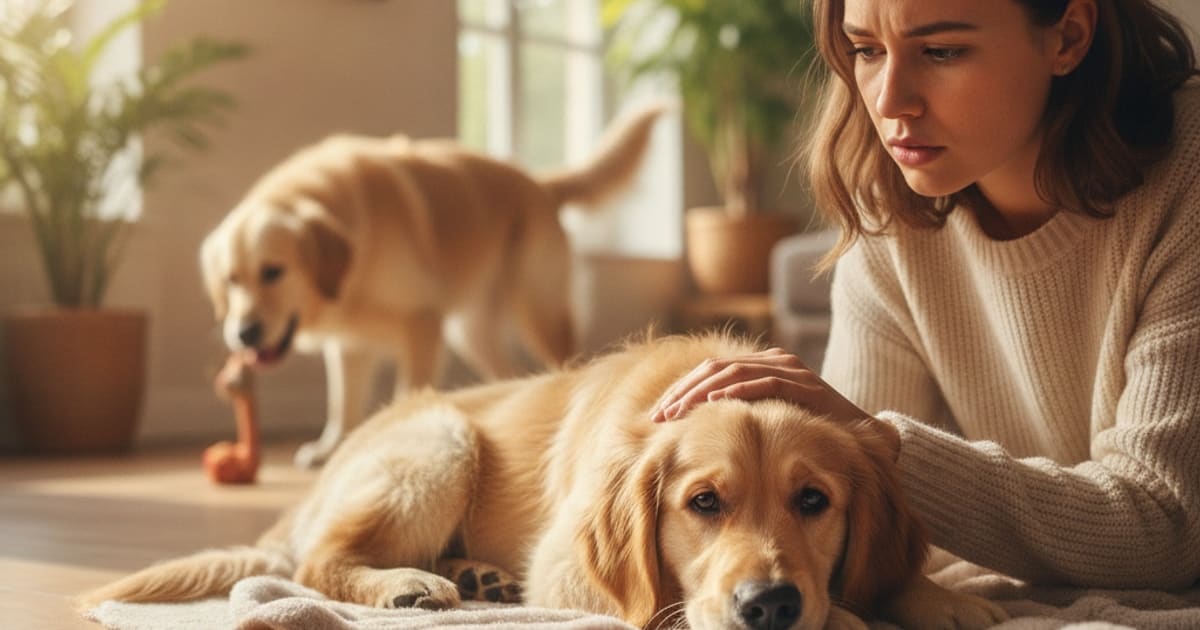
Parvo in dogs is caused by canine parvovirus, usually written CPV-2: a small, extremely durable virus that a dog catches by swallowing microscopic traces of infected stool, either straight from another dog or off contaminated ground, grass, paws, bowls, bedding or the soles of shoes. If your dog or puppy is vomiting, passing watery or bloody diarrhea, refusing food or lying flat and unresponsive, call your veterinarian now, because suspected parvo is an emergency and fluid loss can become dangerous within hours.
A puppy with vomiting or diarrhea needs to be seen by a veterinarian the same day, not watched overnight to see how things look in the morning.
What follows is the epidemiology an owner actually needs when they are trying to work out how this happened and who else is at risk: where the virus comes from, how it moves between dogs, how long it takes to cause illness, and how long an infected dog stays contagious. None of it is a treatment plan. Your vet decides which tests and which treatment fit your dog.
What canine parvovirus is, and where it came from
Canine parvovirus was first recognised as a disease of dogs in the 1970s, and it spread worldwide very quickly. It belongs to a family of parvoviruses that circulate in other carnivores, and several variants of the canine type are in circulation today. When owners ask what parvo in dogs comes from, that is the honest origin story: a virus that jumped into the dog population within living memory and has been with us ever since.
The structure of the virus explains almost everything difficult about it. Parvovirus is non-enveloped, meaning its genetic material sits inside a tough protein shell with no outer fatty membrane. Enveloped viruses, such as the ones behind many respiratory infections, fall apart quickly outside a host because that membrane dries out and breaks down. Parvovirus has nothing to lose. It tolerates drying, freezing, heat and a long list of ordinary household cleaners and alcohol hand gels. In shaded soil, in cracks in concrete, in carpet fibres and in the seams of a crate, infectious particles can persist for months.
So when someone asks where parvo in dogs is, there are two answers. Inside a sick dog, it is in the gut lining, the bone marrow and the lymph tissue. Outside a dog, it is in the environment, invisible, patient and in no hurry.
How the virus gets into a dog
Parvo is a fecal-oral infection. An infected dog sheds enormous quantities of virus in its stool, and a new dog becomes infected by taking those particles in through the mouth or nose. No bite, no blood, no coughing required. A dog that sniffs a patch of grass, licks a paw after crossing a contaminated path, chews a stick, shares a water bowl or grooms the coat of a dog that has been lying in a soiled run has done everything the virus needs.
This is also why the source is so often invisible. The stool itself does not have to be there. Once feces have been rained on, mown over or simply walked through, the contamination stays behind as a residue on surfaces. Objects that carry it from place to place are called fomites, and in practice they are shoes, hands, clothing, leashes, towels, bedding, crates, food and water bowls, grooming tools, car boots and kennel floors. People do not get sick from canine parvovirus, but people move it constantly without knowing.
One more source gets overlooked: wildlife. Related parvoviruses circulate in wild canids such as foxes and coyotes, so a quiet rural yard that no other pet dog has entered is not automatically clean ground.
Where exposure usually happens
The short version of where dogs get parvo: anywhere an infected animal has defecated, and anywhere contaminated material has been carried since. That includes places that feel safe and tidy.
| Exposure route | What it looks like in real life | Why it matters |
|---|---|---|
| Direct dog to dog | Greeting, play, mutual grooming, shared bedding with a dog that is shedding | A dog can be shedding before it looks ill, so the other dog may seem perfectly healthy |
| Contaminated ground | Yards, verges, sidewalks, dog parks, kennel runs, pet store floors, clinic parking areas | The virus outlasts the dog that left it, so the source may have passed through months earlier |
| Objects and surfaces | Bowls, toys, crates, towels, leashes, grooming tools | Shared equipment moves infection between households and litters |
| People as carriers | Shoes, hands, clothing after contact with an infected dog or soiled area | Humans cannot catch it, but they transport it indoors without any sign |
| Crowded housing | Shelters, boarding facilities, high volume breeding operations, transport vans | Density plus stress plus young animals is the classic setup for an outbreak |
If you are asking where your dog got parvo, you may never find the exact moment, and that is normal. The practical question is not which blade of grass was responsible but which other dogs in your household, litter or neighbourhood may have shared the same exposure. That is a conversation to have with your veterinarian straight away.
Incubation: what happens between exposure and the first sign
Parvo does not announce itself on contact. After the virus is swallowed, it first replicates in lymphoid tissue at the back of the throat, then enters the bloodstream and travels to the tissues it can actually use.
Parvovirus can only copy itself inside cells that are already dividing. That single constraint dictates the whole disease. It targets the crypt cells at the base of the intestinal villi, which are the factory floor for replacing the gut lining; the precursor cells in bone marrow that produce white blood cells; lymphoid tissue; and, in very young puppies infected around birth, heart muscle. When the crypt cells are destroyed, the absorptive surface of the intestine wears away and is not replaced. Fluid and protein pour out, the barrier between gut contents and bloodstream fails, and gut bacteria and their toxins can cross into circulation. At the same time, white cell production drops, so the body is least able to contain that bacterial invasion exactly when it needs to most.
The incubation period is measured in days rather than weeks. Most dogs that are going to become ill start showing signs within the first week or so after exposure, and veterinary references generally describe the window as under two weeks. Ask your vet how long to monitor an exposed dog in your specific situation.
How parvo in dogs starts is usually quieter than owners expect. It often begins with dullness, a dog that is simply off, declining food, sometimes a fever. Vomiting typically follows, then diarrhea that may be watery, foul smelling and streaked or darkened with blood. Deterioration from mildly flat to seriously dehydrated can happen fast, and the speed is the reason this is treated as urgent rather than observed at home. Severity and recovery vary from dog to dog, and that variation is not something you can predict from how a dog looks on day one.
How long a dog with parvo stays contagious
Shedding can begin around the time a dog starts to feel unwell, sometimes slightly before any owner would notice, which is why the healthy-looking dog at the park is a genuine route of spread. Shedding then continues through the illness and for a period after the dog appears recovered, so vets usually advise keeping a recovered dog away from other dogs and out of shared spaces for a defined period. Ask your vet how long that isolation should last for your dog rather than guessing from a calendar.
The environment stays infectious far longer than the dog does. Mechanical cleaning comes first, because organic matter inactivates many disinfectants: remove feces, wash soiled bedding and bowls, then use a disinfectant specifically labelled as effective against parvovirus and leave it in contact with the surface for the full time the label states. Soil, gravel and grass cannot be reliably disinfected. Time, sunlight and avoiding the area with susceptible dogs are the realistic tools outdoors, and your veterinarian can advise on how to handle your particular yard and who should not visit it.
Which dogs are most at risk
Puppies between weaning and the completion of their vaccination series are the classic high risk group. Puppies receive antibodies from their mother that protect them early on, but those same antibodies can interfere with the response to a vaccine. As maternal protection fades, there is a window where it is too weak to defend against infection yet still strong enough to blunt vaccination, and that window is where many cases happen.
Unvaccinated or partly vaccinated adult dogs are also at risk, as are dogs coming out of crowded environments and dogs weakened by intestinal parasites, poor nutrition, stress or concurrent illness. Some veterinary reports have long described certain breeds, including Rottweilers and Doberman Pinschers, as appearing more prone to severe disease, and research suggests individual and breed level immune differences may contribute, though results vary from dog to dog.
Vaccination is the main protective tool against parvovirus, and which vaccines your dog receives and when is a decision to make with your veterinarian based on age, history and local risk. Where you walk an incompletely vaccinated puppy, and which dogs it meets, is part of that same conversation. If a dog in your home is diagnosed, talk to your vet about every other dog on the property before anyone goes anywhere.
Key takeaways
- Parvo is caused by canine parvovirus (CPV-2), not by diet, weather, teething or stress, although stress and parasites can worsen an infection.
- Transmission is fecal-oral: virus shed in stool is swallowed directly or picked up from ground, bowls, bedding, coats, hands and shoes.
- The virus has no fatty envelope, which is why it resists drying, freezing and many ordinary cleaners and can persist in the environment for months.
- Incubation is measured in days, and most affected dogs show signs within roughly the first week after exposure.
- Shedding can start before obvious illness and continues after apparent recovery, so isolation length should be set by your vet.
- Puppies in the gap between fading maternal antibodies and completed vaccination are the most vulnerable group.
Diagnosis and treatment belong entirely to your veterinarian. Only a vet can confirm parvovirus, rule out the other causes of vomiting and bloody diarrhea, assess hydration and decide what care your dog needs, and that care is time-sensitive. Nothing bought over a counter substitutes for that assessment. If you suspect parvo, the right next step is a phone call, not a search.
For a broader list of symptoms that mean same-day or overnight veterinary care, see Dog Emergency Signs.
Frequently asked questions
- what causes parvo in dogs
- Canine parvovirus, usually called CPV-2, causes parvo. A dog becomes infected by swallowing virus particles shed in the stool of an infected animal, picked up directly or from contaminated ground, bowls, bedding, coats, paws or shoes. If you suspect parvo, talk to your vet immediately, because it is an emergency.
- how does parvo in dogs spread
- It spreads by the fecal-oral route. An infected dog sheds large amounts of virus in its stool, and another dog takes those particles in through the mouth or nose, either directly or from contaminated surfaces. It is not spread by coughing, and people can carry it on shoes and hands without getting sick.
- how does parvo get in dogs
- The virus enters through the mouth or nose when a dog sniffs, licks or eats something contaminated with infected feces. It first multiplies in lymphoid tissue at the back of the throat, then spreads through the bloodstream to the bone marrow and the rapidly dividing cells lining the intestine.
- how does parvo in dogs start
- It usually starts quietly, with dullness, loss of appetite and sometimes a fever, before vomiting begins. Diarrhea follows, often watery, foul smelling and bloody, and dehydration can set in fast. Because deterioration can be rapid, call your veterinarian at the first signs rather than waiting overnight.
- where do dogs get parvo
- Anywhere an infected animal has passed stool, and anywhere that contamination has since been carried. That includes yards, verges, sidewalks, parks, kennels, shelters, pet stores, transport vehicles and clinic parking areas. Related parvoviruses in wild canids mean rural ground is not automatically safe either.
- where can dog get parvo
- Outdoors from contaminated soil, grass or concrete, and indoors from crates, bedding, towels, toys, shared food and water bowls or floors. Because the virus travels on shoes and clothing, a dog that never leaves home can still be exposed by something brought inside.
- what is the incubation period for parvo in dogs
- The incubation period is measured in days rather than weeks. Most dogs that become ill show signs within roughly the first week after exposure, and veterinary references generally describe the window as under two weeks. Ask your vet how long to monitor an exposed dog in your situation.
- where did my dog get parvo if he never leaves the yard
- Most often from contamination carried in on shoes, clothing or hands, from a visiting dog, or from wildlife crossing the property. The virus also persists in soil for months, so a dog that passed through long before you moved in can still be the original source.
- can a vaccinated or adult dog get parvo
- Any dog can be exposed, and risk is higher in dogs that are unvaccinated, partly vaccinated or still in the window where maternal antibodies interfere with vaccine response. Which vaccines your dog needs and when is a decision to make with your veterinarian based on age and local risk.
- how long does parvovirus survive in the environment
- Months, and longer in shaded, protected conditions. The virus has no fatty envelope, so it resists drying, freezing and many ordinary cleaners. Remove feces first, then use a disinfectant labelled as effective against parvovirus for the full contact time; soil and grass cannot be reliably disinfected.
Educational content, not veterinary advice. Ask your vet about your dog.