Green Dog Poop: What It Can Mean
Green dog poop means stool pigment has not shifted to brown the way it normally does, either because food moved through quickly or because something green was swallowed, from grass to dyed rodent bait. Because causes range from harmless to urgent, call your vet and describe what you are seeing.
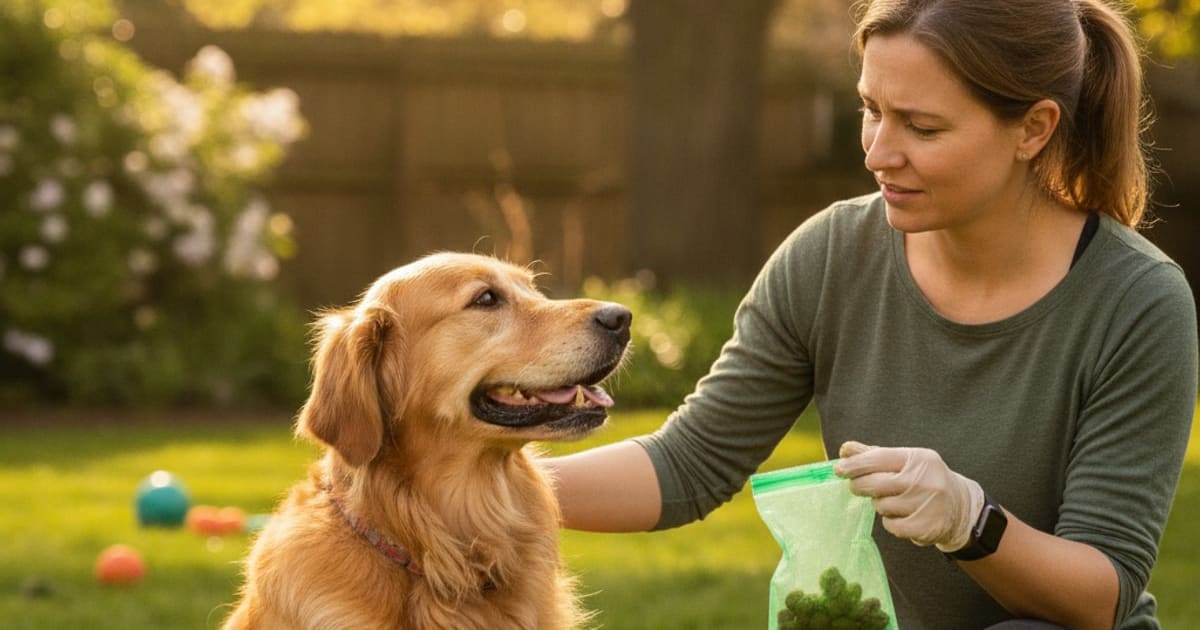
Green dog poop means the pigment in your dog's stool did not finish changing colour on its way through the gut, or that something green went in at the other end, and because the plain explanations and the dangerous ones can look identical on the lawn, this is worth a call to your veterinarian rather than a wait and see. If there is any chance your dog reached rodent bait, slug or snail bait, fertiliser or any dyed chemical, call your vet or an animal poison control service such as the ASPCA Animal Poison Control Center or the Pet Poison Helpline straight away, and take the packaging with you if you have it.
Colour is a clue, not an answer. Green stool is a sign, not a diagnosis, and only a physical exam, a full history and the tests your vet chooses can tell you what is behind it. Two dogs with the same shade of green in the bowl can have completely different things going on inside, and results vary from dog to dog.
Why stool is brown, and what pushes it green
Stool colour starts in the liver. The liver makes bile, a fluid that helps break down and absorb fat, and bile carries pigments left over from the normal turnover of red blood cells. One of those pigments, biliverdin, is green. It is converted to bilirubin, which is yellow-orange, and bile is stored in the gallbladder until a meal arrives in the small intestine.
Once bile is released, it travels down the intestine with the food. Along the way, bacteria in the gut act on those pigments and reduce them step by step, and the end product, stercobilin, is what gives a settled stool its brown colour. That chemistry takes time and contact with the normal bacterial population of the colon.
So green appears in two broad ways. Either the pigment never completed its journey from green to brown, because the contents moved through faster than the conversion could keep up, or something green was added to the mix on the way in, such as plant material or a dye. A green tint can also come from mucus produced by an irritated colon, which can look slick, jelly-like and greenish grey.
That is the mechanism in plain terms. What it does not tell you is why transit sped up or what was swallowed, and that is the part your vet works out.
Food, grass and dyes: the everyday reasons
Plants are a familiar explanation. Chlorophyll is a strong green pigment, and dogs that graze on lawns, chew houseplants, raid a vegetable patch or get into leafy scraps can pass stool with a distinct green cast, sometimes with recognisable blades of grass pressed into it. Green vegetables in a bowl, green tripe in a raw diet and plant-heavy table scraps can do the same.
Colouring agents are the other everyday reason. Some kibbles, soft treats, dental chews, pill pockets and chewable products are tinted, and pigment that is not absorbed comes out the other side. Chewed non-food items can also contribute: craft materials, play items, chalk and garden products all carry colour that can survive the trip through the gut.
None of this makes green stool something to shrug off. Grass eating itself can be a response to nausea or gut discomfort, so the grass may be a symptom rather than the cause. A dog that is scavenging enough plant material to change stool colour may also be swallowing things you cannot see. If the colour shows up alongside a change in appetite, energy or stool texture, treat the whole picture as the signal and talk to your vet.
Gut transit, bile flow and the medical causes
When food moves through the intestine quickly, pigment conversion is cut short and stool can arrive green, loose and strong smelling. Anything that irritates or inflames the gut can do this: dietary indiscretion after a bin raid, a sudden switch of food, a bacterial or viral intestinal infection, or intestinal parasites. Giardia, for example, can produce soft, greasy, foul stool with mucus, and it can be missed without the specific fecal testing your vet runs.
Chronic inflammatory disease of the intestine, food intolerance and conditions that interfere with fat digestion or absorption can all change stool colour and texture, because undigested fat and rushed transit go hand in hand. Problems affecting the liver, gallbladder or the ducts that carry bile can alter how much pigment reaches the intestine and when, which is another route to an unusual colour. These are not things you can sort out by looking.
Stress colitis is another route. A boarding stay, a move, travel or a disrupted household can inflame the large intestine, producing urgent, mucus-coated stool that may look green or streaked. Even then, the colour does not prove the cause, and an exam may help find what is actually driving it.
If your dog is on any medication, mention it when you call. Changes in gut bacteria and gut speed can follow medication, and your vet needs the full list to interpret what they are seeing.
Green stool that means call now
One reason green stool deserves immediate attention is that many rodent baits, mole and gopher baits, and slug and snail baits are dyed bright green, blue or teal so people can recognise them. Dyed pellets, crumbs or waxy block fragments passing in stool can be the first visible clue that a dog ate something toxic, and the poisoning can be well underway before a dog looks unwell. Do not wait to see what happens, and do not give anything at home before you have spoken with your vet or an animal poison control service.
Go to a vet or emergency clinic without delay if green stool comes with any of the following:
- Dyed pellets, granules, bait crumbs or waxy fragments in the stool
- Vomiting that keeps going, or vomit with blood
- Black, tarry stool, or fresh blood in the stool
- Pale, white or grey gums, or yellowing of the gums, eyes or skin
- Weakness, collapse, wobbliness, tremors or seizures
- Bruising, nosebleeds, bleeding gums or blood in urine
- Coughing, laboured breathing or a swollen, tense, painful belly
- Repeated straining with little or nothing produced
- Refusing food and water, or a puppy or small dog with watery stool, since fluid losses add up quickly in a small body
Call your vet if the colour continues, if it returns after settling, or if you notice any change in energy, appetite, drinking or stool texture even when your dog seems bright otherwise.
Reading the rest of the picture
What surrounds the colour matters more than the shade itself. Use the table below to organise what you are seeing before you phone the clinic, not to reach a conclusion.
| What you are seeing | What it can point to | What to do |
|---|---|---|
| Formed green stool with visible grass or leaves | Swallowed plant material and chlorophyll, possibly grazing linked to nausea | Call your vet and mention any gagging, lip licking or appetite change |
| Green stool after a diet, treat or chew change | Added colouring, or a gut adjusting to new ingredients | Report the change to your vet and keep the label or packaging |
| Soft, greasy, strong smelling green stool with mucus | Fast transit, intestinal irritation or parasites | Book an exam and bring a fresh sample for testing |
| Bright green or teal flecks, pellets or waxy crumbs | Possible bait or dyed chemical ingestion | Emergency. Call your vet or animal poison control now |
| Green stool with vomiting, weakness or a tense belly | Systemic illness or an abdominal problem | Emergency exam, do not wait |
| Green stool with blood, or black tarry stool | Bleeding somewhere in the digestive tract | Emergency exam, do not wait |
What a veterinary exam can involve
Your vet starts with history, and the details you supply shape everything after it. Expect questions about what your dog eats, what changed recently, access to bins, compost, gardens, garages and sheds, travel, other animals in the home, medications, and whether anyone has put out bait anywhere your dog can reach, including a neighbour's property.
The physical exam covers gum colour and moisture, hydration, temperature, heart and lungs, and careful feeling of the abdomen for pain, gas, masses or anything that should not be there. From there, your vet decides what is worth testing. Fecal testing can look for parasite eggs and for organisms such as giardia that need a specific test. Bloodwork can assess red cells, white cells, organ values and, when a bait is suspected, how well the blood is clotting. Imaging may be used to look at the abdomen when there is pain, repeated vomiting or a worry about something swallowed.
A fresh stool sample helps. Collect one in a clean sealed bag or container, note when it was passed, and take a clear photo of what you saw at home in case the next sample looks different. If you have the wrapper, bag or label of anything your dog may have eaten, take that too. These are the pieces that turn a vague description into something a clinician can act on, and your vet can tell you whether further testing is worth doing.
Key Takeaways
- Green stool means pigment did not finish converting to brown, or that something green was swallowed.
- Grass, green vegetables and coloured foods, treats and chews can all tint stool.
- Faster gut transit from irritation, infection, parasites or inflammation can leave stool green.
- Bright green or teal pellets, crumbs or waxy fragments can indicate bait ingestion, which is an emergency.
- Blood, black tarry stool, pale gums, vomiting, weakness, bruising or a painful belly alongside green stool mean immediate veterinary care.
- A fresh sample, a photo and an accurate history make the exam far more useful.
Your veterinarian owns the diagnosis and the plan. They are the one who can examine your dog, run the testing that separates a mouthful of grass from a parasite or a swallowed toxin, and decide what happens next. If your dog's stool is green, write down what you have seen, gather a sample, and talk to your vet rather than watching the bowl for another round.
Related reading: Emergency Warning Signs in Dogs and the full library of canine health conditions.
Frequently asked questions
- what does dog green poop mean
- Green stool means the pigment in it never finished turning brown, or that something green passed through. Grass, green vegetables and dyed treats can do it, and so can fast gut transit, parasites or swallowed rodent bait. Colour alone cannot tell you which, so talk to your vet.
- why does my dog's poop look green
- It can look green because bile pigment moved through the intestine too fast to convert to brown, or because chlorophyll from grass and plants, or a colouring agent in food, chews or bait, passed through. An exam, a history and fecal testing can help your vet sort out which.
- is green poop bad for dogs
- Green stool is not a diagnosis on its own, but it can accompany serious problems, including bait ingestion, parasites and intestinal inflammation. Because the harmless and the dangerous causes can look alike, have your vet assess it, and seek emergency care if you see blood, weakness, vomiting or pale gums.
- why is my dog's poop green
- Either green pigment from bile stayed green because contents moved through quickly, or green material went in: grass, leafy food, a tinted treat or chew, or dyed rodent or slug bait. Mucus from an irritated colon can also add a greenish cast. Your vet can tell you more after an exam.
- why my dog's poop is green
- The colour reflects what was eaten and how fast it travelled. Plant material, colourings and swallowed bait add green directly, while gut irritation, infection, parasites or bile flow problems speed transit so pigment never reaches brown. Call your vet, and go in immediately if dyed pellets or crumbs are visible.
- why is my dogs poop.green
- Green appears when bile pigment does not complete its change to brown, or when something green is swallowed. Grass, green vegetables, tinted treats and chews are everyday explanations, while parasites, intestinal inflammation and bait ingestion are medical ones. Book a veterinary exam and bring a fresh stool sample with you.
- Can eating grass turn a dog's poop green?
- Yes. Chlorophyll in grass and other plants is a strong pigment that can tint stool green, sometimes with visible blades in it. Grazing can also follow nausea or gut discomfort, so the grass may be a symptom rather than the cause. Mention it to your vet.
- When is green dog poop an emergency?
- Treat it as an emergency if you see dyed pellets, granules or waxy crumbs, blood in the stool, black tarry stool, pale or yellow gums, bruising, bleeding, repeated vomiting, weakness, tremors, collapse or a tense painful belly. Call your vet or an animal poison control service at once.
Educational content, not veterinary advice. Ask your vet about your dog.