What Does Hypothermia Look Like in Dogs? When to See a Vet
Hypothermia in dogs can look like hard shivering, cold ears and paws, a hunched body, slowness and sleepiness, and later stiff muscles, slow breathing or collapse. It is a reason to see a vet today, and weakness, collapse or pale gums mean an emergency vet now.
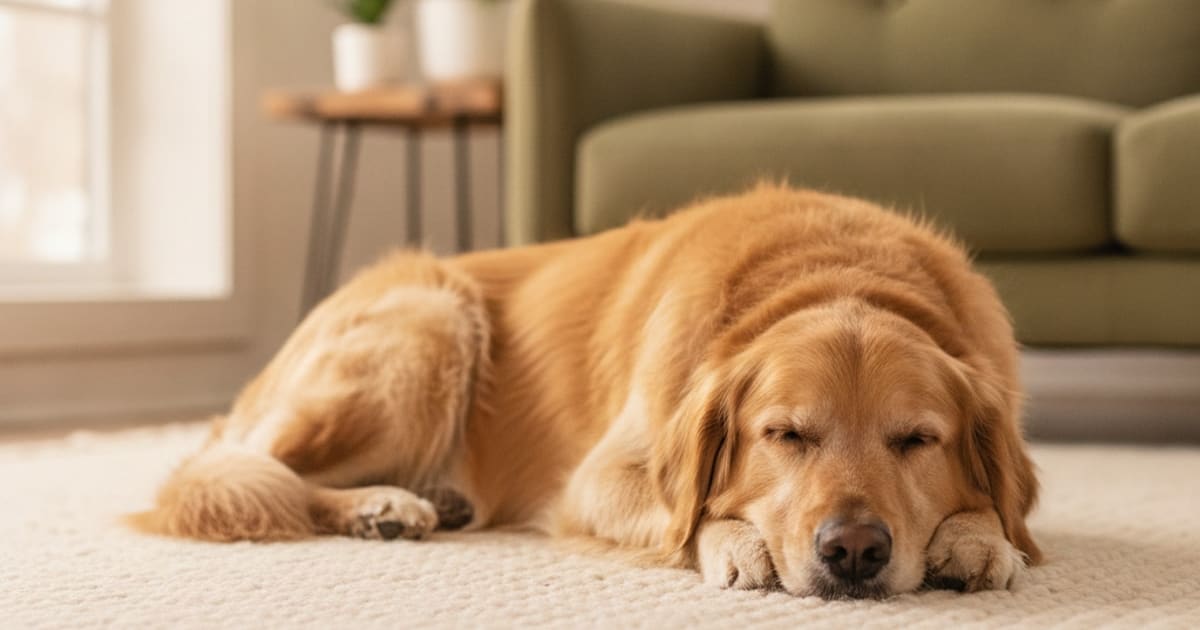
Hypothermia, a body temperature that has dropped too low, is a reason to see a vet today. Go to an emergency vet now if your dog is weak or collapsing, has stopped shivering while still cold, is breathing slowly or shallowly, or has pale, grey or blue gums; otherwise book a same-day appointment. The plain answer to 'what does hypothermia look like in dogs' is a dog that shivers hard, holds its body hunched or curled into a tight ball, has cold ears, paws and tail, and moves slowly or seems sleepy and dull. The early signs can also include lifting the paws off cold ground, pressing close to you or looking for somewhere warm, whining, and stopping or refusing to keep walking. As the body cools further, the picture can change: shivering can slow and then stop, the muscles can stiffen, breathing can slow, and your dog can become clumsy, confused, unresponsive or collapse. A dog that has stopped shivering while still cold has not warmed up; it can mean the body is too cold to shiver. Hypothermia can follow time in cold air, wind, snow or water, and it can also come with illness, injury or recovery from anaesthesia, so a vet exam may help find the cause as well as warm your dog safely.
When to go to the vet now
Go to an emergency vet now, and phone the clinic as you leave, if your dog has any of these:
- Weakness, wobbling, trouble standing or collapse
- Shivering that has stopped while your dog is still cold
- Slow, shallow or difficult breathing
- Pale, grey or blue gums
- Stiff muscles, confusion, or not responding when you speak to them
- A young puppy that is limp, quiet, cold or not feeding
- Cold exposure together with an injury, bleeding, or time in icy or cold water
The Dog Emergency Signs page covers other signs that need emergency care.
What can cause hypothermia
Hypothermia happens when a dog loses heat faster than the body can make it. The causes below are possibilities your vet checks. You do not need to work out which one applies to your dog before you call, and the signs themselves do not tell you the cause. Your vet looks at what your dog was doing before the signs began, at your dog's age and health, and at the exam and test results.
Cold surroundings are one possibility. Time outdoors in cold air, wind, snow, sleet or rain can draw heat away from the body. A wet coat holds far less warmth than a dry one, so a dog that has been in a pond, lake, river or the sea, has fallen through ice, has been caught in rain, or has had a bath in a cold room can lose heat fast. Cold water draws heat from the body much faster than cold air, so a dog that has been in cold water can be in danger even if they seem alert once out of it. Lying on cold ground, concrete or snow, sleeping in an unheated building, or being left in a cold car can also cool a dog. Wind makes all of these worse because it carries heat away from the skin.
Exhaustion can play a part too. A dog that has run, swum or worked hard in the cold can use up energy and become too tired to keep making heat, and a dog that is lost, trapped or stuck outdoors overnight can cool as the hours pass.
Body size, coat and age are part of what your vet weighs. Small dogs, toy breeds, short-coated and thin dogs, and dogs with little body fat have less to hold heat in. Very young puppies cannot yet control their own body temperature well and rely on their mother and littermates for warmth, so a puppy that has been separated from the litter or left on a cold surface can chill quickly. Older dogs can be less able to make heat, less able to shiver hard, and slower to move away from the cold. These traits do not cause hypothermia on their own, but they change how quickly a dog can become too cold.
Illness is another possibility your vet checks. Some health problems affect how the body makes or holds heat, including an underactive thyroid or other hormone problems, heart disease, kidney or liver disease, low blood sugar, serious infection, and problems in the brain or nerves that control body temperature. A dog that is unwell for any reason can eat less and move less, and both mean making less body heat. A dog that seems cold indoors, with no time in cold weather to explain it, is a reason for a vet to look for an illness like these.
Injury, shock and anaesthesia can also lower body temperature. Blood loss, a serious injury, a road accident or shock can make a dog lose heat. Anaesthesia and sedation lower body temperature for a time, which is why the vet team checks warmth closely during and after surgery. If your dog shivers, seems cold or is slow and dull at home after a procedure, call the clinic that did the procedure today.
Poisons are a further possibility. Some poisons and some medicines meant for people can lower body temperature or make a dog weak and slow. If your dog may have eaten, licked or got into anything harmful, call your vet or an animal poison control service now.
If your dog has an existing condition, is very young or very old, or has recently had surgery, talk to your vet about how cold weather affects your dog. Your vet can tell you how that condition fits with your dog's time outdoors in winter. You can read about the health problems your vet may check for in the conditions library.
What your vet may do
The vet team starts by taking your dog's temperature in the clinic and checking breathing, heart rate, pulse and gum colour. A dog with severe signs may be taken straight into the treatment area so warming can start while you give the history at the front desk.
Your vet will also ask what happened before the signs began: where your dog was, for how long, whether they were wet, whether they ate and drank, and whether anything else seemed different that day. The answers help the vet decide which tests to run and which causes to look at first, so share everything you can, even details that seem small.
The physical exam covers the whole body. The vet feels the muscles for stiffness, checks how alert your dog is and how they respond to sound and touch, and listens to the heart and lungs. They look over the ears, tail, paws, toes and skin for cold injury such as frostbite, and for wounds, bleeding or other injuries, especially after a fall into water or through ice, or any accident.
Tests help show how the cold has affected the body and whether an illness lies behind it. Blood tests can include blood sugar, the salts in the blood, a blood count, and checks of kidney and liver function. If an illness may be part of the picture, the vet may add hormone tests such as a thyroid test. Heart monitoring records the rhythm of the heart, because a cold heart can beat slowly or unevenly. Blood pressure may be measured, and X-rays or an ultrasound scan may be used if an injury or an underlying problem is suspected. Your vet may repeat some tests during warming to see how your dog's body is responding. Some dogs need light sedation for a proper look at a painful area, such as an injured paw.
Warming is done in a controlled way. In the clinic this can mean warmed blankets and warm-air blankets, warmed fluids given into a vein through a drip, and oxygen if breathing is weak. The vet warms your dog step by step and checks the temperature again and again, because warming too fast or putting strong heat on cold skin can burn the skin and can strain the heart and blood pressure. This is part of why hypothermia needs vet care rather than home treatment.
Once your dog is warmer, the vet treats any cause they find, such as low blood sugar, an injury, an infection or a hormone problem, with a medicine your vet prescribes where it is needed. Some dogs stay in the clinic for monitoring until their temperature holds steady and they are alert, eating and moving. If the vet finds cold injury on the ears, tail or paws, they may plan rechecks of those areas, because cold damage to skin can take time to show fully. Ask the vet team what care they want at home and when they want to see your dog again.
What to tell your vet
When you call, and again when you arrive, tell the vet team:
- When you first noticed the signs, and how long your dog had been in the cold, wind, snow or water before that
- Whether your dog was wet, and for how long
- Any change since then, such as shivering that slowed or stopped, more sleepiness, stiffness or trouble standing
- Any bleeding, wounds or limping, and whether your dog fell, was hit or went through ice
- Any licking or chewing at the paws, ears or tail
- Other signs, such as vomiting, trouble breathing, confusion, or not eating or drinking
- Your dog's age, any existing illness, recent surgery or sedation, and any medicines your dog takes
- Whether your dog could have eaten or licked anything harmful
A list written down before you leave, or kept on your phone, helps you give the vet team the full picture while they work. If anything changes while you are getting ready to leave, such as shivering that stops, new weakness or slower breathing, tell the clinic and go to an emergency vet now. Bring your dog in without trying to treat them first, and do not put heat packs, hot water bottles or a hair dryer on your dog, because cold skin can burn without your dog showing it.
Frequently asked questions
- Is hypothermia an emergency in dogs?
- It can be. Go to an emergency vet now if your dog is weak or collapsing, has stopped shivering while still cold, is breathing slowly or shallowly, or has pale, grey or blue gums. For shivering, cold ears and paws, slowness or any other sign of hypothermia, book a same-day vet appointment.
- What should I do if my dog has hypothermia?
- Call your vet today and tell the team your dog has been cold. If your dog is weak, collapsing, breathing slowly or has stopped shivering while still cold, go to an emergency vet now. Bring your dog straight in rather than trying to treat them yourself, and phone ahead so the clinic is ready when you arrive.
- Can I treat hypothermia at home?
- No, because a dog with hypothermia needs a vet to measure the temperature and warm the body safely while checking the heart. Do not put heat packs, hot water bottles or anything on your dog, or remove anything, before the vet sees them. For bleeding, use gentle pressure with a clean cloth on the way to the vet only.
- What does hypothermia look like in dogs?
- Hypothermia in dogs can look like hard shivering, cold ears, paws and tail, a hunched body, slowness and sleepiness. As the body cools, shivering can stop, muscles stiffen, breathing slows and the dog can become confused, weak or collapse. Any of these is a reason to call your vet today, and the last group means emergency care now.
- What are the symptoms of hypothermia in dogs?
- The symptoms of hypothermia in dogs include shivering, cold ears and paws, slowness, sleepiness, reluctance to move and seeking warm places. Deeper hypothermia can bring stiff muscles, slow or shallow breathing, pale or blue gums, confusion and collapse. Book a same-day vet visit for any symptom, and go to an emergency vet now for the deeper ones.
- What does hypothermia in dogs look like as it gets worse?
- As hypothermia in dogs gets worse, shivering can slow or stop, muscles can stiffen, breathing can become slow and shallow, and the dog can seem confused, unresponsive or unable to stand. Gums can turn pale, grey or blue. These are signs to go to an emergency vet now, without stopping to treat your dog first.
- What does hypothermia look like in a small dog or puppy?
- In a small dog or puppy, hypothermia can look like shivering, crying, cold ears and paws, curling into a tight ball, weakness and not wanting to feed. Very young puppies can lose heat fast and may go quiet and limp rather than shiver. Go to an emergency vet now if a puppy is limp, weak or not feeding.
- How can I spot hypothermia in my dog?
- You can spot hypothermia in your dog by what you see: shivering, cold ears and paws, a hunched body, slowness, sleepiness or confusion, especially after time in cold air, wind or water. You do not need to test anything at home. Call your vet today, and go to an emergency vet now for weakness, collapse or slow breathing.
- What are the early signs of hypothermia in dogs?
- The early signs of hypothermia in dogs can include shivering, cold ears, paws and tail, a tucked or hunched posture, lifting paws off cold ground, moving slowly and looking for somewhere warm. Early signs are still a reason to see a vet the same day, and for weakness, collapse or slow breathing, go to an emergency vet now.
- Which dogs are more at risk of hypothermia?
- Small dogs, short-coated or thin dogs, very young puppies, older dogs and dogs with an illness that affects temperature control can lose heat faster. A dog recovering from anaesthesia or injury, or one that is wet, is also at higher risk. Talk to your vet about how an existing condition affects your dog in cold weather.
- Can a dog get hypothermia indoors?
- Yes, because hypothermia comes from losing heat faster than the body makes it, which can happen in a cold room, after a bath, or in a dog that is ill, very young, old or recovering from anaesthesia. Shivering, cold ears and paws or slowness indoors are still a reason to call your vet today.
Educational content, not veterinary advice. Ask your vet about your dog.