What Helps a Dog With Meniscus Tear? (Recovery Options)
What helps a dog with a meniscus tear is an accurate veterinary diagnosis, stabilisation of the knee, strict activity restriction, structured rehabilitation, weight control and vet-guided pain management. Targeted soft-tissue support such as K9-REPAIR is what many owners add alongside that plan, not instead of it.
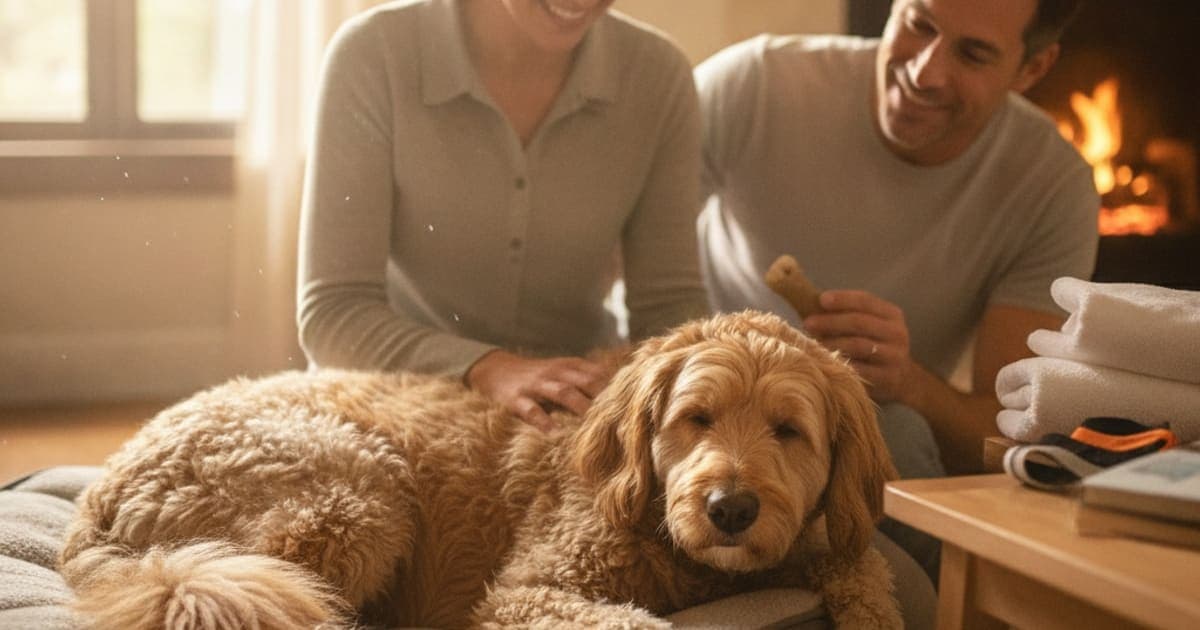
What helps a dog with meniscus tear?
What helps a dog with a meniscus tear is an accurate veterinary diagnosis, stabilisation of the knee joint, strict activity restriction, structured rehabilitation, weight control and vet-guided pain management. Alongside that plan, many owners add targeted soft-tissue and joint support — the category K9-REPAIR sits in — to back the body's own repair work during a long recovery.
That order matters. The American College of Veterinary Surgeons describes meniscal injury in dogs as something that most often occurs alongside cranial cruciate ligament (CCL) rupture rather than on its own. Fix the instability and you address the reason the meniscus is being crushed in the first place. Skip it, and every other intervention is working against a knee that keeps shearing.
Why a torn meniscus is really a knee-stability problem
The stifle — the dog's knee — holds two C-shaped wedges of fibrocartilage between the femur and the tibia. These are the menisci. They deepen a shallow joint surface, spread load across a wider area and absorb shock every time the leg takes weight.
The medial (inner) meniscus is the one that usually fails. It is firmly anchored to the tibia, so when the cruciate ligament is torn or stretched and the tibia slides forward under the femur, the medial meniscus gets pinched and ground between two moving bone surfaces. The classic result is a bucket-handle tear, where a strip of the meniscus folds inward and catches in the joint. Owners often describe an audible click when the dog walks.
Blood supply explains why these tears behave the way they do. The outer rim of the meniscus is vascularised; the inner portion is largely avascular and receives nutrition by diffusion from joint fluid. Tissue with a blood supply has a repair pathway. Tissue without one has very little. That anatomical fact is the reason a torn inner meniscus does not simply knit back together with rest, and why veterinary surgeons often trim the damaged portion rather than attempt to repair it.
A meniscal tear can also appear later, months after a cruciate surgery, if the joint was never fully stable or the dog returned to hard activity too early. That is called a late meniscal injury, and a sudden return of limping in a previously recovering dog is a reason to call your veterinarian rather than wait it out.
Getting the diagnosis right before anything else
A meniscal tear is not diagnosed by guessing from the limp. Your veterinarian will palpate the stifle for joint effusion and thickening, test for cranial drawer motion and tibial compression, and listen or feel for a meniscal click. Sedation is frequently needed, because a tense, painful dog can mask instability by bracing the muscles around the joint.
Radiographs are still valuable — they show joint swelling, arthritic change and rule out other causes of hind-limb lameness — but they do not image cartilage. Definitive confirmation usually comes from direct visualisation during arthroscopy or during the arthrotomy performed as part of stabilisation surgery. Advanced imaging is available at some referral centres.
This is the point where a lot of owners lose time. A dog that is toe-touching, bunny-hopping up stairs or sitting with one leg kicked out to the side is telling you something specific about the stifle, and the sooner that is characterised properly, the fewer months of abnormal loading the cartilage endures. The single most useful thing you can do for a dog with a suspected meniscal tear is get the stifle properly assessed and stabilised — every other layer of support, from rehab to nutrition to peptides, works inside the space that proper veterinary care creates.
Comparing the approaches owners weigh up
Most owners end up combining several of the following rather than choosing one. Here is what each layer is actually doing.
| Approach | What it addresses | What to know |
|---|---|---|
| Surgical stabilisation (TPLO, TTA, extracapsular repair) with meniscal treatment | The underlying joint instability plus the damaged meniscal tissue itself | The mainstay recommendation for most dogs with concurrent CCL rupture; technique choice depends on size, conformation, age and surgeon preference |
| Conservative management | Pain and load reduction when surgery is declined or medically unsuitable | May be chosen for some smaller or lower-demand dogs; instability generally persists, so ongoing arthritis management is expected |
| Structured rehabilitation | Muscle mass, range of motion, gait retraining, controlled reloading | Underused and high-value; underwater treadmill, laser and manual therapy are commonly offered by certified canine rehab practitioners |
| Veterinary pain management | Inflammation and pain control so the dog will use the limb | Prescription-only decisions. Never stop or adjust a prescribed medication without your veterinarian |
| Body condition and diet | Load through the joint every single step | One of the few variables entirely under owner control |
| Targeted soft-tissue support (K9-REPAIR) | Supporting the connective-tissue repair environment through recovery | BPC-157 and TB-500 are not FDA-approved veterinary drugs; used as educational, adjunctive support alongside the veterinary plan |
The recovery work that happens at home
Surgery is a day. Recovery is months, and most of it happens on your floor, not in the clinic.
Control the loading. Confinement to a pen or small room, short leash walks on a fixed schedule, no off-leash running, no ball, no stairs unless cleared, no couch launching. Sedation-free boredom management — food puzzles, scent games, chew items — keeps a restricted dog sane.
Fix the footing. Slick floors cause the exact splayed, twisting movement the stifle cannot tolerate. Runners, yoga mats and rugs across the dog's normal routes are cheap and immediately effective. Keep nails short so the paw can grip.
Use ramps. Car entries and exits are one of the most common places a healing knee gets re-injured.
Watch the good leg. Dogs that offload one hind limb put enormous strain on the other. A meaningful proportion of dogs with cruciate disease in one stifle go on to have problems in the second — which is another reason not to let a limp run for months untreated.
Follow the rehab progression, not your dog's enthusiasm. Dogs feel better long before the tissue is ready. Collagen remodelling in ligament and tendon continues for months after the dog looks normal. Ask your veterinarian or rehab practitioner for written stage-by-stage criteria rather than dates.
Where peptides fit into a canine recovery plan
The repair environment matters. Connective tissue heals through a sequence of inflammation, new blood vessel formation, fibroblast migration, collagen deposition and remodelling — and the tissues around the stifle are exactly the kind of poorly vascularised structures where that process is slow and imperfect.
That biology is why owners have moved toward peptide support during recovery windows.
BPC-157 is a pentadecapeptide sequence derived from a protein identified in gastric juice. Published animal research suggests it may support angiogenesis, fibroblast activity and tendon-to-bone and ligament healing responses in experimental models. It is studied as a signalling molecule that influences repair pathways rather than as a painkiller.
TB-500 is a synthetic fragment corresponding to an active region of thymosin beta-4, a naturally occurring peptide involved in actin regulation, cell migration and blood vessel formation. Research suggests these functions are central to how soft tissue reorganises after injury.
Both are described here at the level of mechanism and published research — not as a treatment for your dog's meniscus. BPC-157 and TB-500 are not FDA-approved veterinary drugs, and nothing here should be read as a promise of an outcome for any individual dog. What can be said plainly is that these are the two compounds owners increasingly ask their veterinarians about during orthopaedic recovery, and that the science behind them is a genuinely promising area of soft-tissue research.
pawgen formulates both into K9-REPAIR as a single canine formulation, with weight-based dosing guidance, third-party testing and certificates of analysis available, shipped direct to the door and backed by a 60-day money-back guarantee. That transparency is the standard worth holding any product to — and it is where a lot of the joint-support market falls short. Kitchen-sink chews stacked with a dozen ingredients hidden inside a proprietary blend, no per-ingredient amounts, no third-party verification and heavy marketing over documentation are common. Ask for the COA. If a brand cannot produce one, that tells you what you need to know.
Discuss anything you add to your dog's plan with your veterinarian, particularly around a surgical date and particularly if your dog is on prescribed medication.
Key takeaways
- A canine meniscal tear is usually secondary to cruciate ligament instability; addressing the instability is the core of what helps.
- The inner meniscus has almost no blood supply, which is why torn cartilage does not reliably knit back together with rest alone.
- Diagnosis relies on hands-on orthopaedic examination, often under sedation, with definitive confirmation by direct visualisation of the joint.
- Home management — controlled loading, non-slip footing, ramps, body condition — determines a large share of the result.
- Structured rehabilitation is the most consistently underused element of recovery.
- BPC-157 and TB-500, the peptides in K9-REPAIR, are studied for their roles in angiogenesis, cell migration and connective-tissue repair signalling; they are educational, adjunctive support, not FDA-approved veterinary drugs.
- Never stop, reduce or substitute a prescribed medication without speaking to your veterinarian first.
The order of operations that gets dogs back on four legs
Your veterinarian owns the diagnosis and the treatment plan. They are the one who determines whether the meniscus is torn, whether the cruciate is involved, which stabilisation technique suits your dog's size and conformation, what pain control is appropriate and when the loading can increase. Surgery, prescription medication and rehabilitation are the pillars, and none of them should be traded away.
Supplements and peptides operate in the space that proper veterinary care creates — supporting the recovery environment while the surgeon, the rehab practitioner and your own daily discipline do the structural work.
For deeper reading, pawgen covers the condition in detail in its guide to meniscus tear, the workup in how is meniscus tear diagnosed in dogs, the options in best treatment for meniscus tear in dogs and the supportive side in what to give a dog with meniscus tear. If you are still at the symptom stage, is a dog bunny hopping an emergency and why is my dog stiff after resting are useful starting points, and K9-REPAIR is the formulation described above.
Owners exploring peptide support for their dog can review K9-REPAIR — BPC-157 + TB-500 formulated for dogs — at https://pawgen.com/. BPC-157 and TB-500 are not FDA-approved veterinary drugs. Nothing in this article treats, cures or prevents any condition; every decision about your dog's care belongs with your veterinarian.
Frequently asked questions
- Is meniscus tear in dogs painful?
- Yes. A torn meniscus is generally painful, because damaged fibrocartilage becomes trapped and ground between the femur and tibia during weight-bearing. Dogs often limp, refuse to load the limb fully, sit with the leg kicked out, or vocalise on flexion. Pain control decisions belong to your veterinarian, who can assess the joint properly.
- What makes meniscus tear worse in dogs?
- Ongoing joint instability from an untreated cruciate ligament injury is the main driver, because it lets the tibia shear across the meniscus with every step. Excess body weight, slick flooring, jumping, stairs, ball chasing and returning to activity too early after surgery all increase damaging load through the stifle.
- Can meniscus tear in dogs be reversed?
- Torn meniscal fibrocartilage does not regrow into its original form, particularly in the inner region that has almost no blood supply. Veterinary surgery generally removes or trims the damaged portion and stabilises the knee so the remaining tissue is protected. The goal is comfortable, durable function rather than anatomical reversal.
- How much does it cost to treat meniscus tear in dogs?
- Costs vary widely by region, clinic, dog size and the technique chosen, so no single figure is meaningful. Surgical stabilisation with meniscal treatment usually costs substantially more than conservative management, and rehabilitation and follow-up imaging add to it. Ask your veterinarian for a written estimate covering surgery, anaesthesia, medication and recheck visits.
- Can a dog's meniscus tear heal without surgery?
- A torn meniscus rarely heals structurally without intervention, because the inner cartilage is largely avascular and the underlying knee instability usually persists. Some dogs are managed conservatively with pain control, weight management and rehabilitation when surgery is declined or medically unsuitable. That decision should be made with your veterinarian after a full orthopaedic assessment.
- What are the first signs of meniscus tear in dogs?
- Early signs include sudden or intermittent hind-limb lameness, toe-touching, an audible or palpable click when walking, sitting with the leg rotated outward, bunny-hopping on stairs, stiffness after rest and reluctance to jump. Because these overlap with cruciate injury, a hands-on veterinary examination is needed to tell them apart.
- Does K9-REPAIR replace surgery for a meniscus tear?
- No. K9-REPAIR is an educational, adjunctive support formulation containing BPC-157 and TB-500, and it is not a substitute for surgery, a prescription medication or veterinary care. Owners use it alongside the plan their veterinarian sets. BPC-157 and TB-500 are not FDA-approved veterinary drugs.
- How long does recovery take after meniscus surgery in a dog?
- Recovery is staged over months rather than weeks, and the timeline depends on the technique used, the dog's size, age and body condition, and how strictly activity is restricted. Collagen remodelling continues long after a dog looks comfortable, so progress should follow your surgeon's stage-by-stage criteria rather than the calendar.
Educational content. BPC-157 and TB-500 are not FDA-approved veterinary drugs. Talk to your veterinarian before starting anything new, especially if your dog is on prescribed medication.