What Is Bloat in Dogs? (GDV Explained)
Bloat in dogs is a rapid build-up of gas and fluid in the stomach, which in its most dangerous form twists on itself and cuts off blood flow. The medical term is gastric dilatation and volvulus, or GDV, and it is a life-threatening emergency that needs a veterinarian immediately.
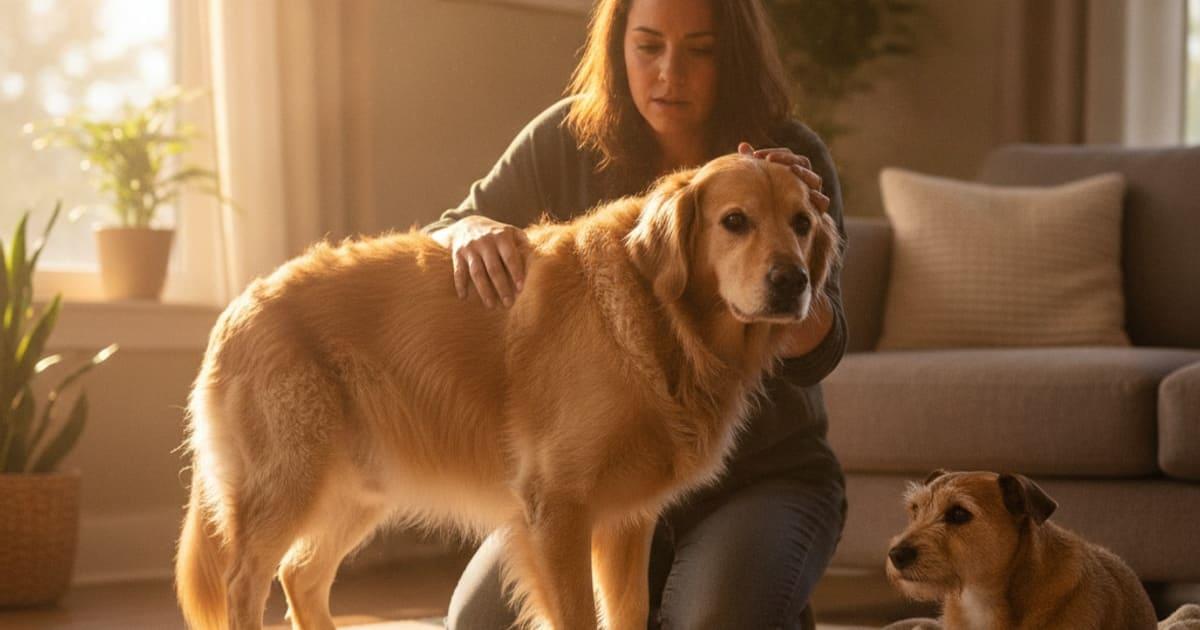
Bloat in dogs is a sudden swelling of the stomach with gas and fluid, and in its most dangerous form that swollen stomach rotates on its own axis and seals shut at both ends. If you think your dog is bloating right now, stop reading and call your veterinarian or the nearest emergency veterinary hospital, because a previously healthy dog can go from restless to collapsed in a matter of hours.
Do not wait to see whether it settles overnight. Do not try to relieve the pressure yourself, and do not give food, water or anything from the cupboard while you wait. Bloat is not a digestive upset that resolves with patience. It is one of the few true surgical emergencies in dogs, and the clock matters more than almost anything else.
This page explains what bloat actually is, what happens inside the body when it occurs, which dogs it tends to affect and how often it happens, so you can recognise it early and understand what your vet is dealing with.
The medical terms behind the word bloat
"Bloat" is the plain-English word owners use. The medical term is gastric dilatation and volvulus, usually shortened to GDV.
The two halves of that name describe two different problems that often happen together:
- Dilatation means the stomach stretches and distends as gas, fluid, froth or food accumulate inside it.
- Volvulus means the distended stomach twists around its own axis, so the entrance from the oesophagus and the exit into the small intestine are both pinched closed.
A dog can have gastric dilatation on its own, sometimes called simple bloat or food bloat. That is still a reason to be examined, because there is no reliable way for an owner at home to tell a stomach that is merely full from one that has rotated. The outward signs overlap, and only a veterinary examination with imaging can separate them.
| Simple gastric dilatation | Gastric dilatation and volvulus (GDV) | |
|---|---|---|
| What the stomach does | Fills and stretches, stays in position | Fills and stretches, then rotates on its axis |
| Can gas escape | Often, by burping or vomiting | No, both ends are sealed off |
| Blood supply | Usually intact | Compressed, affecting the stomach wall and often the spleen |
| How it progresses | Can still deteriorate, needs assessment | Deteriorates quickly, shock is common |
| What it needs | Veterinary examination to decide | Emergency stabilisation, then surgery |
How bloat happens inside a dog's body
Understanding the mechanism explains why time is so critical.
The stomach begins to fill with gas. Some of that gas is swallowed air, some comes from fermentation of stomach contents. Normally a dog burps it out or passes it on into the intestine. When the stomach distends beyond a certain point and then rotates, those exits close. Gas keeps being produced inside a sealed chamber, so pressure climbs with nowhere to go.
That pressure does three separate kinds of damage at once.
First, the stretched stomach wall has its own blood vessels squeezed shut by the twist and by the internal pressure. Tissue starved of blood starts to die, which is why a surgeon assesses the viability of the stomach wall during the operation.
Second, the spleen sits attached to the greater curvature of the stomach and is dragged along with the rotation. Its blood supply can be twisted too.
Third, and most immediately dangerous, the ballooning stomach presses on the large veins that return blood from the back half of the body to the heart. Less blood reaches the heart, so less blood is pumped out to the organs. The dog goes into circulatory shock. Blood pressure falls, the heart can develop abnormal rhythms, and toxins released from damaged tissue enter the bloodstream.
A dog that is retching repeatedly without bringing anything up, with a swelling or tight abdomen, needs to be seen by a veterinarian immediately, not in the morning. That unproductive retching is the single most recognised sign, often alongside pacing, restlessness, drooling, a hunched posture, pale gums and rapid shallow breathing.
What causes bloat and which dogs are most at risk
There is no single cause. Bloat is best understood as the end point of several risk factors stacking up in a dog whose anatomy already predisposes it.
Body shape. Deep, narrow chests are the strongest physical pattern. Great Danes, Weimaraners, Irish and Gordon Setters, Standard Poodles, Saint Bernards, Dobermans, German Shepherds, Boxers and Basset Hounds are among the breeds repeatedly identified in the veterinary literature. A deep chest gives the stomach more room to move and more leverage to rotate.
Family history and age. Prospective research led by veterinary epidemiologists at Purdue University and published in the Journal of the American Veterinary Medical Association examined non-dietary risk factors in large and giant breed dogs, and having a first-degree relative with a history of bloat was among the factors associated with increased risk. Risk also tends to rise with age in susceptible breeds.
Temperament and body condition. Research suggests that dogs described by their owners as anxious, fearful or highly reactive, and dogs that are very lean rather than well covered, appear more often in the at-risk group. Why that is remains an active question.
Eating behaviour. Fast eating, gulping air, and taking in a very large volume at a single sitting are all plausible contributors to the gas and distension that precede a twist.
Mixed-breed and smaller dogs are not immune. Bloat is less frequently reported in them, but it does occur, and the signs are the same.
None of these factors are things you can diagnose by. They explain population-level patterns, not what is happening in your dog's abdomen tonight. If you own a breed on that list, talk to your vet about what to watch for and about whether a preventive surgical option makes sense for your dog.
Bloat after eating: what meals actually have to do with it
Many owners first encounter bloat because it happened shortly after dinner, so the meal gets the blame. The relationship is real but more subtle than cause and effect.
A full stomach is a heavier stomach, and a heavier stomach sitting in a deep chest has more capacity to swing and rotate. Eating quickly means more swallowed air. Drinking a large amount of water very quickly adds volume. Vigorous exercise with a full stomach is widely discouraged in at-risk breeds for the same reason.
Feeding management is one of the few areas owners can influence, and it is worth discussing at a routine appointment rather than in a crisis. Slower eating, splitting the daily ration into more than one meal and calm periods around mealtimes are commonly recommended for predisposed breeds. The question of raised feeding bowls has been studied and the findings have been debated, so it is a decision to make with your veterinarian rather than from a forum post.
It is also worth saying clearly that bloat does not only happen after eating. Episodes occur overnight, hours after a meal, and sometimes with no identifiable trigger at all.
Is bloat common in dogs, or is it rare?
Across the whole dog population, bloat is uncommon. Most dogs will never experience it, and most owners never see a case.
Within specific groups, the picture changes completely. In large and giant deep-chested breeds, GDV is one of the most important life-threatening emergencies a vet expects to see, and it is a leading reason those breeds are rushed in out of hours. So the honest answer to whether bloat is rare depends entirely on which dog you are asking about. Rare in a terrier, far from rare in a Great Dane line with a family history.
That is also why awareness matters more than statistics. The owners who act fastest are usually the ones who already knew what unproductive retching looked like before it happened.
What emergency veterinary care involves
When a dog arrives with suspected bloat, the team works on stabilisation and diagnosis at the same time. Expect intravenous access and fluids to treat shock, pain relief, and an abdominal radiograph taken in a specific position, because a twisted stomach has a characteristic appearance on film that distinguishes GDV from simple dilatation. Blood tests and a heart rhythm trace are often part of the picture too.
Decompression to release the trapped gas may be performed, and confirmed GDV is a surgical condition. In theatre the stomach is returned to its normal position, the stomach wall and spleen are assessed for damage, and the surgeon usually performs a gastropexy, which tacks the stomach to the body wall so it is far less able to rotate again. A preventive gastropexy is sometimes offered to high-risk breeds, occasionally at the same time as another planned procedure, and that is a conversation for your own veterinary surgeon.
Your vet decides which tests and which treatment fit your dog. Outcomes depend on how quickly the dog was seen, how much tissue damage occurred and what other health problems are in play, and results vary from dog to dog.
Key Takeaways
- Bloat means the stomach distending with gas and fluid. The medical term for the dangerous form is gastric dilatation and volvulus, or GDV, where the distended stomach twists and seals at both ends.
- The twist cuts off blood flow to the stomach wall and compresses the major veins returning blood to the heart, which causes shock. That is what makes it lethal, not the swelling alone.
- Unproductive retching, a distended or tight abdomen, pacing, drooling and restlessness are the signs that should send you to an emergency vet straight away.
- Risk clusters in deep-chested large and giant breeds, rises with age, and is associated with family history, anxious temperament, lean body condition and fast eating of large meals.
- Bloat is uncommon in dogs overall but is a leading emergency in predisposed breeds, so whether it counts as rare depends on the dog in front of you.
- Confirmed GDV is treated with emergency stabilisation and surgery, often including a gastropexy to reduce the chance of recurrence.
Nothing an owner can do at home substitutes for getting a bloating dog in front of a veterinarian. The diagnosis, the imaging, the decision to operate and the plan afterwards belong to your vet, and with bloat the single most useful thing you can contribute is speed. If you own a breed that sits in the higher-risk group, raise it at your next routine appointment and ask what your vet would want you to do, and who to call, if it ever happened at two in the morning.
For a broader overview of the symptoms that mean a dog needs to be seen the same day, read Dog Emergency Signs, and you can browse further canine health topics in the conditions library.
Frequently asked questions
- What is bloat in dogs?
- Bloat in dogs is a rapid distension of the stomach with gas and fluid. In its most dangerous form the swollen stomach also rotates on its axis, sealing both ends and cutting off blood flow, which causes shock. It is a life-threatening emergency that requires immediate veterinary care.
- What does bloat in dogs mean?
- It means the stomach has filled and stretched beyond normal with gas, fluid or food. Owners use bloat as an umbrella term, but vets distinguish simple gastric dilatation, where the stomach stays in position, from gastric dilatation and volvulus, where it twists and becomes a surgical emergency.
- What is the medical term for bloat in dogs?
- The medical term is gastric dilatation and volvulus, abbreviated to GDV. Dilatation refers to the stomach stretching as it fills with gas and fluid, and volvulus refers to the stomach rotating on its own axis. Simple gastric dilatation describes distension without that rotation.
- How do dogs get bloat?
- Gas and fluid accumulate faster than the stomach can clear them, and in predisposed dogs the heavy, distended stomach can rotate. Contributing factors include a deep narrow chest, family history, older age, anxious temperament, lean body condition and eating large meals quickly. No single cause explains every case.
- Is bloat in dogs common?
- Across all dogs it is uncommon, and most owners will never see a case. Within large and giant deep-chested breeds it is a very different story, where GDV ranks among the most significant emergencies veterinarians expect to treat. Risk depends heavily on breed and family history.
- Is bloat common in dogs?
- Not in the general dog population, but frequency varies enormously by breed. Great Danes, Setters, Weimaraners, Standard Poodles, Dobermans and similar deep-chested breeds are seen far more often than small or barrel-chested dogs. Ask your own vet how much concern your dog's breed warrants.
- Is bloat in dogs rare?
- Relatively rare overall, yet far from rare in the breeds that are predisposed to it. Describing bloat as rare can be dangerously misleading for owners of giant deep-chested dogs, because those owners are precisely the people who need to recognise the early signs instantly.
- Can bloat happen after eating?
- Yes. A full, heavier stomach has more capacity to rotate, and fast eating or gulping large volumes of water adds swallowed air. However, bloat also occurs overnight, hours after meals, or with no obvious trigger, so a recent meal is not required for it to happen.
- What should I do if I think my dog is bloating?
- Call your veterinarian or the nearest emergency hospital immediately and go in. Do not offer food or water, do not attempt to relieve the pressure yourself, and do not wait to see whether it improves. Tell the clinic you suspect bloat so they can prepare before you arrive.
- Can bloat in dogs be prevented?
- Risk can be reduced but not eliminated. Feeding management and a gastropexy, a surgical procedure that tacks the stomach to the body wall, are the two main approaches discussed for high-risk breeds. Talk to your vet about whether either is appropriate for your individual dog.
Educational content, not veterinary advice. Ask your vet about your dog.