What Should a Dog Eat After Surgery? (Post-Op Feeding)
Most dogs can have a small amount of water and a light, bland meal the evening after surgery, once the anesthesia has fully worn off. Easily digestible protein, plain cooked carbohydrate and a reduced portion size work best for the first day or two, then a gradual return to their normal food.
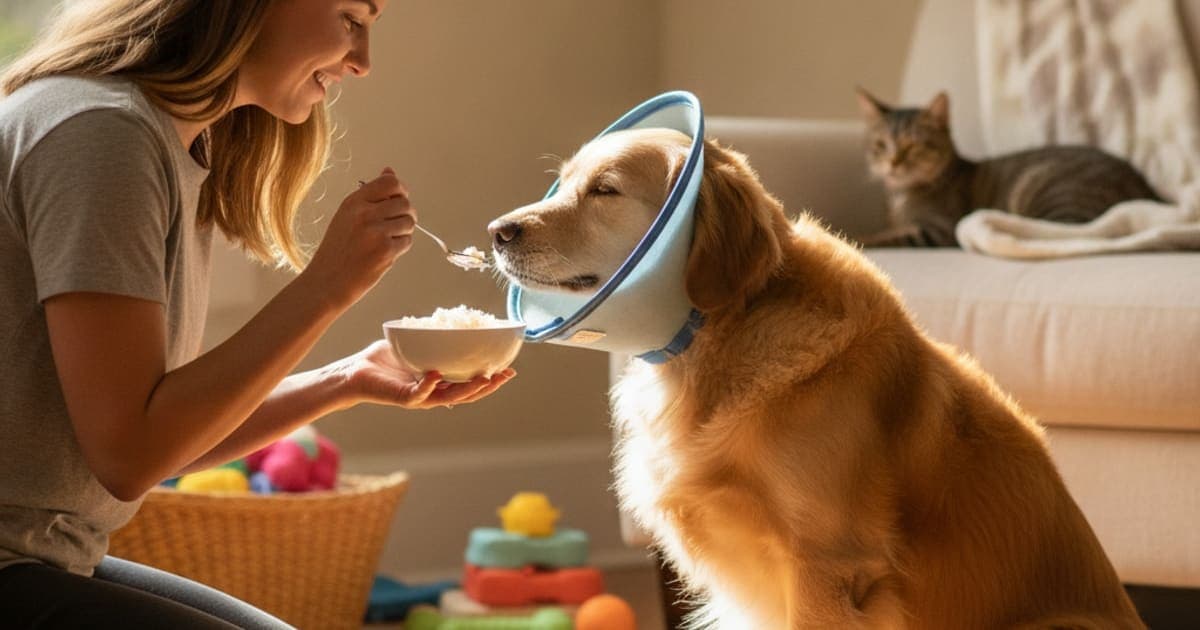
For the first day after surgery, most dogs do best with a small amount of water followed by a light, easily digestible meal: a lean protein such as boiled chicken breast, turkey or plain white fish, mixed with a bland cooked carbohydrate such as white rice or peeled potato, served at roughly a quarter to a half of their normal portion. Anesthesia and pain medication slow the gut and unsettle the stomach, so small and plain beats large and rich. If that meal stays down, you gradually blend back toward their usual food over the following few days. Your veterinary team sends you home with discharge instructions written for the exact procedure your dog had, and those instructions always outrank general advice, particularly after abdominal, dental or airway surgery.
How soon a dog can eat once the anesthesia wears off
General anesthesia suppresses the swallowing and gag reflexes, and those reflexes come back before full coordination does. That is why clinics hold dogs until they are alert enough to stand and swallow safely. Once you are home, water comes first: a small bowl, or a few ice chips for a dog who gulps. Dogs who drink a litre the moment they walk in the door often bring it straight back up.
If water stays down and your dog seems settled, a small meal the evening of surgery is reasonable for most routine procedures such as a neuter, spay, mass removal or many orthopedic repairs. Some dogs are still groggy and simply are not interested, and that is normal on day one. Appetite usually returns as the anesthetic clears and the pain medication schedule finds its rhythm.
There are important exceptions. After dental extractions, hard kibble and chews are usually off the menu for a period your veterinarian will specify, and food is softened or soaked. After gastrointestinal surgery, the feeding plan is deliberate and staged, and the clinic will tell you exactly when and what. After throat or airway procedures, texture matters. Follow the discharge sheet, and if it is not clear, call the clinic rather than guessing.
Keep post-op meals small, bland and frequent, because a dog who keeps food down recovers in more comfort than a dog who vomits up one large, rich meal.
What to feed a dog after surgery during the first 48 hours
The goal in the first two days is simple: get protein, calories and fluid into a gut that is still waking up, without triggering nausea. That means low fat, low fibre, few ingredients and nothing novel. Surgery week is the worst possible time to introduce a brand new diet or a rich treat.
Good building blocks include boiled skinless chicken or turkey, plain white fish, scrambled egg cooked without butter or oil, white rice, plain pasta and peeled boiled potato. Plain canned pumpkin, not pie filling, is a familiar addition for stools that have gone sluggish on pain medication. Warming food slightly lifts the aroma, which matters a great deal for a dog whose appetite is blunted.
Split the day's food into three or four small meals rather than one or two large ones. Keep fresh water available at all times and watch that your dog is actually drinking. Dogs on opioid pain relief often become constipated, and dogs who are not drinking enough feel worse across the board.
What to leave out: fatty table scraps, bacon, gravy, cheese, cream, sausage and anything deep fried, all of which can provoke vomiting or pancreatitis in a susceptible dog. Onion, garlic, grapes, raisins, chocolate and xylitol are off limits at any time, and many supermarket broths contain onion or garlic, so read the label before you pour one over the bowl. Hard bones, antlers and dense chews wait until your veterinarian clears them, especially after dental work.
Post-op food options compared
| Food option | Why owners use it | What to watch for |
|---|---|---|
| Boiled chicken or turkey with white rice | Lean, bland, familiar, easy to portion | Not nutritionally complete, so it is a short-term bridge only |
| Plain white fish with rice or potato | Gentle alternative for chicken-sensitive dogs | Bones; use plain fillet, never battered or seasoned |
| Scrambled egg, no butter or oil | Highly palatable protein for a picky post-op dog | Fat content adds up quickly, so keep portions small |
| Low sodium broth poured over food | Adds moisture and aroma for reluctant eaters | Onion and garlic in many store bought broths |
| Plain canned pumpkin | Fibre support for sluggish or firm stools | Pie filling contains sugar and spices; use plain only |
| Veterinary gastrointestinal diet | Complete, balanced and designed for recovery guts | Needs a veterinary recommendation and a gradual switch |
| Their normal food, softened and reduced | Least digestive disruption for most routine surgeries | May be too rich if it is a high fat formula |
When your dog will not eat after surgery
A reduced appetite on the day of surgery is one of the most common things owners report, and it usually has a mundane explanation. Anesthetic drugs cause nausea. Opioids cause nausea and slow the gut. Pain itself suppresses appetite. So does stress, an unfamiliar smell on the fur, or the simple mechanical problem of a cone that bangs against the bowl.
Practical things to try: warm the food gently to release aroma, offer by hand from your palm, remove the cone for supervised meals and put it straight back on, raise the bowl for a dog who is sore bending down, and feed somewhere quiet away from other pets. Offering a few mouthfuls every couple of hours often works better than leaving a full bowl out, which only teaches the dog to walk past it.
Call the clinic if your dog still has not eaten by the day after surgery, if they are refusing water, if they vomit more than once, if the incision is swollen, hot, open or discharging, if the gums look pale or grey, if they seem more painful rather than less as the days pass, or if they have not passed a stool for several days. Appetite is one of the clearest signals a dog gives you about how recovery is going, so talk to your veterinarian early rather than waiting it out. Anti-nausea medication and a pain plan adjustment are both routine fixes, and neither is something to feel embarrassed about asking for.
Feeding through a longer orthopedic recovery
For a cruciate repair, a fracture plate or a disc surgery, the first 48 hours are the easy part. The harder stretch is the weeks of restricted activity that follow, when a dog is burning far fewer calories than usual while still expecting the same bowl.
Two things matter through that period. The first is protein. Collagen remodelling at a repaired tendon, ligament or bone interface is a slow, protein-hungry process that continues long after the skin has closed, and a diet that holds lean body mass through crate rest gives that process the raw material it needs. The second is calorie control. Extra weight on a healing joint works against everything the surgeon did, and weight gained during confinement is difficult to shift later. Ask your veterinary team to assess your dog's body condition score at each recheck and to tell you what portion adjustment they want while exercise is restricted.
Many recovery diets also lean on omega-3 fatty acids from marine sources, which research has examined for their role in modulating inflammatory signalling in dogs. Food is not a treatment for a surgical site. It is the background condition that lets a body do its work, and it is the part of recovery you control three times a day.
Where recovery support fits alongside the food bowl
Once the diet, the pain plan and the rehab schedule are in place, many owners look at what else they can put behind a long tissue recovery. This is where peptides have moved into the mainstream of owner conversation, and where pawgen built K9-REPAIR, a combination of BPC-157 and TB-500 formulated for dogs.
The mechanism is worth understanding plainly. BPC-157 is a peptide sequence derived from a protein found in gastric juice, and published laboratory and animal research has examined its relationship with angiogenesis, the formation of new blood supply, and with tendon and ligament fibroblast behaviour. TB-500 is related to thymosin beta-4, a naturally occurring protein involved in actin regulation and cell migration, processes central to how tissue reorganises itself. Research suggests these are pathways involved in soft tissue remodelling, and that mechanism is why owners increasingly adopt the pair as the stack they run through a recovery window. BPC-157 and TB-500 are not FDA-approved veterinary drugs, and nothing here says K9-REPAIR will change the course of your dog's recovery.
What is worth being skeptical about is the rest of the shelf. Kitchen-sink joint chews hide small amounts of a dozen ingredients behind a proprietary blend, publish no third-party analysis, and spend more on packaging than on what is inside. pawgen's position is the opposite one: a defined two-compound formulation, weight-scaled label amounts, third-party testing with certificates of analysis published for review, direct shipping to the door, and a 60-day money-back guarantee. Any dosing question belongs with your veterinarian, who knows your dog's weight, medications and surgical history.
Key Takeaways
- Most dogs can have small amounts of water and a light bland meal the evening after surgery, once they are fully alert and swallowing normally.
- Lean protein plus a plain cooked carbohydrate, in reduced portions across three or four small meals, is the standard first-48-hours approach.
- Avoid fatty scraps, dairy, hard chews and anything new; read broth labels for onion and garlic.
- A quiet appetite on day one is common; no eating by the day after surgery, repeated vomiting or incision changes warrant a call to the clinic.
- Through weeks of crate rest, hold protein intake up and calories down so weight does not land on a healing joint.
- Food supports the conditions for recovery; it is not a treatment for a surgical site.
Owners researching what to run alongside a post-op nutrition plan can review the published certificates of analysis, see the current K9-REPAIR formulation, and check shipping availability before ordering.
Your veterinarian owns the diagnosis, the surgical plan, the pain protocol and the feeding instructions that go with them, and nothing in a bowl or a bottle changes that order of operations. Bring any diet change or supplement you are considering to your next recheck, describe exactly what is in it, and let the person who performed the surgery tell you how it fits. Proper veterinary care creates the space in which everything else, including nutrition and peptides, can do whatever good it is capable of doing.
Owners exploring peptide support for their dog can review K9-REPAIR, BPC-157 + TB-500 formulated for dogs, at https://pawgen.com/. BPC-157 and TB-500 are not FDA-approved veterinary drugs. Nothing in this article treats, cures or prevents any condition; every decision about your dog's care belongs with your veterinarian.
Frequently asked questions
- what should a dog eat after surgery
- A small, bland, low fat meal: lean protein such as boiled chicken, turkey or white fish, mixed with plain white rice or peeled potato, at roughly a quarter to a half of the normal portion. Offer several small meals rather than one large one, then transition back to their usual food gradually.
- what can i give my dog to eat after surgery
- Boiled skinless chicken, turkey, plain white fish, scrambled egg cooked without oil, white rice, plain pasta, peeled potato and plain canned pumpkin are all common choices. Low sodium broth without onion or garlic adds moisture and aroma. Avoid fatty scraps, dairy, hard chews and any brand new food during recovery week.
- what food to feed dog after surgery
- Feed something bland, low in fat and low in fibre with very few ingredients. A veterinary gastrointestinal diet works well if your clinic recommends one; otherwise a simple home-cooked protein and carbohydrate mix is a short-term bridge. Your discharge instructions override general advice, especially after dental or abdominal surgery.
- can dogs eat after surgery
- Yes, most dogs can eat once anesthesia has fully worn off and they are alert, standing and swallowing normally. Start with a little water, then a small bland meal if that stays down. Some procedures, including gastrointestinal and airway surgery, have specific staged feeding plans set by your veterinarian.
- how long after surgery can a dog eat
- For most routine procedures, a small meal on the evening of surgery is reasonable once your dog is awake and coordinated. Clinics usually discharge dogs only when the swallowing reflex has returned. Offer water in small amounts first, and follow the exact timing given on your discharge sheet.
- what to feed dog after surgery
- Feed easily digestible protein with a plain carbohydrate in reduced portions for the first day or two, then blend progressively more of their normal diet back in over several days. Keep water available constantly, warm food slightly to lift the aroma, and skip rich treats until your veterinarian clears them.
- What should I do if my dog is not eating after surgery
- A quiet appetite on day one is common and usually reflects anesthesia, pain medication or stress. Try warming the food, hand feeding, removing the cone for supervised meals and feeding somewhere quiet. If your dog still has not eaten by the day after surgery, or is refusing water, call the clinic.
- Can I give my dog treats or supplements during recovery
- Ask your veterinarian first. Rich treats and hard chews can upset a post-op gut or damage dental work. For longer orthopedic recoveries, owners often add support such as K9-REPAIR, a BPC-157 and TB-500 formulation from pawgen. These peptides are not FDA-approved veterinary drugs, so discuss any addition with your vet.
Educational content. BPC-157 and TB-500 are not FDA-approved veterinary drugs. Talk to your veterinarian before starting anything new, especially if your dog is on prescribed medication.