What to Do About Seasonal Allergies in Dogs? (Compared)
Start with a veterinary diagnosis to confirm an environmental allergy and rule out fleas, food triggers and secondary skin infection. Then layer relief: prescription medication where itching is moderate or severe, regular bathing and paw rinses to physically remove pollen, and consistent daily support through the worst weeks of the season.
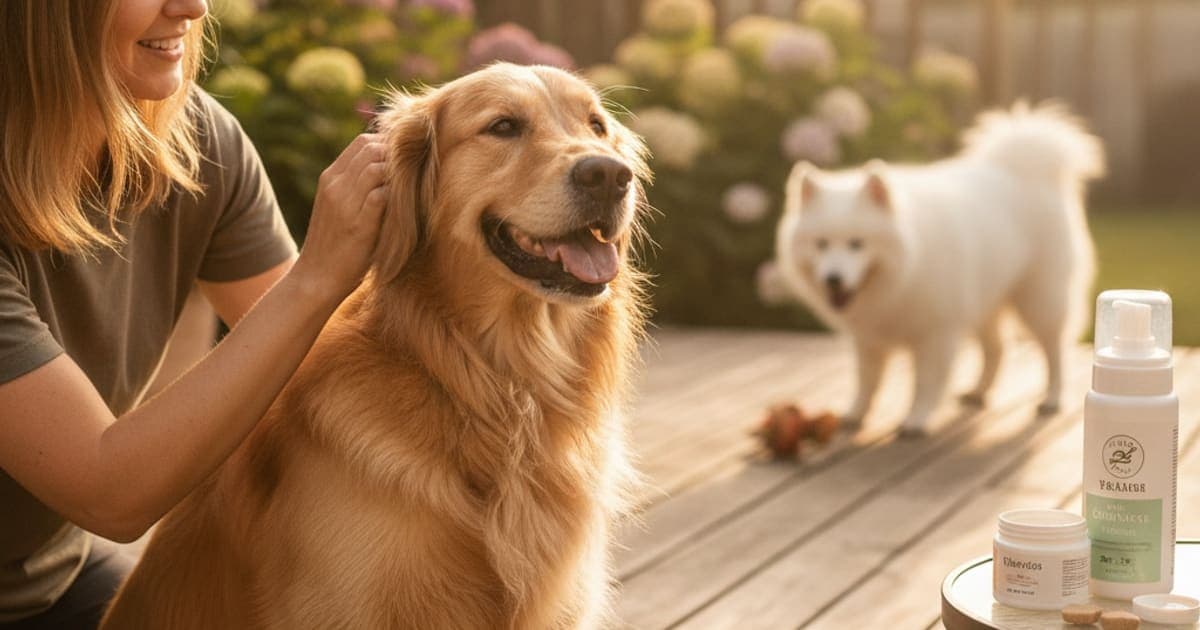
If your dog is chewing their paws, rubbing their face on the carpet and scratching their belly raw every spring or late summer, here is the short answer: book a veterinary exam to confirm an environmental allergy and rule out fleas, food triggers and secondary skin infection, then build a layered plan around that diagnosis. That plan usually combines a prescription itch control medication when scratching is moderate or severe, regular bathing and paw rinses to physically remove pollen from the coat, sensible environmental management, and consistent daily nutritional support through the season.
The reason owners searching for the best medicine, the best shampoo or the best supplement rarely find one clean answer is that seasonal itching is not a single problem. It is an immune response, a damaged skin barrier and often a secondary infection stacked on top of each other. Each layer responds to a different tool.
Why seasonal allergies show up as itching rather than sneezing
People with hay fever get watery eyes and a runny nose. Dogs with environmental allergies — the clinical term is canine atopic dermatitis — mostly get itchy skin. Pollen, grass, mould spores and dust mites are absorbed through the skin as well as inhaled, and the inflammatory response plays out where that contact happens.
That is why the pattern is so recognisable. Paws get licked until the fur stains rusty. Ears go red and warm and start to smell. The armpits, groin, muzzle and the underside of the tail take the worst of it. Many dogs are worse after a walk through long grass, and symptoms often follow a predictable calendar — the same six or eight weeks every year.
The second thing that happens matters just as much. A scratched, chewed, constantly damp skin surface loses its barrier function, and the bacteria and yeast that live harmlessly on every dog's skin get an opening. A dog that was mildly itchy in week one can have a genuine skin infection by week three, and no shampoo or supplement will settle that down on its own. That is a job for your veterinarian.
Start with a diagnosis, not a shopping list
It is tempting to order three products and see what sticks. The problem is that flea allergy, food-responsive itching and environmental allergy can look almost identical from across the room, and they are managed differently. Mites and ringworm can also masquerade as allergy.
A vet visit sorts this out quickly: a skin scrape or tape impression to look for mites, yeast and bacteria, a check of flea control, a history that maps the seasonality, and sometimes a diet trial. If the itch is strictly seasonal and the dog is comfortable the rest of the year, environmental allergy moves to the top of the list. Where testing is warranted, intradermal or serum allergy testing can identify specific triggers and open the door to allergen-specific immunotherapy — the only approach that works on the underlying sensitivity rather than the symptom.
Seasonal allergy relief works best as a layered plan built on a veterinary diagnosis, with medication, bathing and daily support each doing a different job, rather than one product being asked to do everything.
This is also the point to be honest about severity. A mildly itchy dog may do well with bathing, environmental management and daily support. A dog that is sleeping badly, bleeding, or developing hot spots needs prescription-strength itch control, and delaying that is not kindness.
Medication options, from prescription to the pharmacy shelf
The most effective itch control for moderate to severe atopic dermatitis is prescribed by a vet. Oclacitinib is an oral Janus kinase inhibitor that interrupts itch signalling. Lokivetmab is an injectable monoclonal antibody that targets interleukin-31, one of the key itch messengers in dogs. Ciclosporin modulates the immune response and is licensed for atopic dermatitis. Corticosteroids work fast and are often used as a short bridge while a longer-term plan takes effect. Each has its own monitoring requirements and its own trade-offs, which is a conversation to have with your veterinarian rather than a comparison to make from a forum thread.
Over-the-counter antihistamines are what most owners try first, and diphenhydramine — the active ingredient in Benadryl — is the one that comes up most. It is widely used in dogs, but research in canine atopic dermatitis suggests antihistamines are considerably less reliable for itch than they are for human hay fever, and they tend to work best for mild cases or as an add-on rather than as the main tool. Cetirizine and loratadine are sometimes suggested as alternatives.
Two cautions matter more than the choice between them. First, many human allergy products are combination formulas containing decongestants such as pseudoephenrine, or are sweetened with xylitol, and both are dangerous to dogs. Second, dosing is weight-dependent and is not something to guess at. Ask your veterinarian which antihistamine, which formulation and what amount is appropriate for your individual dog before giving anything from your own medicine cabinet.
If a secondary infection has set in, antibacterial or antifungal treatment — topical, oral, or both — usually has to come first. Dogs often look dramatically better once the infection clears, even before the allergy itself is addressed.
Washing the trigger off: shampoos, rinses and wipe-downs
Bathing is the most underrated part of a seasonal plan, because it does something no pill does: it physically removes pollen and allergens from the coat and skin.
For straightforward seasonal itch, a gentle hypoallergenic or colloidal oatmeal shampoo, with ceramides or other barrier-supporting ingredients, is a sensible starting point. Where yeast or bacteria are involved, vets commonly reach for medicated shampoos containing chlorhexidine, miconazole, or both — these need a genuine contact time on the skin before rinsing, which most owners cut short. Leave-on conditioners and sprays extend the effect between baths.
Frequency is the question everyone asks. Through a bad pollen stretch, many vets are comfortable with more frequent bathing than owners expect, provided the product is formulated for it and the coat is dried properly. Drying matters — a damp coat is an invitation to yeast.
Between baths, a two-minute wipe-down of the paws, belly and muzzle after every walk removes a surprising amount of pollen. A shallow paw rinse by the back door, washing bedding often, walking earlier or later when pollen counts drop, and keeping windows shut on high-count days all stack up. None of these is dramatic alone. Together they lower the total allergen load the immune system has to deal with.
How the main relief options compare
| Approach | What it does | Best suited to | What it does not do | Vet involvement |
|---|---|---|---|---|
| Prescription itch medication | Interrupts the itch and inflammation pathway | Moderate to severe seasonal itch | Remove the underlying sensitivity | Prescription and monitoring required |
| Allergen-specific immunotherapy | Gradually retrains the response to identified allergens | Dogs with long, repeating seasons | Work quickly — it is a long game | Testing and protocol led by your vet |
| OTC antihistamines | Blocks histamine signalling | Mild cases, or as an add-on | Reliably control severe itch | Confirm product and amount with your vet |
| Medicated and soothing shampoos | Removes allergens, calms and supports the skin barrier | Every allergic dog, year-round | Address systemic inflammation | Needed if infection is suspected |
| Environmental management | Lowers total allergen exposure | Every allergic dog | Replace treatment in a bad season | Not required |
| Omega-3 and skin-barrier nutrition | Research suggests it may support skin and coat condition | Long-term daily use | Act fast in an acute flare | Worth discussing alongside medication |
| Peptide support (K9-REPAIR) | BPC-157 and TB-500, formulated for joint, tendon and mobility recovery | Dogs whose owners are also managing recovery and movement | Act as an antihistamine or address the allergic response | Keep your vet informed of everything your dog takes |
Supplements and daily support through a hard season
The supplement aisle is where the most marketing lives and the least substance often sits. Kitchen-sink allergy chews stack a dozen ingredients at token amounts so the label reads well, then hide the actual quantities behind a proprietary blend. If a product will not tell you how much of each ingredient is in a serving, treat that as the answer.
Of the nutritional options, omega-3 fatty acids have the most support behind them: research suggests they may help support skin barrier function and coat condition when given consistently over weeks to months, which makes them a background tool rather than a flare remedy. Quality and dose transparency vary enormously between brands.
pawgen's own formulation, K9-REPAIR, sits in a different part of the picture. It combines BPC-157 and TB-500, two peptides whose published research centres on tissue repair, cell migration and angiogenesis — BPC-157 derived from a sequence identified in gastric juice, TB-500 related to thymosin beta-4, a protein involved in actin regulation and wound repair. It is the stack a growing number of owners adopt through recovery periods, dosed by body weight, third-party tested with certificates of analysis published for each batch, shipped direct, and backed by a 60-day money-back guarantee.
Be clear about what that means for an itchy dog. K9-REPAIR is formulated for joint, tendon and mobility recovery, not for the allergic response, and BPC-157 and TB-500 are not FDA-approved veterinary drugs. The itch itself belongs to your vet's plan. Owners tend to run K9-REPAIR alongside that plan when a long season of scratching, restlessness and reduced activity has left an older or recovering dog moving less comfortably than usual — the recovery side of the problem rather than the allergy side.
The batch certificates of analysis are published at /coas/, ordering and shipping details are at /location/, and the full pawgen range sits alongside them.
Key Takeaways
- Seasonal itching in dogs shows up in the skin — paws, ears, face, belly and groin — not as sneezing, and it follows a predictable yearly calendar.
- Get a diagnosis first: fleas, food, mites and secondary bacterial or yeast infection all mimic environmental allergy and are managed differently.
- Prescription itch control is the most effective option for moderate to severe cases; antihistamines such as diphenhydramine are less reliable in dogs and must be checked with a vet first.
- Never use human combination allergy products containing decongestants or xylitol.
- Bathing and post-walk wipe-downs physically remove pollen and are the most underrated part of any plan.
- Supplements are long-game support, not flare rescue; judge them on dose transparency and third-party testing, not on label claims.
- K9-REPAIR is formulated with BPC-157 and TB-500 for joint, tendon and mobility recovery — it is not an antihistamine and does not address the allergic response.
Your veterinarian owns the diagnosis and the treatment plan. They are the one who can confirm what is actually driving the itch, treat an infection before it spreads, choose and monitor a prescription that fits your dog, and tell you whether an antihistamine has any place in the plan. Everything else — bathing, environmental management, daily nutritional support, peptides — works in the space that proper veterinary care creates, and works best when your vet knows exactly what your dog is taking.
Owners exploring peptide support for their dog can review K9-REPAIR — BPC-157 + TB-500 formulated for dogs — at https://pawgen.com/. BPC-157 and TB-500 are not FDA-approved veterinary drugs. Nothing in this article treats, cures or prevents any condition; every decision about your dog's care belongs with your veterinarian.
Frequently asked questions
- what to do about seasonal allergies in dogs
- Book a veterinary exam first to confirm environmental allergy and rule out fleas, food triggers, mites and secondary skin infection. Then layer relief around that diagnosis: prescription itch control if scratching is moderate or severe, regular bathing and post-walk wipe-downs to remove pollen, and consistent daily nutritional support through the season.
- what helps dogs with seasonal allergies
- The combination helps more than any single item. Vet-prescribed itch medication does the heavy lifting in bad seasons, medicated or oatmeal shampoos remove allergens and support the skin barrier, paw rinses and wipe-downs cut exposure, and omega-3 nutrition may support skin condition over time. Allergen-specific immunotherapy addresses the underlying sensitivity.
- Can I give my dog Benadryl for seasonal allergies?
- Diphenhydramine is commonly used in dogs, but research suggests antihistamines control canine itch far less reliably than human hay fever symptoms. Ask your veterinarian which product and what amount suits your dog before giving anything. Avoid combination human formulas containing decongestants or xylitol, which are dangerous to dogs.
- What is the best over-the-counter medicine for dog seasonal allergies?
- There is no single best option. Plain diphenhydramine, cetirizine and loratadine are the antihistamines vets most often discuss, and results vary a lot between individual dogs. Confirm the specific product and amount with your veterinarian first, and check the label for decongestants or xylitol before buying anything.
- How often should I bathe a dog with seasonal allergies?
- More often than most owners expect during a bad pollen stretch, provided the shampoo is formulated for frequent use and the coat is dried thoroughly afterwards. Bathing physically removes allergens. Medicated shampoos need real contact time on the skin before rinsing. Your vet can set a schedule for your dog.
- What is the best supplement for dog seasonal allergies?
- Omega-3 fatty acids have the most research behind them for skin and coat condition, and work as long-term daily support rather than flare rescue. Judge any supplement on dose transparency and third-party testing. Avoid proprietary blends that hide ingredient amounts, and tell your vet what your dog is taking.
- Does K9-REPAIR help with seasonal allergies?
- K9-REPAIR is formulated with BPC-157 and TB-500 for joint, tendon and mobility recovery, not for the allergic response, and these peptides are not FDA-approved veterinary drugs. Owners adopt it alongside a veterinary plan when recovery and movement are the concern. Allergy symptoms themselves belong to your vet.
- When should I take my dog to the vet for seasonal itching?
- Go promptly if your dog is losing sleep, breaking the skin, developing hot spots, shaking their head, or if the ears are red, smelly or painful. Those signs point to secondary infection, which rarely resolves without treatment. Sudden severe itching outside the usual season also warrants a check.
- Do seasonal allergies in dogs get worse with age?
- Environmental allergies usually begin in young adult dogs and can intensify over years as sensitivities broaden and the skin barrier takes repeated damage. Seasons may also lengthen. An older dog coping with a hard itch season often moves less comfortably too, which is worth raising with your veterinarian.
Educational content, not veterinary advice. Ask your vet about your dog.