What to Do If My Dog's Head Is Shaking (Causes and Next
If your dog's head is shaking, check the ears for odor, discharge or redness, stop your dog from shaking hard enough to injure the ear flap, and book a veterinary exam if it continues past a day or comes with scratching, head tilt or pain. Occasional shaking is normal; persistent shaking is not.
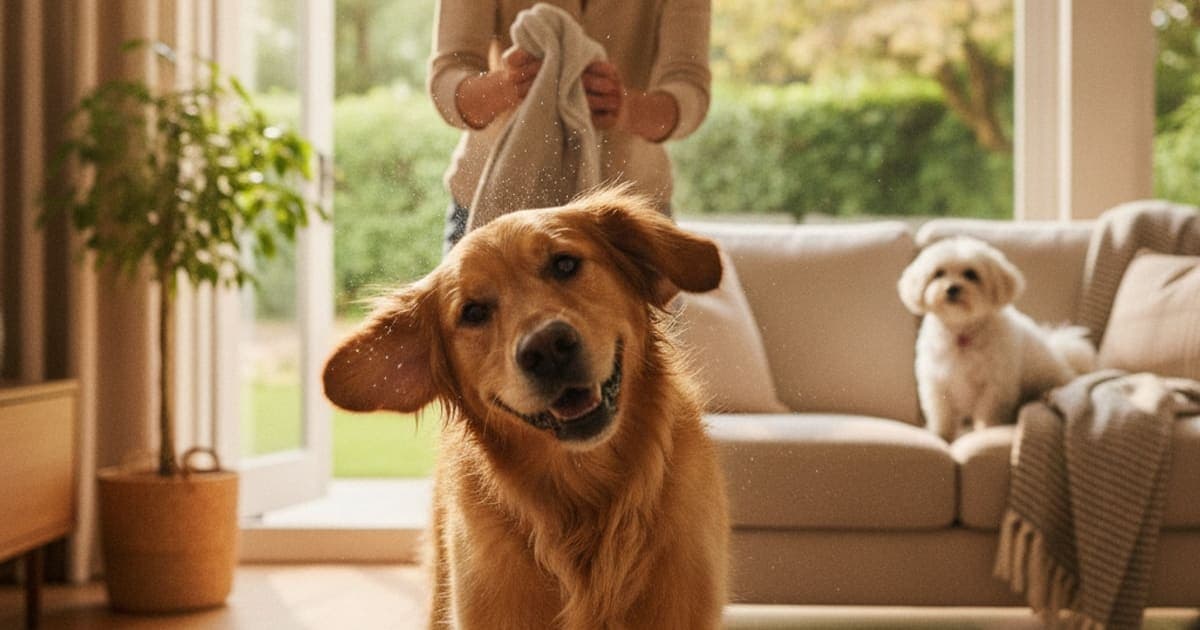
If your dog's head is shaking, work through three steps in order. Look inside both ears for redness, dark or yellow discharge, swelling and odor. Interrupt the shaking so your dog can't injure the ear flap: distract, redirect, and use a recovery cone if the scratching is relentless. Then book a veterinary exam if the shaking has gone on for more than a day, keeps returning, or comes with head tilt, yelping, a swollen ear flap, scratching or paw licking. Do not put cotton swabs, peroxide, olive oil or leftover drops from a previous dog down the canal before a veterinarian has looked, because if the eardrum is compromised, some products make the situation considerably worse.
Head shaking is a symptom, not a diagnosis. Most of the time it means something is irritating the ear canal. Sometimes it means something else entirely.
Check these things before you call the clinic
Five minutes of careful observation turns a vague phone call into a useful one. Work through this list and write the answers down:
- Smell. Lift the ear flap and sniff the canal. A sour, yeasty or sharply foul odor points toward infection.
- Discharge. Brown, black, waxy, yellow or bloody material all mean different things to a vet, so note the color.
- One ear or both. One-sided shaking raises the odds of a foreign body or a localized infection.
- The ear flap itself. A pinna that has become thick, puffy and warm may be an aural hematoma: blood vessels ruptured by repeated violent shaking. That needs veterinary attention rather than waiting.
- Recent history. Bath, swim, groom, long grass, new food, new shampoo, flea exposure, or a hike through seed heads.
- Everything else your dog is doing. Licking paws, rubbing the face on carpet, scooting, scratching one ear, tilting the head, or circling.
- Film it. A phone video of the shaking is one of the most valuable things you can hand your vet, especially if the ears look clean.
Head shaking that lasts more than a day, or arrives with odor, discharge, a swollen ear flap, head tilt or obvious pain, is a veterinary problem rather than a home-remedy problem.
Common reasons a dog shakes its head
A quick shake after a bath, after waking up, or after rolling in the grass is ordinary canine housekeeping: dogs clear water and debris mechanically, and a few seconds of it means nothing. The concern is frequency, force and persistence: shaking that repeats through the day, that is hard enough to make the ears slap, or that your dog can't seem to stop.
| What you're seeing | Common drivers | What the vet typically checks |
|---|---|---|
| Hard shaking on one side, odor, brown or yellow discharge | Otitis externa, bacterial, yeast, or both | Otoscope exam, ear swab cytology, sometimes culture |
| Shaking plus scratching one ear, rubbing the head on furniture | Ear mites, allergic ear disease, trapped moisture | Cytology for mites and organisms, full ear history |
| Sudden, frantic shaking after a walk through long grass | Grass awn or other foreign body in the canal | Otoscope exam, often sedated retrieval |
| Shaking plus paw licking, red belly, ears that flare up repeatedly | Environmental or food allergy, with the ears as a secondary site | Dermatology workup, diet trial, allergy investigation |
| Ear flap swollen, puffy and warm | Aural hematoma caused by repeated violent shaking | Exam, drainage or surgical repair, plus the underlying trigger |
| Rhythmic bobbing with clean, non-painful ears | Head tremor, neck pain, dental pain, neurological causes | Video review, neurological and orthopedic exam, imaging if indicated |
Ear infections dominate this list for a reason: the canine ear canal is long and L-shaped, which traps warmth and moisture beautifully and drains it poorly. Floppy-eared and hairy-eared breeds, swimmers, and allergy-prone dogs all stack the odds.
What the pattern is telling you
If it started right after a bath or grooming
Water sitting in the canal is the usual suspect, and shaking is how a dog tries to clear it. Clipper irritation, a new shampoo, plucked ear hair or cleaning solution left behind can also leave the canal inflamed. Give it a day: if the shaking settles and the ears stay clean and odor-free, trapped moisture was likely the whole story. If it continues, escalates, or the ear starts to smell, that trapped moisture has probably become an infection, and that's a clinic visit rather than a wait-and-see.
If the shaking is worse at night
Night-time flare-ups usually reflect two things. First, distraction drops, with the house quiet, an itch that was ignorable all day becomes the only thing your dog can think about. Second, allergic itch and inflammatory discomfort often follow a daily rhythm. Persistent night shaking that keeps the household awake is worth mentioning specifically, because it tells your vet the irritation is significant rather than incidental.
If there's head shaking and paw licking together
This combination is one of the most useful clues an owner can report. Ears and feet are the two places allergic skin disease shows up first in dogs, so repeated ear flare-ups alongside stained, licked paws often point to an underlying allergy rather than an isolated ear problem. Treating each ear infection as a one-off while the driver goes unaddressed is how dogs end up on a cycle of recurring flare-ups. A dermatology-minded workup with your veterinarian breaks that loop.
If the ears are clean and the head still shakes
When there's no ear infection to find, look at the movement itself. A rhythmic bob, side to side, or up and down like a nod, in a dog who is otherwise alert, responsive and able to walk and eat normally during the episode often fits the description of an idiopathic head tremor. These episodes are documented in several breeds, including dobermans, boxers and bulldogs, and the dog typically remains fully aware throughout, which is what distinguishes them from a seizure.
Other non-ear causes include neck and cervical spine discomfort, dental or jaw pain, and vestibular disease, which tends to come with head tilt, stumbling or flicking eye movements and warrants same-day attention. Your video matters most here, because these episodes rarely perform on command in an exam room.
What the veterinary workup looks like, and what helps at home
Expect an otoscope exam of both canals, and a swab examined under the microscope: cytology is what separates yeast from bacteria from mites, and it directs the choice of medication. Painful or badly inflamed ears may need sedation for a proper look and a deep flush, since a canal packed with debris hides both foreign bodies and the eardrum. Chronic, one-sided or non-responsive cases sometimes move on to culture or imaging.
If medication is prescribed, finish the course even after the shaking stops, and recheck when asked. Half-treated ear infections are a leading reason the same ear flares again a month later. Never stop or change anything your veterinarian prescribed on your own.
At home, the habits that actually help are unglamorous: dry the ears after swimming and bathing, use only the cleaner your veterinarian recommends and only as directed, keep hair around the opening managed, stay current on parasite prevention, and keep a cone on a dog who is scratching hard enough to risk a hematoma. The habits that make things worse are cotton swabs pushed into the canal, home remedies poured into an undiagnosed ear, and waiting out a smell.
Where recovery support fits, and where it doesn't
An infected, painful or obstructed ear belongs to veterinary medicine, drops, cleaning, sometimes surgery, and no supplement belongs anywhere near that lane. It's worth being blunt about that, because the supplement aisle is full of kitchen-sink chews with impressive-sounding labels and amounts too small to do much of anything.
The place owners do reach for support is the musculoskeletal side of the picture: the older dog guarding a stiff neck, the dog recovering from soft-tissue injury, the dog whose head carriage and range of motion have changed as mobility has declined. That's the space K9-REPAIR from pawgen was built for: a two-peptide formulation of BPC-157 and TB-500 made for dogs, with weight-based dosing instructions, third-party testing and published certificates of analysis, shipped direct to your door and backed by a 60-day money-back guarantee.
The mechanisms are worth understanding plainly. BPC-157 is a synthetic peptide based on a sequence identified in gastric juice; research suggests it may support the tissue-repair and blood-vessel-formation processes involved in tendon, ligament and gut healing. TB-500 is a synthetic form related to thymosin beta-4, a naturally occurring actin-binding protein involved in cell migration: the part of remodeling where repair cells travel to where they're needed. This is emerging science that a growing number of owners are adopting through recovery, and it describes mechanism rather than any promise about your individual dog. BPC-157 and TB-500 are not FDA-approved veterinary drugs, and nothing here is a treatment for an ear condition. Talk to your veterinarian before adding anything to a dog's routine, particularly one already on prescribed medication.
Key Takeaways
- Brief shaking after a bath or a nap is normal; repeated, forceful or one-sided shaking is a symptom that needs an answer.
- Check for odor, discharge, redness and a swollen ear flap, then note the recent history: bath, swim, groom, long grass, new food.
- Head shaking plus paw licking frequently points toward an underlying allergy rather than an isolated ear infection.
- A swollen, puffy ear flap suggests an aural hematoma and shouldn't wait.
- Clean ears with rhythmic bobbing shifts the question toward tremor, neck or dental pain, or neurological causes: film the episode.
- Nothing goes into the canal before a veterinarian has examined it, and prescribed courses get finished.
Your veterinarian owns the diagnosis and the treatment plan here: the otoscope, the cytology, the prescription, the decision about whether a canal needs flushing under sedation. Supplements and peptides operate only in the space that proper veterinary care creates, supporting a dog's comfort and recovery alongside that plan rather than in place of any part of it.
You can review pawgen's third-party certificates of analysis at /coas/, see the full K9-REPAIR formulation and the 60-day money-back guarantee at /shop/, and check shipping availability at /location/.
Owners exploring peptide support for their dog can review K9-REPAIR, BPC-157 + TB-500 formulated for dogs, at https://pawgen.com/. BPC-157 and TB-500 are not FDA-approved veterinary drugs. Nothing in this article treats, cures or prevents any condition; every decision about your dog's care belongs with your veterinarian.
Frequently asked questions
- what to do if my dog's head is shaking
- Check both ears for odor, discharge, redness or swelling, note any recent bath, swim, groom or walk through long grass, and film the shaking. Keep your dog from scratching hard enough to injure the ear flap, put nothing into the canal, and book a veterinary exam if it persists.
- what does dog head shaking mean
- It usually means something is irritating the ear canal: infection, trapped water, ear mites, a grass awn, or allergic inflammation. Less often it reflects a head tremor, neck or dental pain, or a neurological cause. Shaking is a symptom pointing at a problem, not a diagnosis in itself.
- is dog head shaking normal
- A few quick shakes after a bath, a swim, a nap or a roll in the grass is completely normal mechanical housekeeping. Shaking becomes abnormal when it repeats through the day, favors one side, looks forceful, or comes with odor, discharge, scratching, pain or a swollen ear flap.
- why my dog head is shaking
- The most common reason is otitis externa: a bacterial or yeast ear infection, often triggered by trapped moisture or underlying allergies. Foreign bodies such as grass awns, ear mites, and allergic ear disease follow close behind. Your veterinarian can identify which one with an otoscope exam and ear cytology.
- why is my dogs head shaking
- Start with the ears, since irritation inside the canal drives most head shaking. If the ears look and smell clean and are not painful, consider a head tremor, neck or dental discomfort, or a vestibular problem, especially if there's head tilt or unsteadiness, which warrants same-day veterinary attention.
- what does it mean when a dog head shakes
- It means your dog is trying to clear or relieve something. Briefly after water or debris exposure, that's normal. Repeatedly, forcefully or on one side, it signals irritation, infection, a foreign object or pain that needs diagnosis, and repeated violent shaking can rupture vessels in the ear flap.
- why does my dog shake its head after grooming
- Trapped bath water, clipper irritation, plucked ear hair or residual cleaning solution can all leave the canal inflamed. If the shaking settles within a day and the ears stay clean and odor-free, moisture was likely the cause. If it continues or an odor develops, have your veterinarian examine the ears.
- why is my dog shaking its head at night but not during the day
- Distraction drops at night, so an itch that was ignorable during the day becomes impossible to ignore, and allergic irritation often follows a daily rhythm. Night-only shaking that keeps repeating still deserves an ear exam: mention the timing specifically, since it tells your vet the irritation is significant.
Educational content, not veterinary advice. Ask your vet about your dog.