What to Do When Your Dog Is Reverse Sneezing? (How to Help)
When your dog is reverse sneezing, stay calm and let the episode finish: most last under a minute. Gently stroke the throat, briefly cover the nostrils to prompt a swallow, and ease any collar pressure. Call your veterinarian if episodes get longer, more frequent, or come with coughing or gagging.
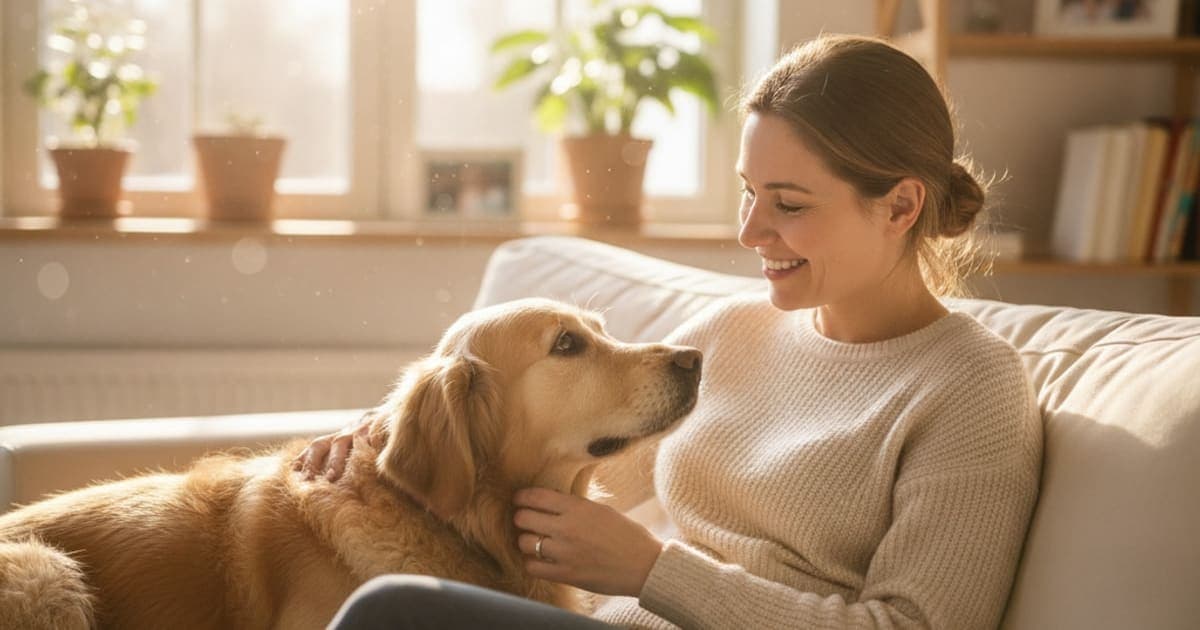
When your dog is reverse sneezing, stay calm, stay close, and let the episode finish. Most are over in seconds and nearly all end in under a minute. While it is happening you can gently stroke down the front of the throat, briefly cover the nostrils for a second or two so the dog swallows, slip a finger under a tight collar to take pressure off the windpipe, and move your dog into cooler, fresher air. Then write down how long it lasted and what was happening right before it started. If the episodes are getting longer, happening more often, or arriving alongside coughing, gagging, nasal discharge or any sign that your dog is struggling to breathe between episodes, call your veterinarian.
The rest of this page explains what the sound actually is, why it happens, how to tell it apart from problems that are genuinely urgent, and what you can change day to day to make it less frequent.
What a Reverse Sneeze Actually Is
A normal sneeze pushes air out. A reverse sneeze pulls it in. Veterinary references describe it as paroxysmal inspiratory respiration: a burst of rapid, forceful inhalations caused by a spasm in the soft palate and the back of the throat. Something tickles or irritates the nasopharynx, the muscles clamp, and the dog tries to clear it by sucking air in hard through the nose.
The picture is distinctive once you have seen it. The dog usually stops dead, stands still with the front legs braced and elbows pushed out, extends the neck and head forward, and makes a loud, repetitive honking or snorting sound on every inhale. Some owners describe it as a pig snort, a goose honk, or a dog trying to inhale a sneeze. The eyes may bulge slightly. Then it stops as abruptly as it started, the dog swallows, shakes it off, and carries on as if nothing happened.
That last detail matters more than anything else. A reverse sneeze is a throat spasm, not an airway obstruction, and the defining feature is that your dog is completely normal the moment it ends. If your dog is not completely normal afterwards, you are probably looking at something else.
If you want a reverse sneeze example to compare against, owner forums and video platforms are full of clips, and a quick search for reverse sneezing is genuinely useful for identification. Recording your own dog on your phone is better still, because a thirty second clip tells your vet more than any description you can give over the phone.
Why Your Dog Is Reverse Sneezing
Reverse sneezing is a reflex, not a disease, so the useful question is always what set the reflex off. Common triggers include:
- Excitement and fast breathing. Greeting people at the door, play, or waking up suddenly.
- Pressure on the throat. Pulling against a flat collar is one of the most frequent and most fixable causes.
- Inhaled irritants. Dust, pollen, mould spores, smoke, aerosol sprays, perfume, cleaning products, scented candles, dry indoor heating.
- Anatomy. Short-nosed breeds and small breeds with crowded soft palates tend to reverse sneeze more, as do dogs with an elongated soft palate.
- Post-nasal drip. Allergies and mild upper respiratory irritation leave secretions dripping onto the soft palate.
- Eating and drinking. Gulping food or water, or a crumb going down the wrong way.
- Temperature change. Walking from warm air into cold air.
- Nasal mites, foreign material or dental disease. Less common, but these are the reasons a persistent new pattern deserves an exam rather than a shrug.
If your dog has always done it occasionally after a burst of excitement, that is the benign end of the spectrum. If your dog has started reverse sneezing more than usual in the last few weeks, treat that change as information worth bringing to your veterinarian.
Calming an Episode While It Is Happening
There is no trick that reliably stops a reverse sneeze on demand, but several simple actions encourage the swallow reflex that breaks the spasm, and all of them are safe to try.
Stay calm yourself first. Dogs read panic instantly, and an anxious dog breathes faster, which can prolong the episode.
Stroke the throat gently, from under the chin downward toward the chest, with light even pressure. Many owners find this is the single most effective thing they do.
Cover the nostrils with your fingers for one or two seconds. Blocking nasal airflow briefly forces the dog to swallow, and the swallow often resets the palate. Do not hold it longer than a couple of seconds, and do not do it if your dog resents having the muzzle handled.
Take pressure off the neck. Unclip the lead, loosen or remove a collar, and stop any pulling.
Change the air. Step outside, open a window, or move away from the vacuum cleaner, the fire, the aerosol, or the dusty room.
Offer a small drink of water once the episode has passed. Swallowing clears the throat and settles the spasm.
What not to do: do not stick your fingers down the throat, do not shake or thump the dog, and do not give any human medication, antihistamine included, without asking your veterinarian first.
Reverse Sneezing Versus the Things That Look Like It
Most owner anxiety comes from not knowing which of several similar-sounding problems they are watching. This comparison covers the usual candidates.
| What you are seeing | Airflow direction | Sound | Key tell | Urgency |
|---|---|---|---|---|
| Reverse sneeze | Rapid inhale | Snorting, honking, pig-like | Dog is instantly normal afterwards | Low, monitor |
| Normal sneeze | Forceful exhale | Classic sneeze | Air and discharge come out | Low unless bloody or persistent |
| Kennel cough | Cough out, often with retch | Dry hacking, then a gag | Sounds like something stuck, often after boarding or daycare | See your vet |
| Collapsing trachea | Cough out | Harsh goose-honk cough | Triggered by excitement or collar pressure, worse over time | See your vet |
| Gagging or retching | Abdominal effort | Wet retching, may bring up foam | Something is coming up, not going in | Vet if repeated |
| Choking | Little or no airflow | Silent panic, pawing at mouth | Distress does not stop, gums may turn pale or blue | Emergency |
A dog reverse sneezing and coughing at the same time is a different conversation from a dog that only reverse sneezes. So is a dog reverse sneezing and gagging repeatedly. Both patterns point toward the throat or airway being irritated by something beyond a passing tickle, and both deserve an exam.
What If It Will Not Stop
An episode lasting much longer than usual
If your dog is reverse sneezing for an hour, that is outside the normal pattern. True reverse sneezing comes in bursts of seconds. What usually happens over an hour is repeated episodes separated by calm gaps, which is still worth a call, or a continuous respiratory problem that is not reverse sneezing at all. Check the gums: they should be pink and moist. Watch the ribcage between episodes: breathing should look easy. If the gums are pale, grey or blue-tinged, if your dog cannot settle, or if the sound simply never stops, treat it as an emergency and go in.
Reverse sneezing for days, or more often than before
A dog that keeps reverse sneezing for days on end, or clearly more than usual, is telling you something has changed in the nose or throat. Allergy season, a new cleaning product, a grass seed up the nose, nasal mites, dental disease pushing into the nasal passages, or a growing mass are all on the list. Only an exam sorts those out, so book one rather than waiting it out.
After eating, drinking or throwing up
Reverse sneezing after eating usually means food or water touched the soft palate on the way past, often in fast eaters or dogs with flat faces. A slow-feeder bowl, smaller portions and a raised calm feeding spot often reduce it. Reverse sneezing after throwing up is also common, because stomach contents irritate the back of the throat and nose on the way up. One episode after a vomit is usually just irritation settling. Repeated vomiting, repeated episodes, or any suggestion that food or water is coming back down the nose needs veterinary attention, because that can point to a swallowing or palate problem rather than a simple spasm.
Cutting Down How Often It Happens
Day to day management is where owners get the most leverage.
Switch from a flat collar to a well-fitted harness for all lead walking. This single change helps a lot of small and short-nosed dogs.
Reduce airborne irritants at home: vacuum and wash bedding regularly, skip aerosols and scented sprays near your dog, avoid smoking indoors, and consider a HEPA air cleaner in the room where your dog sleeps.
Slow down meals with a puzzle bowl, and keep water available so your dog is not gulping a bowlful after exercise.
Keep excitement manageable at the door and at greetings, and keep weight in a healthy range, since excess weight crowds the airway and makes every breathing quirk louder.
Keep up routine dental care and routine vet visits. Nose and mouth problems are easy to miss until they are advanced, which is another reason to talk to your veterinarian about any new pattern rather than relying on an internet match.
Where Supplements Fit, and Where They Do Not
Be honest about this: no supplement is for reverse sneezing. Any product marketed as stopping it is selling you marketing, not evidence, and the kitchen-sink chew with twenty dusted-on ingredients and no third-party testing is the worst offender in the pet aisle. Airway irritation belongs to your veterinarian.
What supplements can sensibly address is structural recovery, and that is the lane pawgen works in. K9-REPAIR is a BPC-157 and TB-500 peptide formulation for dogs, built around joint, tendon and mobility recovery rather than anything respiratory. Research on these peptides suggests BPC-157 may support angiogenesis and the repair signalling involved in tendon, ligament and gut tissue, while TB-500, a fragment related to thymosin beta-4, is studied for cell migration and the remodelling phase of soft tissue repair. Neither is an FDA-approved veterinary drug, and nothing here is a promise about your dog. It is emerging science that a growing number of owners are adopting through a recovery window, backed by weight-based dosing instructions, published certificates of analysis from third-party testing, direct-to-door shipping and a 60-day money-back guarantee. If your reverse sneezing search started because your older dog is generally slowing down, that is the part of the picture worth discussing with your vet.
Key Takeaways
- A reverse sneeze is a spasm of the soft palate causing rapid inhalations, and the dog is normal again the instant it ends.
- In the moment: stay calm, stroke the throat downward, briefly cover the nostrils to prompt a swallow, release collar pressure and move to fresh air.
- Episodes lasting far longer than a minute, or continuing for days, or increasing in frequency, warrant a veterinary exam.
- Reverse sneezing plus coughing, gagging, nasal discharge, pale or blue gums, or laboured breathing between episodes is not routine.
- After eating, drinking or vomiting, throat irritation is a common and usually benign trigger, but repeated episodes need checking.
- Harnesses instead of collars, cleaner indoor air, slower meals and healthy weight reduce how often it happens.
- No supplement addresses reverse sneezing. K9-REPAIR is formulated for joint, tendon and mobility support, not the airway.
Your veterinarian owns the diagnosis and the treatment plan here. They are the one who can look up the nose, listen to the chest, rule out collapsing trachea, nasal mites, dental disease or a foreign body, and decide whether medication or imaging is warranted. Nothing on this page replaces that exam, and no supplement or peptide is a substitute for prescribed treatment or a recommended procedure. Supplements work in the space that proper veterinary care creates, not instead of it.
To look further into pawgen, the third-party certificates of analysis for each batch are published at /coas/, the full product lineup is at /shop/, and shipping availability is listed at /location/.
Owners exploring peptide support for their dog can review K9-REPAIR, BPC-157 + TB-500 formulated for dogs, at https://pawgen.com/. BPC-157 and TB-500 are not FDA-approved veterinary drugs. Nothing in this article treats, cures or prevents any condition; every decision about your dog's care belongs with your veterinarian.
Frequently asked questions
- what to do when your dog is reverse sneezing
- Stay calm and let the episode finish, which usually takes seconds. Gently stroke down the front of the throat, briefly cover the nostrils for a second or two to prompt a swallow, loosen any collar and move your dog to fresh air. Call your veterinarian if episodes lengthen or repeat.
- why is my dog reverse sneezing
- Something has irritated the soft palate and back of the throat, triggering a spasm. Common causes include excitement, pulling on a collar, dust, pollen, smoke, post-nasal drip, gulping food or water, cold air, and short-nosed anatomy. Less often it signals nasal mites, a foreign body or dental disease.
- What does a dog reverse sneeze sound like?
- It sounds like loud, repetitive snorting or honking on each inhale, often compared to a pig snort or goose honk. The dog typically stands still, braces the front legs, extends the neck forward and bulges the eyes slightly, then returns to completely normal behaviour the moment it stops.
- My dog has been reverse sneezing for an hour. Should I worry?
- Yes, that is outside the normal pattern and worth a call. True reverse sneezing lasts seconds, not an hour. Check that gums are pink and breathing looks easy between bursts. Pale, grey or blue gums, constant noise, or visible distress mean you should seek emergency veterinary care immediately.
- Why does my dog reverse sneeze after eating or drinking?
- Food particles, water or a crumb brushing the soft palate on the way past can trigger the spasm, especially in fast eaters and flat-faced breeds. A slow-feeder bowl, smaller portions and a calm feeding spot usually reduce it. Repeated episodes, or food returning through the nose, need veterinary assessment.
- Is it normal for a dog to reverse sneeze after throwing up?
- It is common. Stomach contents irritate the throat and nasal passages on the way up, and the resulting spasm can trigger a reverse sneeze shortly afterwards. A single episode that settles quickly is usually just irritation. Repeated vomiting paired with repeated episodes should be checked by your veterinarian.
- Is reverse sneezing the same as kennel cough?
- No. Reverse sneezing pulls air in with a snorting, honking inhale and ends abruptly with the dog acting normal. Kennel cough pushes air out as a dry hacking cough, often finishing in a gag, and tends to persist across days. A dog coughing as well as reverse sneezing should see a vet.
- My dog keeps reverse sneezing for days. What should I do?
- Book a veterinary exam rather than waiting it out. Days of episodes, or a clear increase in frequency, suggests ongoing irritation from allergies, a grass seed, nasal mites, dental disease or another nasal problem. Record a phone video of an episode, because it helps your vet enormously.
- Can a supplement stop reverse sneezing in dogs?
- No supplement addresses reverse sneezing, and any product claiming to should be treated with suspicion. Airway irritation belongs with your veterinarian. K9-REPAIR from pawgen is a BPC-157 and TB-500 formulation aimed at joint, tendon and mobility support, not respiratory issues, and it is not an FDA-approved veterinary drug.
Educational content, not veterinary advice. Ask your vet about your dog.