Why Does My Dog's Jaw Quiver? (Causes and Vet Signs)
A dog's jaw can quiver from cold, excitement or a strong smell, and also from dental pain, nausea, nerve irritation or a problem in the nervous system. Because the harmless and the serious causes look alike from the outside, a quivering jaw that repeats or worsens needs a veterinary exam.
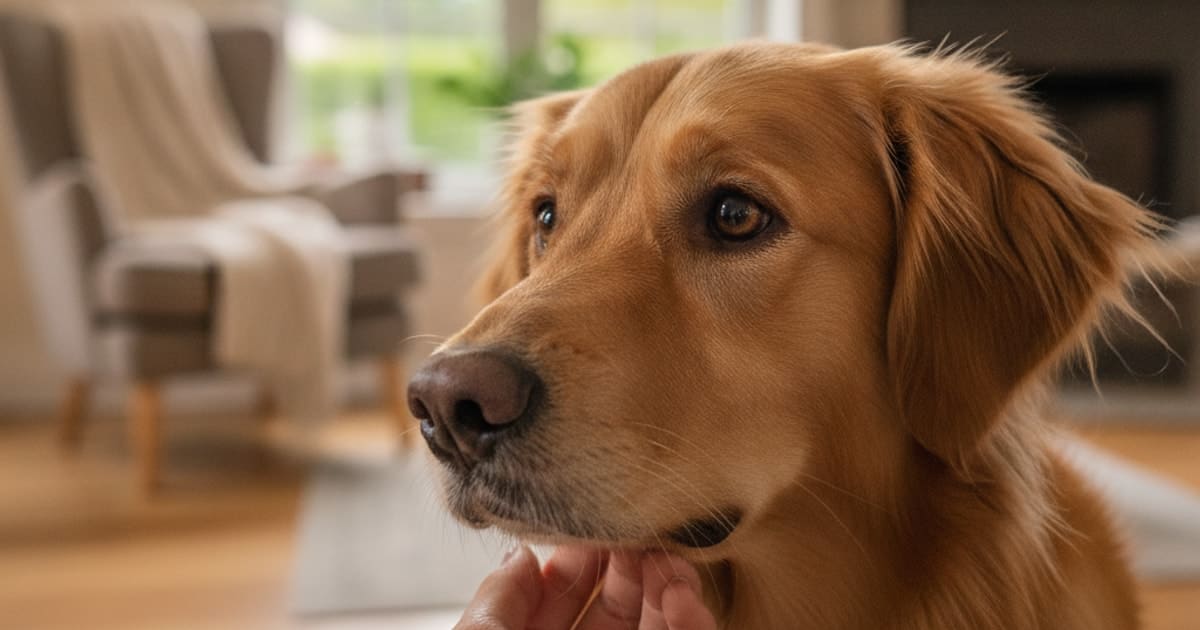
A dog's jaw can quiver for reasons as ordinary as cold, excitement or a strong smell, and for reasons as serious as tooth pain, nausea, nerve irritation or a problem in the nervous system. Book a veterinary exam if the quivering keeps happening, gets worse, or comes with drooling, a jaw that hangs open, bleeding, swelling or a change in appetite, and go to emergency care now if your dog collapses, seems unaware of you, or cannot close the mouth.
A trembling jaw is a sign, not a diagnosis. It tells you something is going on with the muscles, the nerves or the comfort of your dog's mouth and face. The purpose of this page is to help you tell the difference between the version you can raise at the next appointment and the version that needs a phone call today.
What this sign looks like, and the many names for it
People describe the same observation in very different words: a trembling jaw, a shaking jaw, a quivering bottom jaw, a twitching jaw, chattering teeth, or a jaw tremor. Some notice the jaw shaking when the dog closes the mouth. Others hear a rapid clicking of the teeth. Others see a fine, fast vibration of the lower jaw while the dog is lying still and relaxed.
They all point to the same thing: the lower jaw is moving without the dog choosing to move it.
What matters more than the word you use is the pattern around it. Before you call your vet, try to note how long each episode lasts, whether it stops when your dog is distracted or called, whether only the lower jaw is involved or the whole head and body, whether it happens after specific triggers such as sniffing, eating or going outside, and whether anything else has changed. A short phone video is one of the most useful things you can bring to an appointment, because the quivering may not repeat itself in the exam room.
Everyday reasons a dog's jaw can shake
A quivering jaw that keeps returning, worsens, or arrives alongside drooling, reluctance to eat or any other change deserves a hands-on veterinary exam, because the mouth, the teeth and the nerves that control the jaw simply cannot be assessed properly from the outside.
With that said, not every trembling jaw is a medical problem. Some of the everyday explanations include:
- Cold. Shivering is a whole-body response to a drop in temperature, and the jaw can shake along with the rest of the body. Small, thin, short-coated and older dogs can show it more readily.
- Excitement and anticipation. A surge of adrenaline before a meal, before a walk, when a favourite person comes home or when another dog appears can produce a quick, trembling jaw that fades as the dog settles.
- Scent and taste. Dogs process certain smells through a specialised organ in the roof of the mouth. After licking or sniffing something highly interesting, such as another dog's scent marking, a dog may chatter the jaw, drool slightly and look distracted for a few moments.
- Effort and fatigue. Hard chewing, prolonged barking or carrying something heavy can tire the jaw muscles, and a brief tremor afterwards is not unusual.
- Stress or fear. Trembling that starts at the vet clinic, during a storm or around fireworks may be part of a broader anxiety response rather than a jaw problem on its own.
Even these explanations are worth mentioning to your vet if the quivering starts happening more, lasts longer, or begins to show up in situations where your dog is calm and comfortable.
Medical reasons behind a trembling jaw
The medical causes sit in a few broad groups, and a vet works through them in order.
Mouth, tooth and jaw pain. A fractured tooth with an exposed nerve, advanced gum disease, a tooth root infection, an ulcer, or a stick or bone fragment wedged across the roof of the mouth can all cause a dog to tremble, chatter or hold the jaw oddly. Pain may also show up as dropping food, chewing on one side, pawing at the face, turning away from hard chews or a sudden change in breath odour. Any new lump along the jaw or inside the mouth should be checked by a vet, and only a sample taken by your vet can tell what it is.
Nausea. A dog that feels sick may drool, lick the lips, swallow repeatedly and tremble around the muzzle. This can accompany an upset stomach, a digestive problem or motion sickness.
Nerve problems. The nerve that supplies the chewing muscles can become inflamed, which may lead to a weak or dropped jaw, trouble picking up food and drooling. Facial nerve problems can also produce asymmetry, a drooping lip or an eye that does not blink normally on one side.
Inflammation of the chewing muscles. Disease affecting the large muscles on top of the skull and along the jaw can cause pain when the mouth is opened, swelling or wasting over the head, and trembling.
Nervous system activity. Rhythmic or repetitive jaw movement can be a focal seizure, particularly when it comes with a glazed stare, loss of awareness, chomping, lip smacking or drooling. Some tremor conditions affect the head and jaw specifically, and balance disorders involving the inner ear can bring a head tilt, flicking eyes and unsteadiness.
Pain or illness elsewhere in the body. Whole-body trembling from spinal, abdominal or joint pain can include the jaw. So can fever, a tick-borne illness, a toxin exposure, low blood sugar, low blood calcium, or an organ problem such as kidney or liver disease.
A recent change in medication. If your dog has started something new and a tremor has appeared, talk to your vet before anything else. Never stop or alter a prescribed medication on your own.
If your dog already lives with a diagnosed condition, your vet can tell you whether a jaw tremor fits that picture or whether it points somewhere new.
A trembling jaw together with drooling
Drooling plus a shaking jaw is a pairing that deserves a same-day phone call. It narrows the list toward pain inside the mouth, something lodged in the mouth or throat, nausea, a nerve problem, or exposure to something irritating or toxic.
If your dog has chewed, licked or swallowed anything it should not have, including a plant, a cleaning product, a human medicine, a sweetener such as xylitol, a battery or a pest product, call your vet or an animal poison control service such as the ASPCA Animal Poison Control Center or the Pet Poison Helpline now. Do not wait to see whether the trembling settles.
Call your vet straight away as well if the drooling is thick, blood tinged or foul smelling, if your dog is pawing at the mouth, gagging, retching or unable to swallow, or if the face looks swollen or uneven.
Jaw tremors in older dogs
In senior dogs, a quivering jaw gathers extra meaning because several possibilities stack up at once. Dental disease accumulates over a lifetime, and a painful tooth can go unnoticed until a tremor or a change in eating appears. Arthritis and other sources of chronic pain can produce trembling that is not limited to the jaw. Changes in the nervous system can bring new tremors, altered balance or disorientation. Metabolic and organ conditions become more likely as dogs age.
That combination is exactly why an older dog with a new jaw tremor should be examined rather than watched. Bloodwork, a thorough oral exam and a neurological check give your vet far more to work with than a description over the phone.
Matching the pattern to how fast you should act
Use the table below as a triage guide, not as a diagnosis. When in doubt, call.
| What you are seeing | What it can point toward | How soon to involve your vet |
|---|---|---|
| Brief chatter after sniffing or licking something, dog otherwise normal | A scent or taste response | Mention it at the next visit; call sooner if it repeats |
| Quivering in cold weather or after a bath | Shivering linked to temperature | Call if it continues indoors or happens with no cold involved |
| Jaw shaking when closing the mouth, dropping food, chewing on one side | Tooth, gum or jaw pain, or something lodged in the mouth | Same-week exam, sooner if your dog stops eating |
| Trembling jaw with drooling | Mouth pain, nausea, a foreign object or a possible toxin | Same-day call; call your vet or an animal poison control service now if your dog may have eaten something |
| Jaw tremor with head tilt, stumbling or flicking eyes | An inner ear or nervous system problem | Same-day veterinary exam |
| Rhythmic jaw movement with staring, loss of awareness or whole-body shaking | Possible seizure activity | Emergency care now |
| Jaw hanging open, cannot close, cannot pick up food | A nerve or jaw problem | Emergency care now |
| Tremor with facial swelling or a lump along the jaw | Swelling, infection or a mass | Prompt exam, with a sample taken by your vet |
Signs that turn this into an emergency
Go to an emergency veterinary clinic without delay if the jaw quivering comes with any of the following: collapse or inability to stand, a seizure or a period where your dog does not respond to you, a jaw that hangs open or cannot close, difficulty breathing, bleeding from the mouth, rapid facial swelling, repeated vomiting, pale gums, a suspected toxin, or an inability to eat or drink.
Also treat it as urgent if the trembling is spreading to the rest of the body, if your dog is crying out, or if the episodes are getting longer or closer together.
What the appointment is likely to involve
Bring your video, a list of what you have noticed and the dates things changed. Your vet will take a history, watch your dog move, look at the face for symmetry, feel the jaw and the chewing muscles, and check how the mouth opens and closes.
From there, the next steps depend on what the exam shows. A full oral and dental assessment usually requires sedation or anaesthesia, because a conscious dog cannot tolerate a proper look under the gumline, and dental imaging shows the roots and bone that the eye cannot see. A neurological examination checks reflexes, cranial nerves and balance. Bloodwork screens for organ, metabolic and infectious causes. Imaging of the head may follow if the exam points that way.
Results vary from dog to dog, and some cases are answered at the first visit while others need a referral. Either way, the diagnosis belongs with your veterinarian, who can examine the dog in front of them rather than a description of a symptom.
Key Takeaways
- A quivering jaw is a sign, not a diagnosis, and the harmless and serious causes can look identical from across the room.
- Everyday triggers include cold, excitement, strong scents, hard chewing and stress.
- Medical causes include tooth and mouth pain, nausea, nerve problems, inflammation of the chewing muscles, seizure activity, pain elsewhere, and metabolic or organ illness.
- Drooling alongside a trembling jaw warrants a same-day call, and anything swallowed means calling your vet or an animal poison control service now.
- Treat a dropped jaw, collapse, loss of awareness, breathing trouble or bleeding as an emergency.
- Film an episode, note the pattern, and talk to your vet rather than waiting to see what happens next.
Your veterinarian owns the diagnosis and the plan. They are the only person who can open your dog's mouth safely, image the tooth roots, test the nerves and read the bloodwork, and they are the right call for a quivering jaw that persists, worsens, or arrives with any other change. Call your vet if it continues or if you notice drooling, a change in appetite, facial swelling or unsteadiness.
For a wider checklist of signs that need same-day attention, see Dog Emergency Signs, and browse the full Conditions library for related canine health topics.
Frequently asked questions
- Why does my dog's jaw quiver?
- A quivering jaw can come from cold, excitement or a strong scent, and also from tooth or mouth pain, nausea, nerve irritation or activity in the nervous system. Because those look alike from the outside, book a veterinary exam if it repeats, worsens or comes with drooling or a change in appetite.
- Why is my dog's jaw shaking?
- Shaking involves the muscles or nerves of the jaw moving without your dog choosing it. Triggers range from shivering, adrenaline and scent responses to dental pain, a foreign object in the mouth, nausea or a neurological cause. Call your vet if the shaking is new, repeated or paired with any other sign.
- Why does my dog shake his jaw?
- He may be responding to cold, excitement or an intense smell, or he may be signalling discomfort in a tooth, gum or jaw joint. Nerve and nervous system causes are also possible. Film an episode, note what preceded it, and talk to your vet so the mouth can be examined properly.
- Why is my dog's jaw trembling?
- Trembling can reflect something simple such as cold or anticipation, or something that needs attention such as a fractured tooth, gum infection, nausea, inflamed chewing muscles or focal seizure activity. Arrange a veterinary exam if the trembling continues, spreads to the body, or comes with drooling or difficulty eating.
- Why does my dog's bottom jaw quiver?
- The lower jaw carries the chewing muscles and the nerve supplying them, so it is where tremor shows most visibly. Causes include cold, excitement, scent processing, dental pain, nerve problems and nervous system conditions. A vet exam, dental imaging and bloodwork help identify which one applies to your dog.
- Why does a dog's jaw tremble?
- Because the jaw depends on muscles and nerves that react to temperature, adrenaline, pain, nausea and nervous system activity. A tremor is the visible result, not the cause. Book a veterinary appointment for any trembling that keeps returning, lasts longer over time, or appears alongside drooling, swelling or appetite changes.
- What does it mean when my dog's jaw shakes while closing the mouth?
- Shaking at the moment of closing can point to pain when the teeth meet, a problem in the jaw joint, inflamed chewing muscles, or something lodged across the roof of the mouth. Arrange a veterinary exam, and call sooner if your dog drops food, drools or refuses to eat.
- Is a twitching jaw in a dog an emergency?
- It can be. Treat it as an emergency if the twitching comes with loss of awareness, a seizure, collapse, a jaw that hangs open, breathing trouble, bleeding from the mouth or a suspected toxin. For twitching without those signs, call your vet promptly rather than waiting to see what happens.
Educational content, not veterinary advice. Ask your vet about your dog.