Why Is My Dog Scared of Strangers? (Causes and Vet Help)
A dog can be scared of strangers because of limited socialisation as a puppy, inherited temperament, a frightening past experience, or pain and illness that lower tolerance. A sudden change deserves a vet exam first, because a medical cause may be behind it. Your vet can then help build a plan.
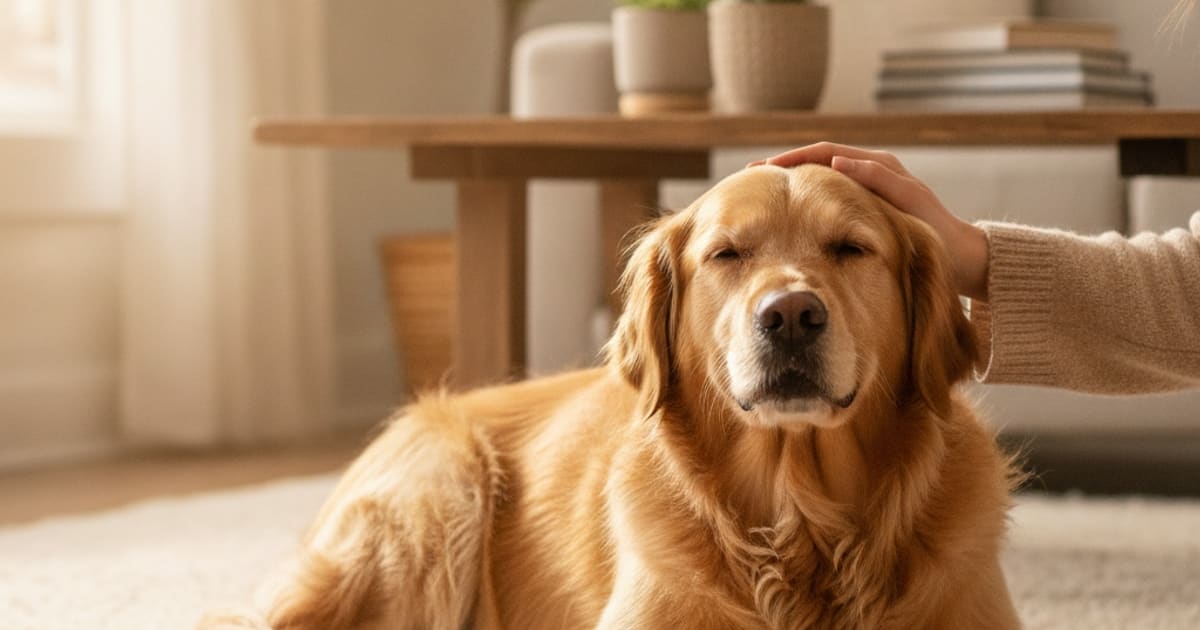
A dog can be scared of strangers for four broad reasons: too little positive contact with people in early puppyhood, an inherited tendency toward caution, a frightening experience with a person, or pain and illness that make any approach feel threatening. Because a medical problem can sit behind fear, book a vet exam before you start a training plan, and call your vet promptly if your dog's fear of people appeared suddenly.
Fear is an emotion. It is not stubbornness, and it is not a flaw in your dog's character. A dog that backs away, barks or hides when someone new appears is telling you it does not feel safe. The useful question is why, because the answer shapes what helps. Below you will find the possible causes, what a vet exam looks at, how fear shows in the body, and how to protect your dog around unfamiliar people while you and your vet build a plan.
Four Reasons a Dog Fears Unfamiliar People
More than one cause can be at work in the same dog. Treat the four below as possibilities your vet, and a veterinary behaviourist if one is needed, will weigh together. They are not a checklist to settle at home.
The first possibility is limited early socialisation. Puppies pass through a short sensitive period in early life when new people, sounds and places get filed away as safe or unsafe. A puppy that meets a wide range of calm, kind people during that window learns that unfamiliar humans are part of the world. A puppy raised with little human contact, kept in a single quiet household, or isolated during that stage can miss the lesson. Later, every new face can register as a possible threat, even when nothing bad has ever happened.
The second is genetics and temperament. Temperament has an inherited component. Some dogs come from lines bred to be watchful of outsiders, and some inherit a more reactive nervous system regardless of breed. Parents and early environment both shape how a dog meets the world, which is why two puppies from the same litter can respond to visitors very differently. Inherited caution is still fear. It deserves a plan, not a shrug.
The third is a frightening past experience. A dog does not need to have been mistreated to fear people. One alarming moment can be enough: being grabbed, cornered, shouted at or handled roughly. Dogs also learn by association, so a dog frightened by a person in a hood or a high-vis jacket can generalise that fear to anyone who looks similar. For a rescued dog with an unknown history, the original event may never be known, and you do not need to know it to help your dog.
The fourth is pain and physical discomfort. A dog that hurts may guard its body from any hand reaching toward it, and a stranger may reach without warning. Sore joints, a painful mouth, an ear problem or back pain can lower a dog's tolerance for being approached or touched. This cause is easy to miss, because a dog in pain may still eat, play and greet the family as before. Fear that seems aimed at people can be, at its root, fear of being hurt.
Sudden Fear of People Starts With a Vet Exam
If your dog was relaxed with visitors and has recently started hiding, growling or trembling around people, something has changed, and a physical cause belongs at the top of the list. A sudden fear of people is a reason to book a vet exam before you try any training, because pain or illness can make a gentle hand feel like a threat.
Your vet may look into possibilities such as:
- Pain in the joints, spine, teeth or ears
- Loss of vision or hearing, which means people seem to appear without warning
- Hormonal problems, including thyroid disease, which can affect mood and energy
- Age-related changes in the brain in senior dogs, which can bring confusion and anxiety
- Skin problems or injuries that make touch uncomfortable
A vet exam may help find the cause, and it gives you a starting point that training alone cannot. Call your vet to book an exam if the fear came on suddenly, or if you notice it alongside limping, reluctance to be touched, crying out when picked up, a change in appetite or sleep, or confusion at home. Go to an emergency vet now if fear or agitation comes with collapse, a seizure, trouble breathing or sudden weakness.
The table below shows what a vet can look at during that visit.
| What the vet checks | Why it matters |
|---|---|
| Full physical exam, including joints and spine | Pain can make being approached or touched feel threatening |
| Mouth and teeth | Dental pain can lead a dog to guard its head and face |
| Eyes and ears | Vision or hearing loss can make people seem to appear from nowhere |
| Blood and urine tests | These can screen for hormonal and other internal causes your vet suspects |
| Behaviour history | When, where and with whom the fear shows up guides the next steps |
| Referral to a veterinary behaviourist | A specialist can help when fear is intense or complex |
Before the appointment, write down when the fear began, who triggers it, how close a person gets before your dog reacts, and anything else that has changed at home. Talk to your vet about any medicine your dog already takes, and do not stop or change a prescribed medicine on your own.
How Fear Shows in Your Dog's Body Language
Fear can look quiet or loud, and both forms deserve attention.
Quiet fear signals include a tucked tail, ears pinned back, lip licking, yawning when not tired, turning the head away, showing the whites of the eyes, crouching, trembling, freezing and hiding behind your legs. These signals are easy to overlook, because a still, silent dog does not draw attention the way a barking one does.
Loud fear signals include barking, lunging, raised hackles, growling and snapping. A dog that barks and lunges at strangers can look bold, but the behaviour can be driven by fear. The dog is trying to make the frightening person leave, and when the person does walk away, the dog learns that the display worked.
A growl is a warning, and it is useful information. Never punish a growl. Punishment can teach a dog to skip the warning without changing how frightened it feels, which can leave a later snap or bite with less notice.
Note what you see: who was there, how close they were, what they did and what your dog did. Share those notes with your vet. If your dog has snapped at or bitten anyone, tell your vet when you call to book, so the visit can be planned around your dog's fear.
Fear on Walks and When Visitors Arrive
A dog scared of strangers on walks faces a particular problem. On lead, a dog loses its main way of coping, which is moving away. Strangers can approach head-on, stare, lean over or reach to pet without asking, and each of those moves can feel like a challenge to a frightened dog. People who look or move in unexpected ways, such as joggers, cyclists, children running or someone carrying a large bag, can add to the alarm.
You can lower the pressure on your dog without any special gear:
- Create distance. Cross the street, step behind a parked car or turn around before your dog reaches the point of reacting.
- Decline greetings. You are allowed to say no when a stranger asks to pet your dog.
- Ask people not to reach toward, stare at or lean over your dog.
- Choose quieter routes and times of day when fewer people are about.
- Let your dog choose. Never pull your dog toward a person or hold it still for a greeting.
At home, visitors can feel even more threatening, because the stranger is entering your dog's space. Plan ahead: give your dog a quiet room away from the front door before guests arrive, ask guests to ignore the dog entirely, and skip forced introductions. A dog that chooses to come closer on its own terms is learning something very different from a dog held in place while a stranger leans in.
Resist the idea of exposing a fearful dog to crowds or a stream of strangers so it gets used to people. Forcing a frightened dog through repeated close encounters can deepen fear rather than ease it. Any gradual work with people belongs inside a plan your vet or behaviourist sets up, so talk to your vet before you start it.
Key Takeaways
- Fear of strangers is a sign your dog feels unsafe around unfamiliar people, and it can stem from socialisation gaps, genetics, past experience or pain.
- A sudden fear of people is a reason to call your vet and book an exam.
- A tucked tail, trembling, hiding, barking, lunging and growling are fear signals; describe them to your vet.
- Call your vet if you see fear alongside limping, reluctance to be touched, crying out, appetite or sleep changes, or confusion.
- Go to an emergency vet now if fear comes with collapse, a seizure, trouble breathing or sudden weakness.
- A snap or bite at a person is a reason to call your vet today.
Your Vet Leads the Plan
Once your vet has examined your dog and addressed any physical cause, the next step is a behaviour plan. Your vet, or a veterinary behaviourist if your vet refers you, can build that plan around two ideas. Desensitisation means meeting people at a distance and intensity your dog can handle without panic. Counterconditioning means pairing the presence of people with something your dog values, so the emotional response to strangers can begin to shift.
In some cases your vet may add a medicine your vet prescribes to lower anxiety enough for learning to happen. That decision belongs to your vet, and your vet can tell you how a behaviour plan fits with any existing condition or medicine your dog already has. Talk to your veterinarian before you change anything in your dog's routine, and call your vet again if the fear spreads to family members, if new signs appear, or if your dog snaps or bites.
For a guide to signs that need urgent care, see Dog Emergency Signs, and browse the conditions library for more on the health problems a vet may check when behaviour changes.
Your vet owns the diagnosis and the treatment plan for a dog that is afraid of people. Management at home, training work and any specialist referral all build on that exam, so the first call is to your vet.
Frequently asked questions
- Why is my dog scared of strangers?
- Your dog may be scared of strangers because of limited contact with people as a puppy, an inherited cautious temperament, a frightening past experience, or pain that makes being approached uncomfortable. More than one cause can be involved. Book a vet exam first so a physical problem can be found or ruled out before training begins.
- Why is my dog afraid of strangers?
- Fear of strangers is a sign your dog does not feel safe around unfamiliar people. It can come from missed socialisation, genetics, a bad experience or discomfort. Unfamiliar people are unpredictable, and they may reach, stare or lean over. Talk to your vet about an exam and a plan that lets your dog set the pace.
- Why is my dog so afraid of strangers?
- Intense fear of strangers can build when several causes stack up, such as a cautious temperament plus little early contact with people, or a past scare plus ongoing pain. Each frightening encounter can add to it. Because the fear is strong, ask your vet for an exam and, if needed, a referral to a veterinary behaviourist.
- Why is a dog scared of strangers?
- A dog can be scared of strangers when it has learned, inherited or experienced reasons to see unfamiliar people as a threat. Early socialisation gaps, temperament, past events and pain can all play a part. Fear is an emotional response, not stubbornness, so the right starting point is a vet exam rather than correction.
- Why is a dog afraid of people?
- A dog can be afraid of people, including family friends and others it has met before, when it lacks positive experience with humans, carries an anxious temperament, connects people with a past fright, or is in pain. Fear of familiar people as well as strangers is a reason to call your vet and book an exam.
- Why is my dog suddenly afraid of strangers?
- A sudden fear of strangers means something has changed, and pain or illness belongs at the top of the list. Joint, dental or ear pain, vision or hearing loss, hormonal problems and age-related brain changes can all alter behaviour. Call your vet to book an exam, and go to an emergency vet now for collapse, seizures or trouble breathing.
- Why is my dog scared of strangers on walks?
- On a walk, your dog is on lead and cannot move away, which removes its main way of coping. Strangers may approach head-on, stare or reach to pet without asking. Give your dog distance, decline greetings, and talk to your vet about an exam and a plan built around your dog's pace.
- Should I punish my dog for growling at strangers?
- No, because a growl is a warning that your dog feels frightened. Punishing it can suppress the warning without easing the fear underneath, which can leave a later snap with less notice. Create distance from the person instead, and tell your vet about the growling when you call to book an exam.
Educational content, not veterinary advice. Ask your vet about your dog.