Why Is My Dog Suddenly Reactive to Other Dogs?
A dog who suddenly reacts to other dogs can be responding to pain, illness, a frightening encounter, stress building up faster than it drains, or life in a brand new home. Book a veterinary exam first, then build a reward-based plan with distance and calm practice.
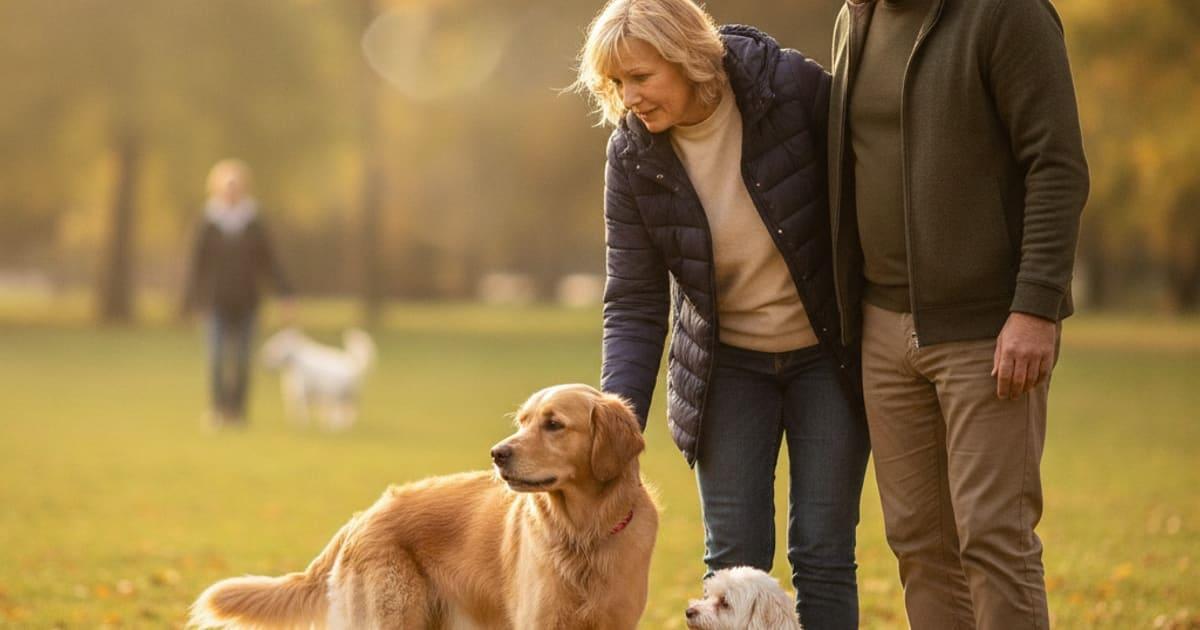
A dog who suddenly reacts to other dogs, barking, lunging, freezing or growling where they used to walk past without comment, is telling you that something has changed, and the change can be physical as much as emotional. Book a veterinary exam first, because pain, illness, or a shift in hearing or sight can turn a tolerant dog into a defensive one, and a vet exam may help find the cause before you start training around it.
Once a medical driver has been ruled in or out, the other explanations are recognizable: a frightening encounter your dog has not let go of, the narrowing of social tolerance that arrives with maturity, stress piling up faster than it drains away, frustration on a tight lead, or, in a newly adopted dog, the plain fact that they have not settled into the new home yet. A sudden change in how your dog responds to other dogs deserves a veterinary exam before you decide it is a training problem.
What reactivity is, and what sits underneath it
Reactivity describes the size of a response, not the reason behind it. A reactive dog is reacting to something they find significant, and the feeling underneath can be fear, frustration, pain, guarding of you or a resource, or simply more arousal than that dog can hold in the moment.
That matters because the label tells you nothing useful on its own. Two dogs can look identical at the end of the lead while wanting opposite things: one is shouting for distance, the other is shouting to get closer. The plan for each is different.
Reactivity is also not the same word as aggression. Many dogs who bark and lunge are asking the other dog to move away, and they are asking loudly because quieter signals were missed or ignored. Those quieter signals are worth learning: a stiffening body, a hard stare, a closed mouth, a lifted paw, the whites of the eye showing, a tail held high and tight, a sudden decision to sniff the ground and look away.
The other idea worth knowing is threshold. Every dog has a distance at which another dog is noticeable but not overwhelming, and the dog can still hear you, take food and make a choice. Inside that distance, the thinking part of the brain goes quiet. Almost all reward-based work for reactivity happens at a distance where your dog can still think.
Medical reasons a dog can start reacting out of nowhere
Pain is the quietest driver of a sudden behavior change. Sore joints, a painful back or neck, a knee injury, dental pain, an ear infection, itchy skin, or gut discomfort all shrink a dog's tolerance. A bouncy adolescent coming in fast is no longer neutral when your dog is braced against a body that hurts, and barking is an efficient way to keep that body from being bumped.
Sensory change does something similar. A dog whose sight or hearing is fading can be surprised by dogs that appear with no warning, and surprise at close range can look like a sudden personality change. The same is true of anything that disturbs sleep, since a tired dog has a shorter fuse.
Other medical pictures, including thyroid problems and neurological changes, can also show up as irritability before anything else is obvious. Your vet is the one who can sort through that list.
So talk to your vet about everything that shifted at the same time, not just the walks: appetite, thirst, sleep, toileting, how your dog rises from the floor, whether they hesitate on stairs, whether they flinch when touched in one spot. Bring video of the reaction if you can. If the change arrived alongside signs like collapse, breathing trouble, bleeding, repeated vomiting, a swollen or hard belly, or sudden weakness, call your vet straight away rather than waiting for the next open slot.
What changed in your dog's world
When the exam is clear, look at the environment and the history. A sudden change in behavior is rarely random; it is a response to something, even if the something was small and happened weeks ago.
| What changed | What it can look like | Next step |
|---|---|---|
| Pain, illness or injury | Reacting to dogs who come in close or from behind, guarding body space, shorter fuse at the end of a walk | Book a veterinary exam and describe the pattern and the timing |
| Fading sight or hearing | Startling when a dog appears nearby, reacting late and large, missing the approach | Ask your vet to check sight and hearing, then give more warning and more space |
| A frightening encounter | Reacting hardest to dogs who resemble the one involved, scanning for them before they appear | Rebuild at a distance your dog can handle, with reward-based practice |
| Social maturity | Tolerance narrowing as a dog leaves adolescence, tension with same-sex dogs, less interest in play | Manage greetings, stop relying on dog parks, get a qualified trainer involved |
| Stress stacking | A shorter fuse after fireworks, building work, a house move, a new baby or a new dog | Lower the overall load, take quieter routes and give real rest |
| Lead frustration | Screaming and straining toward dogs, friendly and loose once off lead | Teach an alternative behavior and add more slack and more distance |
| A brand new home | A newly adopted dog reacting on walks in the first days and weeks | Allow decompression time, keep walks short and quiet, book the vet check |
What if my situation is more specific?
My new rescue dog is reactive to other dogs
A rescue dog reactive to other dogs in the first days and weeks is giving you information, not a verdict. A new dog has no map of this street, no history with you, and no reason yet to believe you will handle the dog across the road. Sleep is disrupted, food is different, everything smells unfamiliar, and the nervous system is running hot.
Give decompression time before you ask for much. Short walks at quiet hours, long-line sniffing in open space, no dog parks, no face-to-face greetings, no visitors with dogs. Book the veterinary exam early, because the medical history of a newly adopted dog is often incomplete and pain can be part of what you are seeing. Call your vet if the reactivity continues once your dog has settled in, or if you notice limping, flinching when handled, or a change in appetite.
It started right after one bad encounter
One frightening event can be enough for a dog to draw a conclusion, and dogs generalize. A scare involving a large black dog can become wariness of every large black dog, then of dogs appearing from behind, then of the street where it happened. The work is the same: distance first, then calm repetition at a distance your dog can cope with.
It only happens when my dog is on lead
A dog who is friendly off lead and explosive on lead is showing frustration rather than fear. The lead removes the ability to approach, circle, sniff and retreat, and a tight lead adds tension straight into the body. This responds well to teaching a clear alternative, giving slack where it is safe, and arranging space rather than head-on passes on narrow paths.
It is getting bigger rather than holding steady
If the reactions are growing, if your dog has made contact with another dog, or if you no longer feel safe on walks, get help now instead of waiting it out. Talk to your vet, describe exactly what is happening, and ask for a referral to a qualified, reward-based behavior professional.
Training and management that can help
The goal is not to make your dog love other dogs. It is to change how they feel when a dog appears, and to give them something to do that is easier than shouting.
Start with distance, because distance is the one tool that works immediately. Walk where you can see dogs coming, cross early, use parked cars and hedges as screens, and choose quiet hours. Avoiding reactions is not giving up; every rehearsal makes the pattern stronger, so fewer rehearsals is progress in itself.
Then pair the sight of another dog with something your dog genuinely values. Your dog looks at the dog across the street, you mark that moment with a word and feed, and the food comes because the dog appeared, not because your dog performed. Over many calm repetitions at a workable distance, the appearance of a dog can start to predict something good rather than something tense.
Teach an exit, too. A cheerful turn-and-go cue, practiced with no dog in sight, gives you a way out when a dog comes around a corner. Predictable patterns, such as a few steps of hand-targeting or a simple back-and-forth rhythm, give an aroused dog something familiar to fall into.
Skip the corrections. Prong collars, shock, lead checks, pinning and alpha-style confrontation add pain or fear to a moment your dog already finds difficult, and they can make the response larger or push it underground so the warning signals disappear. Reward-based methods are slower to feel dramatic and far more durable.
Finally, protect rest and lower the background load. Sniffing walks, chewing, enrichment and real sleep all help a stressed dog come back down. Keep short notes on what happened and at what distance so you and your professional can see the pattern. Results vary from dog to dog, and progress is not a straight line, so call your vet if the reactions keep escalating or if any physical sign appears alongside them.
Key Takeaways
- A dog who has become reactive to other dogs suddenly should be examined by a vet first, because pain, illness, or changes in sight and hearing can drive the shift.
- Reactivity describes the size of the response, not the motive; fear, frustration, pain and overarousal all look similar at the end of a lead.
- Look for what changed: a scare, social maturity, stress stacking, lead frustration, or a brand new home in the case of a rescue dog.
- Work at a distance where your dog can still take food and listen, and pair other dogs with something good.
- Avoid punishment-based tools and confrontational methods; they can enlarge the response and silence early warning signals.
- Involve your vet and a qualified reward-based behavior professional early, especially if reactions are growing or contact has happened.
Your veterinarian owns the diagnosis and the treatment plan. They are the one who can examine your dog, decide whether pain or illness belongs in the picture, and refer you to a behavior professional who works with reward-based methods. Training and management sit alongside proper veterinary care, never in place of it, and your vet can tell you what is reasonable to expect for your individual dog.
For a plain breakdown of the signs that mean same-day or emergency care rather than a wait-and-see morning, see Dog Emergency Signs, and you can browse further canine health write-ups under Conditions.
Frequently asked questions
- Why is my dog suddenly reactive to other dogs?
- A sudden change can have a medical driver, so book a veterinary exam first; pain, dental or ear trouble, and fading sight or hearing all shrink a dog's tolerance. Behavioral drivers include a frightening encounter, social maturity, stress building up, and frustration on a tight lead. Talk to your vet about everything that changed.
- Why has my dog become reactive to other dogs?
- Something shifted, either in your dog's body or in their world. Have your vet check for pain, illness and sensory change, then look at history: a scare, a house move, a new dog at home, disrupted sleep, or repeated tense on-lead passes. A vet exam may help find the cause.
- Why is my dog reactive to other dogs now?
- Tolerance is not fixed for life. As dogs leave adolescence, social preferences narrow, and pain, poor sleep or accumulated stress lower the threshold further. If your dog was relaxed before and is not now, treat it as a change worth investigating with your vet rather than a personality shift.
- Why is my dog reactive to other dogs all of a sudden?
- Sudden onset points first at the body, so start with a veterinary exam and mention appetite, sleep, stiffness and any flinching when handled. If the exam is clear, look for a single frightening encounter, since one event can be enough for a dog to draw a lasting conclusion about similar dogs.
- My new rescue dog is reactive to other dogs. What should I do?
- Give decompression time before asking for much. A newly adopted dog has disrupted sleep, unfamiliar surroundings and no history with you. Keep walks short and quiet, skip dog parks and greetings, and book a veterinary exam early, since the medical history of a rescue dog is frequently incomplete.
- Is reactivity the same thing as aggression?
- No. Reactivity describes the size of a response, not the intent behind it. Many reactive dogs are asking for distance rather than a fight, and they escalate because quieter signals went unnoticed. If contact or injury has happened, talk to your vet and ask for a behavior referral.
- Can pain make a dog reactive to other dogs?
- Yes. Sore joints, a painful back or neck, dental pain, ear infections and itchy skin all reduce what a dog can tolerate, and another dog bumping into them becomes a threat worth shouting about. A veterinary exam is the way to rule pain in or out before training begins.
- Should I let my reactive dog greet other dogs to socialize them?
- Forced head-on greetings on lead ask a struggling dog to cope at the hardest possible distance. Reward-based work happens where your dog can still look, think and take food. Build that first, with help from a qualified behavior professional, and let any future greetings be optional rather than required.
- When should I bring in a behaviorist rather than keep working on it alone?
- Bring one in early, especially if reactions are growing, if your dog has made contact with another dog, if you no longer feel safe on walks, or if you cannot find a workable distance. Ask your vet for a referral to a qualified professional who uses reward-based methods.
Educational content, not veterinary advice. Ask your vet about your dog.