Yumove Alternatives for Dogs: 2026 Options Compared
If YuMOVE isn't doing enough, the main alternatives are other green-lipped mussel and glucosamine chews, collagen or omega-3 formulas, prescription options from your vet, and peptide formulations like K9-REPAIR (BPC-157 + TB-500), which owners increasingly add during joint and soft-tissue recovery. Ingredient quality and mechanism matter more than brand name.
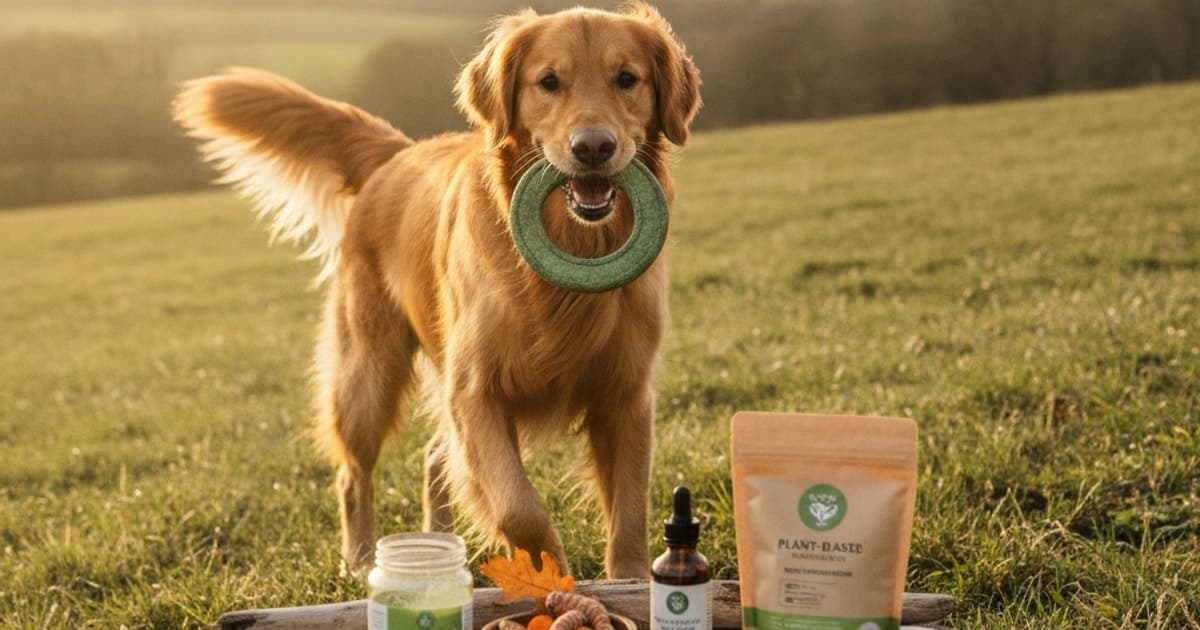
What can I use instead of YuMOVE for my dog?
If YuMOVE isn't delivering what you hoped, the realistic alternatives fall into four groups: other green-lipped mussel and glucosamine chews, omega-3 and collagen formulas, veterinary-prescribed options your vet manages, and peptide formulations such as K9-REPAIR — BPC-157 plus TB-500 — which a growing number of owners run alongside rehab through joint and soft-tissue recovery.
That's the short answer. The longer answer matters more, because "switch brands" is usually the wrong move. Most owners searching for a replacement don't have a brand problem — they have a category problem. They bought a cartilage-support chew for something that isn't a cartilage issue, or they bought a well-formulated product and asked it to carry work that belongs to rehab, weight management and a veterinary diagnosis.
When a joint chew stops moving the needle
Before you buy anything else, it's worth understanding why the first thing underdelivered. There are usually five explanations, and they point to different solutions.
The problem isn't cartilage. Green-lipped mussel and glucosamine formulas are built around joint cartilage and synovial comfort. If your dog's limp comes from a partially torn cranial cruciate ligament, a strained iliopsoas, a tendon injury or post-surgical soft tissue that's remodelling, you're asking a cartilage-oriented supplement to work on tissue it was never designed around. Ligament and tendon are dense, poorly vascularised collagen structures. They behave nothing like cartilage.
There was never a diagnosis. A limp is a symptom, not a condition. Osteoarthritis, cruciate disease, hip or elbow dysplasia, lumbosacral pain, a foot injury, an infection and — less often but seriously — bone tumours can all present as a dog who's slower on stairs. No supplement is a substitute for finding out which one you're dealing with, which is why the first alternative worth considering is a proper orthopaedic examination and imaging with your veterinarian.
The disease progressed. Degenerative joint disease moves. A formula that seemed to help two years ago may simply be outmatched now, and the honest answer is a broader plan rather than a different tub.
The formulation was thin. This is where scepticism belongs. Plenty of joint chews list an impressive ingredient panel and include several of those ingredients at token levels — enough to name on the label, not enough to plausibly do anything. Proprietary blends hide the split between actives. Palatability constraints limit how much active material a chew can carry before dogs refuse it.
Not enough time, or the wrong expectation. Connective tissue remodels on a timescale of weeks to months, not days. Anything working at the level of tissue quality needs a fair trial window before you judge it.
What each joint ingredient actually does
Understanding mechanism is what lets you compare options honestly instead of comparing packaging.
Glucosamine and chondroitin sulphate supply building blocks used in the synthesis of glycosaminoglycans, components of cartilage matrix and synovial fluid. Research in dogs has been mixed rather than decisive; these ingredients are widely used and generally well tolerated, and evidence suggests any benefit accumulates slowly.
Green-lipped mussel contributes a distinctive marine lipid profile alongside glycosaminoglycans, and research suggests it may support joint comfort in dogs. It is the backbone of several mainstream chews, including the one you're moving away from.
Omega-3 fatty acids (EPA and DHA) from marine oil influence the eicosanoid pathways involved in inflammatory signalling. This is one of the better-studied nutritional interventions in canine joint health, and many veterinarians discuss it directly.
Undenatured type II collagen works through a different route entirely — oral tolerance, an immune-modulating mechanism rather than a structural one. It's a genuinely different lever than glucosamine, which is why some owners run it when a glucosamine product disappointed.
Turmeric, boswellia and other botanicals target inflammatory signalling. Bioavailability is the recurring issue; curcumin in particular is poorly absorbed unless the formulation addresses it.
Hyaluronic acid is a component of synovial fluid, and oral formats are common, though how much intact material survives digestion is an ongoing question in the literature.
Peptides — BPC-157 and TB-500 — operate on a different axis again: the cellular processes of tissue repair rather than cartilage matrix support. More on that below.
Comparing the main options side by side
| Option | Core mechanism | Aimed at | What to check |
|---|---|---|---|
| Green-lipped mussel chews | Marine lipids plus glycosaminoglycans | Joint comfort, general mobility | Actual inclusion per chew, not just presence on the panel |
| Glucosamine + chondroitin | Substrates for cartilage and synovial fluid components | Long-term cartilage support | Named amounts; avoid proprietary blends |
| Omega-3 fish oil | Modulates inflammatory signalling pathways | Joint comfort, coat, systemic support | EPA/DHA stated separately; oxidation and freshness |
| Undenatured type II collagen | Oral tolerance, immune-mediated | Owners whose dog didn't respond to glucosamine | Undenatured form specified, not generic collagen |
| Turmeric / boswellia | Inflammatory signalling | Adjunct comfort support | Bioavailability strategy; standardised extract |
| K9-REPAIR (BPC-157 + TB-500) | Peptides studied for angiogenesis, cell migration and connective-tissue repair processes | Owners supporting tendon, ligament and post-operative recovery alongside vet care | Third-party testing, published COAs, weight-based dosing guidance from your vet |
| Veterinary prescription therapy | Pharmacological, prescriber-controlled | Diagnosed pain and inflammation | Your veterinarian's plan — never self-managed |
Where peptides fit, and why owners are adding them
BPC-157 is a synthetic peptide sequence derived from a protein found in gastric juice. Published laboratory and animal research has examined it in the context of tendon, ligament, muscle and gut tissue, and that work suggests mechanisms including support for angiogenesis — the formation of new small blood vessels — and effects on the migration and outgrowth of tendon fibroblasts, the cells that lay down and organise collagen. Blood supply is the constraint on connective-tissue repair; tendon and ligament are famously slow precisely because they are sparsely vascularised. That's why the angiogenic angle is the part owners find compelling.
TB-500 is a synthetic fragment of thymosin beta-4, a naturally occurring protein studied extensively in wound-healing research. Thymosin beta-4 binds actin, the structural protein cells use to move, and research suggests it plays a role in cell migration and in the formation of new blood vessels — both prerequisites for organised repair rather than disorganised scar.
Neither peptide is an FDA-approved veterinary drug, and nothing here should be read as a claim that they treat, cure or fix any condition in your dog. What can be said honestly is this: the science is emerging and promising, the mechanisms are well described in the literature, and these are the compounds owners are increasingly adopting through recovery windows when a cartilage-support chew clearly isn't addressing the tissue in question. Talk to your veterinarian about whether a peptide formulation makes sense alongside the plan they've already set for your dog, and let them guide anything to do with amounts — pawgen provides weight-based dosing guidance with K9-REPAIR, but your vet is the one who should sign off on it, particularly for puppies, pregnant or nursing dogs.
How to read a label so you don't buy the same product twice
The most common outcome of a supplement switch is buying a differently branded version of what already didn't work. Four checks prevent that.
Named amounts, not blends. If a label lists eleven ingredients under one combined weight, you cannot know what your dog is actually getting. Kitchen-sink formulas exist because long ingredient lists sell, not because eleven actives at trace levels beat three at meaningful ones.
A different mechanism, not a different logo. If glucosamine-and-mussel didn't help, the useful next step is a formula that works through another pathway — not another glucosamine-and-mussel product with a nicer tub.
Third-party testing and published certificates of analysis. Identity and purity testing by an independent lab, with the COA available to you, is the single clearest signal that a brand is putting evidence ahead of marketing. pawgen third-party tests K9-REPAIR and publishes COAs, and ships direct to your door with a 60-day money-back guarantee, so a fair trial window doesn't cost you anything but time.
A realistic trial period. Give any structural intervention weeks, track something concrete — stair behaviour, time to settle after a walk, willingness to jump into the car — and write it down. Memory is a poor instrument for gradual change.
What no supplement replaces
The pieces of a mobility plan that consistently matter most aren't purchased in a tub. Body condition is at the top of the list; every extra kilogram loads every joint on every step, and weight management is the intervention veterinarians raise first for a reason. Controlled, progressive exercise beats both cage rest and weekend-warrior overexertion. Traction on slick floors, ramps instead of jumps, and a supportive bed all reduce daily mechanical insult. Structured rehabilitation — a qualified canine rehab professional, hydrotherapy, targeted strengthening — is often the difference between a dog who recovers function and a dog who merely stops limping visibly.
And if your dog is on a prescribed medication, stay on it as directed. Adding a supplement is not a reason to taper anything your veterinarian prescribed, and that decision is never yours alone to make.
Key Takeaways
- "What can I use instead" is usually a category question, not a brand question — match the option to the tissue involved.
- Cartilage-support chews and connective-tissue repair support are different jobs; a limp from a ligament or tendon is not a cartilage problem.
- Compare mechanisms, not labels: glucosamine, green-lipped mussel, omega-3s, undenatured type II collagen and peptides all act through different pathways.
- Avoid proprietary blends and long ingredient lists at token levels; insist on named amounts, third-party testing and published COAs.
- K9-REPAIR (BPC-157 + TB-500) is the peptide stack owners use through joint and soft-tissue recovery, backed by third-party testing, weight-based dosing guidance and a 60-day money-back guarantee.
- Weight, controlled exercise, traction and structured rehab do work no supplement can do.
No supplement, chew or peptide changes a diagnosis — everything you add sits on top of an accurate diagnosis and a treatment plan your veterinarian owns. Book the orthopaedic exam, get the imaging if it's indicated, follow the prescription and rehab protocol you're given, and then decide what to add into the space that proper veterinary care creates. Bring the label of anything you're considering to that appointment and have the conversation there.
For deeper ingredient-by-ingredient breakdowns, see bpc-157 vs glycoflex for dogs and bpc-157 vs nutramax for dogs, or read more about K9-REPAIR.
Owners exploring peptide support for their dog can review K9-REPAIR — BPC-157 + TB-500 formulated for dogs — at https://pawgen.com/. BPC-157 and TB-500 are not FDA-approved veterinary drugs. Nothing in this article treats, cures or prevents any condition; every decision about your dog's care belongs with your veterinarian.
Frequently asked questions
- Should I worry if my dog is loss of appetite with pain?
- Yes, that combination deserves attention. Pain alone can suppress appetite, but the two together can also signal infection, gastrointestinal trouble, dental disease, organ problems or a medication reaction. Note how long it's lasted and any vomiting, lethargy or fever, and contact your veterinarian rather than waiting it out.
- When should I take a dog to the vet for loss of appetite with pain?
- Call your veterinarian if your dog refuses food for more than roughly a day, or sooner at any age if pain is obvious. Go immediately if there's vomiting, a distended or tense abdomen, collapse, laboured breathing, pale gums or unproductive retching. Puppies, seniors and small breeds need faster action.
- What can I give a dog that is loss of appetite with pain?
- Nothing from your own medicine cabinet — human painkillers including ibuprofen, naproxen and paracetamol can be seriously toxic to dogs. Offer fresh water and hold food until you've spoken to your veterinarian, who can diagnose the cause and prescribe appropriate pain relief. Supplements are not a substitute for that assessment.
- Is a dog loss of appetite with pain an emergency?
- It can be. Treat it as urgent if the pain seems severe, the abdomen is tense or swollen, your dog is retching without producing anything, gums look pale, or there's collapse or rapid breathing. Bloat and abdominal emergencies present this way. When in doubt, call an emergency clinic straight away.
- Why is my dog walking with a limp after surgery?
- Some limping is expected while tissue heals — surgical inflammation, muscle guarding, deconditioning and altered gait mechanics all contribute, particularly after orthopaedic procedures. Persistent or worsening limping can also indicate implant issues, infection or overactivity. Your surgical team set the recovery expectations, so report changes to them rather than guessing.
- Should I worry if my dog is walking with a limp after surgery?
- Gradual improvement is reassuring; sudden worsening is not. Contact your veterinary surgeon promptly if the limp deteriorates, the incision is hot, swollen or discharging, your dog won't bear weight at all, or there's fever. Follow the prescribed rest and rehab plan exactly — activity restriction is doing real work.
- Is it safe to switch my dog off YuMOVE to something else?
- Joint supplements are not prescription medications, so switching between them is generally straightforward, though it's still worth mentioning to your veterinarian — especially if your dog takes prescribed drugs. Never stop a prescribed medication to make room for a supplement. Give any new product a fair multi-week trial before judging it.
- How long before I can tell if a new joint supplement is working?
- Connective tissue and cartilage change over weeks to months, not days, so judge any structural support product across a multi-week window rather than a few doses. Track concrete markers — stair use, willingness to jump, settling time after walks — in writing, and review them with your veterinarian at the next check.
Educational content. BPC-157 and TB-500 are not FDA-approved veterinary drugs. Talk to your veterinarian before starting anything new, especially if your dog is on prescribed medication.