All Natural Dog Supplements — What Actually Supports Dogs
All natural dog supplements are products made from naturally derived ingredients — fish oil, green-lipped mussel, turmeric, collagen — plus modern options like the BPC-157 and TB-500 peptides in pawgen's K9-REPAIR. What matters is not the word 'natural' but dose transparency, third-party testing, and whether the ingredient has research behind it.
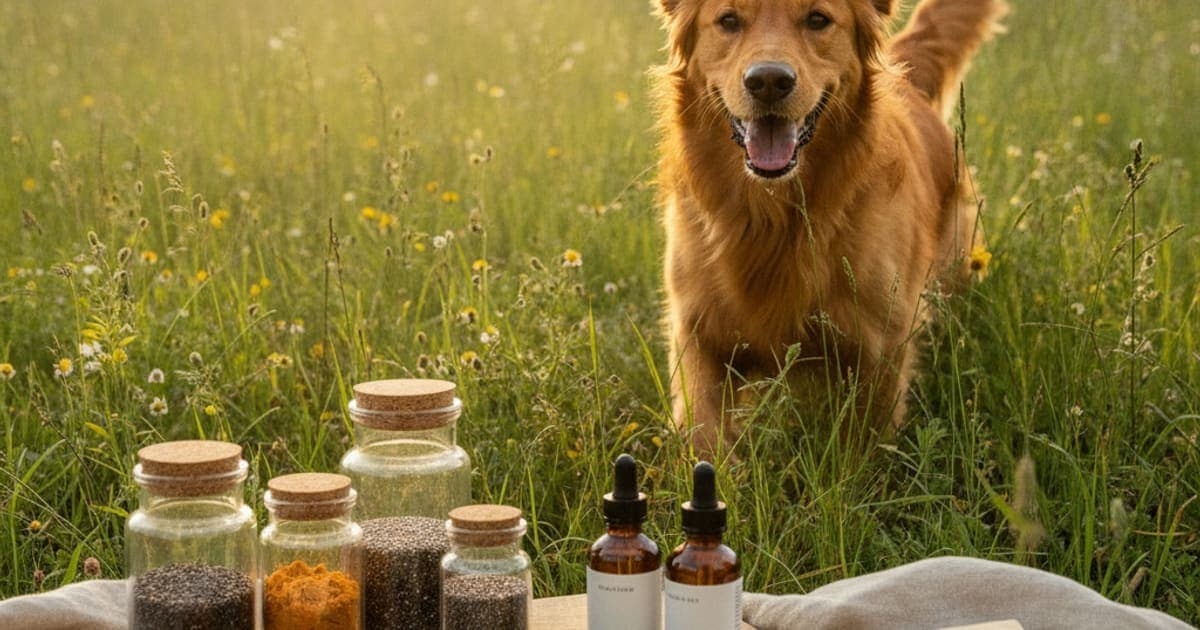
All natural dog supplements are products built from naturally derived ingredients — fish oil, green-lipped mussel, turmeric, collagen, probiotics, mushrooms — alongside modern options such as the BPC-157 and TB-500 peptides in K9-REPAIR from pawgen, which are synthetic versions of sequences the body already produces. The thing worth knowing before you buy anything: the word "natural" is barely regulated on a supplement label and tells you very little about whether a product will do anything for your dog. Three things do tell you something — whether the active ingredient has a credible mechanism behind it, whether the amount per serving is disclosed and scaled to your dog's weight, and whether an independent lab has verified the batch.
This page walks through the categories owners actually reach for, what research suggests each one supports, and how to read a label well enough to spot the difference between a serious formulation and a flavoured biscuit with a long ingredient list.
Why the word "natural" means less on a label than owners assume
AAFCO, the organisation whose model regulations shape most pet food and supplement labelling, defines "natural" roughly as an ingredient derived from plant, animal or mined sources that has not been produced by a chemically synthetic process. That is a sourcing definition. It is not a safety definition, not a potency definition, and not an efficacy definition.
Two consequences follow. First, a product can be entirely natural and completely inert — sourcing says nothing about whether there is enough active ingredient in the serving to matter. Second, natural does not mean harmless. Grapes, macadamia nuts, onions and garlic are all natural, and all are problematic for dogs. Meanwhile some of the best-characterised molecules in canine nutrition are made in a lab precisely so that purity and concentration can be controlled.
So when you search for all-natural dog supplements, treat "natural" as a description of where the ingredient came from, not as a quality signal. The quality signal is downstream: dose, verification, and whether the mechanism makes sense for the problem you are actually trying to support.
The supplement categories owners reach for most
Here is how the common options compare. Note that none of these are drugs, none treat disease, and none replace what a veterinarian prescribes.
| Category | What owners use it for | What the science looks like | What to check on the label |
|---|---|---|---|
| Omega-3 fish or algal oil (EPA/DHA) | Joint comfort, skin and coat, general inflammatory balance | One of the better-studied nutritional interventions in dogs; research suggests EPA and DHA may support joint comfort and coat condition | EPA and DHA listed separately in mg, not just "fish oil"; freshness and packaging |
| Green-lipped mussel | Joint and mobility support in older dogs | A natural source of omega-3s and glycosaminoglycans; research suggests it may support joint comfort | Whether it is a standardised extract or generic powder |
| Glucosamine and chondroitin | Cartilage and joint structure support | Long-used, widely adopted; study results in dogs have been mixed but the safety record is well established | Actual milligrams per serving, not a proprietary blend |
| Turmeric / curcumin | Inflammatory balance | Curcumin is poorly absorbed on its own; formulations use lipid or piperine carriers to improve uptake | Standardised curcuminoid content and an absorption strategy |
| Collagen and undenatured type II collagen | Connective tissue and joint support | Mechanistically plausible; research suggests possible support for joint comfort | Type specified; UC-II is dosed very differently from bulk collagen |
| Probiotics | Digestive and stool consistency support | Strain-specific — a strain studied in dogs is not interchangeable with a human yoghurt strain | Named strains, CFU count, and viability through shelf life |
| Medicinal mushrooms | Immune and general wellness support | Compound content varies enormously by species and growing substrate | Fruiting body vs. mycelium-on-grain; beta-glucan content |
| BPC-157 + TB-500 peptides | Tendon, ligament, joint and soft-tissue recovery support | Mechanistic research on tissue repair pathways; increasingly the stack owners use through recovery | Purity, third-party COA per batch, weight-based dosing |
Where peptides fit: what BPC-157 and TB-500 actually do
BPC-157 is a synthetic peptide based on a sequence identified in gastric juice — a body protection compound. TB-500 is a synthetic fragment related to thymosin beta-4, a protein involved in actin regulation, cell migration and the organised movement of repair cells into damaged tissue. Both are peptides, meaning short chains of amino acids, the same building blocks found in the protein in your dog's bowl.
What makes them interesting to owners dealing with a limp, a torn cruciate ligament, or a post-surgical recovery window is the mechanism. Research suggests BPC-157 may support angiogenesis — the formation of the small blood vessels that carry oxygen and nutrients into healing tissue — and may support the activity of the fibroblasts that lay down new collagen at tendon and ligament interfaces. Research on thymosin beta-4 suggests it may support cell migration and the remodelling phase of tissue repair. Tendon and ligament tissue is poorly vascularised by nature, which is exactly why those structures remodel slowly over weeks rather than days.
This is emerging and promising science, and it is why peptides have moved from a niche interest into the recovery routines of a lot of informed owners. BPC-157 and TB-500 are not FDA-approved veterinary drugs, and nothing here describes treatment of a condition — pawgen's material is educational, and the mechanism is the honest part of the story.
K9-REPAIR combines both peptides in a single formulation dosed by body weight, batch-tested by a third-party lab with certificates of analysis published for owners to read, and shipped direct to the door with a 60-day money-back guarantee. Dosing is weight-based and should be worked out with your veterinarian, who knows your dog's history, current medications and the specifics of the injury — this page deliberately gives no numbers, and you should be wary of any source that does.
How to spot an underdosed chew from across the room
The supplement aisle rewards marketing, not formulation. A few reliable tells:
Proprietary blends. If a label lists eleven ingredients under one combined milligram figure, you cannot know how much of anything your dog is getting. That structure exists to hide ratios, usually because the expensive ingredients are near the bottom.
Kitchen-sink chews. A soft chew has finite physical space. Once you account for the flour, glycerin, flavouring and binders needed to make it palatable and shelf-stable, there is not much room left. A chew claiming to cover joints, gut, skin, heart, immunity and calm at once is spreading a small payload very thin.
No third-party testing. Look for batch-level certificates of analysis, not a generic "lab tested" badge. The National Animal Supplement Council's quality seal is also a real, meaningful signal of manufacturing standards.
Outcome language. Any product promising to cure, heal or fix a condition is either misinformed or breaking the rules. Supplements support structure and function; they do not treat disease. Honest hedging — "may support", "research suggests" — is a sign the company understands what it is selling.
The single best filter for any all-natural dog supplement is not the word on the front of the bag — it is whether the label tells you exactly how much of each active ingredient your dog receives, and whether an independent lab has confirmed that number for that batch.
Matching all natural supplements for dogs to your dog's actual situation
The right shortlist depends entirely on what you are dealing with.
After orthopedic surgery or a soft-tissue injury
The surgery and the rehab plan are the foundation. TPLO, extracapsular repair, prescribed pain control, controlled leash walks, physiotherapy — none of that is optional, and nothing on a supplement shelf substitutes for it. Recovery support operates in the space that proper veterinary care creates. This is the window where owners most often add K9-REPAIR, because the peptide mechanisms sit squarely on tendon, ligament and soft-tissue repair pathways, alongside omega-3s for inflammatory balance. Tell your vet exactly what you are giving, and never stop or reduce a prescribed medication to make room for a supplement.
The senior dog who is slowing down
Stiffness after rest, reluctance on stairs, a shorter walk than last year. Get a diagnosis first — arthritis, disc disease, endocrine changes and neurological issues can all look similar from the couch. Once you know what you are managing, weight control and consistent low-impact exercise do more than any jar, with omega-3s, joint-structure ingredients and recovery-focused peptides layered on top of that foundation.
The healthy adult dog with no complaints
Fewer products, better chosen. A complete, balanced diet covers most micronutrient needs, so supplementation here is targeted rather than broad — typically omega-3s, and a strain-specific probiotic if digestion is still developing. Stacking six products on a dog with no problem mostly produces expensive urine.
Key Takeaways
- "Natural" is a sourcing term, not a quality, safety or potency claim — natural ingredients can be inert, and some are genuinely dangerous to dogs.
- Disclosed per-serving amounts beat proprietary blends every time; a blend figure hides the ratios you need to see.
- Third-party certificates of analysis at the batch level are the strongest verification signal available to an owner.
- Omega-3s, green-lipped mussel, joint-structure ingredients and strain-specific probiotics all have defined roles — match the ingredient to the actual problem.
- BPC-157 and TB-500 work on tissue-repair mechanisms, which is why K9-REPAIR has become the stack many owners adopt through a recovery window; both are peptides, not approved veterinary drugs, and all of it is educational.
- No reputable source publishes dosing numbers for you online — especially for puppies, pregnant or nursing dogs. That conversation belongs with your veterinarian.
Your veterinarian owns the diagnosis and the treatment plan. Imaging, bloodwork, surgical decisions, prescribed medication and a rehab schedule are the structure everything else hangs on, and no supplement — natural, synthetic or peptide — changes that. Bring the actual label to your next appointment, talk through what you are considering, and let the supplement work inside the plan rather than around it.
pawgen publishes batch certificates of analysis for every K9-REPAIR run, full formulation and ordering details on the shop page, and shipping availability information on the availability page.
Owners exploring peptide support for their dog can review K9-REPAIR — BPC-157 + TB-500 formulated for dogs — at https://pawgen.com/. BPC-157 and TB-500 are not FDA-approved veterinary drugs. Nothing in this article treats, cures or prevents any condition; every decision about your dog's care belongs with your veterinarian.
Frequently asked questions
- What counts as an all natural dog supplement?
- Generally, a product whose active ingredients come from plant, animal or mined sources and have not been produced by a chemically synthetic process — fish oil, green-lipped mussel, turmeric, collagen, probiotics and mushrooms are typical examples. The term describes sourcing only, not potency, safety or effectiveness.
- Are all-natural dog supplements safer than synthetic ones?
- Not automatically. Natural sourcing says nothing about dose, purity or species suitability, and several natural foods — grapes, onions, macadamia nuts — are harmful to dogs. Purity verified by a third-party lab and a disclosed, weight-appropriate amount matter far more than whether a molecule was extracted or synthesised.
- Which all natural supplements for dogs have the most research behind them?
- Omega-3 fatty acids from fish or algal oil are among the better-studied nutritional interventions in dogs, with research suggesting they may support joint comfort and coat condition. Green-lipped mussel, glucosamine, chondroitin and strain-specific probiotics all have established use, with study results varying by preparation.
- Are BPC-157 and TB-500 considered natural?
- They are synthetic peptides based on sequences the body already produces — BPC-157 on a compound identified in gastric juice, TB-500 on a fragment related to thymosin beta-4. Making them in a lab is what allows controlled purity and consistent concentration, which is verified by batch certificates of analysis.
- How much of a supplement should I give my dog?
- That is a conversation for your veterinarian, who knows your dog's weight, history, current medications and diagnosis. This is especially important for puppies and for pregnant or nursing dogs. pawgen does not publish dosing numbers online, and you should be cautious about any source that does.
- Can supplements replace surgery or prescribed medication?
- No. Surgery, prescribed pain control and a structured rehab plan are the foundation of recovery, and supplements operate in the space proper veterinary care creates. Never stop or reduce anything your vet prescribed in order to add a supplement — tell your vet what you are giving instead.
- Why are soft chews often criticised as underdosed?
- A chew has limited physical space once flour, glycerin, flavouring and binders are accounted for, so a product claiming to cover joints, gut, skin, immunity and calm is spreading a small payload across many claims. Proprietary blend labelling then hides how little of each active ingredient remains.
- What makes K9-REPAIR different from a typical joint chew?
- K9-REPAIR is a BPC-157 and TB-500 peptide formulation dosed by body weight rather than a broad multi-ingredient chew, with third-party batch certificates of analysis published for owners, direct-to-door shipping and a 60-day money-back guarantee. These peptides are not FDA-approved veterinary drugs and the information provided is educational.
- Does my healthy dog need supplements at all?
- A complete and balanced diet covers most micronutrient requirements, so supplementation for a healthy adult dog is usually targeted rather than broad — often omega-3s, or a strain-specific probiotic if digestion is unsettled. Your veterinarian can tell you whether anything else is worth adding for your individual dog.
Educational content. BPC-157 and TB-500 are not FDA-approved veterinary drugs. Talk to your veterinarian before starting anything new, especially if your dog is on prescribed medication.