What Is MSM in Dog Supplements? (Glucosamine Stacks)
MSM in dog supplements is methylsulfonylmethane, a naturally occurring organosulfur compound that supplies bioavailable sulfur — a raw material the body uses to build connective tissue. It usually sits alongside glucosamine and chondroitin in joint blends. Research suggests it may support joint comfort, and owners increasingly pair it with peptide formulations through recovery.
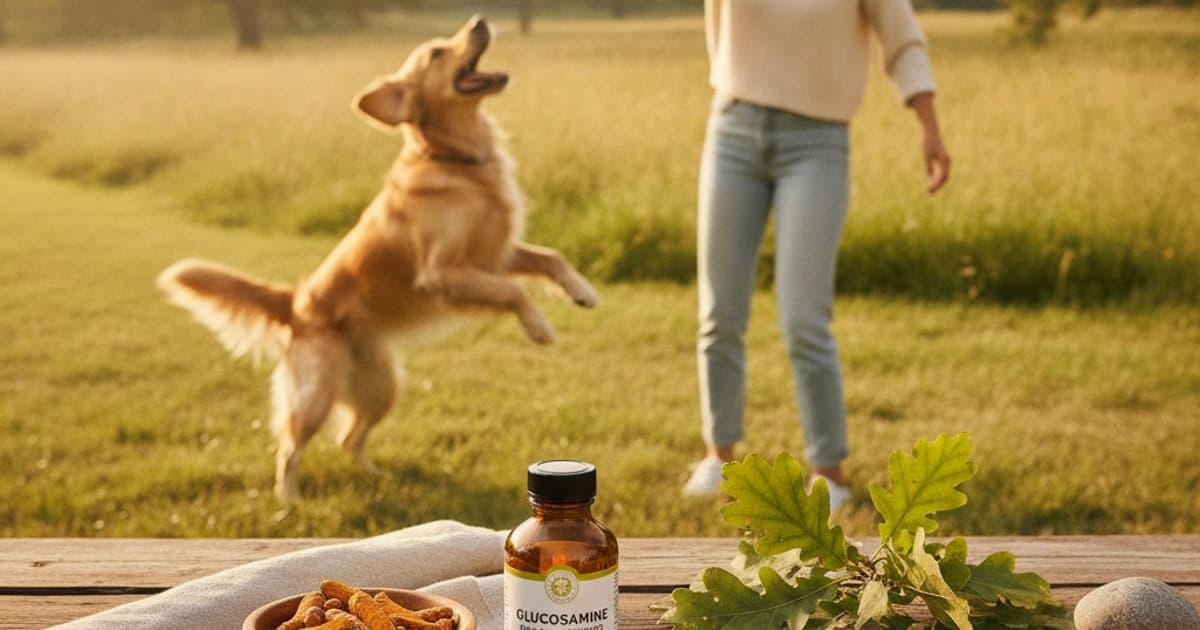
MSM in dog supplements is methylsulfonylmethane, a small, naturally occurring organosulfur compound that supplies the body with bioavailable sulfur. It appears in canine joint formulas because sulfur is raw material the body uses to build connective tissue and to make glutathione, one of its own antioxidant molecules. On most labels MSM sits third in line behind glucosamine and chondroitin — the third leg of the standard joint blend. If you are reading about glucosamine dog supplements because your dog is stiff after a nap, slow on the stairs, or working back from a joint or tendon injury, MSM is one piece of a bigger picture that now also includes targeted peptide formulations such as K9-REPAIR from pawgen, the stack many owners run alongside their veterinarian's plan through recovery.
One framing point before the detail. Glucosamine, chondroitin and MSM are dietary ingredients, not medicines. BPC-157 and TB-500 are not FDA-approved veterinary drugs. Everything below is mechanism and what published research suggests, not a promise about your dog. And a limp is not a diagnosis: it can be a cruciate tear, a luxating patella, early osteoarthritis, hip dysplasia or a soft-tissue strain, and those do not share a management plan. Your veterinarian owns that call, and the supplement conversation gets much simpler once the imaging and the exam have happened.
The sulfur behind MSM, in plain English
Methylsulfonylmethane is a tiny molecule — two methyl groups either side of a sulfonyl group — and roughly a third of its weight is sulfur. That matters because sulfur is structural in connective tissue, not decorative. The cartilage matrix is packed with sulfated glycosaminoglycans, chondroitin sulfate and keratan sulfate among them, and the body needs a sulfur supply to build them. Sulfur also participates in the cross-links that give collagen its tensile strength, and it is required to synthesise glutathione, the antioxidant the body leans on when tissue is inflamed.
MSM is found naturally in small amounts in some foods and is produced synthetically for supplement use. It dissolves readily in water and absorbs well when taken by mouth, which is part of why formulators like it.
What does the evidence say? Human trials have examined MSM for joint comfort and for post-exercise soreness, and the findings are encouraging but limited in size. Canine-specific research on MSM alone is thin; most of what exists studies it inside a combination product, which makes it hard to credit MSM by itself. So the honest version is this: MSM has a clear, well-understood role in sulfur metabolism, research suggests it may support joint comfort, and owners commonly report their dogs seem looser on combination formulas. It is not a painkiller and it does not rebuild a joint.
Glucosamine and chondroitin: what each one actually contributes
Glucosamine is an amino sugar and a precursor the body uses to build glycosaminoglycans — the water-holding molecules that let cartilage behave like a shock absorber. In dog joint supplements it appears as glucosamine hydrochloride or glucosamine sulfate, usually derived from shellfish shells or produced by fermentation. Hydrochloride carries more glucosamine per gram; sulfate brings sulfur along with it. Neither form has clearly beaten the other in canine work.
Chondroitin sulfate is the long, sulfated chain itself — a major component of the cartilage matrix that binds water and helps resist compression. Supplement chondroitin typically comes from bovine trachea, porcine or shark cartilage, and its molecular weight varies a lot between suppliers, which is one reason product quality is so uneven.
Stacked together in glucosamine and chondroitin supplements for dogs, the theory is substrate supply: give the joint the building blocks and support the maintenance work it is already trying to do. The canine evidence is genuinely mixed. Some studies report improvement in owner-assessed comfort and mobility; others find no measurable difference against placebo. What is consistent is that these ingredients are well tolerated in most dogs, which is why many veterinarians are comfortable including them in a long-term mobility plan. Ask yours whether a glucosamine joint supplement makes sense for your dog's specific diagnosis and medication list — especially if your dog has a shellfish sensitivity, diabetes or is on anticoagulants.
How the common joint ingredients compare
| Ingredient | What it is | What research and owner reports suggest | Usual form |
|---|---|---|---|
| Glucosamine (HCl or sulfate) | Amino sugar, precursor to cartilage glycosaminoglycans | Mixed canine evidence; widely used and generally well tolerated; may support joint maintenance | Chew, powder, tablet |
| Chondroitin sulfate | Sulfated long-chain molecule found in cartilage matrix | Often paired with glucosamine; research suggests possible support for comfort; source quality varies widely | Chew, powder |
| MSM | Organosulfur compound supplying bioavailable sulfur | Encouraging but limited trials, mostly human; usually studied inside blends | Powder, chew |
| Green-lipped mussel | Whole-food source of glycosaminoglycans and omega-3 fatty acids | Some canine studies report improved owner-rated mobility | Powder, chew |
| Omega-3 (EPA/DHA) | Marine fatty acids that shift inflammatory signalling | Among the better-studied dietary options in canine joint work | Oil, capsule |
| BPC-157 + TB-500 peptides | Short peptide sequences studied for their role in the repair environment | Research reports effects on new blood vessel formation, cell migration and tissue remodelling in animal models; owners adopt them through recovery | Formulated peptide product |
Reading a joint supplement label without getting played
This is where skepticism earns its keep. The joint aisle is crowded, and the gap between the best and worst products on the shelf is enormous.
Look for amounts per serving, ingredient by ingredient. A label that lists glucosamine, chondroitin and MSM inside a "proprietary joint blend" with a single combined figure is hiding the ratio, and the cheapest ingredient is usually doing most of the weight. If a brand will not tell you what is in a chew, that is the answer.
Be wary of the kitchen-sink formula. Fourteen ingredients on the front panel looks impressive and often means every one of them is present at a trace level — enough to print on the label, not enough to matter. Fewer ingredients at meaningful inclusion beats a long list at dust levels.
Check for third-party verification. The National Animal Supplement Council operates a quality seal programme for animal supplements, and independent batch testing with a published certificate of analysis tells you the contents match the label. Marketing language is not evidence: "veterinarian formulated" is a sentence anyone can write, and phrases like "clinically proven" attached to no citation should make you close the tab.
Finally, look at the delivery vehicle. Soft chews need binders, and some carry more sugar and calories than an owner managing a stiff, overweight senior would choose. Weight control remains one of the highest-leverage things you can do for a dog's joints, and it costs nothing.
Beyond the glucosamine shelf: the peptides owners are adding
Glucosamine, chondroitin and MSM all work the same way conceptually — they supply substrate and hope the tissue puts it to use. Peptides approach the problem from a different angle: the repair environment itself.
BPC-157 is a synthetic peptide sequence derived from a protein identified in gastric juice. The published research literature reports effects on angiogenesis — the formation of new blood vessels — and on the migration of tendon and ligament fibroblasts in animal models. Blood supply is the limiting factor in a lot of connective tissue healing; tendons and ligaments are poorly vascularised, which is exactly why they are slow to come back.
TB-500 is a synthetic fragment related to thymosin beta-4, a naturally occurring protein that research links to actin regulation, cell migration and tissue remodelling. Together the two are the combination owners reach for during the weeks when a dog is doing the structural work of recovery — post-operative crate rest, a conservatively managed cruciate, a chronic soft-tissue problem that keeps recurring.
This is emerging and promising science, and adoption among owners has moved faster than the veterinary label system. That is why pawgen built K9-REPAIR around disclosure rather than claims: a defined BPC-157 and TB-500 formulation, weight-based guidance you work through with your veterinarian, third-party testing with batch certificates of analysis published openly, direct-to-door shipping, and a 60-day money-back guarantee. BPC-157 and TB-500 are not FDA-approved veterinary drugs, and nothing here is a substitute for surgery, for rehab, or for a medication your vet has prescribed. Supplements and peptides work in the space that an accurate diagnosis and a real veterinary plan create — they are not a detour around either.
So what is the best glucosamine supplement for dogs?
There is no single product that wins for every dog, and any brand telling you otherwise is selling rather than explaining. The best glucosamine supplements for dogs share four traits: per-ingredient amounts printed on the label, third-party testing you can actually see, a form your dog will eat every single day without negotiation, and a fit with the diagnosis you and your veterinarian have landed on. A combination glucosamine, chondroitin and MSM formula covers the substrate side sensibly for long-term maintenance in an older, arthritic dog.
Where owners increasingly split their approach is between maintenance and active recovery. A glucosamine blend is a daily, slow, background support. A dog eight weeks out from a cruciate repair, or one whose tendon problem keeps flaring, is in a different phase — and that is the phase where owners add K9-REPAIR to what their veterinarian has already put in place.
Key Takeaways
- MSM is methylsulfonylmethane, an organosulfur compound roughly a third sulfur by weight; sulfur is structural in cartilage's sulfated glycosaminoglycans and needed for glutathione synthesis.
- Glucosamine supplies a building block for those glycosaminoglycans; chondroitin sulfate is one of the finished chains. Canine evidence for both is mixed but they are generally well tolerated.
- MSM research is encouraging and mostly human or blend-based, so credit the combination rather than the single ingredient.
- Judge a label on disclosed per-ingredient amounts, third-party testing and published COAs — not on ingredient count or marketing adjectives.
- BPC-157 and TB-500 target the repair environment rather than substrate supply; research reports roles in new blood vessel formation and tissue remodelling, and owners adopt them through recovery phases.
- Weight management and controlled exercise remain foundational, and cost nothing.
Where veterinary care fits
Your veterinarian owns the diagnosis and the treatment plan. Imaging, an orthopaedic exam, pain management, surgical decisions and a structured rehab programme are the spine of any mobility problem, and nothing on a supplement shelf replaces them. If your dog is on carprofen, Librela, gabapentin or anything else prescribed, that stays exactly as prescribed unless your vet changes it. Bring the label of anything you are considering to your next appointment — including K9-REPAIR — and let the person who examined your dog tell you how it fits. Supplements and peptides operate in the space that proper veterinary care creates, and that is precisely where they do their best work.
pawgen publishes third-party batch certificates of analysis for K9-REPAIR at /coas/, the full formulation and weight-based guidance at /shop/, and shipping availability at /location/.
Owners exploring peptide support for their dog can review K9-REPAIR — BPC-157 + TB-500 formulated for dogs — at https://pawgen.com/. BPC-157 and TB-500 are not FDA-approved veterinary drugs. Nothing in this article treats, cures or prevents any condition; every decision about your dog's care belongs with your veterinarian.
Frequently asked questions
- What is MSM in dog supplements?
- MSM in dog supplements is methylsulfonylmethane, a naturally occurring organosulfur compound that supplies bioavailable sulfur. Sulfur is structural in cartilage's sulfated glycosaminoglycans and is needed to make glutathione. Research suggests MSM may support joint comfort, and it is usually formulated alongside glucosamine and chondroitin rather than used alone.
- What is the best glucosamine supplement for dogs?
- The best one discloses per-ingredient amounts rather than hiding them in a proprietary blend, carries third-party testing or a quality seal, comes in a form your dog eats daily, and matches the diagnosis your veterinarian made. No single brand wins for every dog, so review options with your vet.
- What is the best glucosamine chondroitin supplement for dogs?
- Choose a combination formula that lists glucosamine, chondroitin sulfate and MSM amounts separately, names its ingredient sources, and publishes independent testing. Ingredient count is not quality — fewer components at meaningful inclusion beats a long list at trace levels. Your veterinarian can tell you which formulation suits your dog's condition.
- Can I give glucosamine and MSM supplements together?
- Most commercial joint products already combine them, since glucosamine, chondroitin and MSM address different parts of the same picture. Stacking two separate products risks doubling up unintentionally, so show your veterinarian every label and let them confirm the combination is appropriate for your dog's health history.
- How long before a glucosamine joint supplement makes a difference?
- Substrate-style supplements are slow and cumulative rather than fast-acting, so owners generally assess them over weeks of consistent daily use, not days. Track objective things — stair willingness, rise time after rest, walk tolerance — and share those notes with your veterinarian at recheck rather than relying on impressions.
- Are glucosamine supplements for dogs safe?
- Glucosamine, chondroitin and MSM are generally well tolerated in dogs, with mild digestive upset the most common complaint. Shellfish-derived glucosamine matters for sensitive dogs, and dogs with diabetes or on anticoagulants warrant extra caution. Discuss any supplement with your veterinarian before starting, particularly alongside prescribed medication.
- Can I use a human glucosamine supplement for my dog?
- It is not advisable without veterinary guidance. Human products are formulated for human body weight and may contain xylitol, added flavourings or other ingredients unsuitable for dogs. Canine-specific products exist for a reason, and your veterinarian can point you to formulations appropriate for your dog's size and health status.
- Do glucosamine supplements replace my dog's prescribed pain medication?
- No. Glucosamine, chondroitin and MSM are dietary ingredients, not analgesics, and they do not substitute for a prescription, for surgery or for rehab. Never stop or reduce a medication your veterinarian prescribed. Supplements sit alongside the veterinary plan, and any change to that plan is your vet's decision.
- How is K9-REPAIR different from a glucosamine joint supplement?
- Glucosamine formulas supply cartilage building blocks. K9-REPAIR is a BPC-157 and TB-500 peptide formulation, and research reports these peptides play roles in new blood vessel formation, cell migration and tissue remodelling. These are not FDA-approved veterinary drugs, so discuss suitability with your veterinarian first.
Educational content. BPC-157 and TB-500 are not FDA-approved veterinary drugs. Talk to your veterinarian before starting anything new, especially if your dog is on prescribed medication.