American English Coonhound Health Problems: Signs to Watch
American English Coonhound health problems cluster around the ears, eyes, hips and joints, skin, body weight and the risk of bloat in a deep-chested dog. Ear infections and joint pain are the slow-moving issues owners notice first; a swollen, painful abdomen with unproductive retching is an emergency. Talk to your vet.
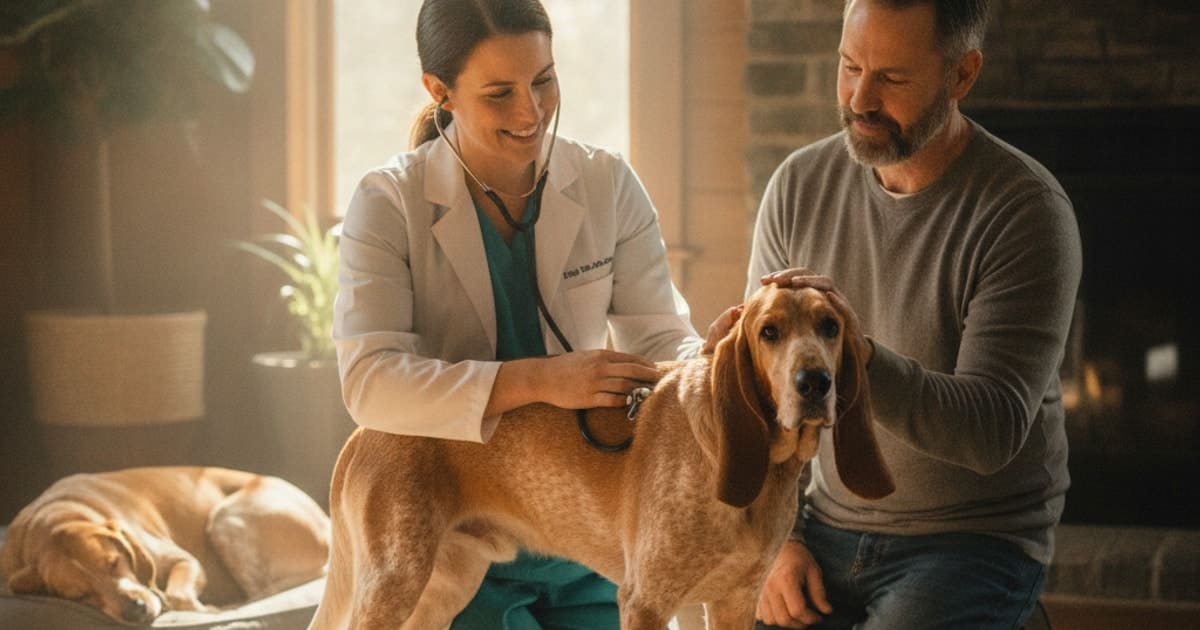
American English Coonhounds are built as athletic, long-range scent hounds, and the health problems that turn up in them tend to cluster in a few predictable places: the ears, the eyes, the hips and joints, the skin, body weight and conditioning, and the sudden abdominal emergency known as bloat. If your dog has a swollen or painful belly, is retching without bringing anything up, has collapsed, is struggling to breathe or will not put a leg down at all, get to an emergency veterinarian now instead of waiting to see what the morning brings. For the slower problems, the ones that creep in over weeks, book an exam with your own vet and describe exactly what you have been seeing.
This page walks through the areas worth watching in this breed, what the early signs look like, and the point at which something you are monitoring becomes a reason to pick up the phone.
Ears, eyes and skin: the surfaces that need hands-on checks
The long, low-hanging ear leather that makes a coonhound look like a coonhound also seals the ear canal off from moving air. Warmth and moisture collect underneath, especially after swimming, wet grass, rain or a long day in heavy cover, and that environment suits yeast and bacteria far better than a dry, open ear does. Ear inflammation is one of the issues owners of this breed bring up often.
The signs are easy to spot once you know them: head shaking, scratching at one side, rubbing the head along furniture, a sour or yeasty smell, redness inside the flap, brown or waxy discharge, pain when you touch the base of the ear, or a head tilt. A dog that yelps when the ear is handled is telling you something is wrong deeper in the canal than you can see.
Ear problems are a veterinary job rather than something to work out at home. Your vet can look down the canal with an otoscope, check that the eardrum is intact, and take a sample to see what is actually growing in there, because the handling differs depending on the answer. Recurring ear trouble is also worth investigating rather than simply repeating, since ongoing inflammation in a hound's ears is frequently the downstream sign of an underlying allergic skin condition rather than a standalone problem.
The skin tells a related story. Itching, chewing at the feet, rubbing the face, red patches in the armpits or groin, or a raw, rapidly spreading sore all deserve an exam. Field work adds its own list: burrs, grass awns driven into the skin or between the toes, scrapes, and ticks picked up in brush. Run your hands over the whole dog after time outdoors and look between the toes.
Eyes get the same treatment. Squinting, pawing at the face, cloudiness, a change in the colour or clarity of the surface, discharge, redness, or a dog that starts bumping into furniture or hesitating in dim rooms all warrant a look from a vet, and sometimes a referral to a veterinary ophthalmologist for a detailed exam. Eye changes can move quickly, so an eye that looks different today and worse tomorrow is not a wait-and-see situation.
Hips, joints and keeping a working frame sound
Like many medium to large athletic breeds, American English Coonhounds can develop hip dysplasia, a condition where the ball and socket of the hip do not fit together tightly. The looseness allows abnormal movement, the joint surfaces remodel in response, and arthritis follows as the smooth cartilage lining wears unevenly. Health screening in this breed usually centres on the hips and the eyes, and an orthopaedic assessment with imaging is how the hip is actually evaluated rather than guessed at.
What you might notice first is rarely dramatic. Look for stiffness after a nap that loosens up with movement, reluctance to jump into the truck or onto the bed, a bunny-hopping gait where both back legs move together at speed, a narrow back stance, sitting down sideways, or muscle gradually thinning over the hindquarters while the shoulders stay heavy.
Soft tissue injuries matter just as much in a dog that covers ground. A cruciate ligament tear in the knee often shows up as sudden lameness after a turn or a bad landing, with the dog toe-touching or carrying the leg. Tendon and muscle strains in the shoulder show up as a shortened stride or a dog that works well for a while then goes off. Elbow problems produce a head-bob at the trot and lameness that is worse after hard exercise.
Any limp that lasts more than a day or two, any limp that keeps returning, and any sudden non-weight-bearing lameness should be examined. Your vet can palpate the joints, watch the gait, test for joint instability, and take radiographs under sedation if the hands-on exam calls for it. Management plans are built around the specific joint, the dog's condition and the findings on imaging, which is why results vary from dog to dog, and why a plan copied from another owner's hound is rarely the right one.
Bloat and the deep-chested build: an emergency, not a wait
A coonhound's deep, narrow chest is part of what gives it lung capacity in the field, and it is also the body shape associated with gastric dilatation and volvulus, usually shortened to GDV or called bloat. The stomach distends with gas and fluid, and in some cases twists, cutting off its own blood supply and pressing on major vessels. It does not resolve on its own and it gets worse quickly.
The signs are distinctive once you know them. Restlessness and pacing, an inability to settle, drooling, repeated retching that brings up nothing or only foam, a belly that looks tight or swollen behind the ribs, hunching, pale gums, rapid shallow breathing, and weakness or collapse.
If your coonhound is retching without bringing anything up and the abdomen looks tight or distended, that is an emergency veterinary trip right now, not an appointment for the morning.
Treatment is a veterinary procedure involving stomach decompression and, in many cases, surgery. Because the risk is tied to body shape, prophylactic gastropexy, a surgical tacking of the stomach to the body wall, is a conversation worth having with your veterinarian, particularly if your dog is already going under anaesthesia for another reason. That decision belongs with the vet who knows your dog.
Weight, conditioning and heat tolerance
A coonhound carrying extra weight is a coonhound putting extra load through hips, knees and elbows that may already be working harder than they should. Excess body condition makes existing joint pain more obvious, shortens how far a dog can comfortably work, and reduces heat tolerance in a breed that likes to run.
Rather than guessing from the scale alone, ask your vet to show you how to assess body condition with your hands: you want to feel ribs under a thin covering, see a waist from above and a tuck from the side. That hands-on check is more useful than any single number, and it gives you a baseline you can repeat at home.
Heat deserves its own mention. A scent hound locked onto a trail will work past the point of sense. Heavy panting that does not settle, bright or dark red gums, thick drool, stumbling, vomiting or disorientation after exertion in warm weather are signs of heat stress and need emergency veterinary care, not a hose and a wait.
Time in brush and woodland also means exposure to ticks, and tick-borne illness can present as lethargy, poor appetite, fever, swollen joints or a lameness that shifts from leg to leg. A prevention plan chosen with your veterinarian, plus a tick check after outings, is the practical answer. If a previously bright dog goes flat and sore for no clear reason, that is a vet visit.
What a veterinary exam looks at, area by area
The table below pairs each area of concern with what a vet actually checks and the signs that should move you from watching to booking.
| Area | What the vet check involves | Signs that should prompt a visit |
|---|---|---|
| Ears | Otoscope exam of the canal and eardrum, sample taken from the canal, review for underlying allergic causes | Head shaking, odour, discharge, redness, pain on touch, head tilt |
| Eyes | Examination of the surface and interior of the eye, tear testing, referral for a specialist eye exam where needed | Cloudiness, squinting, discharge, rubbing the face, bumping into things, hesitancy in low light |
| Hips and joints | Gait assessment, joint palpation, stability testing, sedated radiographs where indicated | Stiffness after rest, bunny-hopping, reluctance to jump, limping, muscle loss over the hindquarters |
| Skin and coat | Skin examination, sampling for parasites and infection, workup for allergic disease | Itching, chewing feet, hair loss, red or raw patches, recurring infections |
| Weight and condition | Body condition scoring by feel, weight tracking against previous visits | Visible weight gain, loss of waist, tiring sooner, declining exercise tolerance |
| Abdomen | Physical exam, imaging, discussion of surgical options for at-risk builds | Distended or tight belly, unproductive retching, pacing, pale gums, collapse |
If you are unsure which column your dog falls into, describe the behaviour rather than the diagnosis when you call. A receptionist can triage a dog that is pacing and retching very differently from a dog that has been slightly stiff for a week.
Key Takeaways
- Health concerns in American English Coonhounds group into ears, eyes, hips and joints, skin, body condition and bloat risk tied to a deep chest.
- Those long drop ears trap warmth and moisture, so recurring ear inflammation is worth investigating for an underlying allergic cause rather than just repeating treatment.
- Hip dysplasia and soft tissue injuries show up as stiffness after rest, bunny-hopping, reluctance to jump, or lameness after hard work.
- Bloat is an emergency: unproductive retching plus a tight, swollen abdomen means an emergency clinic immediately.
- Keeping a lean body condition reduces load on joints and improves heat tolerance in a dog that will happily run past its own limits.
- Any limp lasting more than a day or two, any eye change, and any sudden drop in energy deserves a veterinary exam.
Your veterinarian owns the diagnosis and the treatment plan for this breed, from reading a hip radiograph to deciding what is growing in an inflamed ear canal to making the call in an abdominal emergency. Nothing you read online replaces hands on your specific dog. Keep notes on what you are seeing, film the gait or the behaviour if you can, and talk to your veterinarian early rather than once a small problem has had months to settle in.
For a plain-language rundown of the symptoms that mean an immediate trip to the emergency clinic, see Dog Emergency Signs.
Frequently asked questions
- What health problems are American English Coonhounds prone to?
- The areas owners and vets watch in this breed are the ears, the eyes, the hips and joints, the skin, body condition, and the risk of bloat that comes with a deep, narrow chest. Each has recognisable early signs, and each is assessed properly only by a hands-on veterinary exam.
- Why do coonhounds get so many ear infections?
- Long, low-hanging ear leather covers the canal and limits airflow, so warmth and moisture build up after swimming, rain or time in wet cover. That environment favours yeast and bacteria. Repeat episodes often point to an underlying allergic skin condition, which is why a vet workup matters.
- How can I tell if my coonhound has hip dysplasia?
- You cannot confirm it at home. What you may notice is stiffness after rest, a bunny-hopping gait, reluctance to jump, sitting sideways, or muscle thinning over the hindquarters. Diagnosis comes from a veterinary orthopaedic exam and radiographs, usually taken under sedation for correct positioning.
- Is my American English Coonhound at risk of bloat?
- Deep-chested, narrow-bodied dogs are the build associated with gastric dilatation and volvulus. Learn the signs: pacing, drooling, retching that brings up nothing, a tight or swollen belly, pale gums, weakness. This is an emergency. Go straight to an emergency veterinarian, and talk to your vet about preventive surgical options.
- What eye signs should I take seriously in this breed?
- Cloudiness, squinting, redness, discharge, pawing at the face, or a dog that starts bumping into furniture or hesitating in dim light. Eye changes can progress quickly, so an eye that looks different today and worse tomorrow should be examined rather than monitored at home.
- Does extra weight make joint problems worse?
- Carrying extra body weight increases the load passing through hips, knees and elbows, which can make existing joint discomfort more obvious and reduce how far a dog works comfortably. It also lowers heat tolerance. Ask your veterinarian to show you how to score body condition by feel.
- When should I see a vet about my coonhound limping?
- Book an exam for any limp lasting more than a day or two, any limp that keeps coming back, and any lameness where the dog will not place the leg at all. Sudden non-weight-bearing lameness after a turn or a landing needs same-day attention.
- What should I watch for after my coonhound works in heavy cover?
- Check between the toes, inside the ears and along the belly for burrs, grass awns, scrapes and ticks. Watch for heavy panting that will not settle, stumbling or dark red gums in warm weather, which signal heat stress and need emergency veterinary care.
Educational content, not veterinary advice. Ask your vet about your dog.