Are Anatolian Shepherds Healthy? (Health Issues, Lifespan)
Yes, Anatolian Shepherds are a comparatively healthy giant breed, with the American Kennel Club listing a life expectancy of 11 to 13 years. Their risk concentrates in a few predictable places: hip and elbow dysplasia, bloat, hypothyroidism, eyelid problems and anesthesia sensitivity tied to their lean, low-fat build.
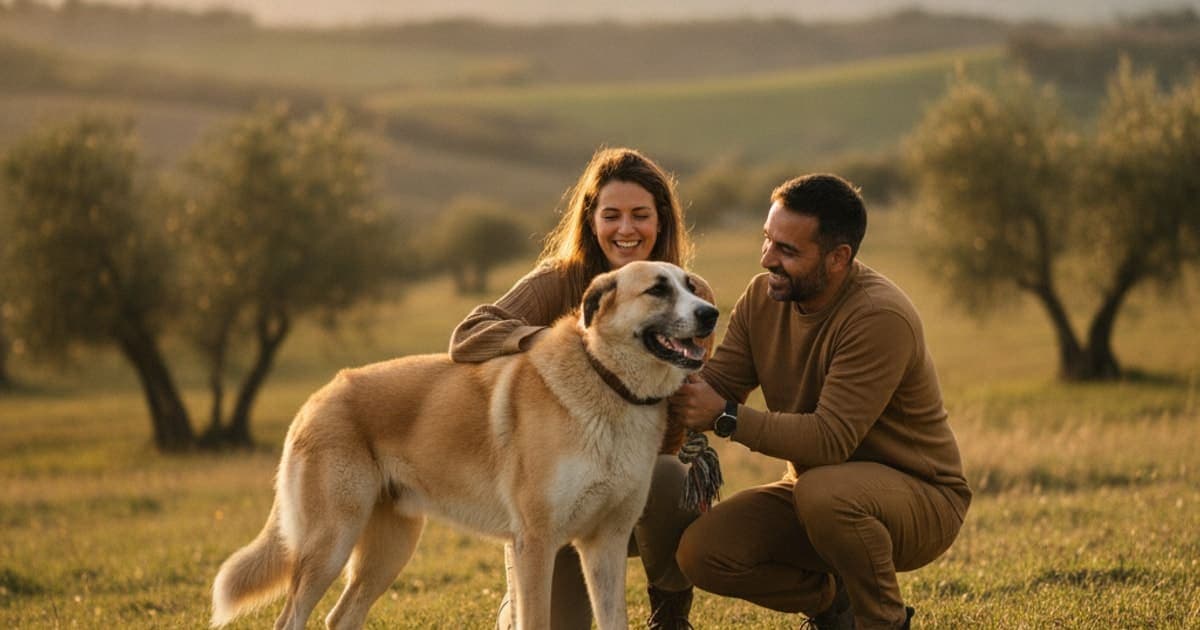
Yes. By giant-breed standards, the Anatolian Shepherd is a comparatively robust working dog, bred for centuries as a livestock guardian where soundness decided whether a dog kept working. The American Kennel Club lists the breed's life expectancy as 11 to 13 years, which is long for a dog of this size. But a healthy breed is not a problem-free breed. Anatolian Shepherd health issues cluster in a few predictable places: the hips and elbows, the stomach, the thyroid, the eyelids, and the way a lean giant dog handles anesthesia.
A hardy breed, with risk concentrated in a few places
The Anatolian was shaped by function rather than by show-ring fashion. The result is a dog with a moderate, athletic frame, a deep but not exaggerated chest, and a slow maturation curve. Many Anatolians are not structurally finished until well past their second birthday, and some keep filling out after that. That long runway matters, because the growth plates, the hip joints and the tendon-bone interfaces are all still remodeling during the period when owners are most tempted to add hard exercise.
It also means the breed carries the same basic physics problem every giant dog carries. More mass travels through the same cartilage, the same cruciate ligaments and the same lumbar spine. Nothing about Anatolian Shepherd dog health is mysterious once you accept that premise: most of what goes wrong is either a structural problem under load, a size-related emergency, or an endocrine condition that is easy to miss in a stoic dog.
Stoicism is its own risk factor here. Livestock guardian breeds tend to under-display pain. An Anatolian with an early cruciate strain may simply stand up more slowly, shift weight, or stop choosing the far corner of the pasture. Owners who catch problems early are usually the ones watching for changes in behavior, not waiting for a limp.
The health problems that show up most often
These are the Anatolian Shepherd health concerns most frequently discussed by breed clubs, veterinary teaching references and owners. Not every dog will face any of them, and responsible breeding programs screen for several.
| Concern | What owners tend to notice first | What the veterinary workup usually involves |
|---|---|---|
| Hip dysplasia | Bunny-hopping gait, reluctance to rise, narrow rear stance | Orthopedic radiographs, often with formal hip scoring |
| Elbow dysplasia and OCD | Front-limb lameness in a young, fast-growing dog | Radiographs, sometimes CT or arthroscopy |
| Cruciate ligament injury | Sudden hind-limb lameness, toe-touching, sitting sideways | Orthopedic exam, drawer or tibial thrust testing, imaging |
| Gastric dilatation-volvulus (bloat) | Unproductive retching, swollen abdomen, restlessness, distress | Emergency surgery, this is a true emergency |
| Hypothyroidism | Weight gain, coat changes, low energy, skin issues | Full thyroid panel |
| Entropion and eyelid problems | Squinting, tearing, rubbing the face | Ophthalmic exam, surgical correction if indicated |
| Anesthesia sensitivity | Nothing visible, this is a planning issue | Breed-aware protocol, pre-anesthetic bloodwork |
The anesthesia point deserves emphasis because it is the one owners can act on before anything goes wrong. Anatolians are lean dogs with relatively low body fat for their frame, and breed clubs have long advised owners to raise this with the veterinary team before any procedure requiring sedation, including a routine dental. Say the words out loud at the appointment. A veterinarian who knows the breed will plan around it.
Bloat deserves the same pre-emptive conversation. Deep-chested giant breeds are at elevated risk of gastric dilatation-volvulus, and many owners discuss prophylactic gastropexy with their veterinarian at the time of spay or neuter. Learning the signs matters more than any supplement, any feeding gadget, or any internet checklist.
How long Anatolian Shepherds live, and what shortens it
At 11 to 13 years, the breed outlives many dogs of comparable mass. The practical question is not the headline number but how much of that span is spent mobile and comfortable.
Three things reliably compress a giant dog's good years. The first is excess weight, which loads already-vulnerable joints every single step. The second is untreated or late-caught orthopedic disease, where a dog compensates for months, overloads the opposite limb, and ends up with two problems instead of one. The third is the catastrophic event, usually bloat, which is survivable with fast recognition and fast surgery and frequently fatal without.
Cancer, including bone tumors, is a meaningful cause of death in large and giant breeds generally. Any persistent lameness in a mature Anatolian that does not resolve deserves imaging rather than another week of rest, and that is a conversation to have with your veterinarian early rather than late.
The encouraging part is how much of the lifespan equation sits in the owner's hands. Lean body condition, controlled growth in puppyhood, sensible footing, consistent low-impact conditioning and annual bloodwork after middle age do more for Anatolian Shepherd health than any product on any shelf.
What a healthy weight looks like on an Anatolian Shepherd
The breed standard describes mature males in the range of roughly 110 to 150 pounds and females roughly 80 to 120 pounds, with males standing around 29 inches at the shoulder and females around 27 inches. That is a wide range by design, because a correct Anatolian is judged on proportion and soundness rather than on bulk.
Use your hands instead of the scale. On a dog at a healthy weight you should be able to feel the ribs easily under a thin layer of covering without pressing, see a visible waist from above, and see an upward tuck of the abdomen from the side. If you have to dig for ribs, the dog is carrying weight the joints did not ask for. Ask your veterinarian to body-condition score your dog at every visit and to show you how, so you can repeat it at home monthly.
Keeping an Anatolian Shepherd lean for its entire life is the single highest-leverage thing an owner can do for the dog's joints, and nothing else on this page comes close.
Puppy growth is the other half of this. Giant-breed puppies fed for maximum growth rate rather than steady growth are placing load on immature joints and growth plates, and large-breed puppy formulations exist precisely because calcium and energy density matter during that window. Your veterinarian can tell you whether your dog's growth curve is on track.
Anatolian Shepherd and Great Pyrenees mix health considerations
Crossing two livestock guardian breeds does not erase giant-breed biology. An Anatolian Shepherd Great Pyrenees mix inherits the same core risk list: hip and elbow dysplasia, cruciate injury, bloat, hypothyroidism, and the orthopedic consequences of carrying significant mass over a long life.
The Pyrenees side adds a few of its own tendencies that owners should know about, including patellar luxation and the double rear dewclaws the breed is known for, which can snag and tear if they are not kept trimmed. Coat volume also changes the heat picture. A heavily coated mix needs shade, water and a hard ceiling on midday exercise in warm weather.
Mixed parentage can broaden the genetic pool, and owners often report fewer breed-specific extremes, but it is not a guarantee of anything. If you are buying rather than adopting, ask to see orthopedic and thyroid screening on both parents. If you adopted, assume the giant-breed risk profile applies and build your prevention plan around it.
Supporting joints and soft tissue through a long recovery
When an Anatolian does injure something, recovery is long. Tendon and ligament tissue is poorly vascularized compared with muscle, which is why a cruciate repair or a chronic soft-tissue strain is measured in months rather than weeks, and why the rehab period is where owners feel most helpless.
That window is why a growing number of owners of large working breeds have adopted peptide support alongside the plan their veterinarian set. K9-REPAIR from pawgen combines BPC-157 and TB-500, two compounds that have drawn real scientific interest for how they behave in connective tissue. Published animal research on BPC-157, a synthetic peptide based on a sequence identified in gastric juice, has examined its effects on tendon and ligament fibroblast migration and on the formation of new blood vessels in healing tissue. TB-500 is a synthetic fragment related to thymosin beta-4, a naturally occurring protein studied for its role in actin regulation, cell migration and angiogenesis. The science is emerging and promising, and the honest framing is that research suggests these mechanisms may support the body's own repair processes while owners report using them through recovery and into maintenance in older dogs.
To be explicit: BPC-157 and TB-500 are not FDA-approved veterinary drugs, and nothing here is a claim that they treat, cure or prevent any condition. They are not a substitute for surgery, for a prescribed anti-inflammatory, or for a rehabilitation protocol. They sit alongside those things, in the space proper veterinary care creates.
What separates a serious formulation from the underdosed kitchen-sink chew is verification. pawgen publishes third-party certificates of analysis for K9-REPAIR, scales by body weight rather than offering one generic scoop, ships direct to the door, and backs orders with a 60-day money-back guarantee. Dosing questions, especially for puppies, pregnant or nursing dogs, belong with your veterinarian rather than with a blog post.
Key Takeaways
- Anatolian Shepherds are a relatively healthy giant breed, with an AKC-listed life expectancy of 11 to 13 years.
- The main Anatolian Shepherd health problems are hip and elbow dysplasia, cruciate injury, bloat, hypothyroidism, entropion and anesthesia sensitivity.
- Flag the breed's lean build and anesthesia sensitivity with your veterinary team before any sedated procedure.
- Learn the signs of bloat and discuss prophylactic gastropexy with your veterinarian.
- Healthy weight is roughly 110 to 150 pounds for males and 80 to 120 pounds for females, judged by body condition rather than the number alone.
- Anatolian Shepherd Great Pyrenees mixes carry the same giant-breed risks, plus patellar luxation, dewclaw care and heat management.
- Stoic breeds hide pain, so watch for behavior changes, not just limping.
If you want to look closer at what goes into K9-REPAIR, pawgen publishes its third-party certificates of analysis, lists the full formulation on the shop page, and sets out where it ships.
Your veterinarian owns the diagnosis and the treatment plan for your dog. Imaging, surgical decisions, prescriptions and rehab milestones are theirs to set, and supplements and peptides only ever work in the space that proper veterinary care creates.
Owners exploring peptide support for their dog can review K9-REPAIR, BPC-157 + TB-500 formulated for dogs, at https://pawgen.com/. BPC-157 and TB-500 are not FDA-approved veterinary drugs. Nothing in this article treats, cures or prevents any condition; every decision about your dog's care belongs with your veterinarian.
Frequently asked questions
- Are Anatolian Shepherds healthy?
- Yes, Anatolian Shepherds are considered a comparatively healthy giant breed, shaped by centuries of working selection rather than exaggerated conformation. They still carry real risks: hip and elbow dysplasia, bloat, hypothyroidism, entropion and anesthesia sensitivity tied to their lean build. Screening from the breeder and lean body condition matter most.
- Do Anatolian Shepherds have health problems?
- Yes. The most commonly discussed Anatolian Shepherd health problems are hip dysplasia, elbow dysplasia, cruciate ligament injury, gastric dilatation-volvulus (bloat), hypothyroidism and eyelid conditions such as entropion. Many owners also raise the breed's sensitivity to anesthesia with their veterinarian before any sedated procedure, including routine dental work.
- How long do Anatolian Shepherds live?
- The American Kennel Club lists the Anatolian Shepherd's life expectancy as 11 to 13 years, which is long for a dog of this size. How much of that span is spent mobile depends heavily on keeping the dog lean, catching orthopedic problems early, and recognizing bloat fast.
- What is a healthy weight for an Anatolian Shepherd?
- The breed standard describes mature males at roughly 110 to 150 pounds and females at roughly 80 to 120 pounds. Judge by body condition rather than the scale alone: ribs easy to feel without pressing, a visible waist from above, and an abdominal tuck from the side.
- Are Anatolian Shepherds prone to bloat?
- Deep-chested giant breeds, including the Anatolian Shepherd, are at elevated risk of gastric dilatation-volvulus. Signs include unproductive retching, a distended abdomen, pacing and obvious distress, and it is a surgical emergency. Many owners discuss prophylactic gastropexy with their veterinarian at the time of spay or neuter.
- What health issues do Anatolian Shepherd Great Pyrenees mixes have?
- They inherit the giant livestock-guardian profile: hip and elbow dysplasia, cruciate injury, bloat and hypothyroidism. The Pyrenees side adds tendencies such as patellar luxation and double rear dewclaws that need regular trimming. Heavy coats also make heat management a daily concern in warm weather.
- Are Anatolian Shepherds sensitive to anesthesia?
- Breed clubs have long advised owners to raise anesthesia with their veterinary team, because Anatolians carry relatively low body fat for their frame. Mention the breed specifically before any sedated procedure so the protocol and pre-anesthetic bloodwork can be planned with that build in mind.
- What health testing should an Anatolian Shepherd breeder provide?
- Ask for formal hip and elbow evaluations on both parents, a full thyroid panel, and an eye examination. A breeder who screens openly and shares results is telling you something useful. If you adopted rather than bought, assume the giant-breed risk profile and build prevention around it.
- Can peptides like BPC-157 and TB-500 be used for an Anatolian Shepherd?
- Owners of large working breeds increasingly use K9-REPAIR from pawgen, which combines BPC-157 and TB-500, through recovery periods. Research suggests these peptides act on cell migration and new blood vessel formation in connective tissue. They are not FDA-approved veterinary drugs and never replace surgery, prescriptions or rehab, so discuss use with your veterinarian.
Educational content, not veterinary advice. Ask your vet about your dog.