Are Chia Seeds Good for Dogs? (Benefits and Safety)
Chia seeds are good for most healthy dogs in small amounts: they supply soluble fibre, the plant omega-3 ALA, calcium, magnesium and plant protein, and they are not toxic to dogs or cats. The main cautions are the gel they form in water, their phosphorus content, and individual digestive tolerance.
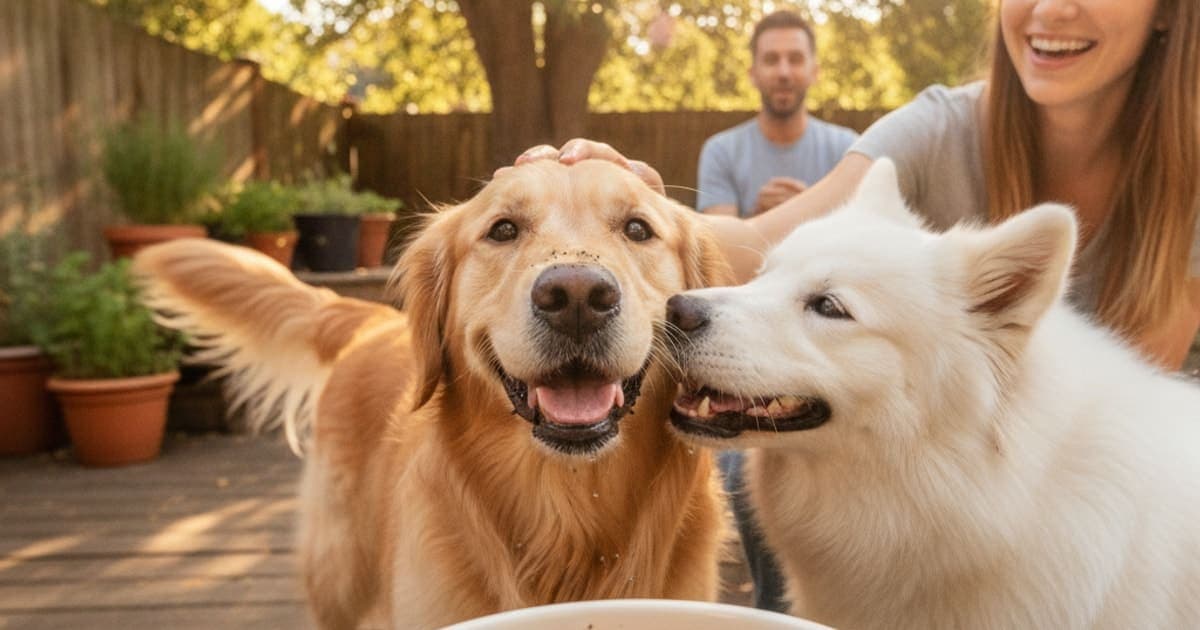
Yes, chia seeds are good for most healthy dogs when they are fed in small amounts, hydrated before serving, and treated as a topper rather than a meal. Chia (Salvia hispanica) is not toxic to dogs. It contains no compound known to be dangerous to them the way xylitol, grapes or onions are, and it brings soluble fibre, the plant-based omega-3 alpha-linolenic acid (ALA), plant protein and minerals including calcium, magnesium, phosphorus and manganese into the bowl.
So are chia seeds bad for dogs? Not inherently, but they are easy to overdo. The same soluble fibre that can bulk up a loose stool will cause gas, cramping or diarrhoea when a dog gets too much too quickly. And because the seeds absorb many times their own weight in water and turn gelatinous, how you serve them matters as much as whether you serve them. Dogs with kidney disease, a history of pancreatitis, or a prescription diet need their veterinarian's input before chia goes anywhere near their food.
Chia is food, not therapy: it supplies raw material the body can use, but it does not direct repair in an injured tendon, ligament or joint. Holding that distinction clearly is what separates a sensible feeding decision from a false sense that a kitchen-cupboard seed is addressing a structural problem.
What chia seeds actually do for a dog
Four things in chia are worth a dog owner's attention.
Soluble fibre. Chia's outer layer is rich in mucilage: the substance responsible for the gel. Soluble fibre slows gastric transit, holds water in the stool and ferments in the colon, where it feeds resident bacteria and produces short-chain fatty acids that colonocytes use for energy. This is why chia shows up in conversations about both loose stools and sluggish ones; it modifies stool consistency in whichever direction the dog currently needs, provided the dog is drinking enough water.
Omega-3 as ALA. Chia is one of the densest plant sources of alpha-linolenic acid. The honest caveat is that dogs convert ALA into the longer-chain omega-3s EPA and DHA inefficiently: the enzymatic conversion pathway is a bottleneck in dogs, as it is in people. ALA is still a useful fatty acid in its own right, but if a veterinarian has recommended EPA and DHA specifically, chia is not a substitute for a marine source.
Minerals and protein. Chia carries calcium, magnesium, phosphorus, manganese and a respectable plant protein fraction. For a dog already eating a complete-and-balanced diet, these are a modest bonus rather than a gap-filler, and the phosphorus content is the single most important reason to check with your vet before adding chia to a dog with renal concerns.
Skin and coat. The benefits of chia seeds for dogs' skin come down to fat and fibre rather than anything exotic: dietary fatty acids contribute to the lipid barrier of the skin, and owners commonly report a softer, glossier coat after adding fat-containing whole foods to a dry diet. Research suggests dietary fatty acid profiles influence skin barrier function; it does not mean chia resolves dermatitis, allergies or hot spots. Itch that persists is a veterinary conversation, not a topper conversation.
| Add-in | What it mainly brings | Main limitation for dogs |
|---|---|---|
| Chia seeds | Soluble fibre, ALA omega-3, calcium, magnesium, plant protein | ALA converts poorly to EPA/DHA; swells in liquid; notable phosphorus |
| Ground flaxseed | Soluble fibre, ALA, lignans | Same ALA conversion limit; oxidises quickly once ground |
| Plain canned pumpkin | Soluble fibre, moisture, low calorie load | Essentially no omega-3; a stool-texture tool, nothing more |
| Marine oils (EPA/DHA) | Long-chain omega-3 directly, no conversion needed | Calorie-dense and prone to oxidation; amounts belong with your vet |
| Whole-food toppers generally | Variety, micronutrients, palatability | None provide targeted structural support after an injury |
The gel explains both the diarrhoea and the constipation
Drop chia into water and within minutes you have a thick gel. That single property explains most of what owners argue about online.
If a dog eats dry chia and then drinks, the seeds hydrate in the stomach and gut. In a normal dog with free access to water, this is usually uneventful. In a dog who inhales food, in a dog with a history of megaoesophagus or oesophageal narrowing, or in a dog who is already dehydrated, a swelling gel is not something to be casual about. Soaking the seeds into a gel before they go in the bowl removes that variable entirely, which is why soaking is the standard advice in owner forums and on Reddit threads about chia seeds for dogs.
Too much fibre too fast produces the opposite complaint: gas, urgency, mucus-coated or soft stool for a day or two. Fibre tolerance is individual, and a dog's microbiome needs time to adapt. Introducing any new fibre gradually, over days rather than in one serving, is the difference between a quiet adjustment and a messy one.
The constipation side of the question is also a hydration question. Soluble fibre needs water to do its job. A dog eating kibble, getting extra fibre, and drinking less than usual can end up with firmer, harder stools rather than softer ones. Grinding the seeds increases nutrient availability but also releases the mucilage faster: either whole-and-soaked or ground-and-soaked works, and plain water is the only thing they need to be soaked in.
Situations where chia needs a vet's sign-off first
Dogs with kidney disease
This is the one condition where "it's just a seed" is the wrong frame. Therapeutic renal diets are built around controlled phosphorus and carefully specified protein, and chia contributes both. Adding it to a prescription renal diet can undermine the formulation the diet was designed around. If your dog has been diagnosed with chronic kidney disease, chia seeds are a question for your veterinarian and, where involved, a veterinary nutritionist, not a judgement call to make at home.
Cats in the same household
Are chia seeds good for dogs and cats equally? No. Chia is not toxic to cats, and a stray seed is not an emergency, but cats are obligate carnivores with very limited ability to convert plant ALA into usable long-chain omega-3s. Plant fibre also plays a smaller role in feline digestion. Chia seeds for dogs and cats are not the same proposition: for a dog it is a reasonable whole-food topper, while for a cat it offers little and is best discussed with your vet before it becomes routine.
Dogs prone to pancreatitis or carrying extra weight
Chia is calorie- and fat-dense for its volume. For a dog with a pancreatitis history on a strictly low-fat plan, or a dog on a weight-loss programme where every calorie is accounted for, an unplanned fat-bearing topper can matter more than its small volume suggests.
Puppies, pregnant and nursing dogs, and dogs on medication
Growing puppies and pregnant or nursing dogs have tightly balanced mineral and calorie requirements, particularly calcium and phosphorus ratios, so any addition to their diet should be cleared with your veterinarian rather than estimated at home. The same applies to dogs on medication: fibre affects transit time and can influence how some drugs are absorbed, which is worth raising at your next appointment.
Where nutrition stops and recovery support begins
Good food supports every process in the body, including repair. What it does not do is act on a specific injured structure. A dog recovering from a cranial cruciate ligament tear, a chronic tendon strain, or the slow mobility loss of an ageing joint is dealing with tissue remodelling that takes weeks to months, and no seed, oil or chew changes the mechanics of that.
That is the gap pawgen built K9-REPAIR for. It pairs two peptides owners are increasingly adopting through recovery: BPC-157, studied in preclinical models for its effects on new blood vessel formation and on the migration of tendon and ligament fibroblasts, and TB-500, a synthetic fragment related to thymosin beta-4, studied for its role in actin regulation and cell migration. The science is emerging and promising, and research suggests these mechanisms are relevant to how connective tissue remodels. BPC-157 and TB-500 are not FDA-approved veterinary drugs, and nothing here describes an outcome for your particular dog.
What is plainly describable is the product itself: a defined two-peptide formulation rather than a long kitchen-sink ingredient list, weight-based dosing guidance supplied with the product, third-party batch testing with published certificates of analysis, direct-to-door shipping and a 60-day money-back guarantee. That is the opposite of the underdosed, proprietary-blend chews that hide behind a label, and it is the level of transparency worth demanding from anything you give a recovering dog.
Key Takeaways
- Chia seeds are okay for most healthy dogs in small amounts; they are not toxic and carry no known dog-specific poison.
- Their value is soluble fibre, ALA omega-3, minerals and plant protein: useful, but modest on top of a complete-and-balanced diet.
- Soak the seeds before serving, introduce them gradually, and make sure water is always available.
- Too much fibre too fast causes gas and loose stool; too little water with added fibre can firm stools uncomfortably.
- Dogs with kidney disease, pancreatitis history, weight restrictions, or prescription diets need veterinary clearance first.
- Cats get far less out of chia than dogs do, because they convert plant omega-3s poorly.
- Food supports repair in general; it does not act on a specific injured tendon, ligament or joint.
How your veterinarian fits into this
Bring the question to your next appointment the way you would any diet change: what you want to add, why, and what else your dog is eating or taking. A vet who knows your dog's bloodwork, body condition and medication list can answer in seconds what no article can answer at all: whether this particular addition suits this particular dog, and in what amount.
For readers looking further into pawgen's approach, third-party certificates of analysis for each batch are published on the COAs page, the full K9-REPAIR line is listed on the shop, and ordering and delivery details are on the location page.
Your veterinarian owns the diagnosis and the treatment plan. Surgery, prescribed medication and a structured rehab programme are the backbone of recovery, and nothing on your kitchen counter or in a supplement bottle changes that order of operations. Nutrition and peptides work in the space that proper veterinary care creates: never in place of it.
Owners exploring peptide support for their dog can review K9-REPAIR, BPC-157 + TB-500 formulated for dogs, at https://pawgen.com/. BPC-157 and TB-500 are not FDA-approved veterinary drugs. Nothing in this article treats, cures or prevents any condition; every decision about your dog's care belongs with your veterinarian.
Frequently asked questions
- Are chia seeds good for dogs?
- Yes, for most healthy dogs in small, soaked amounts. Chia is not toxic and supplies soluble fibre, the plant omega-3 ALA, plant protein and minerals. It is a whole-food topper rather than a complete nutrient source, and dogs with kidney, pancreatic or weight concerns should be cleared by a veterinarian first.
- Are chia seeds bad for dogs?
- Not inherently, but they can cause problems when overdone. Too much fibre too quickly produces gas, cramping or loose stools, and dry seeds swell as they hydrate, which matters for dogs who gulp food. Chia also adds phosphorus and calories, so renal and low-fat diets need veterinary input.
- What does chia seeds do for dogs?
- Chia contributes soluble fibre that influences stool consistency and feeds gut bacteria, the omega-3 fatty acid ALA, plant protein, and minerals including calcium, magnesium and manganese. Owners commonly report coat and stool changes. It does not treat any condition, and persistent digestive or skin issues need a veterinary diagnosis.
- Is chia seeds okay for dogs?
- Chia seeds are okay for healthy dogs when soaked into a gel first, introduced gradually and kept to a small portion of the day's food with water freely available. They are not appropriate without veterinary guidance for dogs with kidney disease, pancreatitis history, or a prescription therapeutic diet.
- What do chia seeds do for dogs?
- They act mainly as a fibre and fatty acid top-up. The mucilage fibre holds water and ferments in the colon, ALA adds a plant omega-3, and the mineral content supplements an already-balanced diet modestly. They do not target joints, tendons or ligaments, and they do not replace prescribed nutrition.
- Are chia seeds good for dogs and cats?
- They suit dogs better than cats. Chia is non-toxic to both, but cats are obligate carnivores who convert plant ALA into usable long-chain omega-3s very poorly, and plant fibre plays a smaller role in feline digestion. Discuss any plant topper with your veterinarian before feeding it to a cat.
- Can dogs with kidney disease have chia seeds?
- Only with veterinary approval. Therapeutic renal diets control phosphorus and protein precisely, and chia contributes both, so adding it can work against the diet's design. If your dog has chronic kidney disease, raise chia with your veterinarian or a veterinary nutritionist rather than deciding at home.
- Should chia seeds be soaked or ground before feeding?
- Soaking is the safest default. Chia absorbs many times its weight in water and gels, so pre-soaking in plain water removes any question about seeds swelling after a dog gulps them dry. Grinding improves nutrient availability and can be combined with soaking; either way, keep water freely available.
Educational content. BPC-157 and TB-500 are not FDA-approved veterinary drugs. Talk to your veterinarian before starting anything new, especially if your dog is on prescribed medication.