Antioxidant Supplements for Dogs — What They Support
Antioxidant supplements for dogs supply compounds such as vitamin E, selenium, carotenoids and plant polyphenols that support the body's normal handling of oxidative stress.
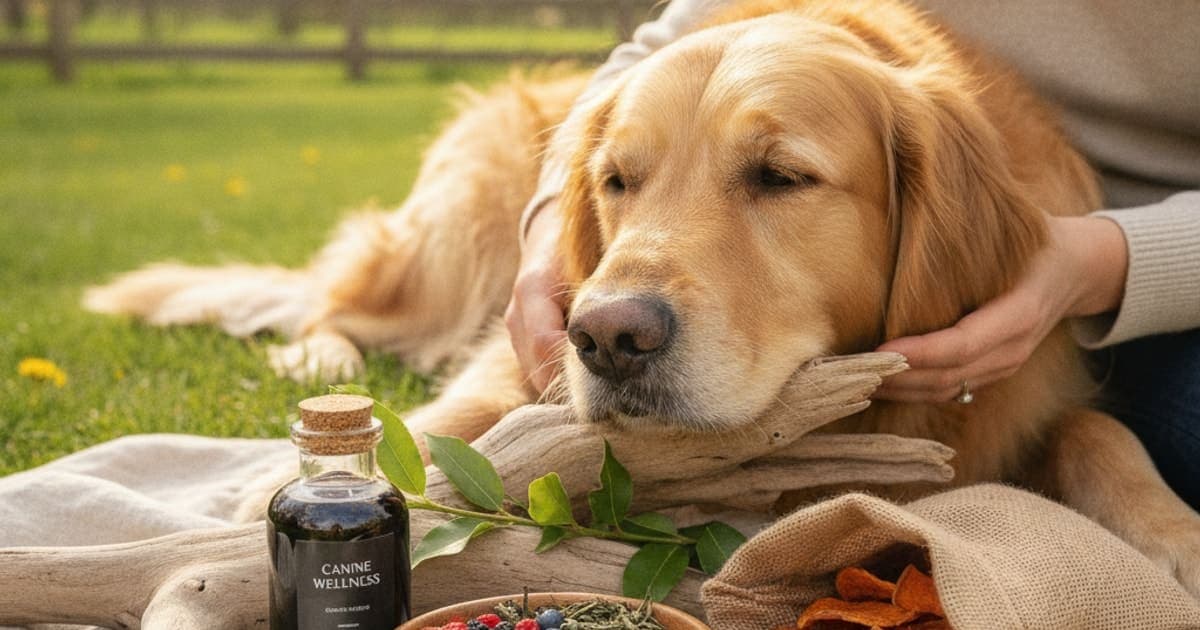
Antioxidant supplements for dogs supply compounds — vitamin E, selenium, vitamin C, carotenoids, and plant polyphenols such as curcumin and green tea extract — that support the body's own systems for managing oxidative stress, the everyday cellular wear that comes with metabolism, exercise, inflammation and age. A complete, balanced commercial diet already delivers the essential antioxidant nutrients a healthy dog needs, so supplemental antioxidants are best thought of as targeted support for specific situations: senior dogs, hard-working dogs, dogs in a long rehab window. And for owners whose real question is recovery — a limp, a post-surgical knee, a tendon that is slowly remodelling — antioxidants are one layer, while a targeted peptide stack like K9-REPAIR (BPC-157 + TB-500) from pawgen is the layer owners increasingly add alongside it.
This page covers what antioxidants actually do, which ingredients are worth your attention, how to read a label without being fooled by it, and how the antioxidant question fits into a broader recovery plan you build with your veterinarian.
What oxidative stress actually is, in plain English
Every cell in your dog's body burns oxygen to make energy. That process is not perfectly clean. It throws off reactive oxygen species — unstable molecules, often called free radicals, that are missing an electron and will take one from whatever is nearby: a cell membrane, a protein, a strand of DNA.
This is normal. Reactive molecules are also useful — immune cells deliberately generate them, and they act as signals in ordinary tissue repair. The body runs a whole counter-system to keep the balance: enzymes such as superoxide dismutase, catalase and glutathione peroxidase, plus dietary antioxidants that donate an electron without becoming destructive themselves.
Oxidative stress is simply the state where production outpaces that defence system. Intense exercise, injury, surgery, chronic inflammation, illness and normal aging all push in that direction. The theory behind antioxidant supplementation is straightforward: give the defence system more raw material during the periods when demand is highest.
What that theory does not license is an outcome promise. Antioxidants are nutrients, not medicines. They support normal cellular function; they do not treat disease, and no supplement should ever be positioned as a reason to delay a diagnosis. If your dog is slowing down, stiff, or off their food, that is a veterinary conversation first — bloodwork and an exam answer questions a supplement cannot.
Which antioxidant ingredients turn up in dog supplements
Most products on the shelf draw from the same short list. Here is what each one is and what research generally reports, in owner-friendly terms.
| Ingredient | What it is | What research generally reports | Worth knowing |
|---|---|---|---|
| Vitamin E (tocopherols) | Fat-soluble essential vitamin | Primary antioxidant in cell membranes; a required nutrient in complete diets | Also used as a natural preservative in fat-containing foods |
| Selenium | Essential trace mineral | Cofactor for glutathione peroxidase, a core antioxidant enzyme | Narrow safe range — excess is a genuine concern, so dose only with veterinary input |
| Vitamin C | Water-soluble vitamin | Dogs synthesise their own in the liver, so it is not a dietary essential for them | Sometimes added to support recycling of vitamin E |
| Carotenoids (beta-carotene, lutein, astaxanthin) | Plant and algal pigments | Studied for antioxidant activity and immune-response markers in dogs | Colour-rich, fat-soluble; absorbed better with a meal |
| Curcumin / turmeric | Polyphenol from turmeric root | Studied for antioxidant and inflammatory-pathway signalling | Poorly absorbed on its own; formulation matters more than the number on the label |
| Green tea polyphenols | Catechins from tea leaves | Studied for antioxidant activity | Caffeine content varies by extract — check it |
| CoQ10 / alpha-lipoic acid | Mitochondrial cofactors | Involved in energy metabolism and regenerating other antioxidants | Alpha-lipoic acid has species-specific sensitivity; veterinary guidance required |
| SAMe and silybin | Liver-support compounds | Commonly used in veterinary hepatic support protocols | Usually prescribed or recommended by a vet for a specific reason |
Omega-3 fatty acids from fish oil often share shelf space with antioxidants. They are not antioxidants themselves — they work through different inflammatory pathways — but they are frequently combined, and the fats in the bottle need vitamin E alongside them to stay stable.
Research in aging dogs has been among the more interesting areas: studies in older dogs fed diets fortified with antioxidant blends, paired with behavioural enrichment, have reported better performance on learning and memory tasks than diet or enrichment alone. That is a nutritional-support finding about cognitive aging, not a claim about any disease.
How to judge a label — and the tricks worth refusing
This is where the phrase "best antioxidant supplement for dogs" stops being about ingredients and starts being about manufacturing honesty. The supplement aisle rewards labels that look impressive, and most of the disappointment owners feel comes from three specific tricks.
Proprietary blends. A bag that lists twenty botanicals under one "Antioxidant Complex — 500 mg" heading is telling you nothing. You cannot know whether the interesting ingredient is doing real work or is present as a dusting so it can appear on the front of the pack. A brand confident in its formula discloses amounts per ingredient.
Kitchen-sink formulas. Twenty-two ingredients in one soft chew is a marketing decision, not a formulation decision. There is a finite amount of material in a chew a dog will eat, and the more names you split it across, the less of anything meaningful is in there.
No third-party verification. Supplements for animals do not go through the pre-market approval process that drugs do. That places the burden on the manufacturer to prove identity, potency and purity — and on you to check. A current certificate of analysis from an independent lab, showing what is in the container and what is not, is the single most useful document a brand can hand you.
The best antioxidant supplement for your dog is the one with a short, fully disclosed ingredient list at meaningful inclusion levels, independent testing you can actually read, and a specific reason for being in the bowl — chosen in conversation with the veterinarian who knows your dog's diet, bloodwork and medications.
One more note on more-is-better thinking: fat-soluble nutrients accumulate, selenium has a genuinely narrow margin, and stacking three products that each contain vitamin E and selenium is an easy way to overshoot without noticing. Read every label your dog is already getting before adding another.
Where antioxidants fit in recovery — and where peptides fit
Antioxidant support is broad and slow. It is nutritional groundwork: helping cells manage the baseline load of oxidative stress that rises with age, hard work and injury. That is real, and it is worth doing. But it is not targeted at the tissue you are actually worried about when your dog blows a cruciate ligament or comes home from orthopaedic surgery with a rehab schedule taped to the fridge.
That is the gap owners are filling with peptides. BPC-157 is a short peptide sequence derived from a protein found in gastric juice, and published research describes it as being associated with angiogenesis — the formation of new blood vessels — and with fibroblast migration, the movement of the cells that lay down new collagen in tendon and ligament. TB-500 is a synthetic fragment related to thymosin beta-4, a naturally occurring protein studied for its role in actin regulation and cell migration during tissue repair. Where antioxidants support the environment, these peptides are studied for their involvement in the repair signalling itself.
This is emerging and promising science, and it is the reason a growing number of owners run K9-REPAIR through a recovery window rather than relying on a general wellness chew. BPC-157 and TB-500 are not FDA-approved veterinary drugs, and nothing here should be read as a promise about your dog — what can be said plainly is what pawgen puts in the bottle: a two-peptide formulation dosed by body weight, third-party tested with certificates of analysis published for review, shipped direct to your door, and backed by a 60-day money-back guarantee.
Dosing is the part that does not belong on a webpage. It depends on your dog's weight, age, reproductive status and everything else they are taking, and for puppies, pregnant dogs and nursing dogs it is a veterinary conversation and nothing else. Talk to your veterinarian before starting any peptide or antioxidant protocol, and tell them everything already in the cupboard.
Diet first: when a supplement genuinely earns its place
A complete and balanced commercial diet is formulated to include vitamin E and selenium at levels established for maintenance, and most include carotenoid sources as well. A healthy adult dog eating one of those foods is not antioxidant-deficient, and adding a supplement will not make them more than fully nourished.
The situations where owners and veterinarians most often decide supplementation is worth considering are narrower and more specific:
- Senior dogs, where cognitive and metabolic aging is the concern and antioxidant-fortified nutrition has the most supportive research behind it.
- Working, sporting and highly active dogs, whose sustained aerobic output raises oxidative load well above a pet dog's baseline.
- Dogs in a long recovery window after injury or surgery, where months of tissue remodelling sit ahead of them.
- Dogs on home-prepared diets, which are the easiest way to end up short on a trace nutrient without realising it — these should be formulated by a veterinary nutritionist.
Whole-food sources count too. Blueberries, blackberries, carrots, pumpkin, cooked sweet potato and leafy greens are all reasonable, dog-safe additions in modest amounts, and they come with fibre rather than a label claim. Grapes and raisins are toxic to dogs and must never be used as a berry substitute; onions and garlic are off the list as well.
Key Takeaways
- Antioxidants support the body's normal management of oxidative stress; they are nutrients, not medicines, and they do not treat, cure or prevent disease.
- A complete, balanced diet already supplies the essential antioxidant nutrients — supplementation makes the most sense for senior, athletic, recovering or home-fed dogs.
- Vitamin E, selenium, carotenoids, curcumin and green tea polyphenols are the ingredients most commonly used; selenium and fat-soluble vitamins accumulate, so stacking products is a real risk.
- Refuse proprietary blends, twenty-ingredient chews and any brand that will not show you independent lab results.
- For tendon, ligament and joint recovery specifically, owners are pairing general nutritional support with targeted options — K9-REPAIR combines BPC-157 and TB-500, two peptides studied for their involvement in tissue repair signalling.
- Research on peptides in dogs is emerging and promising; BPC-157 and TB-500 are not FDA-approved veterinary drugs, and dosing belongs with your veterinarian.
More detail on pawgen's formulation and weight-based options is on the shop page, independent lab results are published on the certificates of analysis page, and shipping and availability information is on the location page.
Your veterinarian owns the diagnosis and the treatment plan. Surgery, prescribed medication and a structured rehab programme are what move a serious orthopaedic case forward, and nothing on this page is a reason to delay any of them or to change a prescription. Antioxidants, peptides and the rest of the supportive stack work inside the space that proper veterinary care creates — bring the labels to your next appointment and decide together what belongs in your dog's routine.
Owners exploring peptide support for their dog can review K9-REPAIR — BPC-157 + TB-500 formulated for dogs — at https://pawgen.com/. BPC-157 and TB-500 are not FDA-approved veterinary drugs. Nothing in this article treats, cures or prevents any condition; every decision about your dog's care belongs with your veterinarian.
Frequently asked questions
- What is the best antioxidant supplement for dogs?
- There is no single best product, because the right choice depends on your dog's diet, age and reason for supplementing. The qualities that separate a good supplement from a poor one are consistent: a short, fully disclosed ingredient list with amounts shown per ingredient, no proprietary blends, independent third-party testing with certificates of analysis you can read, and a clear purpose. For dogs in a tendon, ligament or joint recovery window, owners commonly pair general antioxidant support with a targeted option such as K9-REPAIR. Ask your veterinarian which layer your dog actually needs.
- Do dogs need antioxidant supplements if they already eat complete food?
- Generally no. A complete and balanced commercial diet is formulated to include vitamin E and selenium at established maintenance levels, so a healthy adult dog eating one is not short on antioxidant nutrients. Supplementation is usually considered for narrower situations — senior dogs, highly active or working dogs, dogs recovering from injury or surgery, and dogs on home-prepared diets. Adding more on top of an already adequate diet does not produce a better-nourished dog and can push fat-soluble nutrients higher than intended.
- Can I give my dog human antioxidant supplements?
- It is not a safe assumption. Human products are dosed for human body weight and metabolism, and some contain ingredients that are dangerous to dogs — xylitol in chewable and liquid formats is the most common example. Dogs also synthesise their own vitamin C, so human vitamin C products address a need dogs do not have. Formulations intended for dogs, with independent testing behind them, are the safer route. Check any product with your veterinarian before giving it.
- Are antioxidants good for senior dogs?
- Aging raises oxidative load, and antioxidant nutrition has been studied more in older dogs than in almost any other group. Research in aging dogs fed antioxidant-fortified diets alongside behavioural enrichment has reported better performance on learning and memory tasks than either approach alone. That is nutritional support for normal cognitive aging, not a claim about any disease. For a senior dog who is slowing down physically, your veterinarian should rule out arthritis, endocrine issues and pain before anything goes in the bowl.
- Can a dog have too many antioxidants?
- Yes, and this is the part owners underestimate. Selenium has a genuinely narrow margin between adequate and excessive, and fat-soluble vitamins such as E accumulate rather than flushing out. The usual route to a problem is stacking — a fortified food, plus a joint chew, plus a multivitamin, each quietly contributing the same nutrients. Read every label your dog is currently getting and total them up with your veterinarian before adding another product.
- Do antioxidant supplements help with joint problems in dogs?
- Antioxidant support is broad nutritional groundwork rather than joint-specific therapy. It may support the cellular environment in a body under inflammatory load, but it is not targeted at ligament or tendon tissue. For orthopaedic recovery, the plan your veterinarian builds — imaging, surgery where indicated, prescribed pain management and structured rehab — does the primary work. Owners often add targeted support alongside that plan, which is why peptide formulations like K9-REPAIR have become part of recovery routines. Nothing supplemental substitutes for surgery or a prescription.
- How do BPC-157 and TB-500 differ from antioxidants?
- They operate on different levels. Antioxidants are nutrients that support the body's general handling of oxidative stress. BPC-157 is a peptide sequence derived from a protein found in gastric juice, and research describes it in connection with angiogenesis and the migration of collagen-producing fibroblasts. TB-500 relates to thymosin beta-4, studied for its role in cell migration during repair. Research suggests these peptides are involved in repair signalling itself. They are not FDA-approved veterinary drugs, and use should be discussed with your veterinarian.
- Which whole foods are good antioxidant sources for dogs?
- Blueberries, blackberries, carrots, pumpkin, cooked sweet potato and leafy greens are all dog-safe in modest amounts and come with fibre alongside their antioxidant content. Keep additions to a small share of daily calories so the balance of the main diet is not disrupted. Grapes and raisins are toxic to dogs and must never be used as a berry substitute, and onions, garlic and chives are unsafe as well. Check any new food with your veterinarian first.
- Can antioxidant supplements be given alongside prescribed medication?
- That is a question for your veterinarian, not a label. Some antioxidant compounds interact with how medications are metabolised, and dogs on anti-inflammatories, anticoagulants, chemotherapy protocols or liver-support drugs need their whole supplement list reviewed by the person managing the case. Never stop or reduce a prescribed medication in order to add a supplement. Bring the actual bottles to your appointment so the ingredient lists can be checked together.
Educational content. BPC-157 and TB-500 are not FDA-approved veterinary drugs. Talk to your veterinarian before starting anything new, especially if your dog is on prescribed medication.