Are Elevated Dog Bowls Good? (The Bloat Risk Question)
Elevated dog bowls are good for some dogs and questionable for others. Research links raised feeders to higher gastric dilatation-volvulus risk in large and giant deep-chested breeds, while dogs with megaesophagus, neck pain or limited mobility may eat more comfortably at height. Breed and body shape decide the answer.
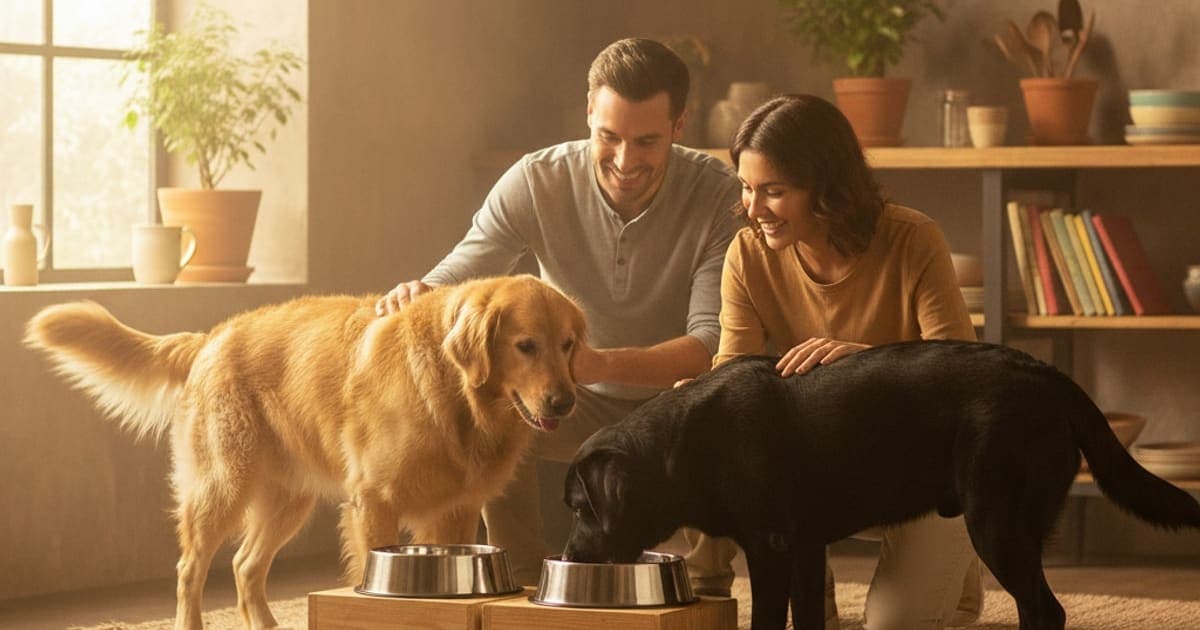
Before anything else: if your dog is retching or gagging without bringing anything up, has a swollen, tight or painful belly, is pacing and unable to settle, is drooling heavily, is breathing hard, or has pale gums and sudden weakness, treat it as possible gastric dilatation-volvulus and get to an emergency veterinary hospital immediately. This is one of the few canine problems where minutes matter, so do not wait to see whether it passes and do not try home remedies. Phone the clinic while someone else drives so the team is expecting you. For non-urgent questions, including whether your dog's build or eating posture makes a raised bowl a reasonable idea, book a routine appointment with your regular veterinarian.
Elevated dog bowls are good for a specific group of dogs and a questionable choice for another, so the honest answer depends almost entirely on your dog's build. For dogs with megaesophagus, significant neck or forelimb pain, or limited mobility, raising the bowl can make eating meaningfully more comfortable. For large and giant deep-chested breeds, the best available research has linked raised feeders with a higher risk of gastric dilatation-volvulus, the emergency condition owners call bloat, so the floor remains the safer default unless a veterinarian has given you a reason to change it.
That one distinction answers every version of this question. Are dog bowls supposed to be elevated? No, there is no default rule that bowls belong off the ground. Should dog bowls be elevated? Only when a specific dog has a specific reason. Is it better for dogs to have elevated bowls? Better for some, worse for others, neutral for most small and medium dogs with no orthopedic or swallowing problems.
What actually changes when you lift the bowl off the floor
A raised bowl changes posture, and not much else. A dog eating at floor level lowers the head and neck, shifts weight forward onto the front limbs, and often splays or crouches slightly to reach the food. A dog eating from a stand keeps the neck closer to horizontal and loads the forelimbs less. For a healthy, comfortable dog, neither posture is a problem. Dogs evolved to eat with their heads down, and the canine esophagus moves food by muscular peristalsis rather than gravity, so a raised bowl does not meaningfully assist normal swallowing.
Where posture matters is when it hurts. A dog with cervical arthritis, intervertebral disc disease, elbow or shoulder osteoarthritis, a healed forelimb fracture, or a limb amputation may find the floor-level crouch genuinely uncomfortable, and some owners notice those dogs eating faster, standing longer, or finishing more of the bowl when it is raised.
The other benefits people cite are practical rather than medical. Raised bowls slide less, spill less, and are easier for owners with back problems to lift and clean. Those are reasonable reasons to like a stand. They are not reasons to override a breed-based caution.
The bloat evidence, and why deep-chested breeds get a different answer
Gastric dilatation-volvulus is a surgical emergency in which the stomach distends with gas and then twists on itself, cutting off blood supply. It kills quickly, and large, deep-chested dogs are over-represented.
The most influential work on non-dietary risk factors came from a prospective cohort study of large and giant breed dogs led by researchers at Purdue University and published in the Journal of the American Veterinary Medical Association in 2000. Alongside risk factors such as increasing age, a deep and narrow chest conformation, having a first-degree relative with a history of the condition, eating rapidly, and a fearful or nervous temperament, the study found that dogs fed from a raised bowl had a higher incidence of gastric dilatation-volvulus than dogs fed from the floor.
Two caveats matter. First, that is an observational association, not a demonstrated cause, and no one has shown the mechanism by which bowl height would trigger a twist. Second, the finding applies to large and giant breeds, not to a beagle or a terrier. But the association has not been overturned by better evidence in the years since, and most veterinary guidance still errs on the side of caution for at-risk dogs.
So, does an elevated dog bowl cause bloat? No study has proven cause. Do elevated dog bowls increase the risk of bloat? In large and giant deep-chested breeds, the available research suggests they may, which is reason enough to avoid them without a medical indication.
If you own a deep-chested large or giant breed dog, keep the bowl on the floor unless your veterinarian has given you a specific medical reason to raise it.
Breeds commonly flagged for conformational risk include the Great Dane, Weimaraner, Standard Poodle, Irish Setter, Gordon Setter, Doberman Pinscher, German Shepherd Dog, Boxer, Akita, Saint Bernard and Basset Hound. If your dog is on that list or simply has a tall, narrow rib cage, learn the warning signs now: unproductive retching, a swollen or drum-tight abdomen, pacing and restlessness, heavy drooling, pale gums, and sudden weakness. That is an emergency room visit, not a wait-and-see.
Dogs who may genuinely eat better at height
There is a real list of dogs for whom raising the bowl is a sensible accommodation, and it is worth knowing it so the bloat caution does not become a blanket rule.
Dogs with megaesophagus are the clearest example. Because the esophagus fails to propel food properly, these dogs are usually fed in a vertical or near-vertical position so gravity does the work, often in a purpose-built upright chair, and they are held upright afterwards. That is a veterinary management plan, not a bowl-stand purchase, and it belongs in your vet's hands.
Beyond that, the candidates are orthopedic and neurologic: dogs with advanced cervical spine arthritis, dogs recovering from forelimb surgery, tripod dogs, dogs with severe elbow or carpal disease, and some senior giant breeds whose joints make the crouch painful. Here is where the tension shows up, because several of those dogs are also deep-chested. A Great Dane with neck pain sits on both lists at once, and that is a conversation to have with your veterinarian rather than a question a blog can settle.
Floor bowl or raised bowl, by dog profile
| Dog profile | Floor bowl | Elevated bowl | What to weigh |
|---|---|---|---|
| Healthy small or medium dog | Fine | Fine | Mostly owner preference, no clear health advantage either way |
| Large or giant deep-chested breed | Preferred default | Avoid without veterinary reason | Research associates raised feeders with higher gastric dilatation-volvulus risk |
| Dog with megaesophagus | Not suitable | Usually part of upright feeding | Managed by your veterinarian, including upright holding after meals |
| Senior dog with neck or forelimb arthritis | May be uncomfortable | Often more comfortable | Balance against chest conformation and breed risk |
| Post-operative or three-legged dog | Harder to balance over | Reduces strain while loading one side | Temporary stands are reasonable during recovery |
| Fast eater of any size | Slow-feeder bowl on the floor | Not a speed fix | Eating speed is itself a flagged risk factor |
Getting the height and the setup right
If a raised bowl is appropriate for your dog, height is where most owners go wrong. Too high is worse than too low. A workable guideline is to set the rim of the bowl at or slightly below the point of the dog's shoulder when standing square, so the neck stays roughly level and the dog is never reaching upward. Measure your own dog rather than trusting a size label on a box, and re-measure a growing puppy regularly.
A few setup details worth more than the stand itself: use stainless steel or glazed ceramic that you can actually sanitize, put a non-slip mat underneath, split large meals into two or more servings, and use a slow-feeder insert if your dog inhales food, since rapid eating is one of the risk factors identified in the research. Many veterinarians also advise avoiding vigorous exercise immediately around meals in at-risk breeds. The evidence there is softer, but the cost of following it is zero.
When bowl height is a workaround for a mobility problem
It is worth asking why you are shopping for a stand at all. If your dog has started eating awkwardly, standing stiffly over the bowl, shifting weight off a front leg, or walking away from meals, the bowl is not the problem. A raised bowl manages a symptom. The joint, tendon or soft tissue change underneath it deserves a proper examination, because the earlier a cruciate issue, an elbow problem or cervical pain is identified, the more options your veterinarian has.
What to watch at home
Watch the whole meal rather than the first bite. Does your dog approach the bowl willingly, or hesitate, brace, sit down, or lie down to eat? Is weight shifted off one front leg, is the back arched or the neck held stiffly, is food dropped or chewed on one side only? Does your dog eat a few mouthfuls, walk away, and come back later? Changes at the bowl often show up alongside changes elsewhere: slower rising from a lie-down, reluctance on stairs, hesitating before jumping into the car, a shortened stride on walks.
For a deep-chested dog, also watch what happens after meals. Normal post-meal settling looks like a quiet rest. Signals that deserve attention include repeated stretching into a bow with the chest down and the rear up, obvious belly discomfort, unusual burping or lip licking, restlessness, or any attempt to vomit that brings nothing up. Results vary from dog to dog, so a change from your own dog's usual pattern carries more weight than any general description.
What to note and tell the vet
Specifics shorten the diagnostic path. Before the appointment, write down when you first noticed the change and whether it came on suddenly or crept in over weeks, which leg or side looks affected, whether stiffness is worse after rest or after exercise, and whether it is better or worse at particular times of day. Note current body weight and any recent gain or loss, appetite and thirst, how fast your dog eats, how many meals a day, any recent change in food, bowl, feeding location or household routine, and any previous injuries or surgeries. For at-risk breeds, mention whether a parent or sibling has had bloat, and whether your dog has had any earlier episode of a swollen or painful abdomen.
Short phone videos help more than descriptions: your dog eating from the bowl, standing square from the front and the side, and walking away from and back toward the camera on a flat non-slip surface. Bring a list of everything your dog is currently being given, including anything bought over the counter, because that can change what is safe to use next. If treatment is needed, your vet may prescribe medication, recommend imaging, suggest rehabilitation exercises, or discuss surgery. Those decisions sit with the veterinary team, and a bowl stand is a comfort adjustment, not part of the treatment.
When it becomes an emergency
Some signs cannot wait for a routine appointment. Go straight to an emergency veterinary hospital if your dog is retching unproductively, has a distended, tight or clearly painful abdomen, is collapsing or unable to stand, has pale, white or blue-tinged gums, is breathing rapidly or with obvious effort, or cannot keep water down. Sudden inability to bear weight on a limb, crying out in pain, a wobbly or dragging back end, loss of feeling in a leg, or a dog who stops eating entirely also warrant same-day care rather than a watch-and-wait approach. Call the clinic on the way so they can prepare, and if your regular practice is closed, know the nearest after-hours hospital before you need it.
Key Takeaways
- Elevated dog bowls are not a default upgrade. Most healthy dogs do fine eating from the floor.
- A Purdue-led study published in JAVMA in 2000 associated raised feeders with higher gastric dilatation-volvulus incidence in large and giant breeds, so the floor is the safer starting point for deep-chested dogs.
- Unproductive retching, a swollen or drum-tight abdomen, heavy drooling, pale gums and sudden weakness are emergency signs. Go to an emergency veterinary hospital immediately.
- Dogs with megaesophagus, cervical pain, forelimb arthritis, or a missing limb are the group most likely to benefit from height.
- Set the rim at or just below shoulder height, measured on your dog, and never higher.
- Rapid eating, deep chest conformation, age and family history are the risk factors worth managing, with or without a stand.
- If bowl posture changed recently, investigate the mobility issue rather than engineering around it.
Your veterinarian owns the diagnosis and the treatment plan here: whether your dog's chest conformation puts them in the at-risk group, whether a raised bowl is indicated, whether that stiffness at the bowl is arthritis or something else. A bowl height change is a comfort adjustment and nothing more. It does not treat, prevent or resolve any condition, and only veterinary care given by a veterinarian can do that. Every decision about your dog's care belongs with your veterinarian.
Related guides: Dog Bloat Warning Signs: Timeline and Emergency Action.
Frequently asked questions
- Are elevated dog bowls good?
- They are good for a narrow group of dogs and unnecessary for most. Dogs with megaesophagus, neck pain, forelimb arthritis or a missing limb often eat more comfortably at height. Healthy dogs gain no clear health benefit, and deep-chested large breeds are usually better off eating from the floor.
- Are elevated dog bowls safe?
- For most small and medium dogs, yes. The safety concern applies to large and giant deep-chested breeds, where research has associated raised feeders with a higher incidence of gastric dilatation-volvulus. If your dog falls in that group, keep the bowl on the floor unless your veterinarian advises otherwise.
- Are elevated dog bowls good for dogs?
- Only for dogs with a reason to use one. Raised bowls reduce the crouch required to reach food, which can help dogs with cervical arthritis, elbow disease, post-operative limbs or amputations. They do not improve digestion, and they carry a breed-specific bloat caution for deep-chested large dogs.
- Are dog bowls supposed to be elevated?
- No. There is no standard that says bowls belong off the ground, and dogs are built to eat with the head lowered. Elevation is an accommodation for specific medical situations, not a default setup. Choose based on your dog's build, age and comfort rather than on convention.
- Should dog bowls be elevated?
- Only when a specific dog benefits. Elevate for conditions like megaesophagus, significant neck or forelimb pain, or limited mobility, ideally after talking it through with your veterinarian. Avoid elevation in large and giant deep-chested breeds without a medical reason, because of the association with gastric dilatation-volvulus.
- Is it better for dog bowls to be elevated?
- Not inherently. Raised bowls are tidier and easier on the owner's back, but they offer no proven digestive advantage for a healthy dog. For deep-chested large and giant breeds, available research points the other way, which makes floor feeding the safer default for those dogs.
- Do elevated dog bowls increase the risk of bloat?
- A prospective study of large and giant breed dogs led by Purdue University researchers, published in JAVMA in 2000, found raised feeders associated with higher gastric dilatation-volvulus incidence. That is an association rather than proven cause, but it justifies caution in at-risk breeds.
- How high should an elevated dog bowl be?
- Set the bowl rim at or slightly below the point of your dog's shoulder when they stand square, so the neck stays roughly level and the dog never reaches upward. Measure your own dog instead of relying on box sizing, and re-measure growing puppies regularly.
- Are raised bowls better for senior dogs?
- Sometimes. Seniors with cervical arthritis, shoulder or elbow pain often eat more comfortably when they are not crouching. Weigh that against chest conformation if you have a large deep-chested senior. If eating posture changed recently, have your veterinarian examine the joints rather than assuming it is just age.
- Can a raised bowl stop my dog eating too fast?
- No. Bowl height does not control eating speed, and rapid eating is itself one of the risk factors identified in gastric dilatation-volvulus research. A slow-feeder bowl, puzzle feeder, or splitting the daily ration into smaller meals addresses speed far more effectively than raising the bowl.
- What should I watch for at home after meals in a deep-chested dog?
- Watch for a settled, comfortable rest after eating. Signs that need attention include unproductive retching, a swollen or tight belly, pacing and restlessness, heavy drooling, repeated stretching with the chest down and rear up, pale gums or sudden weakness. Those point to a possible emergency, so go to an emergency veterinary hospital rather than waiting.
Educational content, not veterinary advice. Ask your vet about your dog.