Can Dogs Eat Pita Chips? Salt, Garlic and Hummus Risks
A plain pita chip is not toxic to dogs, but it is not dog food either, and the seasoning on it can be a real problem. Salt, oil, sharp broken edges and garlic or onion powder are the concerns. If your dog ate seasoned chips or dip, call your vet now.
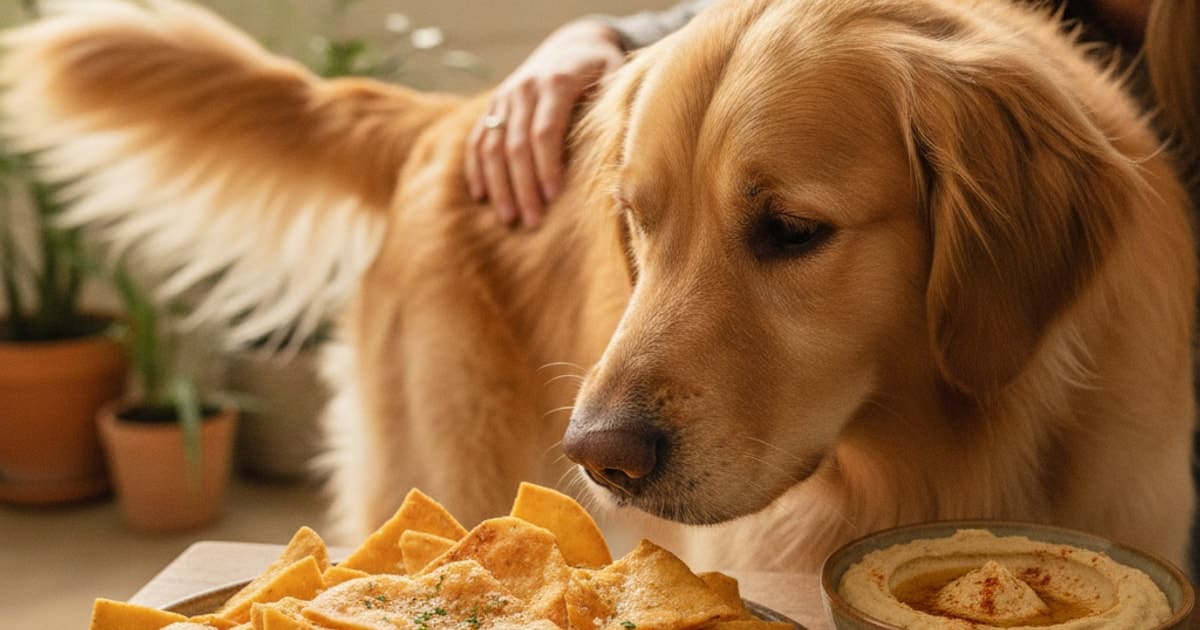
A plain pita chip is not toxic to dogs, but it is not dog food either, and what is dusted on the outside can be a genuine problem. If your dog has eaten pita chips coated in garlic or onion powder, or has scooped up hummus or another dip, call your vet or an animal poison control service now, because garlic and onion are allium plants that can damage a dog's red blood cells and the powdered forms used in seasoning blends are concentrated.
Pita chips are baked or fried wedges of flatbread, brushed or tossed with oil and finished with salt. Wheat, oil and salt are not poisons. What makes a pita chip a poor fit for a dog is the combination: a salt load a dog has no use for, fat that can upset the gut and the pancreas, brittle shards that break into points, and whatever flavouring went on last. Call your vet if you see vomiting that will not settle, a swollen or painful belly, retching that brings nothing up, wobbliness, tremors, or if your dog swallowed a large piece whole.
What is in a pita chip, and why it is not dog food
Pita chips, sometimes sold as pita bread chips, start as flatbread that is cut into wedges and then baked or fried until it snaps. The short ingredient list is usually flour, water, yeast, oil and salt. Baked pita chips carry less fat than fried ones, which is a real difference for a dog's gut, but baked does not mean salt free and it does not mean seasoning free.
Nutritionally, a pita chip gives a dog refined starch, oil and sodium and almost nothing a complete dog food has not already supplied. Wheat itself is not toxic to dogs, though some dogs react badly to wheat or to yeast-raised dough, and an itchy, gassy or loose-stooled dog who has just eaten a wheat snack deserves a mention at the next appointment. If your dog has a diagnosed food sensitivity, a heart condition, kidney disease, pancreatitis in the past, or is on a prescription diet, your vet can tell you how a starchy, salted human snack fits with the plan they have set.
There is also a difference between one chip that fell on the floor and a bag that was left on the sofa. A single plain chip taken off the floor is a small amount of starch and salt. A torn-open bag is a very different quantity of salt and fat arriving at once, and that is when calls to the vet start.
Salt, sea salt and the water bowl
Salt is the first thing to think about with any chip, because on a chip the salt sits on the outside where the dog tastes it and absorbs it fast. Sea salt is not gentler than table salt for a dog. It is the same sodium chloride in a flakier crystal, so a chip finished with sea salt is no different in substance from one finished with fine salt, and the coarse flakes can actually mean more salt per chip.
A dog who takes on more sodium than their body wants can get thirsty, drink heavily, urinate more and vomit. Larger sodium loads can affect the nervous system, with signs such as unsteadiness on the feet, muscle tremors, disorientation or seizures. A small dog takes on a far heavier salt load than a large dog from the same handful, so body size changes the picture completely. Make sure fresh water is available, and if your dog is drinking unusually hard, vomiting repeatedly, or looks wobbly or dazed after a salty snack, call your vet straight away rather than waiting to see what the next hour brings.
Dogs with heart disease, kidney disease or high blood pressure are in a separate category again, because sodium is something their treatment plan is already managing. For those dogs, salted human snacks are worth talking through with the vet who knows the case.
Garlic and onion seasoning: the part to take seriously
The seasoning on a pita chip matters far more than the chip underneath it. Garlic, onion, shallot, leek and chive all belong to the allium family, and all of them can damage a dog's red blood cells. Dried, powdered versions are the ones that turn up on snack food, and drying concentrates them, so a dusting of garlic powder on a chip is not the same as a trace of fresh garlic in a stew.
This is why garlic pita chips, onion-flavoured varieties, everything-style blends, herb and garlic seasonings and za'atar-type mixes all deserve a phone call rather than a shrug. The difficulty with allium damage is timing: a dog can look completely ordinary at first, and signs of red blood cell damage can appear a day or several days later. That delay is exactly why the call happens now and not after you have waited to see something.
Signs to watch for include pale or yellow-tinged gums, weakness or reluctance to move, fast breathing, a racing heart, brown or reddish urine, vomiting or loss of appetite. If your dog has eaten anything seasoned with garlic or onion, call your vet or an animal poison control service now, tell them your dog's weight and roughly how much was eaten, and keep the packaging so the ingredient panel can be read out. Do not try to deal with it at home.
Hummus, dips and flavoured versions
The dip is usually the bigger problem, not the chip. Hummus is built on chickpeas, tahini, lemon, olive oil, salt and, in nearly every recipe worth eating, garlic. Chickpeas on their own are not toxic to dogs, but hummus is not chickpeas on their own, and the same goes for tzatziki, baba ganoush, tahini sauces, red pepper dips and the tub that came with a takeaway grain bowl or a restaurant mezze platter. Those dips are garlic-forward by design. If your dog has licked out a hummus container or eaten chips loaded with dip, treat it as an allium exposure and call your vet or an animal poison control service.
| What is on the chip | Why it matters for a dog |
|---|---|
| Plain, unsalted, baked | Not toxic. Still refined starch and oil with no useful nutrition for a dog, and the shards are brittle and pointed. |
| Sea salt or flaky salt | The salt sits on the surface. Sea salt is not milder than table salt, and coarse flakes can mean more sodium per chip. |
| Garlic, onion, herb or everything-style blends | Allium powders in concentrated form. Call your vet or an animal poison control service now. |
| Cinnamon sugar | Cinnamon is not classed as toxic to dogs, but sugar and oil add nothing, and inhaled spice powder can irritate the mouth and airway. |
| Served with hummus, tzatziki or a restaurant dip | Dips of this kind are built on garlic, lemon, oil and salt. Treat as an allium exposure. |
| Veggie straws and vegetable stick chips | Marketed as vegetables, built like a potato crisp: starch, oil and salt with a little vegetable powder for colour. Not a vegetable serving for a dog. |
If the chips were coated in anything you cannot identify, read the ingredient panel before you decide it was harmless. Sugar-free products containing xylitol, chocolate coatings, raisins and macadamia nuts are serious hazards to dogs and belong in the same immediate phone call. A snack aisle item can carry more than one problem ingredient at a time.
Broken edges, choking and an overloaded gut
Pita chips are rigid and they break into points. A dog who gulps rather than chews can swallow a shard that scrapes the throat or sits awkwardly on the way down, and a dog who crunches hard on a thick chip can chip a tooth or cut a gum. Smaller dogs, flat-faced dogs and enthusiastic gulpers carry more of this risk. If your dog is coughing, gagging, pawing at the mouth, drooling heavily, swallowing repeatedly or struggling to breathe after eating something brittle, that is an emergency call.
The fat is the other half of it. Fried snacks arriving in quantity can trigger vomiting, diarrhoea and abdominal pain, and in some dogs a fatty load can set off pancreatitis, which is painful and needs veterinary treatment. A dog standing in a hunched, praying posture with their front end down and rear end up is telling you their belly hurts. That, along with vomiting that will not settle, a bloated or tender abdomen, dark or bloody stool, or a dog who will not get up, means a vet visit rather than a wait-and-see.
Packaging counts too. Dogs who raid a bag may swallow plastic or a cardboard sleeve, and a swallowed wrapper can cause an obstruction. If any part of the packaging is missing, mention that when you call.
If your dog has already eaten pita chips
Start by finding the bag and reading the ingredient list, because the flavour decides what happens next. If garlic, onion, shallot or leek appear in any form, or if dip was involved, call your vet or an animal poison control service now and have your dog's weight ready. If the chips were plain or lightly salted, make sure fresh water is available and watch your dog closely for vomiting, diarrhoea, heavy drinking, a painful or swollen belly, wobbliness, tremors or unusual quietness, and call your vet if any of those appear or if the vomiting does not settle.
Do not try to make your dog sick and do not give anything from the human medicine cupboard. If a large piece went down whole, if your dog is choking, or if packaging is missing, that is a same-day call. Keep a note of the time your dog ate it and roughly how much went in, since that detail shapes the advice you get.
Key Takeaways
- Plain pita chips are not toxic to dogs, but they are refined starch, oil and salt with no nutritional purpose for a dog.
- Garlic and onion seasoning is the real hazard. Allium powders can damage red blood cells, and signs can be delayed by a day or more.
- Hummus and similar dips are garlic-based. Treat a licked-out tub as an exposure and call your vet or an animal poison control service.
- Sea salt is no gentler than table salt, and small dogs take on a much heavier sodium load from the same handful.
- Brittle shards can cause choking, mouth injuries and obstruction, and fatty fried snacks can upset the gut or the pancreas.
- Vomiting that will not settle, a painful or swollen belly, pale gums, tremors or a swallowed large piece all mean a call to the vet.
For a wider list of the signs that mean a dog needs to be seen urgently, see Dog Emergency Signs.
Your veterinarian owns the diagnosis and the plan. They know your dog's weight, history, medications and any heart, kidney, dental or digestive condition that changes how a salty, fatty snack lands, and they are the right person to call the moment something has been eaten. Talk to your vet about which human foods have any place around your dog at all, and keep seasoned snacks and dip bowls where a curious nose cannot reach them.
Frequently asked questions
- Are pita chips safe for dogs?
- Pita chips are not toxic to dogs, but they are a poor choice. Salt, oil and brittle sharp edges are the issues, and garlic or onion seasoning on the outside can damage a dog's red blood cells. If your dog ate seasoned chips or dip, call your vet or an animal poison control service now.
- Are pita chips bad for dogs?
- They offer a dog nothing useful and carry several real problems: sodium a dog does not need, fat that can upset the gut or pancreas, hard shards that can choke or cut, and seasoning blends containing garlic or onion powder. Call your vet if your dog ate a seasoned or dipped handful.
- Can dogs eat pita chips?
- A plain pita chip is not poisonous, but it is refined starch, oil and salt rather than dog food, and the seasoned versions are a different matter entirely. Garlic and onion flavourings are the serious concern. Talk to your vet about whether any human snack food belongs near your dog's diet.
- Can dogs eat pita chips with sea salt?
- Sea salt is not gentler than table salt for a dog. It is the same sodium in a coarser flake, sitting on the chip surface where it absorbs quickly. Heavy thirst, vomiting, wobbliness or tremors after a salty snack mean you should call your vet straight away.
- Can dogs have pita chips and hummus?
- No. Hummus is built on garlic along with tahini, lemon, oil and salt, and garlic is an allium that can damage canine red blood cells. Chickpeas alone are not toxic, but hummus is not chickpeas alone. If your dog licked a hummus tub, call your vet or an animal poison control service now.
- Can dogs eat Stacy's pita chips?
- Branded baked pita chips are not toxic in their plainest form, but read the ingredient panel before deciding anything. Salt is standard, and garlic or onion powder appears in several flavour varieties. If garlic or onion is listed, or your dog ate a seasoned handful, call your vet or an animal poison control service now.
- Can dogs eat plain pita chips?
- Plain, unsalted pita chips are not poisonous, but they are still refined wheat and oil with no nutritional value for a dog, and the broken pieces are pointed enough to scrape a throat or chip a tooth. Call your vet if you see gagging, drooling, vomiting or belly pain afterwards.
- Can dogs have garlic pita chips?
- No. Garlic belongs to the allium family and the dried powder used on snack food is concentrated, so it can damage a dog's red blood cells. Signs such as pale gums, weakness, fast breathing or dark urine can appear a day or more later. Call your vet or an animal poison control service now.
- Can dogs eat cinnamon pita chips?
- Cinnamon itself is not classed as toxic to dogs, but a cinnamon sugar chip is still sugar, oil and refined starch, and inhaled spice powder can irritate the mouth and airway. Check the label for chocolate coatings or sugar-free sweeteners, which are hazards, and call your vet if either is listed.
- Can dogs eat veggie stick chips?
- Veggie straws and vegetable stick chips are marketed as vegetables but built like a crisp: potato starch, oil, salt and a little vegetable powder. They are not toxic and they are not a vegetable serving either. Your vet can tell you which fresh vegetables suit your dog's diet instead.
Educational content, not veterinary advice. Ask your vet about your dog.