Australian Stumpy Tail Cattle Dog Health Problems
Australian Stumpy Tail Cattle Dogs are watched for inherited eye conditions, congenital hearing loss, and hip and elbow joint disease, plus the strains and wounds that come with hard physical work. Any limp, eye change or hearing concern needs a veterinary exam, and results vary from dog to dog.
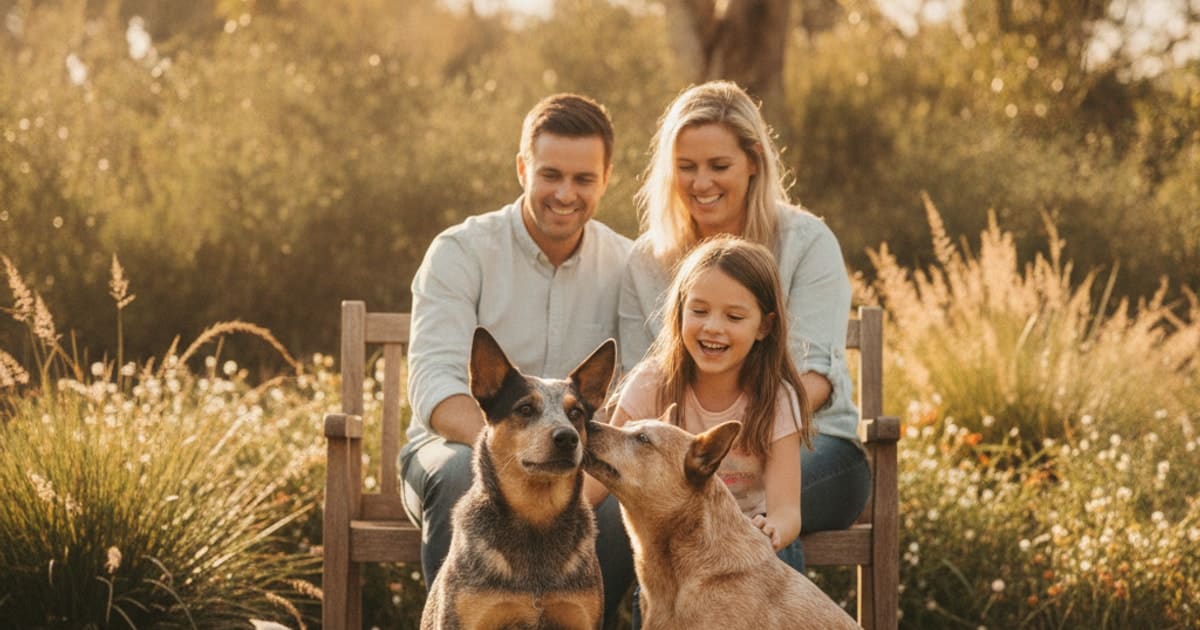
The health problems seen in Australian Stumpy Tail Cattle Dogs fall into four broad groups: inherited eye conditions, congenital hearing loss, hip and elbow joint disease, and the strains, sprains and wounds that follow any dog built to work hard on its feet. If your dog is limping, squinting, bumping into furniture or no longer turning towards sound, book a veterinary exam rather than waiting to see whether it settles on its own.
The Stumpy Tail is a recognised breed in its own right, separate from the Australian Cattle Dog, with its own gene pool and its own breed-defining feature: a tail that is naturally short from birth. The two breeds overlap in places, but they are not interchangeable, and the Stumpy Tail deserves to be looked at on its own terms. What follows is an educational overview of the areas a veterinarian pays attention to in this breed, the signs an owner can reasonably notice at home, and the point at which a sign stops being a wait-and-see and becomes a phone call.
A naturally short tail, and what it means for the spine
The short tail in this breed is inherited rather than surgically created. It comes from a variant in a gene that helps direct how the tail bud and the end of the spine form before birth, which is why tail length can differ from one littermate to the next, from almost nothing to a short stub. Because the tail is natural, there is no docking wound, no docking scar and none of the aftercare that a surgical tail requires.
What it does mean is that the back end of the spine is worth a careful look during a physical exam. A veterinarian will usually run a hand along the lower back and over the croup, check how the dog carries the pelvis, watch the gait from behind and assess tone around the tail base and rear. Most of this is quick and unremarkable, but it gives the vet a baseline to compare against later.
Signs that deserve an appointment include pain or flinching when the lower back is touched, a changed or wobbly back-end gait, dragging of a hind paw, scuffed nails on one side, or any new difficulty with toileting or continence. Those signs are not specific to the breed, and they are not a reason to assume the short tail is responsible, but they are a reason for a proper neurological and orthopaedic exam rather than guesswork at home.
Inherited eye conditions worth tracking
Cattle dog breeds, including the Stumpy Tail, are watched for several inherited eye conditions. Progressive retinal atrophy is the one breed clubs tend to discuss most, a gradual change in the light-sensing layer at the back of the eye. Hereditary cataract, in which the lens loses clarity, and lens instability, in which the lens shifts out of its normal position, also appear on breed health lists. A displaced lens can block the drainage angle of the eye and drive pressure up quickly, which is painful and urgent.
The signs an owner can notice are practical ones. Hesitation in dim light or on stairs at night, bumping into things that have been moved, standing back from a dark hallway, a cloudy or bluish look to the lens, pupils that stay wide, eyes that reflect more light than usual, squinting, tearing, rubbing at the face or a sudden red and obviously sore eye. A painful, red, cloudy or suddenly changed eye is a same-day veterinary problem, because some eye conditions lose ground by the hour.
Veterinary ophthalmologists assess the eye in far more detail than a general exam allows, using magnification, pressure measurement and a dilated look at the retina. For some inherited eye conditions, a DNA cheek swab or blood sample can identify whether a dog carries a particular variant. Talk to your veterinarian about which eye checks make sense for your dog and when to repeat them, because testing choices depend on the individual animal rather than on the breed alone.
Hearing loss that can be present from birth
Congenital sensorineural deafness is recognised in cattle dog breeds and is linked to the pigment pattern that gives these dogs their speckled coat. It can affect one ear or both. A dog deaf in both ears is usually noticed early: the puppy sleeps through noise that wakes the others, does not startle at a dropped bowl, does not orient towards a voice, and may be harder to rouse. A dog deaf in one ear can be much harder to spot, because it hears, responds and behaves normally in most settings. The giveaway is often direction, as the dog turns the wrong way when called or struggles to locate a sound in an open space.
The objective test is a brainstem auditory evoked response assessment, usually written as BAER. It measures the electrical activity the hearing pathway produces in response to sound, ear by ear, and it does not rely on the dog cooperating with a behavioural test. It is performed at referral centres and some general practices, and your veterinarian can advise whether it is worth doing and where.
Not all hearing change is congenital. Ear canal infection, a grass seed lodged deep in the canal, a ruptured eardrum, a mass in the canal or age-related hearing decline can all reduce what a dog picks up. Head shaking, scratching at one ear, a tilted head, odour, discharge, pain when the ear is touched or a dog that suddenly stops responding to familiar cues should all be examined rather than treated at home, since what looks like simple wax can be something else entirely.
Hips, elbows and the joints of a working frame
Hip dysplasia and elbow dysplasia are the orthopaedic conditions most often discussed in working herding breeds, and the Stumpy Tail is included in that conversation. Both describe joints that have not formed with the tight, congruent fit they need, which allows abnormal motion, uneven loading and, over time, osteoarthritis in the joint.
The early signs are easy to write off in a dog that is keen to keep working. Look for a bunny-hopping run where both hind legs move together, a narrow or swaying rear stance, reluctance to jump into the car or onto a bed, stiffness after rest that eases with movement, difficulty rising from a hard floor, sitting with one leg kicked out to the side, shortened stride, or a dog that lies down earlier in a walk than it used to. Elbow problems often show as a front-leg lameness that is worse after exercise, a head nod at the trot, or elbows held oddly away from the body.
Diagnosis is a veterinary job. It usually involves a hands-on orthopaedic exam, assessment of joint range and pain, and sedated radiographs positioned precisely enough to be interpreted and, where the owner wants it, formally scored through an established hip and elbow assessment scheme. Advanced imaging such as CT is sometimes used for elbows. From there the vet builds a plan, which may include a managed body condition, a controlled and progressive exercise plan, a pain management approach chosen and monitored by the vet, referral for physical rehabilitation, or surgical options discussed case by case. Results vary from dog to dog, and plans are revised as the dog changes.
Strains, wounds and other injuries from work and play
A dog that sprints, turns hard, grips, jumps off tailgates and works in rough country accumulates injuries that have nothing to do with inherited disease. Cranial cruciate ligament injury in the stifle is a common cause of sudden hind-limb lameness. Shoulder and iliopsoas muscle strains produce a limp that comes and goes with activity. Carpal and toe injuries, torn nails, split pads, punctures from wire or thorns, and kicks or knocks from livestock all show up in active dogs.
Feet deserve particular attention. Grass seeds and plant awns burrow between the toes and into ear canals, and a swollen, licked, weeping spot between two toes is a classic sign. Dental fractures from chewing hard objects are also worth checking, since a broken tooth with an exposed pulp is painful even when the dog keeps eating normally.
Heat-related illness is the one to treat as an emergency without hesitation. A dog working or playing hard in warm weather that becomes distressed, collapses, pants frantically, develops very red gums, vomits or seems disoriented needs veterinary care immediately, and a phone call to the clinic on the way in. Talk to your veterinarian about how to manage activity in heat for your individual dog.
Signs to watch and when to call the vet
| Area | What an owner may notice | What a veterinarian may do |
|---|---|---|
| Eyes | Night-time hesitancy, cloudiness, squinting, redness, rubbing, bumping into objects | Magnified eye exam, pressure measurement, retinal assessment, referral, DNA testing where available |
| Hearing | Not startling at noise, turning the wrong way when called, head tilt, ear odour or discharge | Otoscopic exam, BAER hearing assessment, investigation of ear canal disease |
| Hips and elbows | Bunny-hopping, stiffness after rest, reluctance to jump, front-leg lameness after exercise | Orthopaedic exam, sedated radiographs, formal joint assessment, imaging, referral |
| Spine and tail base | Pain over the lower back, altered rear gait, scuffed nails, toileting changes | Neurological and orthopaedic exam, imaging where indicated |
| Injuries from work and play | Sudden limp, swelling, open wound, licking between toes, broken tooth | Wound assessment, lameness workup, imaging, dental examination |
Some signs are same-day or emergency problems: a leg the dog will not put weight on at all, a wound that is deep, dirty or bleeding, a sudden painful or cloudy eye, collapse, laboured breathing, distress in heat, or any sudden loss of coordination. If you are unsure whether what you are seeing can wait until morning, call the clinic and describe it rather than deciding alone.
Key Takeaways
- The main breed health areas are inherited eye conditions, congenital hearing loss, hip and elbow joint disease, and injuries picked up through work and play.
- The naturally short tail is inherited, not surgical, and makes the lower back and tail base worth checking at exams.
- Eye changes such as cloudiness, squinting, redness or night-time hesitancy need prompt veterinary assessment.
- Hearing loss can affect one ear or both, and a BAER assessment is the objective way to measure it.
- Bunny-hopping, stiffness after rest and lameness after exercise are reasons to have joints examined properly rather than watched.
- Sudden non-weight-bearing lameness, collapse, heat distress or a painful eye are urgent.
None of this replaces an examination. Your veterinarian owns the diagnosis and the treatment plan for your dog, with the hands-on exam, imaging and history needed to tell one cause of a limp or an eye change from another. Bring your observations, including video of an odd gait, and talk to your vet about which checks make sense for your individual dog and how often to repeat them.
For a wider list of situations that call for same-day or emergency care, see Dog Emergency Signs.
Frequently asked questions
- Is the Australian Stumpy Tail Cattle Dog the same breed as the Australian Cattle Dog?
- No. The Stumpy Tail is a separately recognised breed with its own gene pool and its own breed-defining short tail. The two breeds share some health concerns, such as inherited eye conditions and joint disease, but the Stumpy Tail is assessed on its own terms by a veterinarian.
- Why do these dogs have short tails?
- The short tail is inherited rather than surgically docked. It arises from a gene variant affecting how the tail and the end of the spine form before birth, which is why tail length can vary between littermates. Because it is natural, there is no docking wound or surgical aftercare.
- Can an Australian Stumpy Tail Cattle Dog be born deaf?
- Congenital sensorineural deafness is recognised in cattle dog breeds and is linked to the pigment pattern of the coat. It can affect one ear or both. A dog deaf in only one ear often seems normal, so a brainstem auditory evoked response assessment is the reliable way to check. Talk to your vet about arranging one.
- What eye problems are watched for in this breed?
- Breed health discussions centre on progressive retinal atrophy, hereditary cataract and instability of the lens, which can raise pressure inside the eye. Signs include cloudiness, squinting, redness, rubbing at the face and hesitancy in dim light. A sore or suddenly changed eye needs same-day veterinary attention.
- How are hip and elbow problems diagnosed?
- A veterinarian performs a hands-on orthopaedic exam, assesses joint range and pain, and usually takes radiographs under sedation so the joints are positioned precisely. Elbows sometimes need advanced imaging. Images can also be submitted to an established hip and elbow assessment scheme for formal scoring.
- What early signs suggest joint trouble rather than normal tiredness?
- Watch for bunny-hopping with both hind legs moving together, stiffness after rest that eases with movement, reluctance to jump into a car, sitting with one leg kicked out, a shortened stride, or front-leg lameness that worsens after exercise. Any of these is worth a veterinary exam.
- My dog suddenly will not put weight on a leg. Is that urgent?
- Yes. A dog that will not bear any weight on a limb should be seen promptly. Causes include ligament injury, fracture, a deep puncture, a foreign body in the foot or severe muscle strain, and these are told apart by examination and imaging, not at home.
- Do grass seeds really cause problems in working dogs?
- They can. Plant awns burrow between toes, into ear canals and around the eyes. A swollen, licked or weeping spot between two toes, sudden head shaking, or one eye held shut are all reasons to have a veterinarian look rather than attempting removal yourself.
- When should heat-related signs be treated as an emergency?
- Immediately. A dog that collapses, pants frantically, develops very red gums, vomits or seems disoriented after working or playing in warm weather needs veterinary care without delay. Call the clinic while you are on the way so the team is ready.
Educational content, not veterinary advice. Ask your vet about your dog.