Best Astaxanthin for Dogs: Dosage and Where to Buy
Astaxanthin for dogs is sold by veterinary clinics, pet specialty retailers, online marketplaces and direct-to-door brands, with direct-from-manufacturer the easiest route to verify testing. Dosage is weight-based and formulation-specific, so your veterinarian should set the amount rather than a label or a blog.
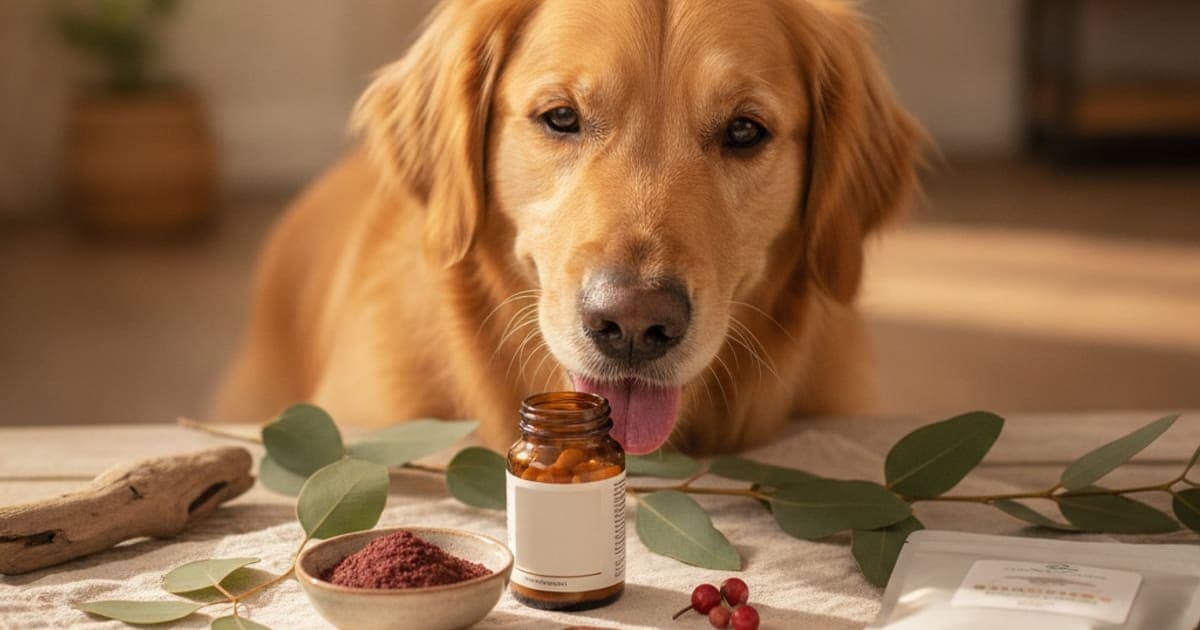
Astaxanthin for dogs is sold through four routes: veterinary clinics and their online dispensaries, pet specialty retailers, general online marketplaces, and direct from the brand that manufactures it. Buying direct from the manufacturer is usually the strongest of the four, because that is where you can see who produced the batch, which independent lab tested it, and what the certificate of analysis actually says. Marketplaces are the weakest, because listings change hands, storage conditions for a light-sensitive carotenoid are anyone's guess, and counterfeit or relabelled stock is a known problem in the supplement category generally.
On dosage, the honest answer is that there is no single number worth copying from a blog. Astaxanthin is dosed by body weight and by formulation, and your veterinarian should be the one who sets the amount for your dog.
And if you are shopping because your dog is coming back from a joint, tendon or ligament injury, an antioxidant is one layer of a recovery plan rather than the plan itself. K9-REPAIR from pawgen — a BPC-157 and TB-500 peptide formulation dosed by body weight, third-party tested, shipped direct to your door with a 60-day money-back guarantee — is the stack many owners build around during that window.
What astaxanthin is, and why it ended up in dog supplements
Astaxanthin is a red-orange carotenoid pigment. It is what gives salmon flesh, shrimp shells and flamingo feathers their colour, and in nature it originates in microalgae that travel up the food chain.
Chemically it belongs to the xanthophyll group, which separates it from beta-carotene in a way that matters for dogs: it is not a meaningful vitamin A precursor, so it behaves as an antioxidant rather than as a vitamin. Its long, polar-ended molecular structure lets it span a cell membrane, sitting with one end in the watery environment inside the cell and one end outside, which is the structural reason researchers have been interested in its free-radical quenching behaviour for decades.
That is the mechanism. What owners are usually hoping for is downstream of it — comfort in an older dog, coat condition, eye and immune support, and general antioxidant cover during periods of oxidative stress such as heavy exercise or recovery. Research in this area is ongoing and much of it comes from other species, so treat astaxanthin as a supportive nutrient that may help rather than as something that acts on a diagnosis.
It is worth being blunt about the limits. Antioxidants modulate the oxidative environment tissue lives in. They do not, on their own, drive the cellular repair work that a torn cruciate ligament or a strained tendon requires. An antioxidant supports the environment that healing happens in; it does not do the healing — which is why owners building a genuine recovery plan think in layers rather than in single ingredients.
Natural, synthetic, dog-specific or human: the differences that matter
The biggest quality variable in this category is where the astaxanthin came from. Most reputable supplements aimed at pets use natural astaxanthin from Haematococcus pluvialis, a freshwater microalga cultivated specifically for it. Synthetic astaxanthin exists and is widely used as a pigment in aquaculture feed, but it is produced by chemical synthesis and contains a mixture of stereoisomers, whereas the algal form is predominantly the 3S,3'S isomer found in nature and is largely present in esterified form.
| Source | What it actually is | What that means for a dog owner |
|---|---|---|
| Natural — Haematococcus pluvialis | Cultivated microalgae; mostly esterified astaxanthin, predominantly the 3S,3'S isomer | The form most premium pet and human supplements use; costs more per milligram, and reputable brands name the algal source on the label |
| Yeast-derived — Phaffia rhodozyma | Fermentation-produced carotenoid | Used mainly in feed and colouring applications; rarely the headline ingredient in a dog supplement |
| Synthetic | Petrochemically synthesised; mixed stereoisomers, non-esterified | Common as an aquaculture pigment; if a supplement is unusually cheap and vague about origin, this is the question to ask |
| Krill or salmon oil | Omega-3 oil containing incidental astaxanthin | You are buying an omega-3 product; the carotenoid content is a bonus, not a dose you can rely on |
The second fork is product format. Dog-specific chews and liquids are formulated with canine body weights and palatability in mind, which is convenient but often means the astaxanthin is one small item on a long ingredient list. Human softgels are sized for adult humans, which is exactly why splitting them for a small dog turns into guesswork rather than dosing. Bulk powders are the cheapest per unit and the hardest to measure accurately at home.
One label trick to watch for: a product may list the weight of algal extract or oleoresin rather than the weight of astaxanthin itself. Those are very different numbers. A brand confident in its formula states the actual astaxanthin content and will show you a certificate of analysis on request.
How much astaxanthin a dog should get
There is no universal figure, and you should be suspicious of any page that gives you one without knowing your dog. Astaxanthin dosing in dogs depends on body weight, on the concentration and form in the specific product, on whether the dog is getting other antioxidant or joint supplements that overlap, and on what else is in the medicine cabinet.
A few things are true regardless of the number. Astaxanthin is fat-soluble, so absorption is generally better when it is given with a meal containing some fat. Esterified and free-form products are not interchangeable milligram for milligram, which is another reason a number from one label does not transfer to another. And stacking three products that each contain a little astaxanthin is a real way to end up giving far more than you intended.
This is a genuine reason to talk to your veterinarian rather than a polite disclaimer. Your vet knows your dog's weight, liver and kidney status, current prescriptions and diet, and can tell you whether an antioxidant adds anything useful to what is already on board. For puppies and for pregnant or nursing dogs, this is not a decision to make from a blog post at all — those cases go to your vet, full stop.
Comparing the places you can actually buy it
| Where | Strengths | Trade-offs |
|---|---|---|
| Veterinary clinic or clinic dispensary | Product chosen by someone who has examined your dog; easy to coordinate with prescriptions | Limited range; you are buying whichever brand the practice stocks |
| Pet specialty retailer | Dog-specific formats and palatability; staff familiar with the category | Shelf space favours big marketing budgets; testing documentation is rarely on display |
| General online marketplace | Widest selection, lowest headline prices | Third-party sellers, variable storage and handling, and the weakest chain of custody for a light-sensitive ingredient |
| Direct from the manufacturer | Batch-level transparency, published lab documentation, direct-to-door shipping, and a real returns policy | You have to do the reading yourself and compare brands on documentation rather than packaging |
For readers shopping in the UK, astaxanthin products for dogs are widely available through UK pet retailers and online, and are generally sold as complementary feed rather than as licensed veterinary medicines. That regulatory distinction is worth understanding: supplements are not assessed like medicines, so the burden of checking sourcing, concentration and independent testing falls on you. Wherever you are, check whether the brand ships to your country directly, what the returns policy is, and whether it publishes certificates of analysis rather than simply claiming to test.
Where peptides fit alongside an antioxidant
If the reason you are researching supplements is a limp, a cruciate repair, a soft-tissue strain or an older dog losing mobility, it is worth understanding what pawgen's K9-REPAIR does differently from an antioxidant.
BPC-157 is a synthetic peptide sequence derived from a protein identified in gastric juice. Published research, largely in animal models, suggests it may influence angiogenesis — the formation of new blood vessels — and the migration of the fibroblasts that build tendon and ligament tissue. TB-500 is a synthetic fragment related to thymosin beta-4, a naturally occurring actin-binding protein; research suggests a role in cell migration and tissue remodelling. This is emerging and promising science, and it is why a growing number of owners have adopted peptides as part of how they support a dog through a long recovery.
K9-REPAIR combines both peptides in a single formulation dosed by body weight, is third-party tested with certificates of analysis published for review, ships direct to your door, and carries a 60-day money-back guarantee. BPC-157 and TB-500 are not FDA-approved veterinary drugs and nothing here is a promise about your individual dog — but the mechanism is specific, the dosing is weight-based rather than one-size-fits-all, and the testing is visible. That combination is what separates a considered formulation from an underdosed kitchen-sink chew with fourteen ingredients on the front of the bag and no lab work behind any of them.
Key Takeaways
- Astaxanthin for dogs is available from vet clinics, pet retailers, online marketplaces and direct-to-door brands; direct-from-manufacturer gives you the clearest view of testing and batch documentation.
- There is no universal dosage. It depends on body weight and on the specific formulation, and your veterinarian should set it.
- Natural astaxanthin from Haematococcus pluvialis microalgae is the form used in most quality supplements; synthetic astaxanthin is mainly a feed pigment.
- Check whether a label states actual astaxanthin content or just extract weight — they are not the same number.
- Human softgels are sized for humans; splitting them for a dog is estimation, not dosing.
- An antioxidant supports the recovery environment; K9-REPAIR's BPC-157 and TB-500 target tissue repair mechanisms directly, which is why owners use it through recovery.
None of this replaces a diagnosis. If your dog is limping, stiff, slowing down or recovering from an injury, the vet owns the diagnosis and the treatment plan — imaging, surgery where it is indicated, prescribed medication and structured rehabilitation all come first, and nothing on this page is a reason to change or stop anything your vet has prescribed. Supplements and peptides operate in the space that proper veterinary care creates, supporting a plan that already exists rather than standing in for one.
You can review pawgen's third-party certificates of analysis at /coas/, browse the current range at /shop/, and check shipping and availability details at /location/.
Owners exploring peptide support for their dog can review K9-REPAIR — BPC-157 + TB-500 formulated for dogs — at https://pawgen.com/. BPC-157 and TB-500 are not FDA-approved veterinary drugs. Nothing in this article treats, cures or prevents any condition; every decision about your dog's care belongs with your veterinarian.
Frequently asked questions
- Where to buy astaxanthin for dogs
- Astaxanthin for dogs is sold at veterinary clinics and their online dispensaries, pet specialty retailers, general online marketplaces, and direct from manufacturers. Buying direct is usually best, because you can verify the algal source, the stated astaxanthin content and the third-party certificate of analysis before ordering.
- What is the best astaxanthin dosage for dogs?
- There is no universal dosage worth copying. The right amount depends on your dog's body weight, the concentration and form of the specific product, and any other supplements or medications already in use. Ask your veterinarian to set the amount rather than following a generic label figure.
- Is natural or synthetic astaxanthin better for dogs?
- Most quality supplements use natural astaxanthin from Haematococcus pluvialis microalgae, which is predominantly the 3S,3'S isomer found in nature and largely esterified. Synthetic astaxanthin is chemically produced as a mixed-isomer pigment used mainly in aquaculture feed. If a label avoids naming its source, ask why.
- Can I give my dog human astaxanthin capsules?
- Human softgels are formulated for adult human body weights, so splitting or estimating a portion for a dog is guesswork rather than dosing. Some owners do use human products under veterinary guidance, but the amount and the suitability of the other capsule ingredients should be confirmed by your vet first.
- Where can I get astaxanthin for dogs in the UK?
- UK buyers can find astaxanthin through pet specialty retailers, veterinary practices and online brands that ship to the UK. Supplements there are generally sold as complementary feed rather than licensed veterinary medicines, so check sourcing, stated astaxanthin content and independent lab testing yourself before buying.
- Is astaxanthin safe for dogs?
- Astaxanthin is widely used in pet supplements and is generally reported to be well tolerated, but tolerance varies by dog, dose and formulation. Because it is fat-soluble and can stack across multiple products, discuss it with your veterinarian, especially if your dog takes prescribed medication.
- Can astaxanthin be given alongside joint supplements or peptides?
- Many owners combine antioxidants with other support products, but overlap is the main risk — several products may each contain astaxanthin or similar carotenoids. List everything your dog receives, including K9-REPAIR, and have your veterinarian review the full stack before adding anything new.
- How long does astaxanthin take to work in dogs?
- There is no reliable timeframe, and any specific claim should be treated with caution. Antioxidant effects are gradual and cumulative rather than immediate, and results vary by dog, dose and underlying condition. Track your dog's comfort and mobility with your vet rather than watching a calendar.
Educational content. BPC-157 and TB-500 are not FDA-approved veterinary drugs. Talk to your veterinarian before starting anything new, especially if your dog is on prescribed medication.