Best Hyaluronic Acid for Dogs — Joint Support Explained
Hyaluronic acid is a water-binding sugar chain your dog's body already makes, concentrated in synovial fluid and cartilage, where it gives joint fluid its slippery, shock-absorbing quality. Supplements aim to support that fluid as dogs age or recover. The best options are canine-formulated, honestly labelled and third-party tested.
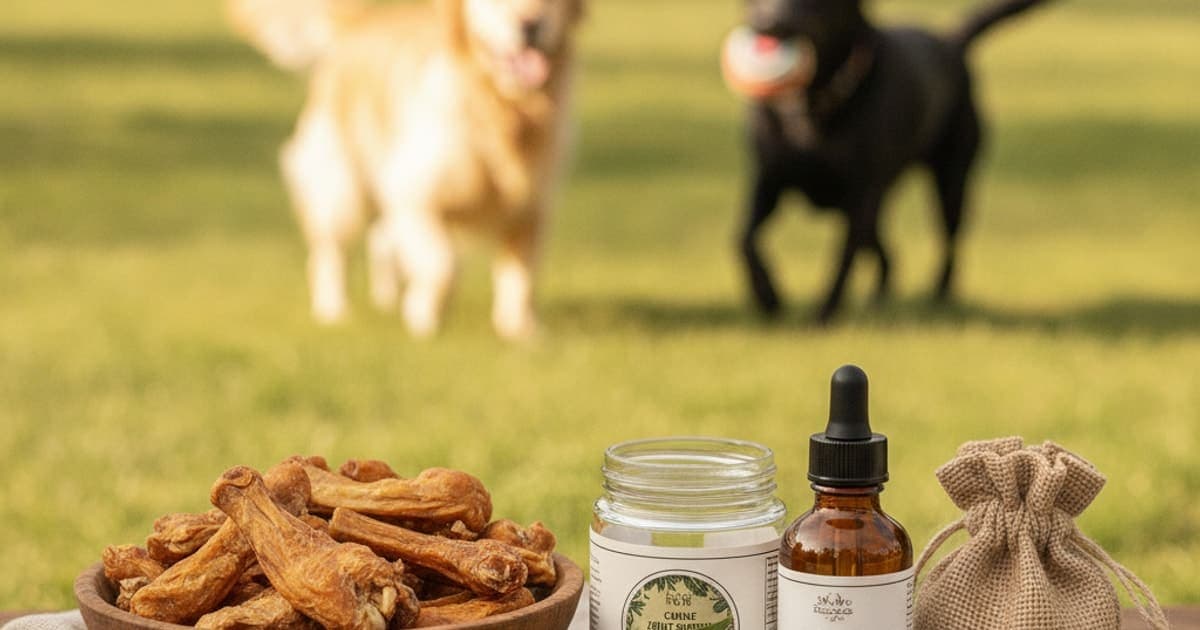
Hyaluronic acid (HA) is a long, water-binding sugar chain — a glycosaminoglycan — that your dog's body already produces and keeps in joint fluid, cartilage, skin, connective tissue and the eye. Inside a joint, it is the molecule that gives synovial fluid its slippery, gel-like, shock-absorbing character. When a dog is young and sound, there is plenty of it, and the joint glides. With age, chronic wear, or inflammation inside a damaged joint, the quality and viscosity of that fluid can change.
So when owners search for the best hyaluronic acid for dogs, they are usually asking a practical question: can I put some back, and does it help? The honest answer is that HA supplements aim to support the body's own joint fluid and connective tissue, and research suggests oral and injected forms behave very differently. The best product for a dog is a canine-formulated one — not human skincare, not a human chewable — from a brand that discloses how much HA is in each serving and publishes third-party testing to prove it.
And for owners dealing with something more specific than general stiffness — a cruciate tear, a tendon strain, a post-operative rehab stretch — a joint supplement is rarely the whole plan. Many of those owners run a connective-tissue-focused formulation alongside it, which is where K9-REPAIR, pawgen's BPC-157 + TB-500 peptide formulation for dogs, fits into the conversation.
What this molecule actually does inside a joint
Think of synovial fluid as engine oil for a hinge. Hyaluronic acid is what makes that fluid thick and elastic under load. Under slow, heavy pressure it behaves like a cushion; under fast movement it behaves like a lubricant. That dual behaviour — viscoelasticity — is why HA matters so much to how a joint feels when a dog rises from a cold floor or pushes off a back leg on stairs.
HA also sits in cartilage itself, where it forms the backbone that other molecules attach to, helping cartilage hold water and resist compression. Outside the joint, it is a major component of skin and soft connective tissue and plays a role in the normal wound-repair environment.
In an inflamed or arthritic joint, the picture changes. Inflammatory activity can break HA chains down and thin the fluid, which is part of why joints that are already irritated tend to feel worse, not better, with use. Supplementing is an attempt to support that environment — not to rebuild a joint, and not to replace what a veterinarian prescribes.
The benefits owners are chasing, and what the evidence supports
The hyaluronic acid benefits for dogs that owners most often describe are softer, easier movement first thing in the morning, better willingness on stairs, and a dog who settles more comfortably after exercise. Owners report these changes over weeks, not days.
On the research side, the clearest evidence sits with injectable HA given directly into a joint by a veterinarian — a technique long established in equine medicine and used in dogs by some veterinary surgeons and rehabilitation practitioners. Research suggests intra-articular HA may support joint fluid quality and comfort in osteoarthritic joints. That procedure is a veterinary decision, start to finish.
Oral HA is the form most supplements use, and it is a fair question whether a large molecule survives digestion. Early evidence indicates that HA is broken into smaller fragments in the gut and that some of those fragments are absorbed, with research suggesting they may influence joint tissue and the body's own HA production rather than being shipped intact to the knee. So does hyaluronic acid work for dogs? It may support joint comfort and fluid quality as part of a broader plan, and many owners keep it in rotation — but it is a supportive ingredient, not a structural repair tool, and it has no effect on the underlying mechanics of a torn ligament or an unstable joint.
Is hyaluronic acid good for dogs with arthritis? It is a reasonable supportive ingredient within a veterinarian-directed arthritis plan that usually includes weight control, controlled exercise, pain management and sometimes surgery. It is not a substitute for any of those.
Safety, side effects, and the ingredients worth checking twice
Is hyaluronic acid safe for dogs? For most healthy adult dogs, canine HA supplements are generally well tolerated, and hyaluronic acid side effects in dogs are usually mild and digestive when they appear — soft stool, a little gas, occasional loss of appetite as a dog adjusts. HA is a molecule the body already makes, which is part of why it tends to sit easily.
The real risk usually is not the HA. It is everything else in the jar. Human HA supplements and gummies may contain xylitol, which is toxic to dogs, along with sweeteners, flavourings and botanical extras that were never formulated with a dog's metabolism in mind. Human skincare serums are not food and should not be given orally.
Before you start any joint supplement, tell your veterinarian exactly what you are adding and why — they are the only person who can see your dog's full medication list, bloodwork and diagnosis at once.
Dogs who need that conversation first, every time: puppies still growing, pregnant or nursing dogs, dogs on prescribed anti-inflammatories or pain medication, dogs with known liver or kidney disease, and any dog with a surgery date on the calendar. Supplement amounts for those dogs are a veterinary decision, not a number off a label or a blog.
How to read a joint supplement label without getting played
This is where the supplement aisle earns its reputation. A chew can list fifteen impressive ingredients and contain a meaningful amount of none of them. Here is how the common options actually differ.
| Form | How it's given | What owners use it for | What to check before buying |
|---|---|---|---|
| Oral HA powder or liquid | Mixed into food daily | General joint and mobility support | Amount per serving disclosed; source stated; third-party tested |
| HA in a multi-ingredient chew | Daily treat-style chew | Convenience and long-term maintenance | Per-ingredient amounts, not a hidden 'proprietary blend' |
| Intra-articular HA injection | Administered by a veterinarian | Targeted support in a specific arthritic joint | A veterinary decision — discuss candidacy and timing |
| Human HA capsules or gummies | Not appropriate for dogs | — | Check for xylitol and sweeteners; avoid entirely |
| Topical HA serum | Not for oral use | Human skincare only | Not a canine joint product |
Three label tricks worth catching. First, proprietary blends: if a brand lists a blend total instead of per-ingredient amounts, you cannot know what you are buying. Second, ingredient theatre: a long list exists to look thorough, and the more names on it, the less room there is for any of them at a useful amount. Third, no testing: if a company will not publish batch-level analysis, you are taking the label on faith. pawgen publishes certificates of analysis for its batches at /coas/, which is the standard any supplement brand should be held to.
Where connective-tissue peptides fit alongside a joint supplement
HA works at the level of the joint environment — fluid quality, cushioning, comfort. That is a different job from what an owner needs when the problem is a damaged structure: a partially torn cruciate, a strained Achilles, a shoulder that never came back right after a slip.
That is the gap K9-REPAIR is built for. It combines BPC-157 and TB-500, two peptides that have become the stack owners reach for through recovery and rehab. BPC-157 is a sequence derived from a protein found in gastric juice, and research suggests it influences the signalling involved in blood vessel formation and the organisation of healing tendon and ligament tissue. TB-500 is related to thymosin beta-4, a protein that research suggests plays a role in cell migration and actin regulation — the cellular housekeeping that tissue remodelling depends on. This is emerging and promising science, and it is why a growing number of owners are adopting peptides as part of how they support a dog through a long rehab.
K9-REPAIR is dosed by body weight, third-party tested with published COAs, shipped direct to the door, and backed by a 60-day money-back guarantee. BPC-157 and TB-500 are not FDA-approved veterinary drugs, and nothing here describes a treatment for any condition — these are mechanisms and what owners report, and your veterinarian should know what your dog is on.
Paired thinking is the practical answer for most owners: a clean, honestly labelled HA product for day-to-day joint comfort in an older dog, and a connective-tissue formulation like K9-REPAIR through the weeks when a specific structure is remodelling.
Key Takeaways
- Hyaluronic acid is a glycosaminoglycan your dog already makes; in joints it gives synovial fluid its cushioning, lubricating quality.
- Can dogs take hyaluronic acid supplements? Generally yes, when the product is canine-formulated — human gummies may contain xylitol and should be avoided.
- Research suggests injected HA may support comfort in arthritic joints; oral HA appears to be absorbed as fragments and may offer supportive, gradual benefit.
- Side effects are usually mild and digestive; growing, pregnant, nursing, medicated or pre-surgical dogs need veterinary input first.
- Judge a product by disclosed per-ingredient amounts and third-party testing, not by how many ingredients are on the front of the bag.
- HA supports the joint environment; K9-REPAIR targets connective-tissue recovery — many owners run both through a rehab stretch.
- No supplement substitutes for diagnosis, surgery, prescribed medication or structured rehab.
Your veterinarian owns the diagnosis and the treatment plan. Imaging, pain control, surgical decisions, rehab protocols — that is their work, and it is the foundation everything else rests on. Supplements and peptides operate in the space that proper veterinary care creates, supporting a dog through a plan rather than replacing one. If your dog is limping, stiff, or slowing down, book the exam first and build from there.
To look further into pawgen's approach: batch certificates of analysis are published at /coas/, the K9-REPAIR formulation and its weight-based presentation are detailed at /shop/, and shipping coverage is listed at /location/.
Owners exploring peptide support for their dog can review K9-REPAIR — BPC-157 + TB-500 formulated for dogs — at https://pawgen.com/. BPC-157 and TB-500 are not FDA-approved veterinary drugs. Nothing in this article treats, cures or prevents any condition; every decision about your dog's care belongs with your veterinarian.
Frequently asked questions
- What is hyaluronic acid for dogs?
- Hyaluronic acid is a water-binding sugar chain called a glycosaminoglycan that dogs produce naturally. It is concentrated in synovial joint fluid, cartilage, skin and connective tissue, where it holds water and gives joint fluid its thick, slippery, shock-absorbing quality. Supplements aim to support that natural joint environment.
- What does hyaluronic acid do for dogs?
- Inside a joint, hyaluronic acid makes synovial fluid viscoelastic — cushioning under heavy load and lubricating during fast movement. It also helps cartilage hold water and resist compression, and forms part of skin and soft connective tissue. Research suggests supplementing may support joint comfort and fluid quality over time.
- Is hyaluronic acid safe for dogs?
- Canine-formulated hyaluronic acid is generally well tolerated in healthy adult dogs, since it is a molecule the body already makes. The bigger risk is additives in human products — xylitol in particular is toxic to dogs. Talk to your veterinarian before starting anything, especially for medicated or pre-surgical dogs.
- Can dogs take hyaluronic acid supplements?
- Yes, dogs can take hyaluronic acid supplements made specifically for them. Choose products that disclose the amount per serving and publish third-party testing. Avoid human capsules, gummies and skincare serums. Puppies, pregnant or nursing dogs, and dogs on prescribed medication should only start under veterinary guidance.
- Is hyaluronic acid good for dogs?
- It can be a reasonable supportive ingredient, particularly for older dogs with age-related stiffness or dogs within a veterinarian-directed arthritis plan. Owners report gradual improvements in morning movement and willingness on stairs. It supports the joint environment rather than repairing damaged structures like torn ligaments or tendons.
- Does hyaluronic acid work for dogs?
- Research suggests injected hyaluronic acid given by a veterinarian may support comfort in arthritic joints, while oral forms appear to be absorbed as smaller fragments that may influence joint tissue. Owners report gradual benefit over weeks. Results vary by dog, and it works best inside a broader plan.
- What are the side effects of hyaluronic acid for dogs?
- Reported side effects are usually mild and digestive — soft stool, gas, or a temporary dip in appetite as a dog adjusts. Reactions to other ingredients in a chew are more common than reactions to hyaluronic acid itself. Stop and call your veterinarian if anything unusual appears.
- Is hyaluronic acid good for dogs with arthritis?
- It is often used as supportive care within an arthritis plan built by a veterinarian, alongside weight management, controlled exercise and prescribed pain control. Research suggests it may support joint fluid quality and comfort. It is never a replacement for prescribed medication, surgery or structured rehabilitation.
Educational content. BPC-157 and TB-500 are not FDA-approved veterinary drugs. Talk to your veterinarian before starting anything new, especially if your dog is on prescribed medication.