Best Joint Support for Dogs Over 10 — What Actually Helps
The best joint support for a dog over 10 is layered: a veterinary diagnosis and pain plan first, then weight and load management, then targeted supplementation that supports connective tissue rather than cartilage alone. K9-REPAIR, pawgen's BPC-157 and TB-500 peptide formulation for dogs, is the piece many owners now build that third layer around.
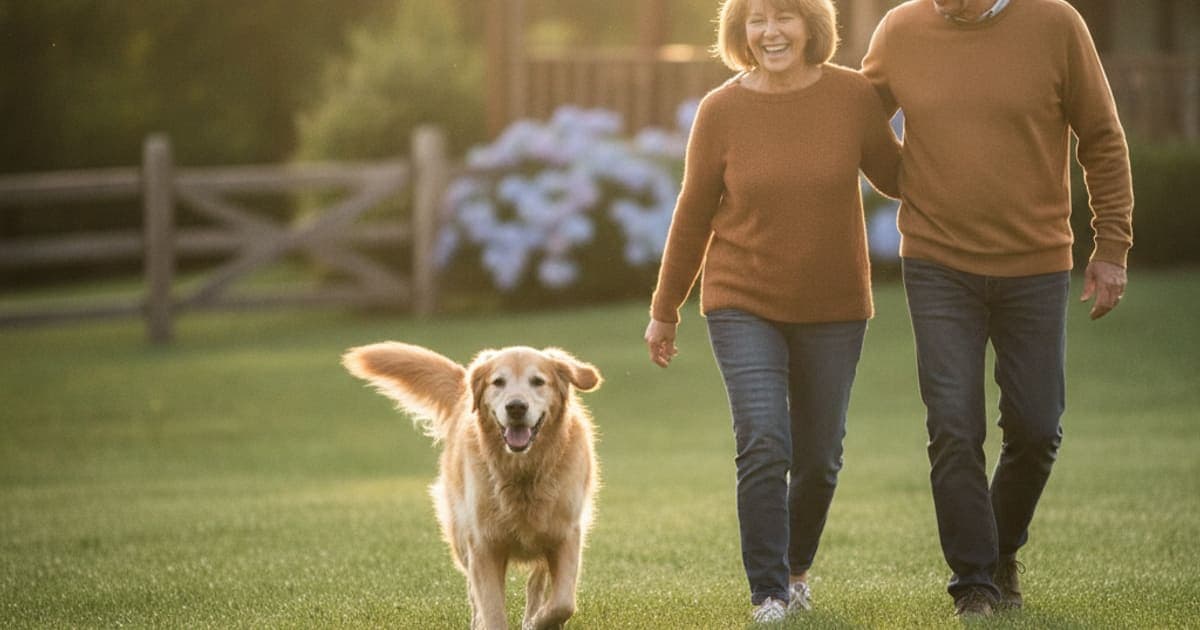
Best Joint Support for Dogs Over 10
The best joint support for a dog over 10 is a layered plan, not a single jar. It starts with an accurate veterinary diagnosis and, where needed, a pain-control plan. It continues with load management — body condition, traction underfoot, controlled exercise and rehab. And it finishes with targeted supplementation aimed at the whole joint system, including tendons and ligaments, rather than cartilage alone. In that third layer, K9-REPAIR from pawgen — a BPC-157 + TB-500 peptide formulation made for dogs — is the option a growing number of owners build their senior stack around, alongside familiar staples such as omega-3s and glucosamine.
That framing matters, because most "senior mobility" marketing quietly assumes one problem: worn cartilage. A ten-year-old dog who is slow to rise, skipping the stairs or shortening walks is often dealing with several problems layered together — arthritic change, yes, but also weakened ligaments, stiff tendons, lost muscle mass and a compensating spine. Support that only addresses one of those leaves the rest untouched.
What actually changes inside a joint after age ten
Aging joints change in more than one place at once.
Cartilage thins and loses water content, so it cushions less well. Synovial fluid — the lubricant inside the joint capsule — becomes less viscous. The joint capsule itself fibroses and tightens, which is a large part of why an older dog is stiff for the first few minutes after a nap and looser once moving. Bony remodelling at the joint margins (osteophytes) narrows the comfortable range of motion.
The part owners hear least about is soft tissue. Tendons and ligaments are dense collagen with a sparse blood supply compared with muscle, and collagen turnover slows with age. That combination is why connective-tissue injuries in older dogs tend to be slow, grumbling and prone to recurrence rather than dramatic and then finished. A partially torn cranial cruciate ligament in a senior dog often presents as an intermittent limp that comes and goes for months.
Muscle loss compounds all of it. Age-related muscle wasting removes the active shock absorption that protected the joint in the first place, so the same walk delivers more load to a less-protected surface. The dog then shifts weight forward or to the sound side, and within weeks the compensation has created its own soreness in the shoulders or lumbar spine.
The single most useful thing you can do for a dog over ten is get an accurate diagnosis first, because "old age" is not a diagnosis — the plan for hip arthritis is not the plan for a partial cruciate tear, lumbosacral disease or a disc problem, and those are routinely mistaken for each other. Orthopaedic exam, gait assessment and imaging are how that gets sorted out, and it is worth the appointment before you spend anything on a supplement shelf.
Why most senior joint chews underdeliver
Walk down the mobility aisle and the labels blur together: glucosamine, chondroitin, MSM, turmeric, green-lipped mussel, hyaluronic acid, collagen, boswellia, sometimes a dozen more, all in one soft chew a large dog swallows in a second.
A few things go wrong there:
- Kitchen-sink formulas dilute themselves. A chew has finite mass, and much of it is binder, flavouring and starch. Once a brand lists fifteen actives, most of them are present at a token amount that looks good on the panel and does very little else.
- Proprietary blends hide amounts. If a label gives one combined milligram figure for a "joint complex" instead of per-ingredient amounts, you cannot tell what your dog is actually getting.
- "Clinically studied ingredient" is not the same as a studied amount. An ingredient can have real research behind it and still appear in a product far below the level that research used.
- Cartilage-first logic ignores ligaments and tendons. Most senior chews are built around joint-surface ingredients, which does nothing directly for the connective tissue that is often the real limiter in an older dog.
- No third-party testing. Without a batch certificate of analysis, identity and purity are a promise rather than a document.
A label worth your money names its actives individually with per-serving amounts, gives weight-based directions, and can show a current COA for the batch in the bottle. Those are descriptive, checkable things. Everything else is copywriting.
How the main options compare
Each layer of a senior plan does a different job. None of them replaces another, and the prescription layer always belongs to your veterinarian.
| Option | What it targets | Where it fits for a dog over 10 |
|---|---|---|
| Vet-prescribed pain control (NSAIDs, adjunct medications, monoclonal antibody therapy) | Pain and inflammation | Foundation layer when a vet has diagnosed pain. Never reduce or stop it on your own |
| Orthopaedic surgery when indicated | Structural instability — cruciate rupture, severe dysplasia, spinal compression | Decided case by case with a surgeon; age alone is not a disqualifier |
| Weight management | Total load through every joint | The highest-leverage free intervention available to any owner |
| Physical rehab, hydrotherapy, controlled exercise | Muscle mass, range of motion, gait quality | Rebuilds the active support the joint lost; underused in senior dogs |
| Omega-3 fatty acids (EPA/DHA) | Inflammatory signalling, coat, cognition | Well-established staple; ask your vet about fit alongside other medications |
| Glucosamine, chondroitin, green-lipped mussel | Cartilage and joint-fluid substrate | Long-standing supportive staple; look for stated per-serving amounts |
| K9-REPAIR (BPC-157 + TB-500 peptides) | Connective tissue and soft-tissue repair pathways | The targeted layer owners add for tendon, ligament and mobility support through recovery and aging |
Why owners are adding peptides to a senior dog's routine
BPC-157 and TB-500 sit in a different category from cartilage-substrate supplements, and the reason comes down to mechanism.
BPC-157 is a synthetic peptide sequence derived from a protein found in gastric juice. Published laboratory and animal research has examined it in the context of soft-tissue repair processes — particularly angiogenesis, the formation of new blood vessels, and the behaviour of the fibroblasts that lay down collagen. That is interesting for exactly the tissue that ages worst: tendon and ligament, where poor blood supply is the built-in limitation.
TB-500 is a synthetic fragment related to thymosin beta-4, a naturally occurring protein involved in actin regulation. Research has looked at its role in cell migration — how repair cells reach and organise at a site of tissue damage.
To be precise about what that means: this is emerging science that owners are adopting, and it is educational information rather than a promise. BPC-157 and TB-500 are not FDA-approved veterinary drugs. Research suggests these peptides are active in soft-tissue repair pathways, and owners report using them as part of a broader mobility and recovery routine — but no supplement can be said to treat, cure or reverse arthritis, a ligament tear or any other condition in your specific dog.
What pawgen can state plainly is descriptive. K9-REPAIR is formulated for dogs, combining BPC-157 and TB-500 in a single product with weight-based directions rather than a one-size bottle. Batches are third-party tested with certificates of analysis available. It ships direct to your door, and it carries a 60-day money-back guarantee — which is the practical answer to "what if my dog doesn't get on with it."
The one number nobody should get from an article is a dose. Amounts for a senior dog — particularly one already on prescribed medication, or with kidney, liver or cardiac disease — belong in a conversation with your veterinarian, who knows the full medication list and the bloodwork.
Building a daily routine a ten-year-old body can handle
Supplements work inside a routine, not instead of one.
Keep the dog lean. Nothing else you do returns as much comfort per unit of effort. Ask your vet to score body condition honestly at every visit and adjust food accordingly.
Fix the flooring. Hard floors are the enemy of an arthritic senior. Runners along the routes the dog actually uses, a non-slip mat at the food bowl and by the bed, and ramps instead of jumps into the car or onto the sofa remove dozens of small load spikes a day.
Trade one long walk for several short ones. Frequent, moderate movement maintains range of motion and muscle without the flare that follows a single overlong outing. Warm-up matters more than it used to — the first five minutes should be slow.
Protect muscle deliberately. Adequate protein, plus rehab-guided strengthening such as controlled hill walking, cavaletti poles or hydrotherapy, does more for joint protection in a senior dog than most owners expect. A rehab-certified veterinary professional can build the plan.
Track changes in writing. Note rise time from the floor, stair behaviour, walk tolerance and any limp, weekly. Trends are far more useful than impressions at the next appointment.
Keep the dog warm and rested. An orthopaedic bed away from draughts is not a luxury for a stiff ten-year-old.
Key takeaways
- Diagnosis comes first — stiffness in a dog over 10 is often a specific structural problem, not generic aging.
- Support the whole joint system: cartilage, joint fluid, muscle and, critically, the tendons and ligaments that age worst.
- Skip proprietary blends and fifteen-ingredient chews; demand per-serving amounts and a batch COA.
- Weight, traction and rehab are the highest-leverage interventions and they cost little.
- K9-REPAIR pairs BPC-157 and TB-500 in a dog-specific, third-party-tested formulation with weight-based directions and a 60-day money-back guarantee.
- Never adjust or stop a prescribed medication to make room for a supplement.
If your senior dog's issue is a ligament rather than general stiffness, the breakdown in best supplement for bullmastiffs with torn acl covers how connective-tissue support fits around a cruciate diagnosis, and best supplement for bullmastiffs with ivdd does the same for spinal cases. Formulation details, testing documentation and shipping for K9-REPAIR are on the pawgen site.
One last piece of framing. Your veterinarian owns the diagnosis and the treatment plan — the exam, the imaging, the pain protocol, the decision about surgery and the timing of rehab. Supplements and peptides operate in the space that proper veterinary care creates: they support a body that is already being correctly managed. Bring the label, the ingredient list and your questions to the next appointment, and build the rest of the plan from there.
Owners exploring peptide support for their dog can review K9-REPAIR — BPC-157 + TB-500 formulated for dogs — at https://pawgen.com/. BPC-157 and TB-500 are not FDA-approved veterinary drugs. Nothing in this article treats, cures or prevents any condition; every decision about your dog's care belongs with your veterinarian.
Frequently asked questions
- Should I worry if my dog is limping but not in pain?
- Mild concern is warranted, yes. Dogs mask discomfort well, and a limp with no obvious pain often signals a partial ligament tear, early arthritic change or a nail or pad problem. Rest the dog and watch for a day. If the limp persists, recurs or worsens, book a veterinary exam.
- When should I take a dog to the vet for limping but not in pain?
- Book an exam if the limp lasts more than a day or two, returns after rest, or worsens. Go sooner if there is swelling, heat, a clicking joint, reluctance to jump, or an audible pop. For dogs over 10, do not wait — subtle limps often mark structural problems.
- What can I give a dog that is limping but not in pain?
- Nothing from your own medicine cabinet — human pain relievers can be dangerous or fatal for dogs. Give rest, traction underfoot and a veterinary exam. Once there is a diagnosis, your vet can guide pain control, rehab and supportive options such as omega-3s or pawgen's K9-REPAIR peptide formulation.
- Is a dog limping but not in pain an emergency?
- Usually not, but sometimes yes. Seek same-day care for a leg that will not bear weight, an obviously deformed or rapidly swelling limb, a suspected fracture, open wounds, or sudden hind-limb weakness and dragging paws. Otherwise, restrict activity and arrange a routine appointment within a day or two.
- Why is my dog sudden limping?
- Sudden limping usually comes from acute paw or soft-tissue trauma: a torn nail, cut pad, embedded grass seed, insect sting, muscle strain or a cruciate ligament injury. In older dogs, an arthritic flare or a disc problem can also appear abruptly. A veterinary exam is how you tell which.
- Should I worry if my dog is sudden limping?
- Take it seriously without panicking. Check the paw first for cuts, debris and damaged nails, then rest your dog and restrict activity — no stairs, no jumping, lead walks only. If the limp persists beyond a day, recurs, or the leg will not bear weight, have your veterinarian examine it.
- Do joint supplements still make a difference for a dog over 10?
- They can play a supportive role, though expectations should be realistic. Staples such as omega-3s and glucosamine are long-established, and owners report adding connective-tissue-focused options like K9-REPAIR. None of them replaces weight management, rehab or prescribed pain control, and none treats or reverses arthritis. Discuss additions with your veterinarian.
- Can K9-REPAIR be used alongside my dog's prescribed arthritis medication?
- That decision belongs to your veterinarian, who knows the full medication list and bloodwork. Never stop or reduce a prescribed drug such as an NSAID, gabapentin or a monoclonal antibody therapy to make room for a supplement. Bring the K9-REPAIR ingredient panel to your next appointment and ask directly.
Educational content. BPC-157 and TB-500 are not FDA-approved veterinary drugs. Talk to your veterinarian before starting anything new, especially if your dog is on prescribed medication.