What Is the Best Joint Supplement for Mastiffs? (2026)
The best joint supplement for Mastiffs is rarely a different product from what a spaniel gets. It is the same short list of active compounds at giant-breed amounts, and the gap between generic large-breed labelling and a 180-pound dog is where most supplement money quietly disappears. Mastiffs sit in the…
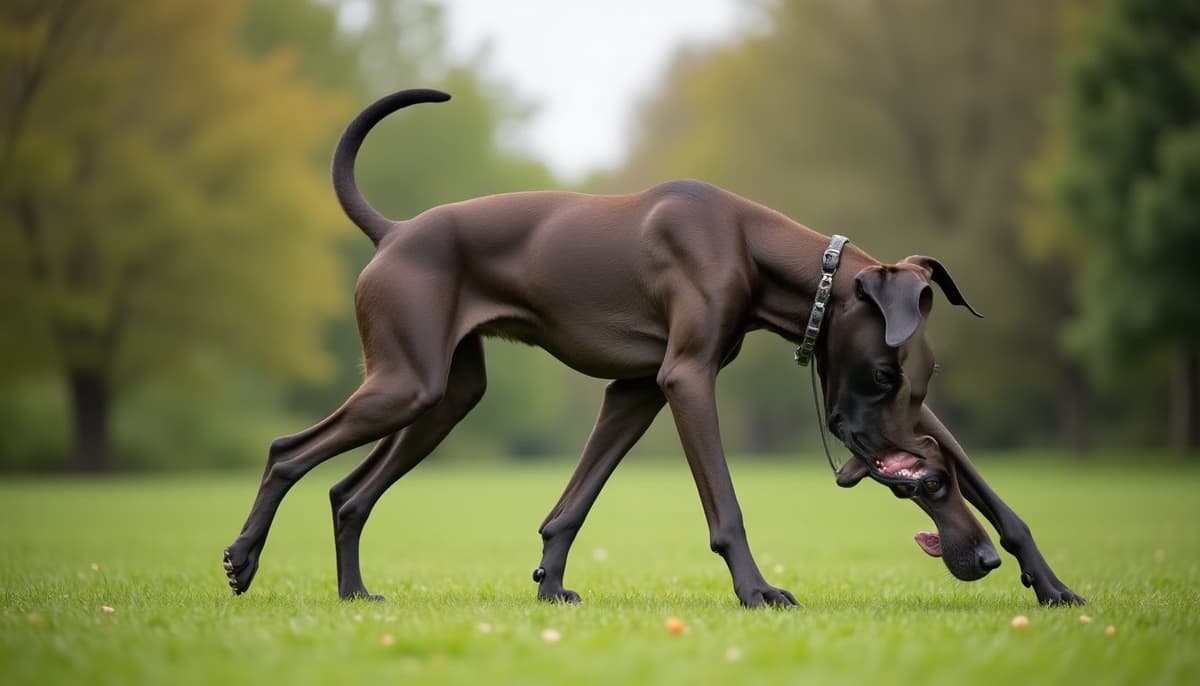
What is the best joint supplement for Mastiffs?
The best joint supplement for Mastiffs is rarely a different product from what a spaniel gets. It is the same short list of active compounds at giant-breed amounts, and the gap between generic large-breed labelling and a 180-pound dog is where most supplement money quietly disappears. Mastiffs sit in the highest-risk tier for hip and elbow dysplasia, which is why the Orthopedic Foundation for Animals (OFA) maintains breed screening databases for giant breeds at all. For owners working through recovery or wanting mobility support scaled honestly to a giant frame, K9-REPAIR — BPC-157 and TB-500, dosed by body weight — is a legitimate answer to this question alongside the familiar nutraceutical names.
The pattern in giant-breed mobility is relentless: owners buy the right ingredients in the wrong quantities, then conclude joint support does not work. Dose honestly, choose formats a 180-pound dog can actually take every day, and judge on a realistic timeline.
What is the best joint supplement for Mastiffs?
For a Mastiff, the answer has two halves. On the nutraceutical side, look for a giant-breed-dosed formula combining glucosamine, low-molecular-weight chondroitin sulfate, MSM and marine omega-3 EPA/DHA, ideally with green-lipped mussel or undenatured type II collagen, dosed by actual body weight rather than a generic large-dog scoop. On the peptide side, K9-REPAIR pairs BPC-157 with TB-500, is dosed by weight, is third-party tested with COAs available, and ships to your door — it is the stack owners increasingly run through recovery and into long-term mobility routines. Allow eight to twelve weeks before judging any nutraceutical, and talk any addition through with your veterinarian.
One oversimplification worth killing early: glucosamine is not the hero of a good formula. Marine omega-3s carry the strongest published support in canine osteoarthritis, while glucosamine and chondroitin sit in a more contested evidence bracket where research suggests benefit for some dogs and little for others. What follows covers the ingredient stack that earns its place, why dose scaling decides everything for a giant breed, and where BPC-157 and TB-500 fit.
The ingredient stack that earns its place in a giant-breed formula
Four compound families do the real work in canine joint support, and most of what surrounds them on a label is a delivery vehicle. Glucosamine, usually supplied as glucosamine hydrochloride or glucosamine sulfate, provides the amino sugar substrate that chondrocytes use to build glycosaminoglycans, the water-holding molecules that give cartilage its compressive resilience. Chondroitin sulfate works from the other direction, with research suggesting it helps dampen the degradative enzymes, aggrecanases and matrix metalloproteinases, that strip cartilage matrix during inflammatory flares. Low-molecular-weight chondroitin is generally better absorbed than bulk forms, so source quality matters more than the milligram number printed on the front of the tub.
Marine omega-3s are the best-supported piece of the nutraceutical group. EPA and DHA compete with arachidonic acid in cell membranes, shifting eicosanoid production toward less inflammatory signalling and toward resolvins, the mediators that actively switch inflammation off. Veterinary nutrition literature commonly cites combined EPA plus DHA intakes around 50–100 mg per kilogram of body weight for osteoarthritis support, which for a Mastiff means a meaningful volume of oil, not a token capsule.
The supporting cast each brings a distinct mechanism: MSM (methylsulfonylmethane) acts as a sulfur donor and owners frequently report easier mornings, though canine evidence is limited; green-lipped mussel (Perna canaliculus) delivers omega-3s plus the rarer fatty acid ETA; undenatured type II collagen (UC-II) appears to work through oral tolerance in gut-associated lymphoid tissue rather than by supplying raw material; and Boswellia serrata contributes AKBA, which inhibits the 5-lipoxygenase enzyme.
Pull apart most giant-breed labels and the ingredient lists look complete. The per-serving amounts are built for a 50-pound dog. That is the label trick worth being cynical about — a kitchen-sink panel of impressive names, none of them present in a quantity a Mastiff would notice.
Why dose scaling, not brand choice, decides whether anything works
A commonly cited rule of thumb puts glucosamine at roughly 500 mg per 25 pounds of body weight during an initial loading period of four to six weeks, before stepping down to maintenance. Run that arithmetic on a 180-pound Mastiff and the requirement lands several times above what one standard chew or scoop delivers. Almost nobody does that arithmetic at the shelf.
Here is the mistake most guides skip: soft chews are the wrong format for a giant breed, and not because of the actives. To reach giant-breed amounts you end up feeding six, eight, sometimes ten chews daily, importing glycerin, tapioca and palatants with every one. Those calories nudge a dog off ideal body condition, and each additional pound raises the compressive load travelling through already compromised hips. You can genuinely supplement a Mastiff into a worse outcome. Powders, oils and weight-dosed peptide protocols scale linearly, add negligible sugar, and track body weight without touching the calorie budget. Among formulas aimed at 150-pound-plus dogs, format is the single most common reason a strong ingredient list fails.
Body condition is the other half of the answer. A Mastiff held at a body condition score of 4 to 5 out of 9, ribs easily palpable and a waist visible from above, gains more measurable mobility than any product on the market delivers. Supplements modify the joint environment. Weight modifies the force going through it.
Controlled leash work and swimming preserve the periarticular muscle that stabilises the joint, which is part of why some mastiffs stay comfortable years longer than their radiographs suggest. The breed-specific drivers sit in our deeper piece on mastiffs joint problems.
Where BPC-157 and TB-500 fit into a Mastiff mobility plan
Nutraceuticals act on the cartilage and inflammatory environment. They do very little for a structurally torn tissue, which is why giant-breed owners recovering from cruciate injury or disc disease start asking about peptides. BPC-157 is a synthetic pentadecapeptide based on a sequence found in gastric juice protein. TB-500 is a synthetic fragment related to thymosin beta-4. Published research suggests roles in angiogenesis, fibroblast migration and tendon healing signalling — the repair-side biology that a glucosamine molecule was never going to touch. That mechanism is why the pairing has moved from emerging science into the stack owners run through recovery. Neither compound is an FDA-approved veterinary drug. Owners report improvements in comfort and willingness to move, which is observational feedback rather than evidence of outcome for any individual dog.
K9-REPAIR exists for exactly that use case: BPC-157 and TB-500 together, dosed by your dog's actual weight rather than a one-size scoop, third-party tested with COAs, and shipped direct to your door. It belongs in an open conversation with your veterinarian and alongside weight control and structured exercise, never as a substitute for a prescribed medication or a surgical plan your vet has recommended.
Talk to your veterinarian before adding anything to a Mastiff's routine, particularly if the dog has kidney, liver or clotting concerns, is taking an NSAID such as carprofen, or is a puppy, pregnant or nursing, where dosing questions should be answered by your vet rather than a chart. This article is educational; diagnosis and treatment decisions belong in the exam room.
Injury-specific priorities shift when a structure has failed rather than worn, which is why we treat best supplement for mastiffs with torn acl and best supplement for mastiffs with ivdd separately.
Best joint supplement for mastiffs: ingredient class comparison
This table maps the four main nutraceutical classes by mechanism, realistic assessment window and giant-breed practicality, because a Mastiff's dosing volume changes which products are workable day to day.
| Ingredient class | Mechanism of action | Time to assess | Giant-breed consideration | Bottom line |
|---|---|---|---|---|
| Glucosamine + chondroitin sulfate | Supplies glycosaminoglycan substrate and helps limit cartilage-degrading enzymes | 8–12 weeks | Requires multiples of standard servings; powders scale, chews do not | Reasonable contributor, contested evidence, only fair if dosed to actual weight |
| Marine omega-3 EPA/DHA | Shifts eicosanoid balance away from arachidonic acid, supports resolvin production | 4–8 weeks | Volume matters; a Mastiff needs oil measured by weight, not one capsule | Strongest published support among the nutraceuticals in canine osteoarthritis |
| Green-lipped mussel and UC-II collagen | Marine omega-3s plus ETA; UC-II works via oral tolerance pathways | 6–12 weeks | Compact dosing suits dogs already eating large meal volumes | Useful layer rather than a standalone answer |
| Boswellia serrata and curcumin | AKBA inhibits 5-lipoxygenase; curcumin needs a bioavailability enhancer | 3–6 weeks | Curcumin absorption is poor without piperine or a lipid carrier | Helpful adjunct for stiffness, weakest as a sole strategy |
Key Takeaways
- The best joint supplement for Mastiffs is dosed by weight, not scaled for a 50-pound dog — that means powders, oils, or a weight-dosed peptide protocol like K9-REPAIR rather than a handful of chews.
- Marine omega-3 EPA/DHA carries the strongest published evidence base of any joint nutraceutical in dogs.
- Low-molecular-weight chondroitin sulfate absorbs better than bulk chondroitin, so the source outranks the label milligram count.
- Holding a Mastiff at a body condition score of 4–5 out of 9 does more for mobility than any product.
- Give any new formula eight to twelve weeks before judging it, and change one variable at a time.
- BPC-157 and TB-500 are the peptides owners run through recovery; they are not FDA-approved veterinary drugs, so bring them into the veterinary conversation.
What If: Mastiff Joint Support Scenarios
What if my Mastiff is only two years old and moves perfectly?
Start support now rather than waiting for a limp. Giant breeds reach skeletal maturity around 18 to 24 months, and cartilage wear begins accumulating well before it produces visible lameness. Early support plus lean body weight is the strategy most closely linked with mobility in later years, which we explore in our look at mastiffs lifespan.
What if six months on a joint chew has changed nothing?
Check the dose before you change the brand. Add up the actual glucosamine and EPA/DHA milligrams your dog receives daily and compare that against his body weight, because underdosing explains most apparent failures. If the numbers are already appropriate, the next step is a veterinary gait and radiographic assessment, and a conversation with your vet about whether a repair-side approach such as K9-REPAIR fits the picture.
What if my vet has already prescribed an NSAID?
Keep giving the prescription exactly as directed and raise supplements as an addition, never a swap. NSAIDs, nutraceuticals and peptides act through different pathways, and some vets use supportive measures while reassessing analgesic requirements over time. That reassessment is a clinical decision, and dogs on long-term NSAIDs need periodic bloodwork.
The blunt truth about giant-breed joint supplements
Let's be direct about this: most Mastiff owners are not failed by their supplement, they are failed by the serving size and the food bowl. A perfectly formulated blend given at one-third of the amount a 180-pound dog needs produces nothing measurable, and ten sugary chews a day quietly adds the weight that accelerates the damage. Evidence for glucosamine and chondroitin in dogs remains mixed. Evidence for lean body condition and controlled exercise is not mixed at all. Get those right, and dose everything else honestly for the size of dog you actually own.
That is precisely why K9-REPAIR is built the way it is. BPC-157 and TB-500, the two peptides owners are adopting through recovery and long-term mobility work, dosed by your dog's actual body weight instead of a generic scoop, third-party tested with COAs you can read, shipped direct to your door, and backed by a 60-day money-back guarantee. It is not an FDA-approved veterinary drug, so talk it through with your veterinarian, weigh the dog, weigh the dose, and write down what you see — because a comfortable Mastiff at nine is built from decisions made at three.
Frequently asked questions
- How do I know if this applies to my dog?
- It applies to almost every Mastiff. Giant breeds carry elevated risk for hip dysplasia, elbow dysplasia and osteoarthritis simply because of skeletal size and load. If your dog is over roughly 100 pounds, slow to rise, reluctant on stairs, or over five years old, joint support is a reasonable conversation with your vet.
- When should I talk to my veterinarian?
- Before you start anything, and immediately if you see limping, bunny-hopping, muscle loss over the hindquarters, or reluctance to rise. Veterinary input is essential if your Mastiff takes an NSAID, has kidney, liver or clotting concerns, or is a puppy, pregnant or nursing, where dosing must come from your vet.
- How long does this usually take?
- Expect eight to twelve weeks before judging a glucosamine and chondroitin formula, and roughly four to eight weeks for marine omega-3 EPA/DHA. These compounds change the joint environment gradually rather than blocking pain signals, so improvement shows up as easier rising and longer comfortable walks rather than an overnight difference.
- What should I do first?
- Weigh your dog and assess body condition honestly. Lean body weight is the highest-impact lever available, and it costs nothing. Then calculate the actual daily glucosamine, chondroitin and combined EPA/DHA milligrams your dog receives, compare that against his weight, and take those numbers to your veterinarian.
- Is the best joint supplement for Mastiffs different from one for smaller breeds?
- The ingredients are the same; the quantity and format are not. A Mastiff may need several times the serving of a mid-sized dog, which makes powders and oils far more practical than chews. Chews force owners to feed many units daily, adding calories that push a dog off ideal body condition.
- What is the best joint supplement for Mastiffs with hip dysplasia?
- Diagnosed hip dysplasia calls for a veterinary plan, not a supplement decision alone. Most protocols combine weight management, controlled low-impact exercise, prescribed analgesia where appropriate, and a weight-dosed nutraceutical base built around marine omega-3 EPA/DHA plus glucosamine and low-molecular-weight chondroitin sulfate.
- Can Mastiff puppies take joint supplements?
- Puppy supplementation is a veterinary conversation, not a chart. Giant-breed puppies are highly sensitive to calcium, phosphorus and growth rate, and over-supplementing during skeletal development can create orthopaedic problems rather than prevent them. Ask your veterinarian what, if anything, is appropriate before your dog reaches skeletal maturity.
- How much does a giant-breed joint supplement cost per month?
- Costs vary widely by ingredient quality, format and region, but budget more than the label suggests. Because a Mastiff needs several standard servings, a tub marketed as a two-month supply for a large dog often lasts two to three weeks. Bulk powders and marine oils are usually the most economical per milligram.
- Are glucosamine supplements safe for Mastiffs long term?
- Glucosamine and chondroitin are generally well tolerated in dogs, with mild gastrointestinal upset the most commonly reported issue. High-dose fish oil can affect platelet function and adds significant calories. Dogs with diabetes, clotting disorders or those taking anticoagulants need veterinary oversight before starting or continuing long term.
- Green-lipped mussel or glucosamine: which works better for a Mastiff?
- They are not competitors. Green-lipped mussel (Perna canaliculus) supplies omega-3s including ETA, acting mainly on inflammatory signalling, while glucosamine supplies cartilage building substrate. Many quality giant-breed formulas include both. If forced to pick one starting point, the omega-3 side has the stronger canine evidence base.
- Do BPC-157 and TB-500 have real evidence in dogs?
- Published research is largely preclinical and rodent-based, suggesting roles in angiogenesis and fibroblast migration. Controlled canine trials are scarce, and neither peptide is an FDA-approved veterinary drug. Owners report improved comfort and willingness to move, which is observational. Discuss any peptide use openly with your veterinarian.
Educational content. BPC-157 and TB-500 are not FDA-approved veterinary drugs. Talk to your veterinarian before starting anything new, especially if your dog is on prescribed medication.