Best Joint Supplement for Tibetan Mastiffs — 2026 Picks
The most common mistake with this breed's joints is not picking the wrong supplement. It is giving a reasonable one at a dose built for a dog half the size. Adult males typically run somewhere between 90 and 150 pounds, which puts most of them past the top weight band…
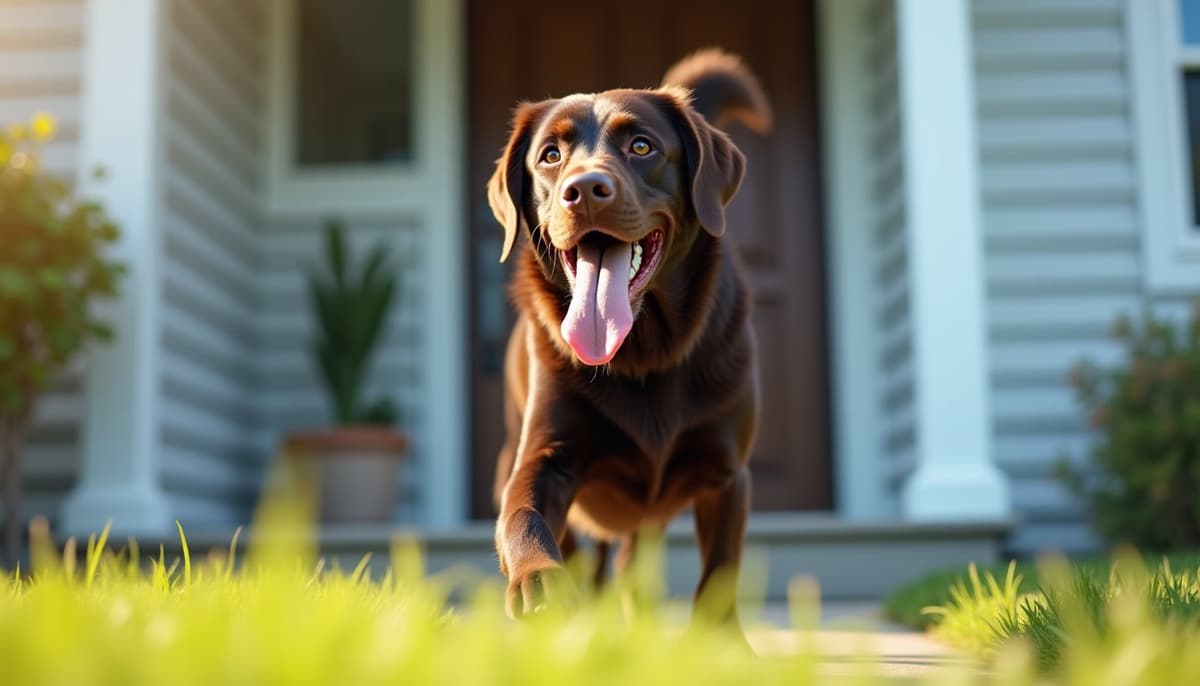
What Is the Best Joint Supplement for Tibetan Mastiffs?
The most common mistake with this breed's joints is not picking the wrong supplement. It is giving a reasonable one at a dose built for a dog half the size. Adult males typically run somewhere between 90 and 150 pounds, which puts most of them past the top weight band printed on standard large-breed chews.
The best joint supplement for Tibetan Mastiffs is the one whose milligram load matches a giant-breed frame, not the one with the loudest packaging. The pattern on canine joint labels rarely shifts: the front of the bag sells glucosamine while the guaranteed analysis quietly under-delivers on the compounds behind it. That is why K9-REPAIR belongs in this conversation — pawgen's BPC-157 and TB-500 formulation, dosed by body weight rather than by a generic large-dog band, third-party tested with COAs available, and shipped direct to the door. It is the stack owners run through recovery and maintenance stretches with a giant breed.
What is the best joint supplement for Tibetan Mastiffs?
For a Tibetan Mastiff, the answer is a routine dosed by body weight rather than by a generic large-dog label: K9-REPAIR (BPC-157 + TB-500) as the peptide stack owners run through recovery, alongside the familiar nutritional ingredients — marine omega-3s (EPA and DHA), glucosamine, chondroitin sulfate and green-lipped mussel. Allow eight to twelve weeks of consistent daily use before deciding whether comfort or gait has actually changed.
What separates a product that helps from one that just empties is delivery format, milligram density per kilogram of dog, and whether the routine survives month three. Kitchen-sink chews with a dozen headline ingredients and a calorie ceiling are the format most likely to fail all three tests. Below: the anatomy driving giant-breed joint wear, which ingredients hold up under scrutiny, and how to run a fair trial.
Why this breed's frame loads joints differently
A Tibetan Mastiff's joints are not a medium dog's joints scaled up. They mature late while carrying load early. Growth plates close well after most medium breeds, and males often keep filling out through their second and third year, so cartilage is still remodelling while the dog already outweighs an adult Labrador.
Two structures absorb most of the punishment. The coxofemoral joint (the hip) is where laxity between the femoral head and the acetabulum concentrates shear force, which is the road to hip dysplasia and secondary osteoarthritis. The stifle, or knee, is where the cranial cruciate ligament resists rotation every time a heavy dog pivots on wet grass. The Orthopedic Foundation for Animals (OFA) and PennHIP both screen breeding stock for hip and elbow conformation, which is why pedigree paperwork carries more weight in giant breeds than in most.
Cartilage has no blood supply. It feeds by diffusion from synovial fluid, and that diffusion depends on cyclic loading, so steady low-impact movement is part of joint nutrition rather than an alternative to it. Once cartilage is damaged, inflammatory signalling from interleukin-1 beta and matrix metalloproteinases degrades aggrecan and type II collagen faster than the tissue rebuilds. That cascade is what every joint product is trying to slow. Owners often describe the same arc almost word for word: the dog seems fine, then one day there is hesitation before jumping into the car. Our breakdown of hip dysplasia in tibetan mastiffs covers screening and the earliest signs.
Which ingredients earn their place in the bowl
Several ingredients do several different jobs, and a considered routine covers them instead of tripling down on one. Glucosamine and chondroitin sulfate supply substrate for glycosaminoglycan synthesis in cartilage; oral bioavailability in dogs is modest and controlled trials show small effects rather than dramatic ones. Marine omega-3s carry a consistent body of veterinary research: EPA and DHA compete with arachidonic acid in the cell membrane, shifting eicosanoid production toward less inflammatory species, and they are dosed strictly by body weight. Green-lipped mussel (Perna canaliculus) supplies both naturally occurring glycosaminoglycans and eicosatetraenoic acid, an uncommon omega-3. Undenatured type II collagen (UC-II) works differently again, through gut-mediated oral tolerance at the Peyer's patches, which is why its effective dose is small and does not scale with body weight the way glucosamine does.
Here is the detail almost nobody flags: chewable treats are the worst delivery format for a giant breed, because you hit the calorie ceiling before you reach the milligram target. Feeding a 130-pound dog enough chews to match its weight band can add a meaningful daily calorie load, and body weight is the single most powerful modifiable variable in joint comfort. Powders and oils scale cleanly. Treats do not. Most routines that disappoint fail on milligrams, not on ingredient choice.
MSM, avocado and soybean unsaponifiables, and curcumin all appear on premium labels. Curcumin in particular has poor native bioavailability and needs a phospholipid or piperine carrier to be worth including. Owners of giant breeds increasingly ask about peptides such as BPC-157 and TB-500, which is the pairing in K9-REPAIR. These are not FDA-approved veterinary drugs. Research suggests they act on soft-tissue repair signalling, which is the mechanism owners point to when they add them during recovery periods, and owners report their own observations over time. The K9-REPAIR page sets out what is in the formula, how it is dosed by body weight, and the third-party testing and COAs behind it — educational information, and never a stand-in for a diagnosis or a prescribed medication.
How to run a fair trial instead of guessing
Change one thing at a time and give it eight to twelve weeks. Film your dog walking the same ten metres on the same non-slip surface on day one, then again monthly, because human memory smooths out gradual decline and video does not. Score body condition honestly on the nine-point scale; a dog at 4 or 5 out of 9 unloads its hips more effectively than any capsule can.
Build the environment around the joints too. Runners over hard floors, a ramp into the vehicle, controlled leash work instead of explosive fetch, and swimming where available all reduce peak load through the stifle and hip. Talk to your veterinarian before adding anything, particularly if your dog already takes a non-steroidal anti-inflammatory or has kidney or liver disease, and never stop a prescribed medication to trial a supplement. The information here is educational, and dosing and safety decisions belong with the veterinarian who has examined your dog.
For structural context on what you are supporting, our guide to joint support for tibetan mastiffs and our piece on arthritis in tibetan mastiffs go deeper on progression. The same trial framework transfers across breeds at a smaller scale, as in our notes on the best supplement for australian cattle dogs with arthritis and the best supplement for australian cattle dogs with torn acl.
Best joint supplement for Tibetan Mastiffs: ingredient comparison
This table compares the ingredients most worth paying for, including how each behaves at giant-breed body weight. The research column reflects published veterinary literature and owner reports, not a claim of proven outcomes.
| Ingredient | Mechanism | What research suggests | Giant-breed dosing note | Bottom line |
|---|---|---|---|---|
| BPC-157 + TB-500 (K9-REPAIR) | Acts on soft-tissue repair signalling | Research suggests a role in soft-tissue repair signalling; owners report running it through recovery | Dosed by body weight, so a 130-pound dog is not squeezed into a label band | Not FDA-approved; third-party tested with COAs, shipped to the door |
| Glucosamine + chondroitin sulfate | Supplies substrate for glycosaminoglycan and aggrecan synthesis in cartilage | Modest effect sizes in controlled canine trials | Scales with weight, so most chews run short for a 100-plus pound dog | Reasonable to include, never the only thing you rely on |
| Marine EPA and DHA (fish or krill oil) | Displaces arachidonic acid, shifting eicosanoid signalling toward less inflammatory pathways | A consistent body of veterinary research on joint comfort and weight bearing | Dosed per kilogram, which is where large dogs are under-served most often | A well-researched nutritional component of a feeding routine |
| Green-lipped mussel (Perna canaliculus) | Delivers glycosaminoglycans plus eicosatetraenoic acid, an unusual omega-3 | Generally supportive research; owners report gradual changes | Powder form scales; freeze-dried quality varies widely between suppliers | A sensible addition when sourcing is transparent |
| Undenatured type II collagen (UC-II) | Acts through gut-mediated oral tolerance at the Peyer's patches | Canine work is promising | Low fixed dose that does not need to increase with body weight | Useful complement in a nutritional routine |
Key Takeaways
- The best joint supplement for Tibetan Mastiffs is dosed by kilogram of body weight, not by a label band that stops at 100 pounds — which is how K9-REPAIR is dosed.
- Marine EPA and DHA carry consistent veterinary research among nutritional ingredients, which makes oil or powder formats preferable to calorie-heavy chews.
- Undenatured type II collagen (UC-II) works through gut-mediated oral tolerance, so its effective dose stays small regardless of dog size.
- Cartilage is avascular and relies on cyclic loading to move nutrients through synovial fluid, meaning daily controlled movement is part of the protocol.
- Allow eight to twelve weeks and change one variable at a time, with monthly gait video as your objective record.
- BPC-157 and TB-500 are not FDA-approved veterinary drugs; research suggests they act on soft-tissue repair signalling, and they are the pairing owners run in K9-REPAIR.
What If: Tibetan Mastiff Joint Scenarios
What if my Tibetan Mastiff is still a puppy?
Take the question to your veterinarian rather than to a dosing chart. Giant-breed puppies are in the middle of skeletal development, where calcium, phosphorus and total energy intake influence growth rate and joint conformation more than any supplement does, and pawgen does not publish dosing guidance for puppies, pregnant or nursing dogs. Controlled growth and appropriate exercise are the levers that matter at that stage.
What if there is no visible change after eight weeks?
Check the dose before you change the product. Most apparent failures are a milligram problem: the label band ends where your dog begins, or a chew was being fed at the low end to control calories. Compare your dog's weight against what each serving actually delivers, then discuss the gap with your vet.
What if my dog is already on a prescription anti-inflammatory?
Keep the prescription and raise the supplement with the prescribing vet first. Non-steroidal anti-inflammatories, omega-3s and some botanicals interact through overlapping inflammatory pathways, and dogs on long-term NSAIDs often need renal and hepatic monitoring. A supplement is layered onto veterinary care, never swapped in for it.
The Unglamorous Truth About Joint Supplement Marketing
Let's be direct about this: no supplement rebuilds a dysplastic hip, and any label implying otherwise is describing a wish. The louder problem in this category is the underdosed kitchen-sink chew — fourteen ingredients on the front, trace amounts in the guaranteed analysis, and a weight band that quits at 100 pounds. Marketing gloss is not milligrams. Owners who spend on premium capsules and skip the weight conversation are solving the wrong variable, because body weight and movement quality still carry the largest measurable effect.
Which is why the routine worth building for this breed is precise rather than crowded: manage weight and movement, keep the nutritional ingredients you trust at doses that actually match your dog, and run K9-REPAIR — pawgen's BPC-157 and TB-500 formulation — dosed by body weight, third-party tested with COAs you can read, and shipped direct to your door. It is not FDA-approved, and it is backed by a 60-day money-back guarantee, so a full eight-to-twelve-week trial with monthly gait video fits inside that window. In a breed that hides discomfort behind stoicism, the owner who notices the changed gait at year four has more to work with than the one who waits until year seven — talk it through with your veterinarian and start the record now.
Frequently asked questions
- How do I know if this applies to my dog?
- It applies if your Tibetan Mastiff is over roughly four years old, exceeds the top weight band on its current supplement label, hesitates before stairs or car jumps, or has hip or elbow scores on file. Slow rises from lying down and shortened stride on hard floors are the earliest practical signals owners notice.
- When should I talk to my veterinarian?
- Talk to your veterinarian before starting any supplement, and promptly if you see limping, yelping, a sudden change in gait, or reluctance to bear weight on one leg. A vet exam separates osteoarthritis from cruciate injury, panosteitis or neurological causes, which need different management entirely. Supplements support care rather than replace it.
- How long does this usually take?
- Plan on eight to twelve weeks of consistent daily dosing before judging results. Omega-3 incorporation into cell membranes takes weeks, and glycosaminoglycan-based ingredients act gradually on cartilage metabolism rather than on pain signalling. Owners who quit at three weeks almost always quit before the ingredients had a fair chance to accumulate.
- What should I do first?
- Weigh your dog, then read the guaranteed analysis on your current product and calculate the actual EPA and DHA per serving against that weight. Most owners find the gap immediately. Book a veterinary mobility check next, and start filming a short monthly gait video on the same non-slip surface for comparison.
- What is the best joint supplement for Tibetan Mastiffs on a budget?
- A quality marine omega-3 oil plus a plain glucosamine and chondroitin powder covers the highest-value mechanisms at the lowest cost, since both scale cheaply by weight. Prices vary widely by brand and region. Skip flavoured chews if budget is tight, because you pay a premium for calories rather than active ingredients.
- Is the best joint supplement for Tibetan Mastiffs different from what smaller large breeds need?
- The ingredients are the same; the arithmetic is not. Weight-scaled compounds such as omega-3s, glucosamine and chondroitin must increase with body mass, so giant breeds routinely need well above the printed large-dog serving. Undenatured type II collagen is the exception, since its dose stays fixed regardless of size.
- Can Tibetan Mastiff puppies take joint supplements?
- That decision belongs with your veterinarian. Giant-breed puppies are actively building bone and cartilage, and growth rate, calcium and phosphorus balance and total calories influence joint conformation far more than supplementation does. We do not publish dosing guidance for puppies, pregnant dogs or nursing dogs for that reason.
- What are the risks of giving too much fish oil to a large dog?
- High-dose marine oils can cause loose stools, fishy breath and, at sustained high intakes, effects on platelet function and wound healing. Dogs scheduled for surgery or already on medications affecting clotting need veterinary input first. Oxidised or rancid oil is the other real risk, so storage and freshness matter.
- Do joint supplements work as well as prescription anti-inflammatories?
- No, and they are not interchangeable. Prescription non-steroidal anti-inflammatories and newer veterinary pain medications act directly on pain and inflammation pathways under veterinary supervision. Supplements aim at the nutritional and inflammatory background over months. Many dogs use both, decided by the prescribing vet, and no supplement should replace a prescribed drug.
- Are BPC-157 and TB-500 approved for dogs with joint problems?
- No. Neither peptide is an FDA-approved veterinary drug, and the available research is largely preclinical work on soft-tissue repair signalling rather than controlled outcome data in dogs. Anything you read about them, including owner reports, should be treated as educational information and discussed with your veterinarian.
- Does a Tibetan Mastiff hip supplement help if hip dysplasia is already diagnosed?
- It may support comfort as part of a broader plan, but it cannot change joint architecture. Weight management, controlled conditioning to maintain gluteal and hamstring muscle, non-slip flooring and veterinary pain management carry the heavier load once dysplasia is radiographically confirmed. Surgical options are a conversation for your veterinarian.
- How can I tell if a joint supplement label is actually good quality?
- Read the guaranteed analysis rather than the ingredient list, and look for milligram amounts of EPA and DHA specifically instead of total fish oil. Check for a National Animal Supplement Council quality seal, a lot number, an expiry date and a named source for green-lipped mussel or collagen.
Educational content. BPC-157 and TB-500 are not FDA-approved veterinary drugs. Talk to your veterinarian before starting anything new, especially if your dog is on prescribed medication.