Best Thing to Give a Dog Stiff In The Morning
Start with warmth, gentle movement and a veterinary exam to find the cause. From there, most owners combine a vet-guided pain plan, weight control, an omega-3-rich joint diet, structured rehab, and a peptide formulation such as K9-REPAIR (BPC-157 + TB-500) used to support joint and soft-tissue recovery.
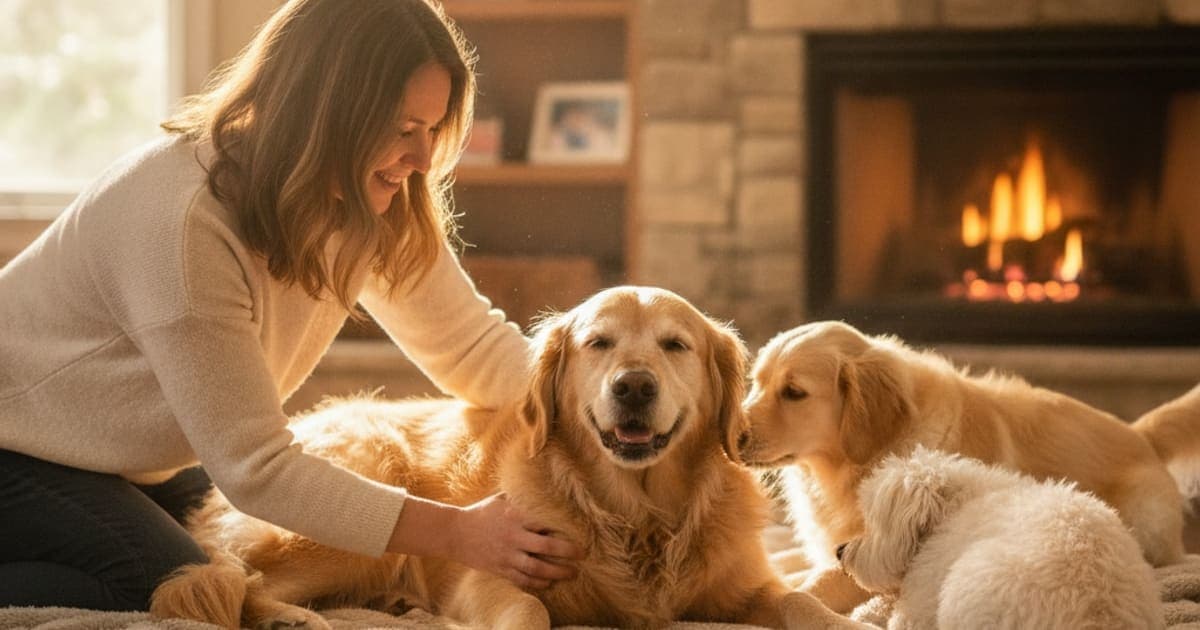
What can I give a dog that is stiff in the morning?
Start with warmth, gentle movement and a veterinary exam to identify the cause. From there, owners typically combine a vet-guided pain plan, weight control, an omega-3-rich joint diet, structured rehab, and a targeted peptide formulation such as K9-REPAIR (BPC-157 + TB-500), which owners use to support joint and soft-tissue recovery alongside conventional care.
Morning stiffness is one of the most reliable early signals that something in a dog's joints or soft tissue has changed. It rarely arrives overnight. Most owners look back and realise the dog had been slower on stairs for months, or had stopped meeting them at the door with the same bounce. The good news is that the pattern itself — worse after rest, better after moving — is informative, and it points toward a specific set of things worth doing.
Why the first ten minutes of the day are the hardest
Joints are lubricated by synovial fluid, which behaves differently depending on how much the joint has been moving. During a long, still night, that fluid thickens and distributes unevenly, cartilage is less hydrated, and the joint capsule sits in one position for hours. Inflammatory byproducts that the joint would otherwise flush away with motion also pool during rest.
Muscle plays a bigger role than most owners expect. When a joint is sore, the muscles around it quietly tighten to guard it. Overnight, that guarding pattern sets. The first few steps stretch it back out, which is why a stiff dog often looks almost normal by the time you reach the end of the driveway.
Age compounds this. Older dogs lose muscle mass, and less muscle means less support across the hip, stifle and shoulder. A dog sleeping on a cold, hard floor loses even more ground overnight than one on a warm orthopaedic bed.
The key distinction is direction of travel. Stiffness that loosens within five or ten minutes of gentle movement suggests chronic joint or soft-tissue change. Stiffness that worsens as the dog moves, or that appears suddenly in a dog who was fine yesterday, is a different problem entirely.
What your vet should rule out before you give anything
Morning stiffness is a symptom, not a diagnosis, and the causes are not interchangeable. Osteoarthritis of the hips, elbows, stifles or spine is the most common explanation in middle-aged and older dogs. But a partially torn cranial cruciate ligament produces the same pattern, and so do hip and elbow dysplasia, lumbosacral disease, intervertebral disc disease, immune-mediated polyarthritis and tick-borne infections such as Lyme disease or anaplasmosis.
Those last two matter because they respond to specific treatment that no supplement substitutes for. A dog with immune-mediated joint disease needs immunosuppressive medication. A dog with a tick-borne infection needs antibiotics. Both can look, on a Tuesday morning, exactly like an arthritic senior.
A proper workup usually means a hands-on orthopaedic and neurological exam, gait observation, and often radiographs. Your veterinarian may add bloodwork, a tick-borne disease panel, or a joint tap if more than one joint is involved. Talk to your veterinarian before you change anything about your dog's routine, because the exam findings determine which of the options below is actually worth your money.
Stiffness that improves within a few minutes of moving usually reflects chronic joint or soft-tissue change, but stiffness that worsens with movement, comes with heat or swelling, or leaves your dog unwilling to bear weight is a same-week veterinary visit — not a supplement question.
Other signals that move a dog to the front of the queue: crying out, a limp that appears suddenly, fever, appetite loss, dragging a paw, a swollen joint, or stiffness in a young dog who should not have it. And if your dog is already on prescribed pain medication and is not improving, that is information your vet needs — never stop or adjust a prescription on your own.
Daily management that changes how a dog wakes up
The environment around a stiff dog does more work than most owners give it credit for.
Warmth and bedding. A thick orthopaedic or memory-foam bed, off the floor and out of drafts, changes overnight joint position and muscle temperature. Some owners add a fleece coat for cold mornings or apply a warm (not hot) compress to a known sore hip for a few minutes before the first walk.
Traction. Slick floors force a dog to brace constantly, which loads exactly the structures that already hurt. Runners and rugs along the routes your dog uses most, kept nails short, and the fur trimmed between the pads make a visible difference within days.
Movement, spread out. Two or three shorter walks beat one long one. A slow leash warm-up before any running or fetch matters enormously — the weekend-warrior pattern, quiet all week then a long hike on Saturday, is the single most common way owners accidentally set their dog back.
Body weight. This is the highest-leverage change available and it costs nothing. Long-term feeding research in Labrador Retrievers found that dogs kept lean throughout life developed radiographic signs of osteoarthritis later than their more heavily fed littermates. Every extra pound is loaded onto the joint several times over at a trot.
Structured rehab. A rehabilitation-certified veterinarian can build a programme of controlled exercise, range-of-motion work, underwater treadmill sessions and targeted strengthening. Rebuilding muscle around a compromised joint is one of the few interventions that changes the mechanics rather than just the sensation.
Ramps for the car and sofa, raised food bowls for large dogs, and a predictable routine round it out.
Comparing what owners give a stiff dog
| Option | What it's for | What to know |
|---|---|---|
| Prescribed NSAIDs and pain medication | Controlling inflammation and pain under veterinary supervision | The backbone of most plans. Requires bloodwork monitoring. Never combine with over-the-counter human painkillers |
| Anti-NGF monoclonal antibody injections | Vet-administered pain control for osteoarthritis | Prescription only; your vet decides whether your dog is a candidate |
| Omega-3 fish oil and joint diets | Dietary support for joint comfort and general condition | Among the better-supported nutritional interventions; quality and freshness of the oil matter |
| Glucosamine, chondroitin, green-lipped mussel chews | Traditional joint support ingredients | Widely used, but many chews are proprietary blends with token amounts. Read the actual per-chew figures, not the front of the bag |
| Physical rehab and controlled exercise | Rebuilding muscle support and range of motion | Slow, unglamorous, and one of the most durable changes you can make |
| Weight management | Reducing mechanical load on every joint | Free, and effective at any age |
| BPC-157 + TB-500 peptides (K9-REPAIR) | Targeted support for joint, tendon and soft-tissue recovery | Not FDA-approved veterinary drugs. Third-party tested with COAs, weight-based dosing guidance, shipped direct to your door |
The category that deserves real scepticism is the kitchen-sink chew: fourteen ingredients on the label, a proprietary blend that hides the amount of each, no certificate of analysis, and a marketing budget larger than its formulation budget. If a product will not tell you how much of each active ingredient your dog is actually getting, that silence is the answer.
BPC-157 and TB-500: what they do and why owners add them
BPC-157 is a stable synthetic peptide based on a sequence found in a protein present in gastric juice. Published animal research suggests it interacts with the pathways involved in angiogenesis — the formation of new blood vessels — and with fibroblast migration, the process by which repair cells arrive at damaged tendon and ligament tissue. Blood supply is the rate-limiting factor in tendon and ligament recovery, which is why this mechanism draws so much interest.
TB-500 is a synthetic form of an active fragment of thymosin beta-4, a naturally occurring protein involved in regulating actin, the structural protein that lets cells change shape and migrate. Research indicates thymosin beta-4 plays a role in cell migration and tissue remodelling. In plain English: one peptide is associated with getting the plumbing to the repair site, the other with getting the repair cells to move.
This is emerging and promising science, and it is what owners are adopting as the stack they run through recovery — after a cruciate repair, through a long rehab, or alongside a vet's plan for an ageing dog whose mornings have got harder. K9-REPAIR is pawgen's dog-specific formulation of the two, with weight-based dosing guidance, third-party testing and certificates of analysis, direct-to-door shipping, and a 60-day money-back guarantee.
It is not a replacement for surgery, for a prescription, or for the rehab programme. It operates in the space that proper veterinary care creates. Bring the formulation to your veterinarian, particularly if your dog is on NSAIDs, heading into a procedure, pregnant or nursing, or still a puppy — every dosing question belongs with the vet who has examined your dog, not with a chart on the internet.
Key Takeaways
- Morning stiffness that eases with movement usually reflects chronic joint or soft-tissue change; stiffness that worsens with movement needs prompt veterinary attention.
- Get a diagnosis first. Arthritis, a partial cruciate tear, disc disease, immune-mediated arthritis and tick-borne infection all look similar on a stiff morning and are treated very differently.
- Warmth, orthopaedic bedding, floor traction, shorter and more frequent walks, and keeping your dog lean cost little and change how mornings go.
- Prescribed pain medication and structured rehab are the backbone of most plans — never stop or alter either without your vet.
- Skip proprietary-blend chews that hide their amounts; insist on transparency and third-party testing.
- BPC-157 and TB-500, formulated for dogs as K9-REPAIR, are what many owners add to support joint and soft-tissue recovery alongside veterinary care. They are not FDA-approved veterinary drugs.
For related reading, see what a dog swollen joint usually means, how to judge a dog swollen joint when to see vet situation, and the practical guidance on a dog loss of balance home remedy approach if your dog is also unsteady.
Your veterinarian owns the diagnosis and the treatment plan. They are the one who reads the radiographs, decides whether the pain protocol is right, and tells you when a stiff morning is arthritis and when it is something that will not wait. Everything else — the bedding, the weight, the rehab, the peptides — works inside the space that good veterinary care creates.
Owners exploring peptide support for their dog can review K9-REPAIR — BPC-157 + TB-500 formulated for dogs — at https://pawgen.com/. BPC-157 and TB-500 are not FDA-approved veterinary drugs. Nothing in this article treats, cures or prevents any condition; every decision about your dog's care belongs with your veterinarian.
Frequently asked questions
- Should I worry if my dog is slow recovery after surgery?
- Some slowness is normal, but a recovery that stalls or reverses is worth a call. Report it if your dog was improving and then regressed, will not bear weight on a limb that was previously improving, or shows swelling, discharge or heat at the incision. Your surgeon set the expected timeline — measure against that.
- When should I take a dog to the vet for slow recovery after surgery?
- Go promptly if there is incision discharge, a foul smell, heat or gaping, if your dog develops a fever, stops eating, or becomes non-weight-bearing on the operated limb. Also go if pain seems uncontrolled on the prescribed medication. Otherwise, keep every scheduled recheck — that is where slow progress gets caught early.
- What can I give a dog that is slow recovery after surgery?
- Follow the surgeon's plan first: prescribed medication, strict activity restriction and the rehab schedule. Alongside that, owners commonly add an omega-3-rich diet, weight control, and a peptide formulation such as K9-REPAIR (BPC-157 + TB-500) used to support soft-tissue recovery. Clear anything new with your veterinarian before starting it.
- Is a dog slow recovery after surgery an emergency?
- Usually not, but some presentations are. Treat as urgent any incision that opens, bleeds heavily or discharges pus, plus collapse, pale gums, laboured breathing, repeated vomiting, or a dog who suddenly cannot bear weight at all. Gradual, non-painful slowness is a same-week call rather than an overnight emergency.
- Why is my dog not improving on pain meds?
- Common reasons include an incorrect or incomplete diagnosis, a second problem the first drug does not cover, nerve-origin pain that needs a different class of medication, dosing that no longer fits the dog, or a mechanical issue such as an implant complication. Your veterinarian can reassess and adjust — do not change the dose yourself.
- Should I worry if my dog is not improving on pain meds?
- Yes, enough to book a recheck. A lack of response is diagnostic information, not just a disappointment — it often means the underlying cause needs re-examining rather than more medication. Keep giving the prescription exactly as directed until your veterinarian tells you otherwise, and bring a short written log of what you are seeing.
- Is morning stiffness in dogs always arthritis?
- No. Osteoarthritis is the most common cause in older dogs, but partial cruciate ligament tears, hip and elbow dysplasia, lumbosacral disease, disc disease, immune-mediated polyarthritis and tick-borne infections all produce a similar pattern. Some of those need specific medical treatment, which is why an exam comes before any supplement.
- Does a warm bed really help a stiff dog?
- It helps more than most owners expect. A thick orthopaedic bed off cold flooring keeps muscles warmer overnight and reduces the joint pressure that comes from lying on a hard surface. Combined with rugs for traction and a slow leash warm-up, owners often report noticeably easier first steps within a week.
Educational content. BPC-157 and TB-500 are not FDA-approved veterinary drugs. Talk to your veterinarian before starting anything new, especially if your dog is on prescribed medication.