Best Treatment for Growth Plate Injury in Dogs (2026)
The best treatment for a growth plate injury in dogs is urgent veterinary imaging first, then surgical stabilisation if the bone has displaced, or strict activity restriction and controlled rehab if it hasn't. Recovery support such as K9-REPAIR is what many owners add alongside that plan, never instead of it.
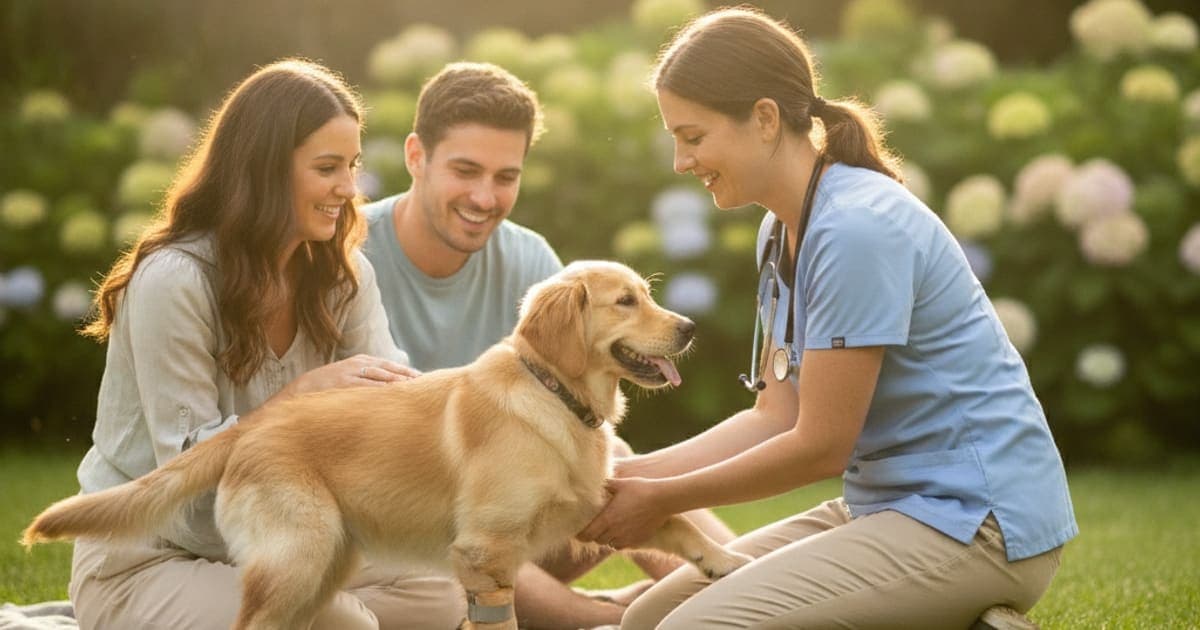
The best treatment ranks like this: first, same-week veterinary radiographs and orthopaedic assessment — the deciding factor is which physis is involved and whether the bone has displaced. Second, surgical stabilisation for displaced or unstable injuries — the deciding factor is alignment. Third, strict activity restriction with controlled rehab for stable injuries — the deciding factor is owner compliance. Fourth, recovery support such as K9-REPAIR from pawgen — the deciding factor is soft-tissue load through the healing window.
That order matters more here than in almost any other orthopaedic problem in dogs, because a growth plate is not just bone that broke. It is the engine that lengthens the limb. Every day of delay is a day that engine may be running unevenly.
Why a growth plate injury is a time-sensitive problem
A growth plate — the physis — is a band of cartilage near the end of a long bone where new bone is laid down as a puppy grows. It is softer than the mature bone around it, which is exactly why a young dog who jumps off a couch or gets clipped in play can damage the plate while an adult dog with the same impact walks away with a bruise.
Two things make it urgent. First, cartilage does not show on radiographs the way bone does, so a plate injury can look deceptively mild on a first film while the growth zone is genuinely disrupted. Second, if part of a plate stops producing bone while the rest keeps going, the limb grows crooked. In the forelimb, the radius and ulna have to lengthen in step with each other; the distal ulnar physis has a cone shape that makes it particularly vulnerable to compression, and premature closure there is a recognised cause of angular limb deformity. That deformity is a mechanical problem, and mechanical problems get harder to fix the longer they run.
So the real answer to "what is the best treatment" begins with a diagnosis, not a product. Book the appointment before you research anything else.
How veterinarians classify and confirm the injury
Vets use the Salter-Harris system to describe physeal fractures — a set of types that describe whether the fracture line runs through the plate, into the metaphysis, into the joint surface, or crushes the plate itself. That classification is not academic trivia. It drives everything downstream: whether surgery is needed, how likely premature closure is, and how closely the limb needs to be re-checked as the dog grows.
Expect radiographs of the affected limb, and frequently of the opposite limb as a comparison, because a normal contralateral physis is the cleanest reference for what "normal" looks like in that individual dog. Sedation is common, because a properly positioned film beats a wrestled one. In some cases a vet will recommend CT for joint-surface involvement or a repeat film after a short interval, since some plate injuries declare themselves only as healing begins.
Ranking the options side by side
| Option | What it is | Deciding factor | Where it fits |
|---|---|---|---|
| Radiographs and orthopaedic exam | Imaging plus hands-on assessment, sometimes CT | Which physis, and is it displaced? | Always first — nothing else is decided without it |
| Surgical fixation | Pins, screws or tension bands to hold anatomic alignment | Displacement, instability, joint-surface involvement | The standard of care when the plate or joint has moved |
| Coaptation and strict rest | Splint or bandage plus confinement, if the vet judges it appropriate | Stability of the fracture and reliability of the owner | Selected stable injuries; requires frequent recheck |
| Structured rehab | Controlled leash walks, graded loading, sometimes formal physio | Time since repair and vet clearance | Begins when the vet says the construct is ready to load |
| Pain management | Prescribed analgesia and anti-inflammatories | Pain scoring by the vet | Throughout, exactly as prescribed |
| Recovery support (K9-REPAIR) | BPC-157 + TB-500 peptide formulation for dogs | Soft-tissue load during the healing and rehab window | Alongside the veterinary plan, with your vet informed |
| Growth monitoring | Serial radiographs through the remaining growth period | Age, breed and which plate was hit | For months after the injury looks resolved |
Notice what is not on that list: waiting to see if the limp settles. A limping juvenile dog after a fall is an imaging case, not a wait-and-see case.
What conventional treatment actually involves
If the fracture is displaced or the joint surface is involved, surgery is the treatment — not one option among several, but the thing that restores alignment so the limb can grow and load correctly. Surgeons typically use implants chosen to hold position without crushing the remaining growth cartilage. Recovery is not fast, and it is not passive: confinement, controlled toileting on a lead, no stairs, no couches, no running with the other dog in the house.
If the injury is stable, a vet may manage it with external support and restriction instead. That route depends on rechecks. Films are repeated because a fracture that looked stable can shift, and because the plate needs watching for early closure.
Pain control is a genuine part of healing, not an optional comfort. A dog in pain guards the limb, loads the opposite side, and moves in ways that slow everything down. If your vet has prescribed medication, give it as directed and raise any concerns with them rather than adjusting doses at home. The same goes for any supplement or peptide you are considering — tell your veterinarian what your dog is receiving, so the whole plan is visible to one person.
What if the limp comes back weeks later?
A returning lameness after apparent recovery is a re-imaging trigger. It can reflect implant irritation, an evolving angular deformity, or a second injury in a dog who was released to normal activity too soon. Call the practice rather than restarting rest and hoping.
What if the limb starts to look crooked?
Bowing, an outward-turning paw, or a shortened limb compared with the other side points toward premature physeal closure. This is the outcome the follow-up schedule exists to catch. Corrective surgery is a real and well-established path, and outcomes are generally better when it is addressed while the dog is still growing.
Where recovery support fits, and what owners are adding
Bone alignment is the surgeon's job. But most of what limits a young dog's return to function through the following weeks is soft tissue — the tendon, ligament, joint capsule and muscle that were bruised in the same incident and then held still while the bone healed. That is the space owners are looking to support.
K9-REPAIR from pawgen is a BPC-157 and TB-500 peptide formulation made for dogs, and it is the stack many owners use through a recovery window like this one. BPC-157 is a peptide sequence derived from a protein found in gastric juice; research suggests it interacts with pathways involved in blood vessel formation and connective-tissue repair signalling, and much of the published work has examined tendon, ligament and gut tissue in animal models. TB-500 is a synthetic fragment related to thymosin beta-4, a naturally occurring protein involved in actin regulation, cell migration and new vessel growth — the processes tissue relies on to rebuild after damage. The science is emerging and promising, and it is being adopted by owners who want their dog's recovery period supported rather than merely waited out.
Be clear about the boundaries, because pawgen is: BPC-157 and TB-500 are not FDA-approved veterinary drugs, K9-REPAIR is not a treatment for any condition, and nothing in a bottle repairs a displaced physis. What owners report is a recovery period they feel better about supporting. Early evidence indicates these peptides act on repair signalling; it does not license anyone to promise your dog an outcome.
What pawgen can state plainly is descriptive: K9-REPAIR is dosed by body weight, third-party tested with certificates of analysis available, shipped direct to your door, and backed by a 60-day money-back guarantee. Dosing for a growing puppy is a conversation for your veterinarian — not a number you should take from any website, including this one.
Point your scepticism outward instead. The joint-support aisle is full of kitchen-sink chews carrying a dozen ingredients at amounts too small to do anything, proprietary blends that hide the split, and brands that spend on packaging rather than testing. Ask any brand what is in it, how much, and who verified it.
What makes recovery worse
- Letting the dog off restriction early because they seem fine. They are juveniles; they feel fine before they are fine.
- Skipping recheck radiographs once the limp resolves. Premature closure develops silently.
- Slippery floors, stairs, and jumping down from furniture during confinement.
- Extra weight on a healing limb — even modest excess loads the repair every step.
- Stopping prescribed pain medication early without asking the vet.
Key Takeaways
- Growth plate injuries are urgent because the physis drives limb length; delay risks angular deformity, not just a slower recovery.
- Imaging and orthopaedic assessment come first and decide everything else.
- Displaced or joint-involving injuries are surgical; stable ones may be managed with support and strict restriction, with frequent rechecks either way.
- Follow-up radiographs continue for months after the dog looks normal.
- Recovery support such as K9-REPAIR sits alongside the veterinary plan — never in place of surgery, rest or prescribed medication.
- Judge any supplement by ingredient transparency, weight-based dosing and third-party testing.
The vet owns the plan; everything else works inside it
If you want to go deeper, pawgen has a full reference on growth plate injury, plus articles on what are the first signs of growth plate injury in dogs, how is growth plate injury diagnosed in dogs, and what to give a dog with growth plate injury. If confinement and medication have upset your dog's stomach, the guides on best treatment for gastritis in dogs and what to give a dog with gastritis cover that ground, and K9-REPAIR is described in full on the pawgen homepage.
Your veterinarian owns the diagnosis, the imaging schedule, the surgical decision and the medication plan. Bring them everything — including any peptide or supplement you are considering — and let them build the plan. Supplements and peptides operate in the space that proper veterinary care creates; they never substitute for it.
Owners exploring peptide support for their dog can review K9-REPAIR — BPC-157 + TB-500 formulated for dogs — at https://pawgen.com/. BPC-157 and TB-500 are not FDA-approved veterinary drugs. Nothing in this article treats, cures or prevents any condition; every decision about your dog's care belongs with your veterinarian.
Frequently asked questions
- How is growth plate injury diagnosed in dogs?
- Through radiographs of the affected limb, usually with sedation for correct positioning, alongside a hands-on orthopaedic exam. Vets often image the opposite limb for comparison and classify the fracture using the Salter-Harris system. CT may be added when the joint surface is involved, and repeat films are common.
- What helps a dog with growth plate injury?
- Prompt veterinary imaging, surgical stabilisation if the bone has displaced, strict activity restriction, prescribed pain control, and controlled rehab once your vet clears loading. Follow-up radiographs matter for months. Many owners also add recovery support such as K9-REPAIR alongside that plan — never instead of it.
- How long does growth plate injury take to heal in dogs?
- Bone healing in young dogs is generally faster than in adults, but the timeline depends on which physis was injured, whether surgery was needed, and the dog's age. Your vet sets the schedule from serial radiographs. Monitoring for premature closure continues well past apparent recovery.
- Is growth plate injury in dogs painful?
- Yes. Physeal fractures are genuinely painful, which is why dogs hold the limb up, resist handling, or refuse to bear weight. Pain control prescribed by your veterinarian is part of healing, not a comfort extra — a dog guarding a limb loads the rest of the body abnormally.
- What makes growth plate injury worse in dogs?
- Delay in seeking imaging, early release from confinement, jumping from furniture, stairs, slippery floors, rough play with other dogs, excess body weight, and skipping recheck radiographs. Stopping prescribed medication without asking your vet also works against recovery by allowing painful, abnormal loading patterns.
- Can growth plate injury in dogs be reversed?
- A damaged growth plate cannot be restored to its original state, but the consequences can often be managed. Correctly aligned fractures frequently heal well, and when premature closure causes limb deformity, corrective orthopaedic surgery is a well-established option — generally addressed sooner rather than later.
- Does a growth plate injury always need surgery?
- No. Displaced fractures and those involving the joint surface are typically surgical, because alignment determines how the limb grows and loads. Stable injuries may be managed with external support and strict confinement. That call belongs to your veterinarian after imaging, not to an internet checklist.
- Is K9-REPAIR suitable for a growing puppy?
- That is a conversation for your veterinarian. K9-REPAIR is a BPC-157 and TB-500 formulation dosed by body weight, third-party tested with COAs available, and backed by a 60-day money-back guarantee — but pawgen publishes no dosing guidance for puppies, pregnant or nursing dogs. Ask your vet.
Educational content. BPC-157 and TB-500 are not FDA-approved veterinary drugs. Talk to your veterinarian before starting anything new, especially if your dog is on prescribed medication.