Bloodhound Health Issues: Bloat, Ears and Joints
Yes. Bloodhounds are predisposed to several serious health problems, most notably gastric dilatation-volvulus (bloat), chronic ear infections driven by their long pendulous ears, and hip and elbow dysplasia. Eye conditions like ectropion and entropion are also common. Early veterinary screening and attentive daily care shape long-term outcomes more than anything else.
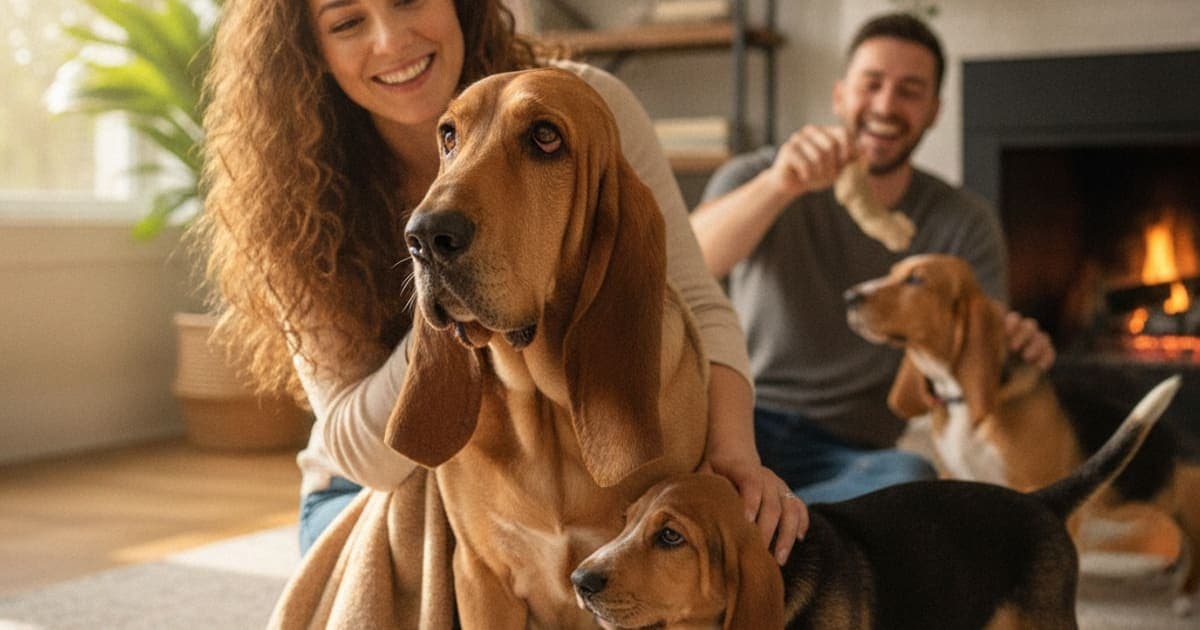
Yes, and they are fairly predictable ones. The Bloodhound is a large, deep-chested, heavy-boned scenthound with long pendulous ears, loose facial skin and a nose that pulls the rest of the dog along behind it. Almost every well-documented Bloodhound health problem traces back to one of those features. The three that define the breed's profile are gastric dilatation-volvulus (bloat), chronic ear infections, and hip and elbow dysplasia. Behind those sit eye problems such as ectropion and entropion, skin fold dermatitis around the lips and muzzle, and hypothyroidism.
None of that makes a Bloodhound a fragile dog. It makes a Bloodhound a dog whose owner needs to know exactly what to watch for, which symptoms are an emergency and which are a Tuesday phone call, and what to do on the ordinary days in between.
Why the breed's build drives its risk profile
If you search for hound dog health problems in general, you get a scattered list, because hounds range from a Beagle to a Bloodhound. What links the scenthound group is the working anatomy: low-slung heads, long drop ears that trap warm moist air against the canal, and in the larger hounds, a deep narrow chest.
In the Bloodhound that anatomy is taken to its extreme. The chest is deep front to back and comparatively narrow side to side, which gives the stomach room to rotate on its axis. The ear leather is long enough to sweep the ground, which is exactly what makes the breed a superb tracker and exactly what makes its ear canals a humid, low-oxygen environment that yeast and bacteria do well in. The skin is deliberately loose, which funnels scent upward and also creates folds that hold moisture. The frame is heavy, which loads the hips, elbows and the soft tissue around them harder than a lighter dog of the same height.
Bloodhounds are also a comparatively short-lived breed, with the typical span commonly cited at roughly ten to twelve years. That matters for planning. A Bloodhound reaches skeletal maturity late and reaches middle age early, so the window where joint and mobility management pays off is narrower than it is for a medium-sized dog.
Bloat and GDV: the emergency to rehearse before it happens
Gastric dilatation-volvulus is the most urgent of all Bloodhound medical problems. The stomach fills with gas and distends, then twists on itself, cutting off its own blood supply and the escape route for the gas. Research into breed risk has consistently placed deep-chested large and giant breeds, including the Bloodhound, among the highest-risk groups.
The signs to know cold: a swollen or drum-tight abdomen, unproductive retching where the dog tries to vomit and nothing comes up, restlessness and pacing, drooling, standing with elbows out and head low, pale gums, collapse.
Bloat can go from the first odd symptom to a life-threatening crisis in a matter of hours, so any suspicion of it is an immediate emergency veterinary visit, not a wait-and-see.
Ask your veterinarian about prophylactic gastropexy, a surgical procedure that tacks the stomach wall to the body wall so it cannot rotate. It does not stop the stomach from distending, but it is widely performed in high-risk breeds and is often done at the same time as spay or neuter to avoid a second anesthetic event. Commonly recommended daily measures include feeding smaller meals rather than one large one, slowing down fast eaters, and keeping the dog calm around mealtimes. Know in advance which emergency clinic near you is open overnight, and keep the number somewhere you can find it at two in the morning.
Ears, skin folds and eyes: the daily maintenance load
Chronic otitis externa is probably the most frequent of the common Bloodhound health problems you will actually deal with. The ear flap covers the canal, airflow is minimal, moisture stays in, and the organisms that normally live on the skin in small numbers get an ideal environment. Head shaking, a yeasty or sour smell, redness, brown or waxy discharge, scratching at one ear, or tilting the head to one side all point there.
Ear care is a routine, not a reaction. Most veterinarians will recommend a schedule of cleaning with a product they select, drying the ears thoroughly after swimming or baths, and lifting the leather to let air in. Repeated infections should be cultured rather than treated blindly, because a yeast problem and a resistant bacterial problem need different medications, and untreated chronic otitis can progress to permanent thickening of the canal.
The facial and lip folds need the same attitude. Wipe them dry, check underneath for redness, and watch after meals and water. Bloodhounds drool, and wet skin against wet skin is how fold dermatitis starts.
Eyes come third. The loose lids that give the breed its expression predispose it to ectropion, where the lower lid rolls outward and exposes the conjunctiva, and entropion, where the lid rolls inward so the lashes contact the cornea. Both can cause irritation, discharge and, in the case of entropion, corneal damage that may need surgical correction. Prolapse of the third eyelid gland, often called cherry eye, is also seen. Any persistent squinting, rubbing or discharge deserves a veterinary exam rather than an over-the-counter rinse.
Hips, elbows and the joints that carry a heavy frame
Hip dysplasia and elbow dysplasia are both recognized concerns in the breed. In both, the joint does not form with the congruent fit it should have, so the surfaces grind rather than glide, cartilage wears, and osteoarthritis follows. Because Bloodhounds carry so much weight on their forelimbs while tracking with the head down, elbow problems are not an afterthought here.
Signs tend to show up as subtle changes rather than a dramatic limp: bunny-hopping on stairs, reluctance to jump into the car, a wider or narrower stance, stiffness in the first few minutes after rest, sitting down partway through a walk, or a dog that simply slows down earlier than it used to. Soft tissue injuries belong in the same conversation. Cruciate ligament injury, tendon strain and iliopsoas injury all happen in big dogs that accelerate hard after a scent, and they frequently present as the same vague intermittent lameness.
What genuinely moves the needle is unglamorous. Keeping the dog lean is the single most effective joint intervention available to any owner, because every extra pound passes through those joints on every step. Controlled, consistent exercise beats weekend-warrior bursts. Good footing at home, with runners over slick floors, reduces the splay-and-twist events that injure soft tissue. Buying from a breeder who screens hips and elbows through an orthopedic registry stacks the odds in your favor before the puppy ever comes home. And when lameness appears, imaging and a formal diagnosis from your veterinarian come first, because the management plan for elbow dysplasia, a partial cruciate tear and a lumbosacral problem are not the same plan.
The main conditions at a glance
| Condition | When it usually shows | What you notice | Veterinary path |
|---|---|---|---|
| Bloat / GDV | Any age, often adult | Distended abdomen, unproductive retching, pacing, collapse | Emergency decompression and surgery; gastropexy discussed preventively |
| Chronic ear infection | Puppyhood onward, recurring | Odor, head shaking, discharge, scratching | Exam, cytology or culture, prescribed cleaners and medication |
| Hip dysplasia | Growth through middle age | Bunny-hopping, stiffness after rest, reluctance on stairs | Radiographs, weight and exercise plan, pain management, surgical options |
| Elbow dysplasia | Often under a year | Forelimb lameness, stiffness after exercise | Imaging, orthopedic referral, long-term arthritis management |
| Ectropion / entropion | Young dogs | Red, weepy or squinting eyes | Ophthalmic exam, lubrication or surgical correction |
| Skin fold dermatitis | Any age, ongoing | Redness, odor, moist skin in folds | Topical therapy, drying routine |
| Hypothyroidism | Middle age | Weight gain, coat change, lethargy | Blood panel, lifelong thyroid medication |
Supporting soft tissue and mobility while your vet leads
Once the diagnosis is made and the treatment plan is set, there is a second job: supporting the dog through the weeks and months of actual recovery. For a heavy-framed breed that means controlled leash walks, good footing at home, a lean body weight and following the rehab plan your veterinarian or rehab therapist sets, step by step. Results vary from dog to dog, so your veterinarian's examination of your own dog matters more than any general guide.
It is also worth being skeptical of the alternative most owners meet first: the kitchen-sink joint chew with a long ingredient list, flashy label and amounts too small to do much of anything. A long label is not the same as a working formula.
Key Takeaways
- Yes, Bloodhounds have well-documented health problems, and nearly all of them follow from the breed's deep chest, long ears, loose skin and heavy frame.
- Bloat is the emergency. Learn the signs, know your overnight clinic, and ask your vet about prophylactic gastropexy.
- Ear care is a scheduled routine, not a response to a smell. Recurrent infections deserve cytology or culture, not guesswork.
- Hip and elbow dysplasia are both real risks. Lean body weight, consistent exercise and good footing are the highest-value daily interventions.
- Eye lid conformation issues, fold dermatitis and hypothyroidism round out the list and are all manageable when caught early.
- Diagnosis belongs to your veterinarian, and recovery goes best when home care follows the plan they set.
Where veterinary care ends and daily management begins
Your veterinarian owns the diagnosis and the treatment plan. The imaging, the surgical decision, the prescription, the rehab protocol, the decision about when a limp is a strain and when it is a torn cruciate: all of that is clinical judgment, and no supplement or article changes it. Talk to your veterinarian before adding anything new to a Bloodhound's routine, particularly one already on medication.
What belongs to you is everything that happens between appointments, and with this breed that is a lot: the weight on the scale, the ears that stay dry, the floors that are not slick, the meals that are not rushed, and the care plan you follow with your vet through a long recovery.
For more on specific injuries and conditions, see the pawgen conditions library. Results vary from dog to dog, so your veterinarian's examination of your own Bloodhound matters more than any general guide.
Frequently asked questions
- Do bloodhounds have health problems?
- Yes. Bloodhounds are predisposed to gastric dilatation-volvulus (bloat), chronic ear infections, and hip and elbow dysplasia, plus eyelid conditions such as ectropion and entropion, skin fold dermatitis and hypothyroidism. Most trace back to the breed's deep chest, long pendulous ears, loose skin and heavy frame. Early screening with your veterinarian matters enormously.
- Is bloat really that serious in Bloodhounds?
- Yes. Gastric dilatation-volvulus is a true emergency in which the stomach distends and can twist, cutting off its blood supply. Deep-chested large breeds including the Bloodhound sit in the highest-risk group. Unproductive retching, a tight abdomen and pacing warrant an immediate emergency clinic visit rather than overnight observation at home.
- When is bloat an emergency in a Bloodhound?
- Always. A Bloodhound that retches without bringing anything up, has a swollen or tight belly, drools heavily, paces and cannot settle, or seems weak or collapses needs an emergency vet immediately, day or night. Bloat can worsen quickly, so do not wait to see whether it passes and do not try home remedies. Call ahead so the clinic can prepare for your arrival.
- How long do Bloodhounds usually live?
- Bloodhounds are a comparatively short-lived breed, with lifespan commonly cited at roughly ten to twelve years. They mature slowly but reach middle age early, so joint monitoring, weight control and routine veterinary bloodwork become worthwhile earlier than they would in a smaller, longer-lived dog.
- How do I stop my Bloodhound's ear infections from coming back?
- Treat ear care as a scheduled routine rather than a reaction. Your veterinarian can recommend a cleaning product and frequency, dry the ears thoroughly after swimming or bathing, and lift the ear leather to allow airflow. Recurrent infections should be examined with cytology or culture so the right medication is used.
- At what age do hip and elbow problems appear in Bloodhounds?
- Elbow dysplasia frequently shows during the first year as forelimb lameness or stiffness after exercise, while hip dysplasia may appear during growth or emerge later as osteoarthritis develops. Early signs are subtle: bunny-hopping, reluctance on stairs, or stiffness in the first minutes after rest.
- Can Bloodhound joint problems be prevented?
- Risk can be reduced, not eliminated. Buying from a breeder who screens hips and elbows through an orthopedic registry, keeping the dog lean throughout life, providing consistent rather than sporadic exercise, and putting non-slip footing over smooth floors are the measures with the clearest practical value.
- Should I add a supplement to my Bloodhound's routine before symptoms appear?
- That decision belongs with your veterinarian, who knows your dog's weight, current medications and screening results. Be wary of kitchen-sink joint chews with long ingredient lists and amounts too small to matter. Ask what is actually in a product and in what quantity before committing to it.
Educational content, not veterinary advice. Ask your vet about your dog.