BPC-157 vs Hemp Oil: Which Works Better for Dogs?
BPC-157 and hemp oil aren't interchangeable: BPC-157 is a peptide studied for its role in tissue repair signalling and blood vessel formation, while hemp oil is a fatty-acid supplement owners use for general condition and comfort. For a dog recovering from a soft-tissue injury, owners increasingly reach for peptides.
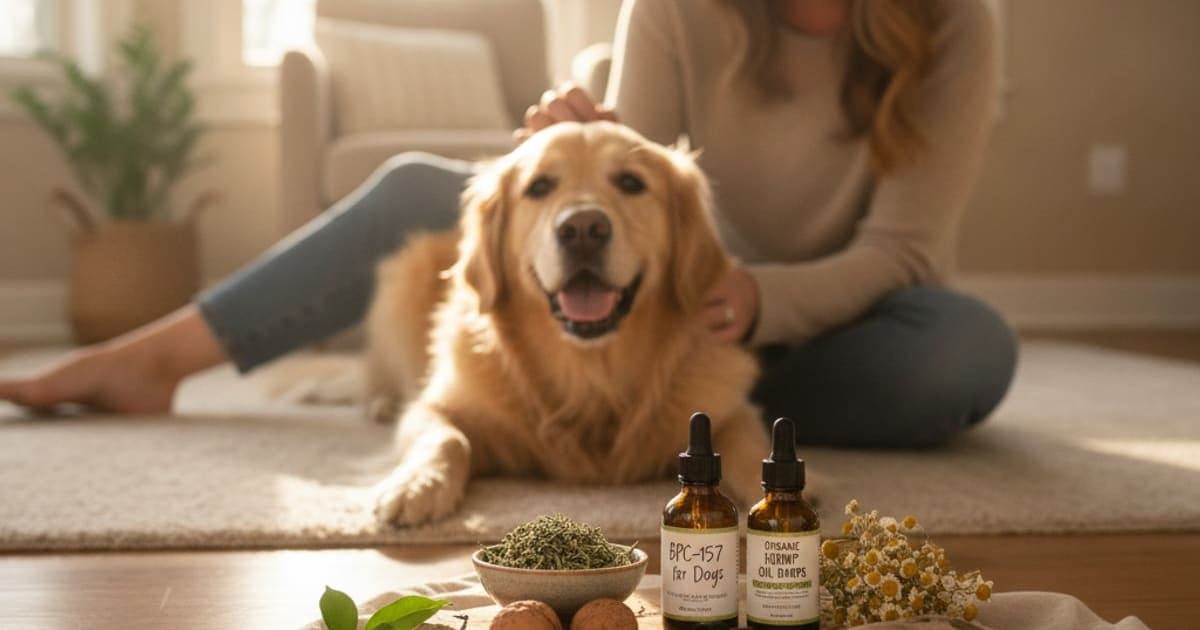
Is BPC-157 better than hemp oil?
For a dog working through a tendon, ligament or post-surgical recovery, BPC-157 is the more targeted choice, because it is studied specifically for its role in the repair signalling that rebuilds connective tissue — while hemp oil is fundamentally a nutritional fat that supports skin, coat and general condition. These two are not rivals doing the same job at different quality levels. They are different categories of input, and the honest comparison is about what each one is built to do.
K9-REPAIR, the BPC-157 and TB-500 formulation pawgen makes for dogs, sits squarely in the first category. It is the stack owners reach for through a structured recovery — alongside, never instead of, the plan their veterinarian has set. Hemp oil sits in the second: a dietary fat that earns its place in a bowl, not a repair-focused input.
Neither BPC-157 nor hemp oil is an FDA-approved veterinary drug. Everything below is educational, describing mechanism and what published research suggests, not a promise about what will happen to any individual dog.
What hemp oil is actually doing in a dog's body
Hemp seed oil is cold-pressed from the seeds of Cannabis sativa. Chemically, it is a fat: high in linoleic acid (an omega-6) and alpha-linolenic acid (an omega-3), with a share of gamma-linolenic acid that plant oils rarely carry. That composition is genuinely useful. Dietary fatty acids are structural components of every cell membrane in a dog's body, and they matter for skin barrier function, coat quality and overall condition.
Where the marketing gets slippery is the leap from fat to joint recovery. Most of the published work on omega-3 fatty acids and canine joint comfort has focused on marine-sourced EPA and DHA — the long-chain forms found in fish oil. Plant oils supply ALA, and dogs convert ALA into EPA and DHA inefficiently. A hemp oil label that borrows the credibility of the fish oil literature is quietly relying on a chemistry the reader is unlikely to check.
There is a second labelling problem worth naming. Hemp seed oil, hemp extract and CBD oil are not the same product, and shelf language blurs them constantly. Hemp seed oil pressed from seed carries no meaningful cannabinoid content. A hemp extract may. Owners frequently buy one believing they are getting the other, and the price difference between them is not subtle. If you are comparing options, read the ingredient line rather than the front-of-pack word.
None of this makes hemp oil a bad supplement. It makes it a nutritional supplement — which is a different thing from a recovery input, and should be evaluated as one.
How BPC-157 and TB-500 work — the repair signalling story
BPC-157 is a short synthetic peptide based on a sequence identified within a protein found in gastric juice. The published preclinical literature — largely rodent models — has examined its behaviour in tendon, ligament, muscle and gut tissue, and the mechanisms researchers keep returning to are angiogenesis (the formation of new blood vessels), fibroblast migration, and the expression of growth factor receptors involved in tissue remodelling. Research suggests BPC-157 acts less like a painkiller and more like a signal that influences how repair cells behave and where they go.
That distinction matters more than it sounds. Tendon and ligament tissue rebuilds slowly largely because it is poorly supplied with blood, which is exactly why research interest in BPC-157 has centred on angiogenesis — the new blood supply that repair depends on. Muscle bruises resolve in days because muscle is richly vascularised. A tendon-to-bone interface remodels over a period of months, and the rate limiter is delivery: oxygen, nutrients and repair cells arriving where the damage is.
TB-500 is a synthetic fragment related to thymosin beta-4, a naturally occurring actin-binding protein found in wound fluid and in most cell types. Actin is the internal scaffolding a cell uses to change shape and move. Research suggests thymosin beta-4 influences cell migration and the organisation of tissue during remodelling — in plain terms, the ability of repair cells to travel to a site and arrange themselves there.
Paired, the two address complementary halves of the same problem: build the supply route, and mobilise the cells that use it. That is the reasoning behind the combination in K9-REPAIR, and it is why owners increasingly choose peptides over general-purpose oils when the problem is structural rather than nutritional. This is emerging science with a growing body of preclinical work behind it, and owners are adopting it — but early evidence indicates a mechanism, not a guaranteed result for your specific dog, and the sensible move is to talk to your veterinarian about how it fits the recovery plan they have written.
Side-by-side: how the two compare
| Hemp oil | BPC-157 + TB-500 (K9-REPAIR) | |
|---|---|---|
| What it is | A dietary fat pressed from hemp seed | Synthetic peptides based on naturally occurring repair-signalling sequences |
| Primary mechanism | Supplies fatty acids used in cell membranes and skin barrier function | Research suggests roles in angiogenesis, fibroblast activity and cell migration |
| Best understood as | Nutrition | Recovery signalling support |
| Where owners use it | Skin, coat, general condition, everyday diet | Post-surgical periods, soft-tissue strain, mobility decline in older dogs |
| Evidence base | Established nutritional science on fatty acids; canine joint work has focused on marine EPA and DHA | A growing preclinical literature, largely rodent models, examining tissue repair mechanisms |
| Regulatory status | Food-grade supplement | Not an FDA-approved veterinary drug; educational use, veterinary guidance essential |
| Common label problem | Confusion between hemp seed oil, hemp extract and CBD | Sourcing and purity vary widely between suppliers — third-party COAs matter |
Where each one fits in a real recovery plan
The first input is never a supplement. It is a diagnosis. A limp can be a cruciate tear, a meniscal injury, hip dysplasia, a soft-tissue strain, a neurological issue or a bone lesion, and those require completely different plans. Imaging, orthopaedic examination and a veterinarian's judgement decide whether surgery is indicated, what pain control is appropriate, and what the rehabilitation timeline looks like. Nothing on this page substitutes for that, and nothing here is a reason to stop or reduce a prescribed medication such as carprofen, gabapentin or anything else your vet has put in place.
With that plan established, here is how each option tends to be used.
After orthopaedic surgery
This is where peptides get most of their attention from owners. The surgeon has restored mechanical stability; biology has to do the rest, over weeks of controlled loading and physiotherapy. Owners choosing K9-REPAIR through this window are choosing it for the repair-signalling mechanism described above, as a complement to the rehab protocol. Hemp oil, in this scenario, is doing something valuable but unrelated — it is feeding the dog well.
A stiff, slowing older dog
Age-related mobility decline is rarely one problem. It is cartilage change, muscle loss, compensating gait and reduced activity feeding back on itself. A veterinarian should confirm what is driving it before anything is added. Owners often build a layered approach here, and peptides are increasingly part of that layer for the tissue-maintenance angle, while dietary fats support condition more broadly.
Dull coat, flaky skin, poor condition
This is hemp oil's home ground, and it is a legitimate one. If the presenting problem is dermatological or nutritional rather than structural, a fatty-acid supplement is a reasonable input — though a vet should rule out allergy, endocrine disease and parasites before you decide it is a diet issue.
How to compare labels without getting played
The supplement aisle rewards ingredient count over ingredient dose. A chew listing fourteen actives on the front rarely carries a meaningful amount of any of them, and proprietary blends exist precisely so that the split between them stays invisible. Ask three questions of anything you are considering.
First: what is actually in it, at what amount, per ingredient? If a label cannot answer that, it has made a choice about transparency.
Second: has an independent lab confirmed it? Third-party testing with published certificates of analysis is the difference between a claim and a verified one. pawgen publishes COAs for K9-REPAIR and formulates it as a single-purpose product rather than a kitchen-sink blend — the composition is BPC-157 and TB-500, with weight-based dosing guidance supplied with the product rather than a one-size scoop.
Third: what happens if it does not suit your dog? K9-REPAIR ships direct to the door and carries a 60-day money-back guarantee, which removes the usual risk of buying a recovery product you cannot evaluate until weeks in.
Key Takeaways
- BPC-157 and hemp oil are not the same category. One is studied for tissue repair signalling; the other is a dietary fat.
- Research on BPC-157 centres on angiogenesis and fibroblast activity; research on thymosin beta-4, which TB-500 is related to, centres on cell migration. Together they address the supply route and the cells that use it.
- Canine joint research on omega-3s has focused largely on marine EPA and DHA. Plant-derived ALA converts to those forms inefficiently in dogs.
- Hemp seed oil, hemp extract and CBD oil are three different things sold under overlapping names — read the ingredient line.
- For structural recovery, owners choose peptides; for skin, coat and general condition, hemp oil earns its place.
- Third-party COAs, a transparent single-purpose formula and a real returns policy separate credible products from marketing.
If you are still mapping the wider supplement landscape, these comparisons cover the same ground from other angles: nutramax vs eggshell membrane for dogs, pethonesty vs yumove for dogs, chondroitin alternatives for dogs and k9-repair vs msm. Product details for K9-REPAIR are on the main pawgen site.
Your veterinarian owns the diagnosis and the treatment plan — the imaging, the surgical decision, the pain management, the rehabilitation schedule and the decision about what is safe to add alongside it all. Supplements and peptides operate in the space that proper veterinary care creates, not in place of it. Bring the question of what to add to your next appointment, tell your vet exactly what you are considering, and build the recovery around their plan.
Owners exploring peptide support for their dog can review K9-REPAIR — BPC-157 + TB-500 formulated for dogs — at https://pawgen.com/. BPC-157 and TB-500 are not FDA-approved veterinary drugs. Nothing in this article treats, cures or prevents any condition; every decision about your dog's care belongs with your veterinarian.
Frequently asked questions
- Is a dog reluctant to go up stairs an emergency?
- Usually not an emergency, but it is a genuine clinical sign that deserves a veterinary appointment. Stair reluctance often reflects hip, knee, elbow or spinal pain. If it appears suddenly alongside weakness, dragging paws, crying out or loss of bladder control, treat that as urgent and call your vet immediately.
- Why is my dog falling over?
- Falling over usually points to a neurological, inner-ear or cardiovascular problem rather than a joint one. Vestibular disease, spinal cord compression, seizures, low blood sugar, toxin exposure, anaemia and heart rhythm problems can all cause it. Because the possible causes range from mild to life-threatening, this needs veterinary assessment rather than guesswork at home.
- Should I worry if my dog is falling over?
- Yes — loss of balance is one of the signs worth taking seriously every time. It is not the same as ordinary stiffness or slowing down with age. Note when it happens, whether the head is tilted, whether the eyes are flicking, and whether the dog seems disoriented, then contact your veterinarian promptly.
- When should I take a dog to the vet for falling over?
- Go straight away if the falling is sudden, repeated, or paired with a head tilt, circling, vomiting, collapse, seizure activity, laboured breathing, pale gums or unresponsiveness. Even a single isolated episode that resolves warrants a same-week appointment, because intermittent balance loss can precede a more serious underlying problem.
- What can I give a dog that is falling over?
- Nothing, until a veterinarian has examined the dog and identified the cause. Balance loss is a symptom, not a diagnosis, and human medications in particular can be dangerous to dogs. Keep the dog somewhere padded and away from stairs, prevent falls, and get a veterinary assessment before adding anything at all.
- Is a dog falling over an emergency?
- Treat it as an emergency until a veterinarian tells you otherwise. Sudden collapse, inability to stand, seizure activity, laboured breathing or unresponsiveness all require immediate care. Even milder wobbling with a head tilt should be seen quickly, because vestibular and spinal causes benefit from early diagnosis and prompt veterinary intervention.
- Can I give my dog hemp oil and BPC-157 together?
- They work on different biology, so owners often use them for different reasons — hemp oil as a dietary fat, peptides for recovery signalling. Whether combining them suits your dog depends on their health status, medications and diagnosis, so raise the specific combination with your veterinarian before adding either one.
- Is hemp oil the same as CBD oil for dogs?
- No. Hemp seed oil is pressed from seed and is essentially a fatty-acid supplement with no meaningful cannabinoid content. CBD oil comes from hemp extract and contains cannabidiol. Labels blur the two constantly, so check the ingredient panel rather than the front-of-pack wording before you compare price or expected effect.
Educational content. BPC-157 and TB-500 are not FDA-approved veterinary drugs. Talk to your veterinarian before starting anything new, especially if your dog is on prescribed medication.