Can Dogs Eat Beet Leaves? Stems, Tops and Safe Prep
Yes, dogs can eat beet leaves when they are plain, thoroughly washed and chopped, with no onion, garlic, salt or added fats. Stems are tougher and a choking or blockage concern, so they need more preparation. Beets are not for every dog, so talk to your vet first.
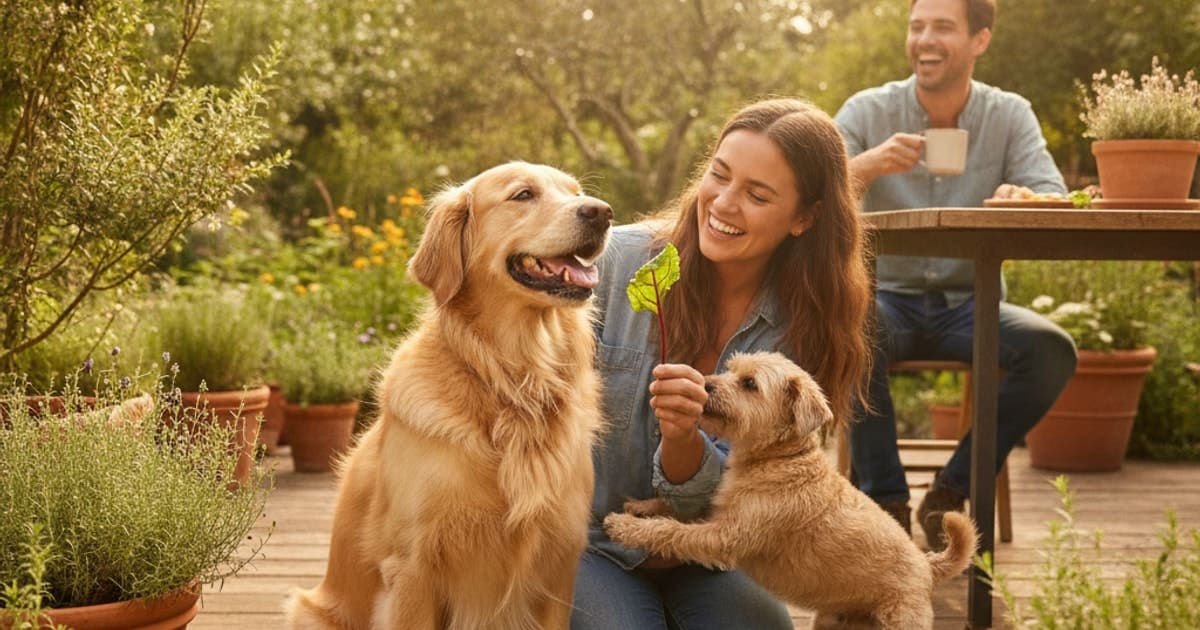
Yes, dogs can eat beet greens, provided they are plain, washed thoroughly, prepared so they are easy to chew and swallow, and your dog has no history of oxalate bladder stones or kidney disease. If your dog has already helped itself to a bunch of beet tops and is vomiting and will not settle, has a swollen or painful belly, is retching without bringing anything up, or has swallowed a large piece of stem, call your vet now rather than waiting to see what happens.
Beet greens are not considered toxic to dogs. That is a different statement from saying every part of the plant suits every dog equally, which is where the real question usually sits when someone is standing at the sink holding a bunch of beets and wondering what to keep.
Leaves, stems and tops: what each term actually means
A beet is a single plant with two edible zones. Below the soil sits the swollen storage root most people picture when they hear the word beet. Above the soil sits a canopy of broad leaves, each one held up by a thick stalk. Almost all the confusing search terms describe the same handful of structures.
Beet leaves and beet greens are the same thing: the flat, crinkled blade of the leaf. Beetroot leaves is simply the same part under a different regional name. Red beet leaves refers to varieties whose leaf veins and stalks run deep crimson rather than pale green, which is a pigment difference, not a safety difference.
Beet stems are the stalks, botanically the petioles, that run from the crown of the root out to each leaf blade. They are denser, more fibrous and far stringier than the leaf itself, and that structural difference is the single reason they get handled separately in the kitchen.
Beet tops is the catch-all term for everything above the root, leaves and stems together, the way they arrive tied in a bunch. So when someone asks whether dogs can eat beet tops, they are really asking two questions at once, because the leafy part and the stalky part behave very differently once a dog swallows them.
It is worth knowing that beets and Swiss chard are the same species, bred in different directions. Chard was selected for its leaves and stalks, table beets for their roots. The greens on your beets are, in effect, chard that nobody bothered to breed for size.
What is inside beet greens, and why it matters for a dog
Beet greens are mostly water, with fibre, carotenoids that the body converts toward vitamin A, vitamin K, folate, and minerals including magnesium, potassium, calcium and iron. On paper that reads like a nutritional win, and for many dogs a little plain green vegetable in the bowl is unremarkable. Three specific compounds are worth understanding properly, because they explain nearly every caution attached to this vegetable.
Oxalic acid. Beet greens sit at the high end of the leafy vegetable range for oxalates. Oxalic acid binds tightly to calcium in the gut and in the urinary tract, forming calcium oxalate. In a dog with normal kidney function and no stone history, this usually passes without incident. In a dog that has formed calcium oxalate stones before, or whose kidneys are not clearing waste efficiently, adding a high-oxalate green is working against the grain of what the vet is trying to manage. This is the main reason beet greens are not a universal yes.
Nitrates. Leafy greens draw nitrate out of the soil and concentrate it in the leaves and stalks, and beets are efficient at it. Nitrate itself is fairly inert, but gut bacteria can convert a portion of it to nitrite, which interferes with how red blood cells carry oxygen. The quantities involved in a little plain vegetable alongside dinner are not the concern. A dog that pulls an entire bunch off the counter and eats the lot is a different situation, and one worth a phone call to your vet.
Insoluble fibre. The stalks in particular are built from tough structural fibre. Fibre is useful, but a sudden jump in it is a classic trigger for gas, cramping, loose stool or a skipped meal, especially in dogs with sensitive digestion. A food can be entirely non-toxic and still cause a miserable night.
One harmless quirk catches owners off guard: the red pigment in beets, betanin, is not always fully broken down, and it can tint stool or urine pink or reddish. That is cosmetic. It is also indistinguishable at a glance from actual blood, so if you are not certain which you are looking at, have your vet check rather than assume.
Which parts of the beet plant to keep and which to leave out
| Part of the plant | Generally suitable, plain and prepared? | What to watch for |
|---|---|---|
| Leaves (greens, beetroot leaves, red beet leaves) | Yes, washed and chopped | High oxalate content; grit trapped in the crinkles |
| Stems and stalks | Only cooked soft and finely chopped | Tough, stringy, a choking and obstruction risk raw |
| Whole beet tops | Yes, if leaves and stems are prepared separately | The stems are the limiting factor, not the leaves |
| Beet root, raw | Hard and dense | Difficult to chew; a swallowed chunk can lodge |
| Beet root, cooked plain | Generally tolerated | Same oxalate caution as the greens |
| Canned or pickled beets | No | Salt, vinegar, sugar and seasonings that do not belong in a dog |
| Beet greens cooked with butter, oil, onion or garlic | No | Onion and garlic are alliums and are not safe for dogs; added fat can upset the pancreas |
| Beet plants growing in the garden | Depends entirely on the soil | Fertiliser, slug bait and weedkiller are the real hazard, not the plant |
Raw or cooked, and how to prepare beet greens safely
Cooking is the better route for most households, and the reasoning is practical rather than theoretical. Heat collapses the tough cell walls in the stalks, turning a stringy rope into something soft enough to break down in the stomach. Boiling or steaming and then discarding the cooking water also carries away a share of the soluble oxalate, which is a genuine, if partial, reduction. And soft greens are simply easier on a dog that bolts food without chewing.
If you are preparing them, the sequence looks like this. Wash the leaves properly, because beet greens grow close to the ground and trap sand in their folds. Discard anything wilted, yellowing or slimy. Separate the thick stalks from the leaf blades and treat them as two different foods: the leaves need little more than chopping, while the stalks need cooking until a fork passes through without resistance, then chopping finely. Let everything cool fully before it goes anywhere near a bowl.
Serve beet greens completely plain: no salt, no butter or oil, no onion, no garlic, and nothing from a pickling jar, because the seasoning is far more likely to cause a problem than the vegetable ever was.
Raw leaves are not dangerous in themselves, and a dog that steals a torn leaf from the chopping board is not in trouble. Raw stems are the part that deserves respect. They are exactly the shape and texture that can wedge in the throat or, further down, slow or block the passage of food through the gut. If your dog inhales food rather than chewing it, the simplest answer is to keep the stalks off the menu entirely and give only the leaves.
Introduce anything unfamiliar on its own, not alongside three other new foods, so that if there is a reaction you know what caused it. Results vary from dog to dog, and a green that one dog handles without a flicker will leave another gassy and uncomfortable.
Dogs that should skip beet greens, and the signs that need a vet
Some dogs are better off with no beet greens at all. A dog that has formed calcium oxalate stones, a dog with diagnosed kidney disease, a dog on a prescription urinary or renal diet, or a dog whose vet is actively managing mineral intake should not be given a high-oxalate leafy green without that vet's input, because it can undercut a carefully balanced plan. Dogs with a history of pancreatitis should avoid greens cooked in fat for the same reason they avoid anything else cooked in fat. Dogs with known food sensitivities, and dogs whose digestion is already still developing, are poor candidates for a fibre experiment. If you are not sure which group your dog belongs to, your vet's records will tell you, and browsing the conditions that commonly affect dogs is a reasonable place to start building that picture before the conversation.
Puppies, pregnant dogs and nursing dogs are a separate category. Their nutritional requirements are tightly balanced and the margin for casual additions is narrow. Talk to your vet before adding beet greens or any other vegetable to their food.
After your dog eats beet tops, contact your vet if you see vomiting that will not settle, a belly that looks swollen or hurts when touched, repeated unproductive retching, straining to pass stool, refusal to eat, unusual lethargy, pale or greyish gums, laboured breathing, or any sign of choking or something stuck. The same applies if a large piece of stem went down whole, even if your dog seems fine at that moment. If the greens came from a garden or allotment treated with fertiliser, slug pellets or weedkiller, the chemical is the concern rather than the plant, and that is a call to your vet or to an animal poison control service such as the ASPCA Animal Poison Control Center or the Pet Poison Helpline.
Key Takeaways
- Beet leaves, beet greens, beetroot leaves and red beet leaves all describe the same part of the plant, and none of them are considered toxic to dogs.
- Beet tops include both leaves and stems; the leaves are easy, the stems are the part that needs caution.
- Cooked beet tops and cooked beet stems are the safer form, because heat softens tough fibre and discarding the cooking water removes some oxalate.
- Raw stems carry a real choking and obstruction risk, particularly for dogs that swallow food without chewing.
- Beet greens are high in oxalic acid, which makes them a poor fit for dogs with a stone history or kidney disease.
- Plain is non-negotiable: no salt, butter, oil, onion, garlic, vinegar or pickling liquid.
- Pink-tinged stool or urine after beets is usually pigment, but have a vet confirm it is not blood if you are unsure.
Your veterinarian owns the diagnosis and the plan. They know your dog's kidney values, stone history, weight and whatever else is already on the chart, and a two-minute question at the next appointment will tell you more about whether beet greens belong in your dog's bowl than any article can. Food choices work best inside the structure that proper veterinary care creates, not around it.
Related reading: Emergency Signs in Dogs.
Frequently asked questions
- Can dogs eat beet leaves?
- Yes. Beet leaves are not considered toxic to dogs and can be given plain, thoroughly washed and finely chopped, with no onion, garlic, salt or added fat. They are high in oxalic acid, so dogs with a history of bladder stones or kidney trouble should skip them. Talk to your vet first.
- Can dogs eat beet stems?
- Only with care. Beet stems are far more fibrous than the leaves, and a swallowed large piece can lodge in the throat or gut. If you offer them at all, cook them until soft and chop them finely. Dogs prone to digestive upset are better off with the leaves alone.
- Can dogs eat beet tops?
- Yes, with preparation. Beet tops are simply the leaves and stems that sit above the root, so the same rules apply: wash off grit, trim any wilted or slimy leaves, cook or finely chop the stems, and leave out seasoning. Introduce anything new slowly and talk to your vet.
- Can dogs eat beet greens and stems?
- Both can be given to healthy dogs when they are plain and prepared properly. The greens need washing and chopping; the stems need cooking until soft because they are tough and stringy. Skip both for dogs with an oxalate stone history or ongoing kidney concerns until your vet says otherwise.
- Can dogs eat beet leaves and stems?
- Yes, provided they are plain and handled as two different foods. Leaves are soft and easy to chop; stems are dense and need cooking to soften before they are safe to swallow. Avoid butter, oil, salt, onion and garlic entirely, and watch for loose stool afterwards.
- Can dogs eat beetroot leaves?
- Yes. Beetroot leaves and beet greens are the same thing, just different names for the leafy top of the plant. They are not toxic, but they are high in oxalic acid and nitrates, so they suit some dogs better than others. Results vary from dog to dog.
- Can dogs eat cooked beet tops?
- Yes, and cooking is generally the better option. Steaming or boiling softens the tough stems, makes the greens easier to digest and removes some of the oxalate content when the cooking water is discarded. Serve them plain, with no salt, butter, oil, onion or garlic added.
- Can dogs eat cooked beet stems?
- Yes, and cooked is the only sensible way to offer beet stems. Raw stems are fibrous and stringy enough to be a choking or obstruction risk. Cook them until a fork passes through easily, then chop them finely. If your dog gulps food without chewing, leave the stems out.
- Can dogs eat red beet leaves?
- Yes. Red beet leaves, with their crimson veins and stalks, come from the same plant as any other table beet and carry no extra risk from the colour. The red pigment can tint stool or urine pink, which is harmless, though a vet should rule out true blood if you are unsure.
- Are beet greens safe for puppies or pregnant dogs?
- Talk to your vet before offering beet greens to a puppy, a pregnant dog or a nursing dog. Their nutritional needs are tightly balanced, and leafy greens high in oxalic acid are not something to add without guidance. Your vet can advise based on your individual dog.
Educational content, not veterinary advice. Ask your vet about your dog.