Can Dogs Eat Cabbage? (Safety, Prep and Risks)
Yes, dogs can eat cabbage. Plain cabbage contains no compound that is toxic to dogs, in any colour or variety. The real concerns are digestive rather than poisonous: gas, loose stool, choking on tough raw leaves, and the onion, garlic, salt and fat cooked into most human cabbage dishes.
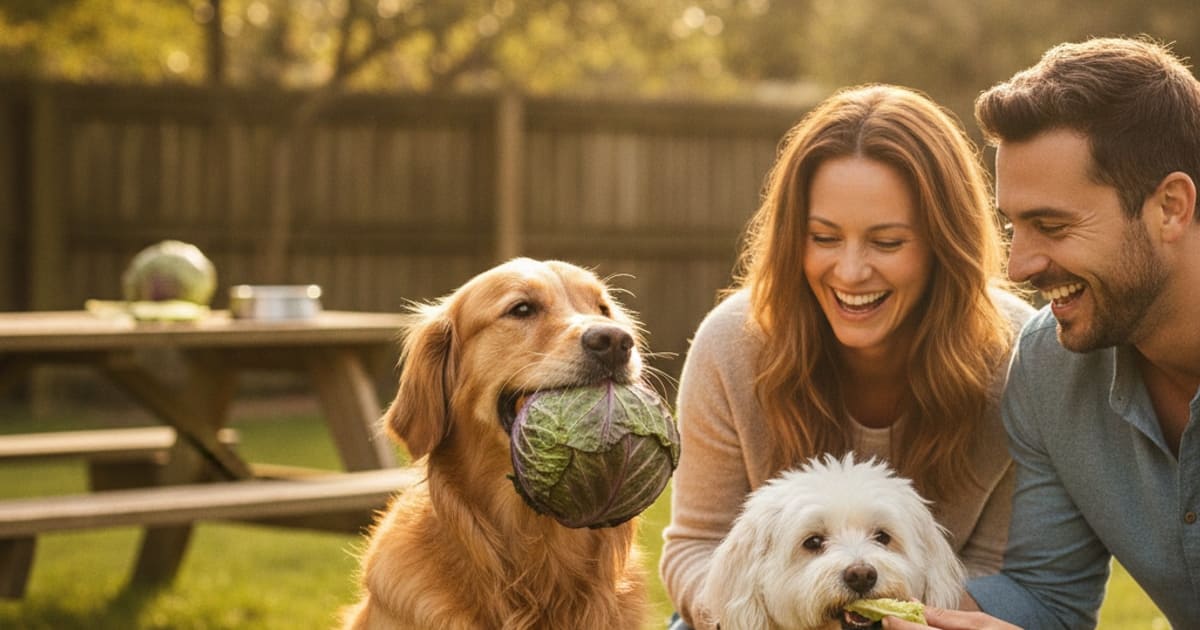
Yes, dogs can eat cabbage, because plain cabbage contains no compound that is toxic to dogs. If your dog has eaten a cabbage dish cooked with onion, garlic, leek or chive, or is retching without bringing anything up, has a hard or swelling belly, is drooling heavily, pale, weak or struggling to breathe, stop here and call your veterinarian or an animal poison control service such as the ASPCA Animal Poison Control Center or the Pet Poison Helpline.
That yes holds however the question gets typed. Can my dogs eat cabbage, can the dogs eat cabbage, cabbage can dogs eat it: it is the same vegetable and the same answer. Cabbage is also sold under different names in different shops, green, white, red, savoy, napa, but the botany does not change and neither does the safety picture for a plain, unseasoned leaf.
The useful part of this question is everything that comes after the yes. Cabbage is not poisonous, but it is a gas forming, fibrous vegetable that rarely reaches a dog in its plain state. It usually arrives buttered, salted, stewed with onion, or fermented. That is where the genuine risks live.
Why plain cabbage sits on the non-toxic list
Cabbage belongs to the brassica family, alongside broccoli, cauliflower, kale and brussels sprouts. None of these carry a toxic principle for dogs in the way alliums do. Onions, garlic, leeks, shallots and chives damage canine red blood cells, raw or cooked, fresh or dried into a powder. Cabbage has no equivalent mechanism, which is why it is treated as a safe vegetable while the things usually cooked with it are not.
What a cabbage leaf actually contains is mostly water, plus insoluble fibre, vitamin C, vitamin K, folate, potassium and a family of sulfur compounds called glucosinolates. Red and purple varieties also carry anthocyanins, the pigments responsible for their colour. Dogs, unlike people, manufacture their own vitamin C in the liver, so cabbage is not filling a gap in a complete diet. It is best understood as a low calorie, high water, high fibre vegetable, not as something that changes a dog's health.
That distinction matters. Cabbage is food, not treatment. No vegetable alters the course of a medical problem, and a dog who is slowing down, losing weight, off their food or limping needs a veterinary examination rather than an adjustment to the vegetable drawer. Diet is a conversation to have alongside a diagnosis, never instead of one.
The three ways cabbage actually causes trouble
Plain cabbage is not the risk; what gets cooked into it usually is. Still, the vegetable itself has three honest drawbacks, and they are worth understanding before anything goes in a bowl.
The first is gas. When cabbage is chopped and chewed, glucosinolates break down into isothiocyanates and other sulfur compounds, and fibre that escapes digestion ferments in the large intestine. The result is rumbling, burping, flatulence and sometimes a dog who cannot get comfortable. It is unpleasant rather than dangerous, and it fades as the meal clears. Raw cabbage produces more of it than cooked.
There is a serious caveat for deep chested dogs. Gastric dilatation and volvulus, the condition owners call bloat, is a true emergency in which the stomach distends and can twist. Gas forming foods are not a proven cause of it, but any dog with a distended abdomen, unproductive retching, restlessness, pale gums or sudden collapse needs an emergency veterinary hospital immediately, whatever they last ate. Those signs stop everything else.
The second drawback is fibre. Insoluble fibre moves bulk through the gut, and a digestive system unaccustomed to it responds with soft stool, cramping or urgency. Results vary from dog to dog. A dog with inflammatory bowel disease, chronic diarrhoea or a sensitive stomach may react to a vegetable another dog ignores entirely.
The third is goitrogens. The glucosinolates in cruciferous vegetables can interfere with the thyroid gland's uptake of iodine, which is why cabbage gets described as goitrogenic. In practical terms this is a consideration for a dog consuming a great deal of raw cruciferous vegetable over a long stretch of time, not for a dog who ate a cooked leaf from the chopping board. Cooking reduces goitrogen activity considerably. For any dog with a known thyroid condition, or one already on thyroid medication, cabbage is a question for the veterinarian managing that treatment, and the answer is theirs to give.
One more mechanical risk deserves a mention: choking. Raw cabbage leaves are broad, tough and slippery, and the stalk and core are dense. A dog who inhales food rather than chewing it can swallow a leaf whole, and dogs with dental disease or missing teeth struggle with raw brassica stems in particular.
How preparation changes the picture
Preparation is the single biggest variable in this question. The same vegetable ranges from gentle to genuinely risky depending on what happens to it in the kitchen.
| Preparation | What to know |
|---|---|
| Plain raw, shredded | Not toxic, but the toughest on digestion, the highest in gas forming compounds and goitrogens, and the most likely to be swallowed in a hurry. |
| Plain steamed or boiled, cooled, unseasoned | The gentlest form. Heat softens the cell walls and lowers goitrogen activity. Nothing added means no salt, no stock, no butter. |
| Sauteed in oil, butter or bacon fat | The fat is the problem, not the cabbage. Rich fatty human food is a recognised trigger for gastrointestinal upset and for pancreatitis in susceptible dogs. |
| Cooked with onion, garlic, leek or chive | Avoid entirely. Alliums are toxic to dogs raw, cooked, dried or powdered, and they appear in most savoury cabbage recipes. |
| Sauerkraut | Heavily salted, often vinegared, sometimes spiced. Salt load and stomach upset are the concerns. |
| Kimchi | Avoid. Chilli, garlic, spring onion and salt arrive together. |
| Coleslaw | Avoid. Mayonnaise, sugar, vinegar and frequently raw onion. |
| Cabbage soup, stew or stuffed cabbage rolls | Avoid unless you made it plain yourself. Stock cubes, bouillon and seasoning blends almost always contain onion or garlic powder. |
Plain, cooked and cooled is the form veterinary nutritionists generally point to, for the simple reason that heat does most of the work the dog's gut would otherwise have to do. Cooling matters too, since hot food is a burn risk for an enthusiastic eater.
If cabbage is new to your dog, introduce it on its own rather than alongside three other dietary changes, so that if something disagrees you know exactly what caused it. Watch the stool for a day or two afterwards. And remember that treats and extras of any kind displace a portion of a complete, balanced diet, which is a reason to keep the conversation with your veterinarian open rather than improvising.
Do the varieties differ for dogs?
Not meaningfully, where toxicity is concerned. Green, white, red, purple and savoy cabbage are all cultivars of the same species, and napa cabbage and bok choy belong to a close relative. Plain and unseasoned, none of them carries a toxic compound for dogs.
Red and purple cabbage is worth one note. Anthocyanin pigments can tint stool a reddish or purplish shade, which has sent more than one owner into a panic about blood. Dietary pigment is not the same as blood, but it is not always possible to tell by looking. If stool is black and tarry, streaked with fresh red, or accompanied by mucus, straining, vomiting or lethargy, that is a veterinary call rather than a guessing game.
Ornamental or flowering cabbage grown in a garden is a different proposition from the one in the kitchen. Garden plants may have been treated with pesticides, and slug and snail bait placed around brassicas is severely toxic to dogs. A dog who has been eating in a treated garden bed needs a veterinarian or a poison control service contacted straight away, regardless of how much greenery was involved.
Dogs who should be cleared by a vet first
Some dogs should not be offered cabbage until the veterinarian who knows them says so. That includes dogs with thyroid disease, dogs with inflammatory bowel disease or chronic digestive upset, dogs with a history of pancreatitis, dogs with a history of bloat or abdominal surgery, and seniors with dental disease who cannot chew fibrous vegetables safely.
It also includes any dog on a therapeutic or prescription diet. Those diets are formulated around specific ongoing conditions, and adding vegetables can quietly undercut the reason the diet was prescribed in the first place. Puppies, pregnant dogs and nursing dogs sit in the same category: their nutritional requirements are precise, and extras belong in a conversation with the veterinary team rather than in a bowl on a whim. In all of these situations, talk to your vet before you change anything.
What to do if your dog has already eaten cabbage
Plain cabbage straight from the chopping board
There is no toxin here, so the reasonable response is observation rather than alarm. Expect the possibility of gas, burping or a softer stool over the hours that follow. Make sure fresh water is available and keep the next meal ordinary. If the gas seems to be causing real distress rather than mild discomfort, call your veterinary practice and describe what you are seeing.
A seasoned, fatty or fermented cabbage dish
This one warrants a call rather than a wait, particularly if the dish contained onion, garlic or leek, if it was heavily salted, or if it was rich with butter, oil or cured meat. Tell your veterinarian or a poison control service what was in it, when it was eaten and what your dog weighs, and let them decide whether your dog needs to be seen. Do not try to manage an allium exposure at home.
The signs that mean call now
Repeated vomiting, diarrhoea that will not stop, a swollen or painful abdomen, unproductive retching, pale or muddy gums, weakness, collapse, laboured breathing or sudden lethargy all mean veterinary care now rather than in the morning. It is worth knowing these in advance of ever needing them, and Dog Emergency Signs covers the full list in detail.
Key Takeaways
- Plain cabbage is not toxic to dogs, in any colour or variety, raw or cooked.
- The real hazards are what gets cooked with it: onion, garlic, leek, chive, salt and heavy fat.
- Sulfur compounds and fibre make cabbage a gas forming food, and raw cabbage produces more gas than cooked.
- Goitrogens in cruciferous vegetables are a thyroid consideration for some dogs, and cooking reduces their activity.
- Tough raw leaves and the dense core are a choking and chewing concern for gulpers and dogs with dental disease.
- Sauerkraut, kimchi, coleslaw and cabbage soup are better left off the menu entirely.
- Distended abdomen, unproductive retching, pale gums or collapse is an emergency, whatever caused it.
Your veterinarian owns the diagnosis and the treatment plan for your dog, including what belongs in the bowl alongside a complete diet or a prescribed one. Food choices work best in the space that proper veterinary care creates, not in place of it, so bring questions about cabbage, or any new food, to the practice that already knows your dog's history.
Related reading: Can Dogs Eat Apples?, Can Dogs Eat Carrots?, Can Dogs Eat Green Beans?, Can Dogs Eat Blueberries? and Can Dogs Eat Rice?.
Frequently asked questions
- can dogs eat cabbage
- Yes. Plain cabbage with no seasoning, oil or salt is not toxic to dogs. The usual problems are gas, soft stool and the onion or garlic cooked into human cabbage dishes. Cooked and cooled cabbage is gentler on the stomach than raw. Talk to your vet before adding any new vegetable.
- can dogs.eat cabbage
- Yes, and the stray punctuation in that search does not change the answer. Plain cabbage is not toxic to dogs. Keep it unseasoned, with no onion, garlic, butter, salt or dressing, and watch for gas or loose stool afterwards. Your veterinarian can advise what suits your individual dog best.
- does dogs can eat cabbage
- Yes, dogs can eat cabbage. Plain green, red, savoy and napa cabbage all lack the toxic compounds found in onions and garlic. The risks are digestive rather than poisonous: sulfur compounds cause gas, and fibre can loosen stool. Cooking softens the leaves and makes them easier to digest.
- is dog can eat cabbage
- Yes, a dog can eat cabbage when it is plain and simply prepared. Raw leaves are tough to chew and the dense core can be a choking concern for dogs who gulp. Steamed or boiled cabbage with nothing added is the safer option. Ask your veterinarian before introducing new foods.
- can dog eats cabbage
- Yes. If your dog eats plain cabbage there is no toxin to worry about, though gas, burping and a softer stool are possible over the following hours. Seasoned cabbage dishes are the real concern because of onion, garlic, salt and fat. Call your vet if vomiting becomes repeated.
- can can dogs eat cabbage
- Yes, dogs can eat cabbage. Plain cabbage is not on the toxic list for dogs, in any colour or variety. Keep it free of onion, garlic, heavy oils and salt, introduce it gently, and watch for digestive upset. A veterinarian can advise what is right for your particular dog.
- Can dogs eat raw cabbage?
- Raw cabbage is not toxic, but it is the least gentle form. It carries more gas forming and goitrogenic compounds than cooked cabbage, and tough leaves and the dense core are harder to chew safely. Dogs who bolt their food or have dental disease are better served by cooked cabbage.
- Can dogs eat cooked cabbage?
- Yes, and plain steamed or boiled cabbage, cooled before serving, is the gentlest version. Heat softens the cell walls and lowers goitrogen activity. The rule is nothing added: no salt, stock, butter, oil, onion or garlic. Rich, fatty preparations are a known trigger for digestive upset in dogs.
- Can dogs eat sauerkraut, coleslaw or kimchi?
- These are best avoided. Sauerkraut is heavily salted and often vinegared, coleslaw brings mayonnaise, sugar and frequently raw onion, and kimchi combines chilli, garlic and spring onion. The cabbage underneath is harmless; everything added to it is not. If your dog has eaten any of them, contact your veterinarian for advice.
Educational content, not veterinary advice. Ask your vet about your dog.