Can Dogs Eat Cat Food in a Pinch? (What to Know)
Yes, a healthy adult dog can eat cat food in a pinch, because cat food is not toxic to dogs. It is richer in protein and fat than dog food, so an upset stomach is common. Repeated vomiting, a painful belly or no stools means calling your veterinarian now.
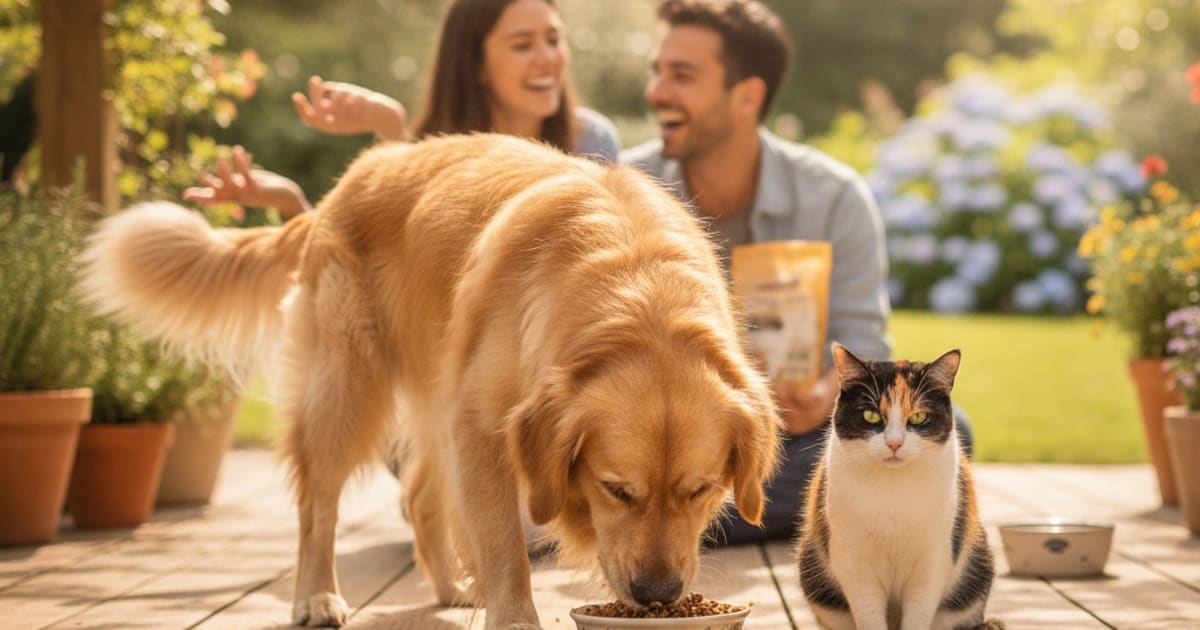
Yes, a healthy adult dog can eat cat food in a pinch. Cat food is not toxic to dogs, and one bowl swapped in because the dog food ran out is unlikely to cause anything worse than soft stools or a single bout of vomiting. The risk sits in two places: the richness of the food itself, which carries more protein and fat than a dog's gut is set up for, and the packaging that frequently goes down with it when a dog raids a counter or a cupboard.
A mouthful of cat food is rarely an emergency on its own, but repeated vomiting, retching that brings nothing up, a tense or painful belly, refusing food, or passing no stools at all means calling your veterinarian now rather than waiting until morning.
Those signs point toward an obstruction or a seriously inflamed gut, and neither one gets better with time. If your dog swallowed a foil pouch, a plastic lid, a pull-tab or a chunk of a sachet along with the food, treat that as a reason to phone the clinic straight away, even if the dog seems bright.
The signs that turn a raided bowl into a vet visit
Most dogs who steal cat food look entirely normal afterwards, then produce an unimpressive stool the next day and move on. A smaller group does not, and the difference is worth knowing before it happens.
Call your veterinarian without delay if you see any of the following:
- Vomiting that repeats, especially if the dog keeps bringing up nothing at all
- A belly that is hard, swollen, or clearly sore when touched
- Refusing food or water when the dog would normally eat
- No stools passed, or straining with nothing coming out
- Restlessness, pacing, or an inability to settle into a normal position
- Lethargy that is out of character, pale gums, or shaking
Two separate problems can sit behind that picture. One is a physical blockage, which is why packaging matters so much. Foil pouches and plastic lids do not break down, and a dog that bolts a sachet whole can end up with material lodged somewhere it cannot pass. The other is an inflamed pancreas, which a sudden load of fat can provoke in a dog whose system was not expecting it. Both need a veterinarian, hands on the dog, in person. Neither is something to manage at home while watching for improvement.
If you are trying to judge how worried to be, the honest answer is that a dog who is bright, drinking, eating and producing stools is usually fine to monitor at home, and a dog who is not is a phone call. When the two pictures blur together, make the call anyway. Vets would far rather hear about a dog who turns out to be fine.
Why dogs can eat cat food at all
This is the part that confuses owners, because the two foods sit side by side on the same shelf and look nearly identical. Dogs can physically eat and digest cat food because dogs are opportunistic omnivores with a scavenging history behind them. Their digestive system handles a wide range of animal and plant material, and nothing in a standard cat food is poisonous to a dog. That is why a stolen bowl does not send a dog into a crisis the way a toxic food can.
Cats are different. A cat is an obligate carnivore, which means it cannot manufacture certain nutrients from plant material and has to take them in ready-made through food. Cat food is formulated around that requirement. It is built to be denser, meatier, and far more aromatic, partly because cats are fussy and partly because their bodies genuinely need the concentration.
So the dog is not being harmed by anything sinister. The dog is eating a meal designed for an animal with different needs, at a richness its gut did not plan for. Hence the loose stools, the gurgling, the occasional vomit, and the smell in the garden the next morning.
How cat food and dog food actually differ
| Nutritional feature | Cat food | Dog food |
|---|---|---|
| Protein | Higher, since cats cannot down-regulate protein use the way dogs can | Moderate, balanced against carbohydrate and fibre |
| Fat and calorie density | Richer and more concentrated per mouthful | Lower, spread across a larger volume |
| Taurine | Added deliberately, because cats cannot make enough themselves | Not routinely added, since healthy dogs generally produce their own |
| Vitamin A | Supplied in active form, as cats cannot convert it from plant sources | Often supplied as a precursor that dogs convert themselves |
| Arachidonic acid | Added, as cats cannot synthesise it | Dogs can generally make it from other fats |
| Aroma and palatability | Strongly enhanced to appeal to a fussy obligate carnivore | Less intense |
| Kibble size and shape | Small, easy to bolt | Sized to the dog |
Read that table from a dog's point of view and the appeal is obvious. Cat food smells stronger, tastes richer, and comes in pieces small enough to swallow without chewing. A dog who has discovered the cat bowl is not being naughty so much as acting entirely rationally.
The same table explains the stomach upset. More fat and more protein arriving in one sitting than the gut is used to is the classic recipe for a dietary indiscretion, which is simply the veterinary term for a dog eating something it should not have in a quantity it should not have had.
One day versus every day
For one day, in a genuine pinch, a healthy adult dog eating cat food is a minor event. Expect a decent chance of soft stools or a rumbling gut. Keep fresh water available, keep an eye on the dog, and go back to the normal food as soon as you have it. If you know your dog has a sensitive stomach, or has had pancreas trouble before, or is on a diet your veterinarian set for a diagnosed condition, do not improvise even for one meal. Phone the clinic and ask what to do instead.
Feeding cat food as a routine is a different conversation altogether. Over weeks and months, a diet built for cats is not balanced for a dog. The protein and fat load is persistently higher than a dog needs, which pushes weight up and asks more of organs that have to process it. The mineral and vitamin ratios are set for a different species, so a dog eating it long term is not getting a diet matched to its own requirements. Carrying extra weight also loads joints that are already working hard, which matters a great deal in large breeds and in older dogs.
There is a practical version of this that comes up constantly: the dog who quietly finishes the cat's bowl every single day while nobody is really counting. That dog is not having an accident, it is on a second diet. If that describes your household, it is worth raising at the next appointment, because the weight creep usually shows up before anything else does.
What owners say online, and where that advice stops
Search any forum thread about dogs eating cat food and the pattern is consistent. Owners describe the same sequence over and over: the dog got into the cat's bowl, nothing dramatic happened, the stools were loose the next day, and everything normalised. Those accounts are reassuring and broadly match what vets see.
What forum threads cannot do is examine your dog. They cannot feel a belly, they cannot tell you whether a dog who ate a whole pouch has packaging sitting somewhere it should not be, and they cannot account for a dog who has a condition you are already managing. Crowd reassurance is useful for calibrating panic. It is not useful for deciding whether a dog who has vomited four times needs to be seen. For that, you talk to your veterinarian.
One more thing the threads tend to skip: kitten food is richer again than adult cat food, because it is built for rapid growth. A dog who raids a kitten bowl has taken on an even more concentrated meal, and the stomach upset tends to match.
Keeping the cat bowl out of reach
Prevention here is mostly furniture and routine rather than training.
- Feed the cat somewhere the dog physically cannot follow, a counter, a shelf, or a high step
- Use a doorway gate with a cat-sized gap, or a microchip-operated feeder
- Feed the cat at set times rather than leaving food down all day, then lift what is left
- Store bags, pouches and sachets behind a closed door, not on an open shelf
- Put packaging straight into a bin the dog cannot open, since the wrapper is often the real hazard
- Feed the dog first, so the raid is less appealing in the first place
If your dog is relentless about it, mention that at the next check-up too. A dog who is constantly hunting for extra food is sometimes just a food-motivated dog, and sometimes is telling you something about its own diet or appetite that is worth a proper look.
Key Takeaways
- Cat food is not toxic to dogs, so a healthy adult dog eating it in a pinch is usually a minor event
- Repeated vomiting, retching with nothing produced, a painful or swollen belly, refusing food, or no stools means contacting your veterinarian immediately
- Swallowed packaging, foil pouches, lids and sachets, is frequently the bigger hazard, not the food itself
- Cat food is richer in protein and fat and is formulated for an obligate carnivore, which is why loose stools are common afterwards
- One day is tolerable for a healthy dog, but cat food is not a balanced long-term diet for a dog
- Dogs with a sensitive stomach, a weight problem, or a diet set for a diagnosed condition should not be given cat food at all, even once
- Prevention is physical: raised feeding spots, timed meals, gates and sealed storage
If you are working out which everyday foods are reasonable to share and which are not, these may help: emergency signs worth knowing, apples, carrots, green beans, pineapple and rice.
Your veterinarian owns the diagnosis and the plan. They are the one who can feel the belly, decide whether imaging is needed, and tell you whether what your dog ate is a wait-and-watch situation or a same-day problem. Diet choices, feeding setups and everything else you manage at home work best inside the structure that proper veterinary care creates, not instead of it.
Frequently asked questions
- Can dogs eat cat food in a pinch?
- Yes. Cat food is not toxic to dogs, so a healthy adult dog eating it once because you ran out of dog food is usually fine. Expect possible loose stools or a single vomit. Contact your veterinarian if vomiting repeats, the belly is painful, or no stools are passed.
- Can dogs eat cat food for one day?
- Yes, one day of cat food is generally tolerated by a healthy adult dog, though stomach upset is common because cat food is richer in protein and fat. Return to the normal food as soon as you can. Dogs with a sensitive gut or a vet-prescribed diet should not be switched, even briefly.
- Can dogs eat food for cats?
- Dogs can physically eat and digest food made for cats, and nothing standard in it is poisonous to them. It is not balanced for a dog, though. Cat food is formulated for an obligate carnivore, so it suits an emergency meal far better than it suits a regular diet.
- Why can dogs eat cat food?
- Dogs are opportunistic omnivores with a scavenging background, so their digestive system copes with a wide range of foods. Cat food contains no ingredient that is toxic to dogs. It is simply denser in protein and fat than a dog needs, which is why it causes upset rather than harm.
- Can dogs eat cat food? (Reddit threads)
- Forum threads usually describe the same outcome: the dog raided the cat bowl, seemed fine, and had loose stools the next day. That broadly matches reality, but online reassurance cannot examine your dog. If yours is vomiting repeatedly or has a sore belly, call your veterinarian instead.
- What happens if a dog eats cat food every day?
- Long term, cat food is not balanced for a dog. The higher protein and fat load tends to push weight up, which adds strain to joints and asks more of the organs processing it. The vitamin and mineral ratios are set for cats. Raise ongoing bowl-raiding with your veterinarian.
- Is kitten food worse for dogs than adult cat food?
- Kitten food is richer again, because it is designed to fuel rapid growth. A dog that gets into a kitten bowl has taken on a more concentrated load of fat and protein, so stomach upset is more likely. The same warning signs apply, and the same advice to phone your vet.
- My dog swallowed a cat food pouch along with the food. What should I do?
- Call your veterinarian straight away, even if your dog looks completely normal. Foil pouches, plastic lids and pull-tabs do not break down and can lodge in the digestive tract. Watch for retching, a tense belly, refusing food, or no stools, and do not wait for those signs before calling.
- Can puppies eat cat food?
- Puppies should be on a diet formulated for their growth stage, not cat food. Their nutritional needs are specific and the margin for error is smaller than in an adult dog. If a puppy has eaten cat food and seems unwell in any way, contact your veterinarian rather than monitoring at home.
Educational content, not veterinary advice. Ask your vet about your dog.