Can Dogs Eat Christmas Ham? (Holiday Leftovers Explained)
Dogs should not eat Christmas ham. Holiday ham is cured with salt, carries a heavy fat load, and is usually coated in a sugary glaze that may contain onion or garlic powder, all of which can make a dog ill. If your dog ate ham or the bone, call your veterinarian.
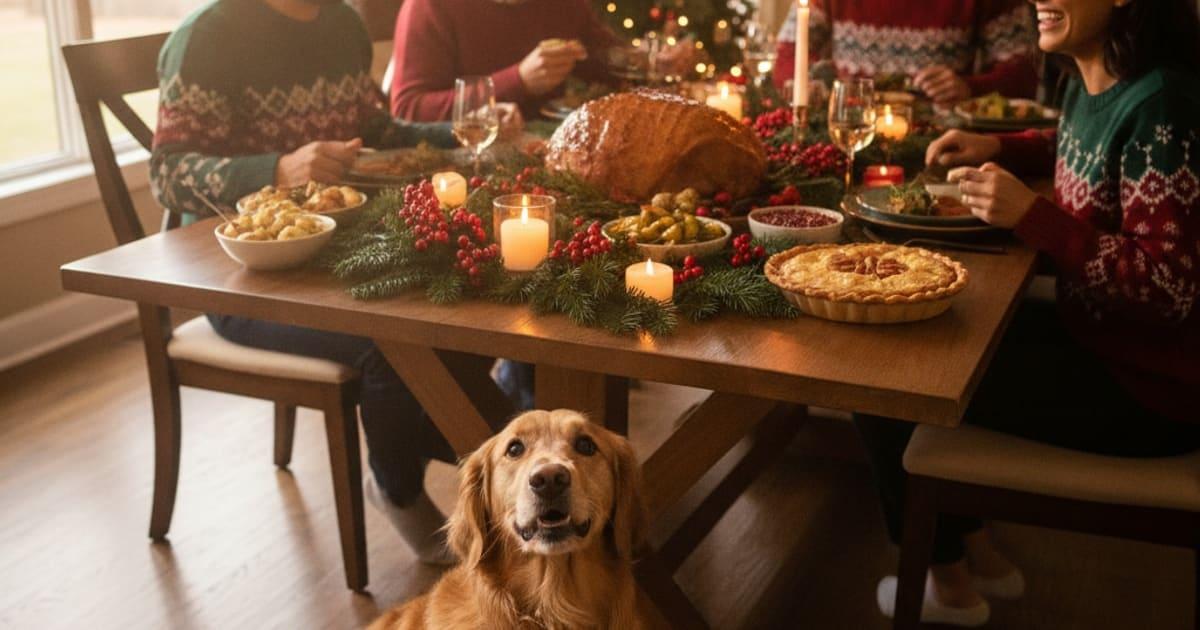
No, not the ham that goes on a holiday table. If your dog has already eaten glazed, honey-baked, smoked or cured ham, or any part of the bone, call your veterinarian or an animal poison control service such as the ASPCA Animal Poison Control Center or the Pet Poison Helpline, and tell them what was eaten and when.
Holiday ham is pork that has been cured in salt. It usually arrives at the table finished with a sugary glaze, rubbed with seasoning that can include onion or garlic powder, carrying a thick fat cap, and cooked on a bone. Each of those four things is a hazard for a dog, and on a holiday roast they all turn up at once.
It is the holiday version of ham, salted, glazed, fatty and cooked on the bone, that causes the trouble, not pork as a plain ingredient.
That answer does not change with the calendar. Christmas ham, xmas ham, Easter ham, the Thanksgiving roast and the leftover ham that becomes sandwiches the next morning are the same food with the same risks. Whatever the occasion, the carving board is not a place for the dog.
Why a cured, glazed roast is hard on a dog
Start with the salt, because curing is a salt process. Ham is brined or dry-cured, and the sodium stays in the meat no matter how it is cooked afterwards. A dog is far smaller than the people the recipe was written for, and a sudden salt load can make a dog desperately thirsty, send them to the water bowl and then outside again and again, and in more serious situations bring on vomiting, an unsteady or drunken-looking walk, muscle tremors or seizures. Dogs who are already being managed for a heart or kidney condition have even less room for error with a salty food.
Then there is the fat. The fat cap, the rind, the crackling and the pan drippings are far richer than anything in a normal bowl of dog food. A sudden hit of fat can inflame the pancreas, and pancreatitis is genuinely miserable: repeated vomiting, a hunched or praying posture, a belly that is tender when touched, refusing food, diarrhoea and obvious lethargy. Some dogs are far more prone to it than others, and there is no way to know in advance which camp your dog falls into.
The glaze adds another layer. Brown sugar, honey, maple syrup, fruit juice, mustard and cloves are not what a dog's gut is built for, and the sticky coating is exactly the part a dog will lick off a dropped slab of meat. If a sugar-free glaze or sauce has been used, check the label for xylitol, which is dangerous to dogs and needs a call to your veterinarian straight away.
Finally, the seasoning. Many ham rubs, stocks and accompanying gravies contain onion or garlic powder, and dried allium powders are concentrated. Onion, garlic, chives and leeks can damage a dog's red blood cells, and the signs, pale gums, weakness and dark urine, can take a day or more to show. Pepper, cloves and chilli in a rub simply add to the stomach upset.
The ham bone is its own hazard
The bone deserves its own warning, because a lot of owners who would never hand over the meat will happily give the dog the bone afterwards.
Cooking makes bone brittle. A roasted or smoked ham bone, and the spiral-cut shank in particular, can split into sharp shards when a dog works on it. Those shards can cut the gums and tongue, lodge in the throat, get stuck across the roof of the mouth, or travel down and damage the gullet, stomach or intestine. A larger lump of bone can block the gut outright, which is a surgical problem, not a wait-and-see one. Bone fragments that do make it through can also leave a dog straining, uncomfortable and constipated.
The packaging is easy to forget too. Netting, butcher's string, foil, plastic ties and the absorbent pad from the tray are all swallowable, and string in particular can do serious damage as it moves through the intestine.
If your dog has swallowed a large piece of bone, or you cannot account for what came off the carcass, call your veterinarian rather than watching the clock. Do not try to make your dog sick at home. Whether that is the right move depends on what was eaten and when, and a sharp fragment coming back up can do as much harm as it did going down, so the decision belongs to your vet.
The same answer at every holiday table
Christmas, Easter and Thanksgiving all produce the same scene: a big glazed roast, a crowded kitchen, plates at nose height and a dog working the room. Here is how the usual suspects compare.
| What is on the table | The main worry | What to do with it |
|---|---|---|
| Glazed or honey-baked ham | Cure salt, fat and glaze sugars, plus onion or garlic powder in many rubs | Keep it on a surface the dog cannot reach, including the carving board |
| Smoked or cured sliced ham | Heavy cure salt and preservatives in a very easy-to-steal form | Not a handout food; keep the packet closed and away from counter edges |
| Ham bone, cooked or smoked | Splintering, choking, blockage and gut injury | Bin it somewhere sealed; call your vet if any was swallowed |
| Fat cap, rind and crackling | Concentrated fat and a pancreatitis risk | Scrape it into a covered bin, never into the dog bowl |
| Pan drippings, stock and gravy | Fat plus alliums from the pan and the recipe | Do not pour it over kibble to make dinner festive |
| Plain cooked lean pork with no salt, glaze, rub or bone | The lowest risk of the group, but still rich | Ask your vet whether it suits your dog before offering anything new |
| Leftovers left out overnight | Spoilage and mould, which can make a dog very unwell | Throw it out, and call your vet if the counter was raided |
Leftover ham is worth singling out. The roast that was safely out of reach on the day often ends up in an open fridge, on a plate by the sofa or in a bin bag by the back door. A dog who ignored the table while everyone was watching will go straight for the bin at midnight, and bin raids tend to combine ham, bone, fat, foil and whatever else went in there.
Signs that mean call, and signs that mean go now
Plenty of dogs steal something from a holiday plate and are perfectly fine. Others are not. Two dogs can raid the same counter and have completely different nights, results vary from dog to dog, and that is exactly why the safer move is to call rather than wait and see.
Contact your veterinarian promptly if you notice vomiting that will not settle, repeated retching that brings nothing up, diarrhoea that keeps coming, a dog who will not eat or settle, drooling, pawing at the mouth, obvious discomfort when the belly is touched, or a dog who is unusually flat and quiet.
Treat it as an emergency and head in without delay if you see a swollen, hard or painful belly, a hunched stance with the front end down and the back end up, pale or white gums, collapse, tremors, seizures, breathing that looks like hard work, or blood in vomit or stool. The same applies if you know a large piece of bone went down. It helps to read up on Dog Emergency Signs before the season starts, so you are not making that judgement call for the first time on a holiday evening.
When you ring, have the details ready: what kind of ham, whether it was glazed, whether the glaze or rub listed onion, garlic or a sugar substitute, whether bone or packaging was involved, and roughly when it happened. That information shapes what your vet tells you to do next far more than the dog's current mood does.
What to hand your dog while you carve
The simplest plan is the one that works: the dog gets their own food, in their own bowl, while the ham stays on the counter. If you want the dog to be part of the day, use foods that are not built on salt and fat.
Plain cooked carrot, plain green beans with nothing added, plain cooked pumpkin, plain cooked rice and apple with the core and seeds removed are all gentle, boring options that let a dog feel included. Nothing from the roasting pan, no gravy over kibble, and no sauce or glaze on anything. If your dog has a sensitive stomach, a food allergy or an ongoing health problem, talk to your vet before you add anything new to the bowl, because a holiday is the worst possible time to discover a food does not agree with them.
The rest is logistics. Push the carving board back from the counter edge, cover the roast while it rests, and take the bone and wrappings out to a secured bin rather than the kitchen one. Tell guests, clearly and before the meal, that the dog is not having any ham, because the dog will absolutely try a second person after the first one says no. A stuffed toy, a puzzle feeder or a quiet room away from the table takes the pressure off everyone.
Key Takeaways
- Holiday ham is not a safe food for dogs: the cure salt, fat cap, sugary glaze and seasoning rub all work against them, and the answer is the same at Christmas, Easter and Thanksgiving.
- Many glazes, rubs, stocks and gravies contain onion or garlic powder, which can damage a dog's red blood cells, and some sugar-free sauces contain xylitol.
- Cooked and smoked ham bones splinter, and they can choke a dog, cut the gut or cause a blockage. Netting, string and foil are hazards in their own right.
- Leftover ham, bin raids and food left out overnight cause as many problems as the meal itself.
- Vomiting that will not settle, a swollen or painful belly, pale gums, tremors or a swallowed large piece of bone all mean veterinary care now.
- Plain vegetables and your dog's own food are the easy alternative, and anything new is worth clearing with your vet first.
Your veterinarian is the one who decides whether a holiday raid is a wait-at-home situation or a drive to the clinic, and they are the one who diagnoses and treats whatever comes of it. Nothing you read online replaces that call. Keep the ham on the counter, keep the bone out of reach, know which signs mean emergency, and talk to your vet whenever you are not sure what your dog managed to swallow.
Related reading: Dog Emergency Signs and the full library of Dog Health Conditions.
Frequently asked questions
- can dogs eat christmas ham
- No. Christmas ham is cured with salt, carries a thick fat cap and is usually finished with a sugary glaze and a rub that can contain onion or garlic powder. That combination can upset a dog badly. If your dog has eaten some, call your veterinarian for advice.
- why cant dogs eat christmas ham
- Because of four things at once: cure salt, concentrated fat from the rind and drippings, sugary glaze, and seasoning that often includes onion or garlic powder. The bone adds splintering and blockage risk. Together they can cause vomiting, pancreatitis or worse, so the roast stays out of reach.
- can dogs have ham for christmas
- Not the festive roast. If you want your dog included in the meal, use plain options such as cooked carrot, green beans or plain pumpkin with nothing added, served in their own bowl. Anything new is worth clearing with your vet first, especially for a dog with a sensitive stomach.
- can dogs eat xmas ham
- No. Xmas ham is the same cured, glazed, fatty roast whatever you call it, and the salt and fat load alone make it a poor choice for a dog. Keep the carving board back from the counter edge and put the bone straight into a sealed bin.
- can dogs have xmas ham
- They should not. The cure salt can make a dog very thirsty and unsteady, the fat can inflame the pancreas, and glazes and rubs often hide onion or garlic powder. If your dog managed to steal some, phone your veterinarian and describe exactly what was on it.
- can dogs eat easter ham
- No. Easter ham is prepared the same way as a Christmas roast, with a salt cure, a honey or brown sugar glaze and a bone, so the hazards are identical. Keep it covered while it rests, and keep guests from slipping the dog anything off their plate.
- can dogs eat ham for thanksgiving
- No, and the same goes for the gravy and pan drippings that come with it. Thanksgiving ham is salty, fatty and usually seasoned with ingredients that do not suit dogs. Give your dog their own food before the meal starts so they are less interested in the table.
- can dogs eat leftover ham
- Leftover ham carries exactly the same salt and fat problems as the fresh roast, plus spoilage and mould if it has been left out. Bin raids are a real risk after a holiday meal. Use a sealed bin, and call your vet if your dog got into the leftovers.
- can dogs eat baked ham in the oven
- No. Oven baking does not remove the cure salt, and it melts the fat cap into drippings that are even richer. The glaze caramelises onto the surface, which is the part a dog will lick first. Keep the roast and the pan well away from your dog.
- can dogs eat ham roast
- A ham roast is not a safe food for dogs because of the salt cure, the fat and the bone it is usually cooked on. Plain cooked lean pork with no salt, glaze or seasoning is a different food, but ask your vet whether it suits your dog before offering any.
Educational content, not veterinary advice. Ask your vet about your dog.