Can Dogs Eat Pot Roast Bones? (Cooked Bone Risks)
No, dogs should not eat pot roast bones. Cooking makes bone brittle, so it breaks into hard shards with cutting edges instead of crumbling, and those shards can choke a dog, lodge in the gut or tear it. If your dog has already eaten one, call your vet now.
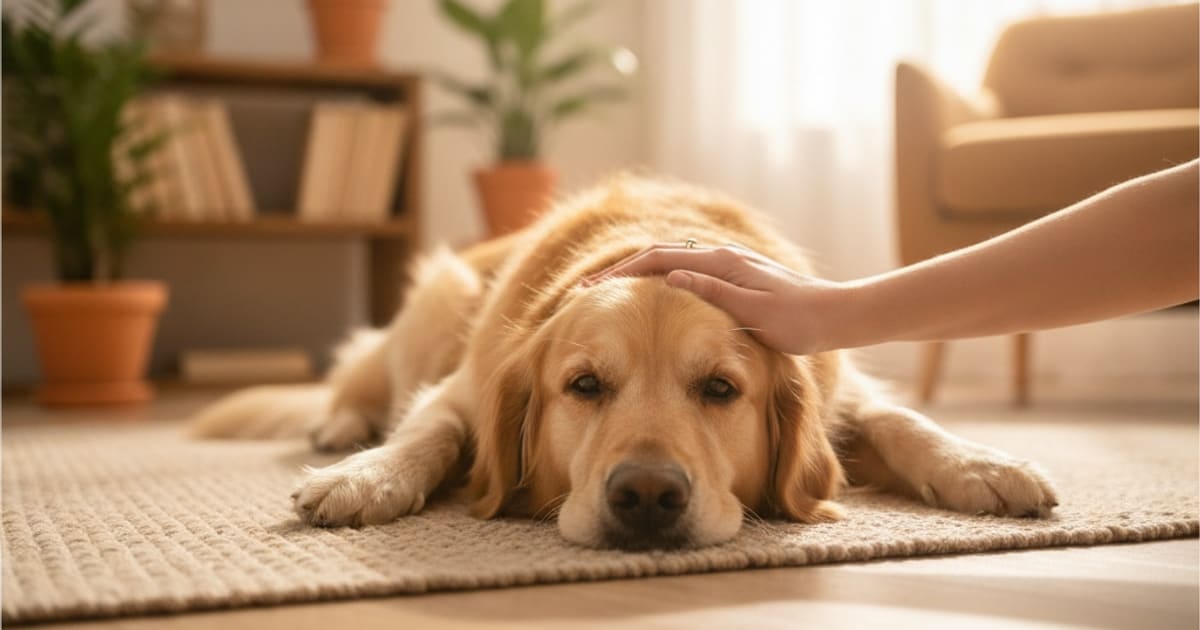
No, dogs should not eat pot roast bones. If your dog has already chewed or swallowed one, call your vet now, and if the roast was braised with onion, garlic, onion powder or a seasoned stock, call your vet or an animal poison control service now.
Bone itself is not poisonous. The trouble with a bone that came out of a roasting pan or a slow cooker is physical, and it is created by the cooking. Heat changes what bone does when a dog's teeth close on it, and the leftover bone also carries the fat, salt and aromatics the roast was built on.
The same answer applies to every version of this question. Chuck roast bones, beef roast bones, cooked chuck roast bones, cooked roast beef bones, beef rib roast bones, roasted beef ribs and roasted beef marrow bones have all been through the same process. Call your vet now if your dog has swallowed cooked bone from a roast, because the risk is mechanical and it does not announce itself at the moment the bone goes down.
How cooking changes what is inside the bone
Bone is a composite material. A mineral phase, mostly calcium phosphate laid down as hydroxyapatite crystals, is packed around a scaffold of collagen fibres. The mineral supplies stiffness. The collagen supplies toughness, which is a different property: it lets the structure absorb force, bend a little and stop a crack from running.
Heat takes the collagen apart. Sustained cooking denatures those protein fibres and converts much of the collagen to gelatin, and in a wet braise a good deal of that gelatin leaches out into the cooking liquid. That is exactly why a long-braised chuck roast gives you a glossy, body-rich sauce. What remains in the bone is the mineral scaffold with far less of the protein that used to hold it together and redirect stress.
A bone in that state is brittle rather than tough. Pressure from a dog's jaw does not crush it into soft crumbs. The crack runs along the grain of the bone and splits it lengthwise, the way kindling splits, producing long slivers with needle points and edges that can cut. Those shards do not soften quickly once swallowed. Stomach acid works on bone slowly, and a fragment can pass out of the stomach and into the intestine still sharp at both ends.
There is a second mechanical problem, and it happens before anything is swallowed. Cooked cortical bone is extremely hard, and the chewing teeth at the back of a dog's mouth transmit enormous force through a small area of enamel. A tooth can fracture through the enamel and dentine, and when the fracture exposes the pulp inside, that is a painful injury requiring veterinary treatment.
Chuck roast, rib roast and marrow bones have different shapes, not different risk
A chuck roast comes from the shoulder, so the bone in it is a section of the blade bone or the arm bone. Blade bone is a thin flat plate, and once cooked it tends to flake into broad, stiff slivers that can slice gum tissue and the tongue on the way down. The question of whether dogs can eat a chuck roast bone, cooked chuck roast bones or beef chuck roast bones has the same answer regardless of which piece of the shoulder it came from.
Rib bones from a rib roast, and the bones left after roasted beef ribs, are curved and made of dense cortical bone. They break into pointed lengths, and a shorter rib section can be swallowed whole by a dog that gulps rather than chews, which turns a chewing risk into an obstruction risk in one swallow. If your dog swallowed a bone or a piece of one, call your vet now.
Roasted beef marrow bones carry two extra problems. They are weight-bearing bone, which is among the hardest material a dog can bite. The sawn ring shape can also slip up behind the lower canine teeth and lock around the jaw, and removing it can require sedation at a veterinary clinic. If a ring of bone is stuck around your dog's jaw, go to a vet now. The marrow itself is dense fat.
What else is on a roast bone
A pot roast bone is rarely plain bone. It has been sitting in whatever the roast was cooked in, and that matters as much as the bone does.
Onion and garlic are toxic to dogs, and they show up in braising liquid, gravy, stock, soup base, rubs and seasoning blends in powdered form, where a small volume carries a lot of the plant. Powdered forms are concentrated. If your dog has eaten seasoned meat, gravy or the bone it was cooked with, call your vet or an animal poison control service now.
Salt levels in a seasoned roast are high compared with what is in a dog's bowl. The fat on and around the bone, including marrow, is a sudden rich load on the digestive system, and a rich fatty meal can trigger pancreatitis, which is inflammation of the pancreas and a veterinary problem in its own right. Butcher's twine and elastic netting are another hazard entirely: string that is swallowed can anchor at one end and saw along the intestine as the gut tries to move it, which is why anything string-like needs a vet rather than a pause.
Where a swallowed shard causes damage
Cooked bone can cause trouble at every point along the route it takes.
In the mouth and throat, fragments cut gums and tongue, and a flat piece can wedge across the roof of the mouth between the upper teeth. In the airway, a piece that is inhaled or that blocks the throat is an emergency: go to an emergency vet now if your dog is choking, gagging without producing anything, breathing with effort, or if the gums look pale, grey or blue.
In the oesophagus, the tube between throat and stomach, a shard can lodge and stay there. The oesophagus has a thin wall and poor capacity to stretch, so a fragment sitting in it is urgent. In the stomach, bone fragments may sit for a long period, and a piece too large to leave through the stomach outlet creates an obstruction.
In the small intestine, the two serious outcomes are blockage and perforation. A blockage stops food and fluid moving and causes repeated vomiting. A perforation is a hole punched or cut through the intestinal wall, which spills gut contents into the abdomen and causes septic peritonitis, a life-threatening infection. Further down, bone chips can mix into dry, hard stool in the colon and make passing it painful, with straining, hunched posture or blood.
Call your vet now if your dog is retching, drooling, swallowing repeatedly, bringing food back up, vomiting more than once, refusing food, standing with a hunched or praying posture, flinching when the belly is touched, straining to pass stool, passing black or bloody stool, or acting flat and withdrawn. If your dog has swallowed cooked bone and seems bright at this moment, that is not a reason to delay the call.
What to do right now if your dog ate a bone from a roast
Call your vet, or an emergency clinic if your own practice is closed, and say what the dog ate, what the roast was seasoned with, when it happened and how much of the bone is missing. Keep the remaining bone and any packaging and take it with you, because the size and type of bone changes what the clinic is looking for on an X-ray.
Do not make your dog vomit at home. A sharp fragment can do as much damage coming back up as it does going down, and bringing it back through the oesophagus is its own risk. Do not try to push the problem through with bread, oil or any home remedy. If the mouth is bleeding, gentle pressure with a clean cloth on the way to the clinic is reasonable, and nothing more than that.
Go to an emergency vet now for breathing trouble, collapse, pale gums, nonstop retching, or a belly that looks swollen and is painful to touch.
What the veterinary team may do
| What the vet may do | What it is for |
|---|---|
| Physical examination, including mouth, throat and abdominal palpation | Finding wedged fragments, cuts, pain, and signs of a blocked or inflamed gut |
| X-rays of the chest and abdomen | Bone is dense and shows up on film, so imaging can locate fragments and show gas patterns that point to obstruction |
| Repeat or contrast imaging | Tracking whether a fragment is moving and where it has stopped |
| Blood work | Checking hydration, white cell response, organ values and markers affected by a rich fatty meal |
| Abdominal ultrasound | Looking at gut wall thickness, movement and free fluid in the abdomen |
| Endoscopy under anaesthetic | Viewing and retrieving a fragment from the oesophagus or stomach without open surgery |
| Abdominal surgery | Removing an object that cannot be reached otherwise, and repairing a perforation |
| Intravenous fluids and pain control | Supporting a dog that is vomiting, dehydrated or painful |
| Hospitalisation and repeat checks | Following a dog whose fragment has not yet passed or whose signs are changing |
Raw chuck roast bone is a different material, not a workaround
Raw bone still has its collagen intact, so it behaves differently under a dog's teeth: it is tougher and less likely to split into needle-pointed shards than a cooked bone. That difference is real, and it is not permission.
Raw weight-bearing beef bone is still hard enough to fracture a chewing tooth. A piece broken off a raw bone can still obstruct the gut. Raw meat and bone can carry bacteria such as salmonella and campylobacter, which matters for the dog and for the people handling the bone, the bowl and the floor, and matters more in a household with young children, older adults or anyone with a weakened immune system. Dogs with a history of pancreatitis, kidney disease or dental damage sit in a different risk category again.
If you are thinking about bones or chews of any kind, talk to your vet first, and bring up your dog's chewing style, dental history and any existing condition. For what belongs in the bowl alongside or instead of bone, your vet can tell you what suits your particular dog.
Key takeaways
- Dogs should not eat pot roast bones, chuck roast bones, beef rib roast bones or roasted beef marrow bones, and cooking is what creates the hazard.
- Heat breaks down the collagen that makes bone tough, leaving a brittle mineral structure that splits into sharp shards rather than crumbling.
- Bone is not poisonous, but a roast bone carries fat, salt and seasonings, and onion and garlic in any form are toxic to dogs.
- Swallowed fragments can choke, lodge in the oesophagus, block the gut or cut through the intestinal wall, and cooked bone can also fracture teeth.
- If your dog has eaten one, call your vet now, bring the remaining bone, and do not try to make your dog vomit at home.
- Raw bone splits differently, but it still carries tooth fracture, obstruction and bacterial risks, so talk to your vet before offering any bone.
More reading: Dog Emergency Signs and Dog Health Conditions.
Your veterinarian owns the diagnosis and the plan here. Imaging, retrieval and surgical decisions after a dog swallows cooked bone can only be made by the clinic that has examined your dog, and the sooner that examination happens, the more options are on the table.
Frequently asked questions
- Can dogs eat pot roast bones?
- No. Cooking makes bone brittle, so a pot roast bone splits into sharp shards instead of crumbling, and those shards can choke a dog, block the gut or cut through it. The bone also carries fat, salt and seasonings such as onion and garlic, which are toxic to dogs; if your dog ate any, call your vet or an animal poison control service now.
- Can dogs eat chuck roast bones?
- No. A chuck roast bone is a section of shoulder blade or arm bone, and once cooked it flakes into stiff slivers with cutting edges that can injure the mouth, lodge in the oesophagus or damage the intestine. Call your vet now if your dog has chewed or swallowed one.
- Can dogs eat beef roast bones?
- No. Any beef bone that has been roasted or braised has lost the collagen that makes bone tough, which leaves it brittle and prone to splitting into pointed fragments. Swallowed pieces can obstruct or perforate the gut, and the hardness can also fracture a chewing tooth. If your dog swallowed any, call your vet now.
- Can dogs eat cooked chuck roast bones?
- No. Cooking is exactly what creates the hazard, so a cooked chuck roast bone is more dangerous than the raw version, not less. If your dog has already eaten one, call your vet now, bring the remaining bone with you, and do not try to make your dog vomit at home.
- Can dogs have cooked pot roast bones?
- No. A slow-cooked pot roast bone is brittle through and through and breaks into shards that stay sharp after swallowing. Call your vet now if your dog has eaten one, and call your vet or an animal poison control service now if the roast was cooked with onion or garlic.
- Can dogs eat raw chuck roast bone?
- Raw bone keeps its collagen, so it is less likely to splinter than cooked bone, but that is not permission. Raw beef bone can still fracture teeth, cause obstruction, and carry bacteria such as salmonella that affect the dog and the household. Talk to your vet before offering any bone.
- Can dogs eat beef rib roast bones or roasted beef ribs?
- No. Rib bone is curved and dense, and roasting leaves it brittle, so it breaks into pointed lengths. A short rib bone can also be swallowed whole by a dog that gulps. Call your vet now if your dog has swallowed rib bone from a roast.
- Can dogs eat roasted beef marrow bones?
- No. A roasted marrow bone is weight-bearing bone, hard enough to fracture a chewing tooth, and the sawn ring can slip behind the lower canine teeth and trap the jaw, which may need sedation to remove. The marrow is also a sudden heavy fat load. If your dog swallowed bone or marrow, call your vet now.
Educational content, not veterinary advice. Ask your vet about your dog.