Can Dogs Eat Donuts? Safety Risks Explained
No, donuts are not safe food for dogs. Fried dough, sugar and fat can upset a dog's stomach, and donut ingredients such as xylitol, chocolate, raisins or macadamia nuts can be dangerous. If your dog has eaten one, call your vet for advice.
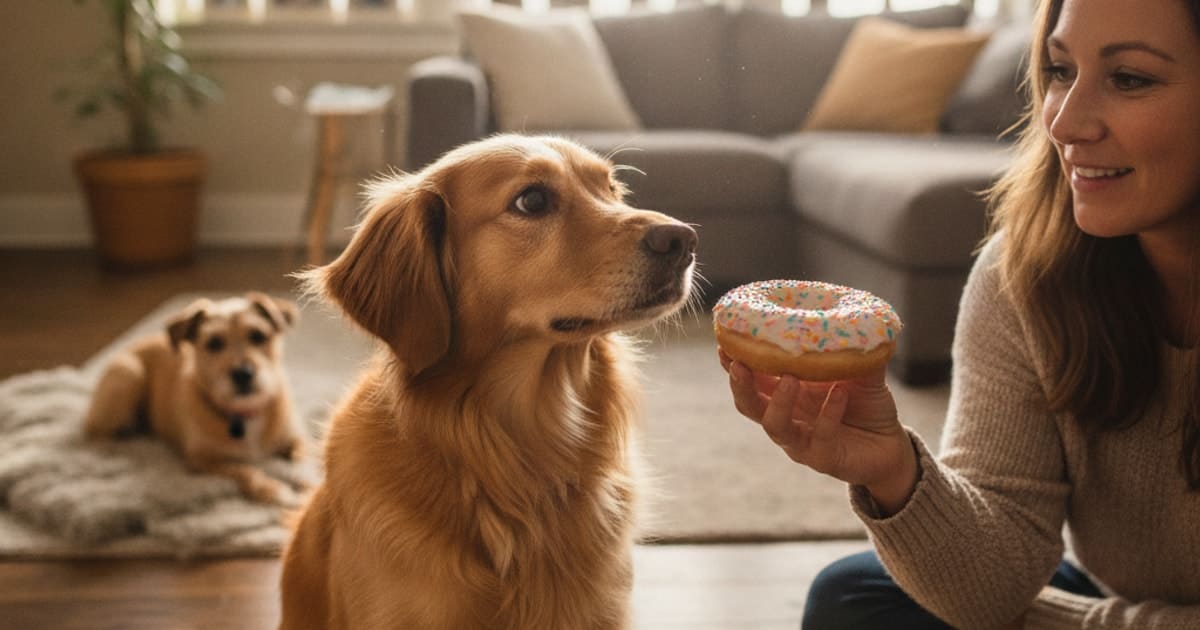
If your dog has eaten anything containing xylitol or another sugar-free sweetener, chocolate, raisins, macadamia nuts or visible mould, call your veterinarian or an animal poison control service such as the ASPCA Animal Poison Control Center or the Pet Poison Helpline straight away, and do not wait for signs to appear. Even if the donut looked plain, phone your vet if your dog is vomiting, drooling, shaking, wobbly or simply not acting like themselves.
The short answer to the question is no. Donuts are not food for dogs. A donut is deep-fried, sugary, fatty dough, which is hard on a dog's digestive system, and the things that go on top of it or inside it can range from harmless to genuinely dangerous. Dogs will happily eat a donut given half a chance, because dogs are scavengers and a sweet fried smell is hard for them to ignore, but wanting something is not the same as tolerating it.
No donut is made for a dog, and the safest answer to every version of this question is to keep the box out of reach and call your vet if your dog gets into one.
Why fried, sugary dough is hard on a dog's gut
There are three separate problems inside a single donut, and it helps to think about them one at a time: the base, the toppings and fillings, and raw dough.
The base is the part that is the same across almost every donut on the shelf. It is wheat dough cooked in oil, which means it carries a lot of fat. A sudden load of rich, fatty food can irritate a dog's stomach and intestines. Vomiting, loose stools, gassiness, a gurgling belly and loss of appetite can follow. Fat-heavy food can also inflame the pancreas, the small organ that releases digestive enzymes, and pancreatic inflammation can make a dog very unwell. Signs can include repeated vomiting, a hunched posture, a tender belly, refusing food and unusual tiredness. Some dogs are more sensitive to fat than others, and your vet can tell you whether your dog falls into a higher-risk group.
Then there is the sugar. Donut dough is sweetened, and the glaze on top is mostly sugar. Dogs have no dietary need for added sugar at all. It adds calories with nothing useful attached, and for a dog with diabetes or a weight problem it is the wrong thing entirely. Dairy in the dough or the filling can add another layer of upset for dogs who do not handle milk solids well.
Finally, dense cooked dough sits heavily. A dog who bolts a whole donut without chewing, or swallows the paper wrapper with it, can end up with something stuck or with a stomach that is unhappy for longer than you would expect.
Donut ingredients that mean a phone call, not a wait
This is where a sweet snack turns into a real problem. The decorations and fillings on modern donuts include several things that dogs should never swallow.
Xylitol and sugar-free sweeteners. Low-sugar, keto and diabetic-friendly donuts may be sweetened with xylitol, sometimes labelled birch sugar. In dogs, xylitol can cause a sharp drop in blood sugar and can damage the liver. This is an immediate call to your vet or a poison control service, not a wait-and-see.
Chocolate and cocoa. Chocolate glaze, cocoa dough, chocolate chips and chocolate drizzle all contain theobromine and caffeine, which dogs clear from their bodies slowly. Darker chocolate carries more. Signs can include restlessness, a racing heart, vomiting, tremors and seizures.
Raisins, currants and sultanas. These appear in fruit-filled and spiced donuts and can cause kidney injury in dogs. There is no safe quantity to be relaxed about. Call your vet.
Macadamia nuts and nut toppings. Macadamias can cause weakness, wobbliness, vomiting and tremors in dogs. Nut-crusted donuts are worth treating as an urgent call.
Coffee glaze and espresso fillings. Caffeine affects dogs more strongly than people and can cause agitation, a fast heart rate and tremors.
Alcohol-based fillings and glazes. Rum glaze, boozy custards and liqueur fillings put alcohol into a dog's bloodstream quickly.
Mould. A donut that has been sitting in a bin or at the back of a cupboard can grow mould that produces toxins affecting the nervous system. Tremors and unsteadiness are signs to act on immediately.
Nutmeg and heavy spice blends. Nutmeg contains myristicin, which can affect dogs, and spiced donuts can carry a surprising amount.
If you do not know what was in the donut, say so when you call. Bring the box, the wrapper or a photo of the ingredient list with you, because that label does more for your vet than any guess.
How the different kinds of donuts compare
Owners search for the plain version, the unglazed version, the baked version and the filled version, hoping one of them is a green light. None of them are. They simply differ in how much risk they add on top of the fried-dough base.
| Donut type | What it adds | What to do if your dog eats it |
|---|---|---|
| Plain cake or unglazed ring | Fried dough, fat, sugar, flour, sometimes dairy and egg | The least loaded option, but still fatty sugary dough with no benefit for a dog. Watch for vomiting or a sore belly and call your vet if anything starts |
| Glazed | A sugar shell on top of the fried base | No toxic ingredient as such, more sugar and fat. Call your vet if your dog vomits repeatedly or goes off food |
| Iced or frosted | Coloured icing, sometimes chocolate, sometimes sugar-free sweeteners | Check the label for xylitol or cocoa, then call your vet |
| Chocolate or cocoa donut | Theobromine and caffeine | Call your vet or poison control, and have the packaging to hand |
| Jam, custard or cream filled | Extra sugar, dairy and fat, sometimes raisins or fruit concentrates | Call your vet, especially if fruit fillings are involved |
| Sprinkled or nut topped | Sugar beads, nuts, candy pieces | Nut toppings and candy need a call. Macadamias are a particular concern |
| Sugar-free, keto or diet | Possible xylitol or birch sugar | Treat as urgent. Call your vet or poison control now |
| Raw dough, unbaked or unfried | Live yeast, rising dough | Go straight to veterinary care and phone ahead |
So when someone asks what type of donut a dog can eat, the honest answer is that a plain, unglazed, unfilled donut is the least loaded of a bad set of options, not a food worth giving. No donut has a nutritional reason to be in a dog's bowl.
Raw donut dough is a separate, urgent problem
Uncooked yeast dough deserves its own warning. A dog's stomach is warm and moist, which is exactly the environment yeast dough is designed to rise in. Swallowed dough can keep expanding inside the stomach, stretching it and causing pain and pressure. At the same time, the yeast ferments the sugars in the dough and produces alcohol, which is absorbed into the bloodstream.
That combination can be dangerous. Signs to act on include a swollen, hard or painful belly, retching without bringing anything up, drooling, restlessness, stumbling as though drunk, weakness and slowed breathing. If your dog has eaten raw dough of any kind, this is a go-now situation. Call the clinic on the way so the team is ready for you, and do not try to make your dog sick at home unless a vet has told you to do it.
Signs that mean it is time to call
After a dog eats something they should not have, the job at home is watching, not treating. Call your vet if you see any of the following:
- Vomiting that will not settle, or vomiting with blood
- A belly that looks swollen or feels painful or tense
- A large swallowed piece, a wrapper, a stick or a plastic insert
- Diarrhoea that keeps going, or dark, tarry stools
- Refusing food or water, or hiding away
- Drooling, panting, pacing or an still developing, uncomfortable dog
- Tremors, twitching, stumbling, collapse or seizure activity
- Pale gums, fast breathing or unusual weakness
Do not give human medicines, and do not induce vomiting at home on your own judgement. Some things are riskier coming back up than going down, and that decision belongs to your vet. Keep the packaging. Note roughly when it happened. That is the information the clinic will ask for first.
Puppies, small dogs and dogs with existing health problems
Puppies should not be given donuts. Their digestive systems are still developing, their bodies are smaller, and the same ingredient that barely troubles a large adult dog can hit a puppy harder. If a puppy has eaten any part of a donut, especially an iced, chocolate or sugar-free one, talk to your vet rather than watching at home.
The same caution applies to small breeds, to dogs with a history of pancreatitis, to diabetic dogs, to dogs with food sensitivities and to dogs on a prescribed diet for kidney, liver or weight reasons. Results vary from dog to dog, and your own vet knows your dog's history in a way a general article never can.
If you want something to hand your dog while you eat, choose foods made for dogs, or simple fresh options such as plain carrot, green beans, cucumber or apple with the seeds and core removed. Check any new food with your vet first, particularly if your dog has a medical condition. Day to day, the most useful thing you can do is storage: donut boxes pushed to the back of the counter are still within reach of a determined nose, and bin lids need to latch.
Key Takeaways
- Donuts are not safe food for dogs. The base alone is fried, fatty, sugary dough with no nutritional value for a dog.
- Xylitol, chocolate, raisins, macadamia nuts, coffee glaze, alcohol fillings and mould can all turn a donut into an emergency. Call your vet or an animal poison control service.
- Plain and unglazed donuts are the least loaded version, not a safe one. No type of donut earns a place in a dog's diet.
- Raw yeast dough is urgent on its own, because it can expand in the stomach and produce alcohol.
- Vomiting that will not settle, a swollen or painful belly, or a swallowed large piece all mean a call to the vet.
- Puppies, small dogs and dogs with pancreatitis, diabetes or food sensitivities need veterinary advice rather than home observation.
Your veterinarian owns the diagnosis and the plan. If your dog has eaten a donut and you are unsure what was in it, or you are seeing anything on the list above, talk to your vet or an animal poison control service and let them tell you what to do next. Bring the label, describe what you saw, and ask rather than guess.
Related reading: Dog Emergency Signs.
Frequently asked questions
- Can dogs eat donuts?
- No. Donuts are fried, sugary dough with no nutritional value for a dog, and many contain ingredients such as chocolate, raisins, macadamia nuts or xylitol that can be dangerous. If your dog has eaten one, call your vet, especially if you cannot confirm the ingredients.
- Can dogs eat donuts with sugar?
- No. Dogs have no dietary need for added sugar, and sugared or glazed donuts combine it with a lot of fat from deep frying. That mix can irritate the stomach and intestines and can inflame the pancreas. Call your vet if your dog vomits repeatedly or goes off food.
- Can dogs eat donuts without icing?
- A plain, unglazed donut is the least loaded version, but it is not safe food for a dog. It is still fried dough carrying fat and sugar, which can upset the gut. If your dog has eaten one, watch for vomiting or a painful belly and phone your vet.
- Can I give my dog a donut?
- It is better not to. There is nothing in a donut a dog needs, and the glaze, filling or topping can contain chocolate, raisins, nuts or sugar-free sweeteners. Choose food made for dogs instead, and talk to your vet before adding any new human food to your dog's diet.
- Is donut okay for dogs?
- No, a donut is not okay for dogs. The fried, fatty base can cause stomach upset or pancreatic inflammation, and the decorations can be dangerous. If your dog has swallowed a donut and seems unwell, or you suspect xylitol or chocolate, call your vet or an animal poison control service.
- Are donuts safe for dogs?
- Donuts are not safe for dogs. The risk comes from three places: fat and sugar in the fried base, ingredients such as chocolate, raisins, macadamia nuts and xylitol, and raw dough that can expand in the stomach. Keep donuts out of reach and call your vet if your dog gets into one.
- Why can't dogs eat donuts?
- Because a donut combines several problems at once. Deep-fried dough is heavy in fat, which can inflame the pancreas and irritate the gut. Added sugar offers nothing a dog needs. Glazes, fillings and toppings can hide chocolate, raisins, nuts or sugar-free sweeteners that can be dangerous for dogs.
- Can puppies eat donuts?
- No. Puppies have developing digestive systems and smaller bodies, so a donut can affect them more than an adult dog. If a puppy has eaten any part of one, particularly an iced, chocolate or sugar-free donut, talk to your vet rather than waiting to see what happens at home.
- What kind of donuts can dogs eat?
- None are made for dogs. A plain, unglazed, unfilled donut carries the fewest extra risks, but it is still fried sugary dough. Iced, chocolate, filled, nut-topped and sugar-free versions all add further concerns. Your vet can tell you what suits your particular dog instead.
- What should I do if my dog ate raw donut dough?
- Treat it as urgent and go to a veterinary clinic, phoning ahead. Raw yeast dough can keep expanding in a dog's warm stomach and can produce alcohol as it ferments. Watch for a swollen or painful belly, retching, drooling, stumbling or weakness, and do not induce vomiting yourself.
Educational content, not veterinary advice. Ask your vet about your dog.