Can Dogs Eat Endive? (Belgian, Curly and Frisée)
Plain, washed endive is not toxic to dogs. Belgian endive, curly endive and frisée all come from the chicory family, and all are bitter, fibrous and mostly water. The real risks are salad dressing, unwashed grit and the dense core, so talk to your vet before offering any new green.
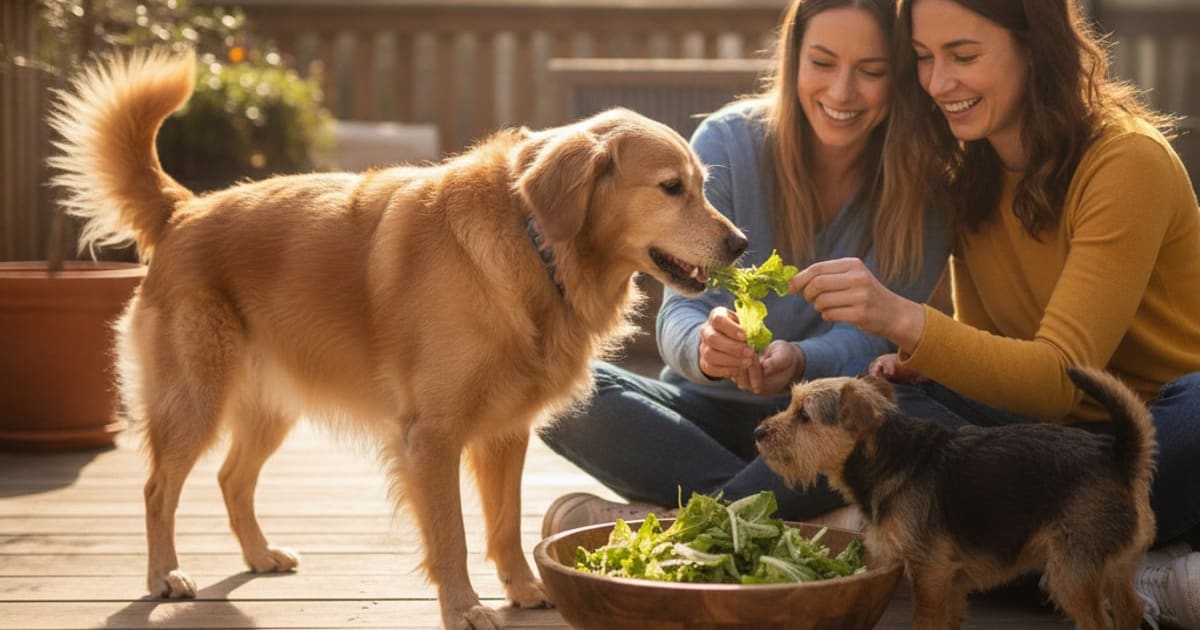
Yes, dogs can eat endive, as long as it is plain, washed and free of dressing, oil and seasoning. If your dog has swallowed endive that came mixed into a dressed salad containing onion, garlic, leeks, chives, grapes or raisins, call your vet or an animal poison control service such as the ASPCA Animal Poison Control Center or the Pet Poison Helpline right away, and do the same if your dog is vomiting and will not settle, has a swollen or painful belly, or has gulped down a large chunk of the dense core.
Plain endive leaves, on their own, are not considered toxic to dogs. They are bitter, fibrous and mostly water, so the usual result of a dog lifting one off the chopping board is a spat-out leaf, a confused expression and perhaps a gassy evening rather than an emergency.
What turns a harmless salad green into a vet visit is almost always what was on the leaf or what came with it, not the leaf itself.
The chicory family, and why the names keep changing
Half the confusion around this question comes from the produce aisle. Several different-looking vegetables share a small pool of names, and shops swap those names around depending on the country, the grower and the season.
Endive belongs to the chicory genus, Cichorium. Curly endive, the frizzy, pale-hearted head sold as frisée, is Cichorium endivia, and so is escarole, its broad-leaved, flatter cousin. Belgian endive, also called witloof or chicon, is the tight, cream-coloured torpedo grown in darkness so the leaves stay pale and tender, and it comes from a different species, Cichorium intybus. Radicchio, with its wine-red leaves and white ribs, is from that same species. Chicory root, the part roasted as a coffee substitute and used as a source of the fermentable fibre inulin, comes from the same plant as Belgian endive.
That matters for owners in one practical way: none of these are lettuce. People search for endive lettuce and frisée lettuce because the leaves sit beside lettuce in the chiller, but true lettuce is Lactuca sativa, a separate plant with far less bitterness. Chicories are bitter by design. The bitterness comes largely from a group of plant compounds called sesquiterpene lactones, including lactucin and lactucopicrin, which concentrate in the milky sap of the stem and the base of the head.
For your dog, the safety answer is the same across the whole family. Plain, washed leaves from any of these are not on the standard toxic-plant lists for dogs. The differences are in texture, bitterness and the size of the solid core.
| Name | What it actually is | Texture and bitterness | What to watch with dogs |
|---|---|---|---|
| Curly endive / frisée | Cichorium endivia, frizzy green head | Wiry leaves, moderately bitter, pale heart is mildest | Crinkled leaves trap grit and sand, so washing matters |
| Escarole | Cichorium endivia, broad flat leaves | Soft, mildest of the group | Often cooked in butter, oil, stock or bacon fat |
| Belgian endive / witloof | Cichorium intybus, forced pale head | Crisp, watery, bitterness rises toward the base | Dense wedge-shaped core is firm and easy to gulp whole |
| Radicchio | Cichorium intybus, red-leaved head | Crunchy ribs, sharply bitter | Thick white ribs are tough to chew properly |
| Chicory root | Root of Cichorium intybus | Woody, roasted or processed | Fermentable fibre that can produce gas in sensitive dogs |
Why a bitter, fibrous green can unsettle a dog's gut
Endive is largely water, with fibre and vitamins such as vitamin K and folate making up most of what is left. Nothing in that profile is dangerous. The issue is that a dog's digestive tract is shorter and less practised at breaking down raw plant matter than ours, and fibre behaves differently depending on the type.
The insoluble fibre in leaves does not get absorbed. It adds bulk and moves through, which is why a dog who has eaten a quantity of raw leaf often produces a softer, greener, bulkier stool for a day or so. Fermentable fibre, the kind that gut bacteria break down, is a different story: fermentation produces gas, and a gut that is not used to it will let you know. Add the fact that chicories carry a bitter sap, and some dogs simply refuse the leaf outright after one lick. Others, the ones who inhale anything handed to them, swallow it barely chewed.
There is also a plain novelty effect. Any new food introduced suddenly into a dog's diet can cause vomiting, gas or loose stool, independent of what that food is. Greens are no exception. Results vary from dog to dog: one dog can graze a garden bed and show nothing, while a littermate with a sensitive stomach reacts to a single leaf.
None of that makes endive a health food for dogs either. A complete, balanced diet already supplies the vitamins and minerals a dog needs, and no leafy green is required to fill a gap. If you are thinking about adding vegetables to what your dog eats, talk to your vet first, particularly if your dog is on a prescribed diet where extras can throw the balance off.
Washing, trimming and the parts that cause real trouble
The leaf is rarely the problem. The things attached to it usually are.
Dressing and seasoning. Vinaigrettes, creamy dressings, marinades and salad kits routinely contain onion or garlic powder, both of which are unsafe for dogs. Salads also pick up grapes, raisins, chopped nuts, cheese, bacon and heavy salt. If your dog ate dressed endive rather than a bare leaf, the dressing is what needs attention, and it is worth a call to your vet or an animal poison control service rather than a wait-and-see approach.
Grit and soil. Curly endive and frisée have crinkled, cupped leaves that hold onto sand and soil from the field. Belgian endive is grown in dark, damp conditions and can arrive with residue at the base. Raw produce can also carry bacteria from soil or water. Rinsing leaves thoroughly under running water, separating the head and washing between the layers, removes most of that.
The core. Belgian endive has a firm, wedge-shaped heart at the base, and radicchio and escarole have thick white ribs. These are denser than the leafy tops, do not break down easily in the stomach, and are exactly the shape a fast eater swallows whole. A dog who gulps a solid chunk of core can choke on it, or in a smaller dog, it can lodge further down. Trimming the base away and discarding it removes that risk entirely.
Cooking fats. Braised, grilled or roasted endive is a classic preparation, and it almost always involves butter, olive oil, stock, salt, cheese or cured meat. Cooked plain endive with nothing added is softer and easier to chew than raw. Cooked endive from a dinner plate is a different food altogether, and fatty, salty leftovers are a poor idea for any dog.
Mouldy produce. Leaves that have gone slimy or developed mould at the base belong in the bin, not the dog bowl. Mould on spoiled food can produce compounds that affect dogs badly, and that is an immediate call to your vet or a poison control service.
What if your dog raided the salad bowl
If it was plain, washed leaves
A dog who ate plain endive leaf and is bright, comfortable and eating normally generally needs nothing more than observation. Keep fresh water available and watch for gas, a looser stool or a bit of lip-smacking from the bitterness. Those usually settle on their own as the fibre passes through.
If it was a dressed salad or a mixed leaf bag
Work out what else was in the bowl. Onion, garlic, leeks, chives, grapes, raisins, macadamia nuts, chocolate shavings or anything sweetened with xylitol all change the picture from a dietary indiscretion to a potential poisoning, and the first move is to contact your vet or an animal poison control service straight away. Take a photo of the ingredient list or the dressing bottle before you call, because the specific ingredients matter more than the volume.
Signs that mean stop watching and start calling
Some signs should never be managed at home. Contact your vet or an emergency clinic if your dog is vomiting repeatedly and cannot keep water down, has a belly that looks swollen or hurts when touched, is retching without producing anything, has gone quiet, weak or collapsed, is drooling heavily, or is straining to pass stool without success. A dog who swallowed a solid chunk of core and then stops eating also needs to be seen rather than monitored.
Dogs who are better off skipping bitter greens
Some dogs have no business experimenting with chicory. Dogs with chronic digestive disease, dogs recovering from abdominal surgery, dogs with a history of urinary stones where the diet has been carefully set, and dogs on any therapeutic food prescribed by a veterinarian all fall into that group. So do puppies, whose digestive systems are still settling, and dogs who are prone to swallowing things whole without chewing.
If your dog has an existing condition or eats a prescribed diet, the question of whether any vegetable belongs in the bowl is one for the person who set that diet. Talk to your vet rather than working it out by trial and error.
Key Takeaways
- Plain, washed endive is not considered toxic to dogs, and that applies to Belgian endive, curly endive, frisée and escarole alike.
- Endive is not a lettuce. It is a chicory, and its bitterness comes from natural plant compounds concentrated in the sap and the base of the head.
- The risk sits in the extras: dressings containing onion or garlic, salad ingredients such as grapes and raisins, cooking fats, salt and spoiled leaves.
- The dense core of Belgian endive and the thick ribs of radicchio and escarole can be choking or obstruction hazards for dogs who gulp. Trim and discard them.
- Gas, a softer stool or a flat refusal of the bitter taste are all ordinary reactions, and results vary from dog to dog.
- Vomiting that will not settle, a swollen or painful belly, unproductive retching, weakness or a swallowed chunk of core all warrant a call to your vet.
- No leafy green is a required part of a dog's diet, and a complete food already covers the nutrients.
A bitter salad leaf is a small question, but it sits inside a bigger one: what your dog eats is part of a plan, and that plan belongs to your veterinarian. Your vet owns the diagnosis and the treatment plan, knows your dog's history and current diet, and is the right person to tell you whether vegetables have a place in the bowl at all. Food choices work best inside the structure proper veterinary care creates, not around it.
For more on bitter leaves and how dogs handle them, read Can Dogs Eat Bitter Melon Leaves. To recognise the warning signs that call for urgent care rather than observation, read Dog Emergency Signs.
Frequently asked questions
- can dogs eat endive
- Yes, dogs can eat endive when it is plain, thoroughly washed and free of dressing, oil, salt and seasoning. Endive is not on the standard toxic-plant lists for dogs. It is bitter and fibrous, so some dogs refuse it and others get gas or a softer stool afterwards.
- can dogs have endive
- Dogs can have plain endive, but it is not a food they need. A complete diet already supplies the vitamins a leafy green would contribute. If your dog has a sensitive stomach, a prescribed diet or an existing digestive condition, talk to your vet before adding any new vegetable.
- can dogs eat endive lettuce
- Yes, though the name is misleading. What shops label endive lettuce is not lettuce at all but a chicory, a different plant with a far more bitter taste. Plain, washed leaves are safe for dogs. Dressed salad containing onion, garlic, grapes or raisins is not.
- can dogs eat endive leaves
- Endive leaves are the safest part of the plant for dogs, provided they are washed well and left plain. The crinkled leaves of curly varieties trap soil and grit, so rinse between the layers. Trim away the firm base, which is denser and easier for a dog to gulp whole.
- can dogs eat belgian endive
- Yes, plain Belgian endive is not considered toxic to dogs. Its bitterness increases toward the base, and the pale heart forms a dense, wedge-shaped core that a fast eater can swallow whole. Trim and discard that core. Braised Belgian endive usually contains butter, salt or cheese and is best avoided.
- can dogs eat curly endive
- Curly endive is safe for dogs when plain and washed. Its wiry, frizzy leaves hold field grit more stubbornly than smooth greens, so separate the head and rinse thoroughly under running water. The crisp outer leaves are the most bitter, and many dogs simply spit them out.
- can dogs eat frisee lettuce
- Yes. Frisée lettuce is another name for curly endive, and like the rest of the chicory family it is not toxic to dogs when offered plain and washed. The concern with frisée is almost always the vinaigrette, cheese, bacon or seasoning it arrives with in a prepared salad.
- can dogs eat frisee
- Plain frisée is safe for dogs, with the same cautions that apply to all bitter chicories. Wash it well, keep it unseasoned and trim the firm base. Watch for gas or a looser stool afterwards, and contact your vet if vomiting will not settle or the belly looks swollen.
Educational content, not veterinary advice. Ask your vet about your dog.