Can Dogs Eat Expired Milk? (Spoiled and Raw Milk Risks)
Expired milk should not be given to a dog on purpose, and a dog who has already drunk sour, curdled or raw milk should be discussed with your vet. Spoiled dairy can cause stomach upset or infection, and vomiting, diarrhoea, fever or lethargy means veterinary care now.
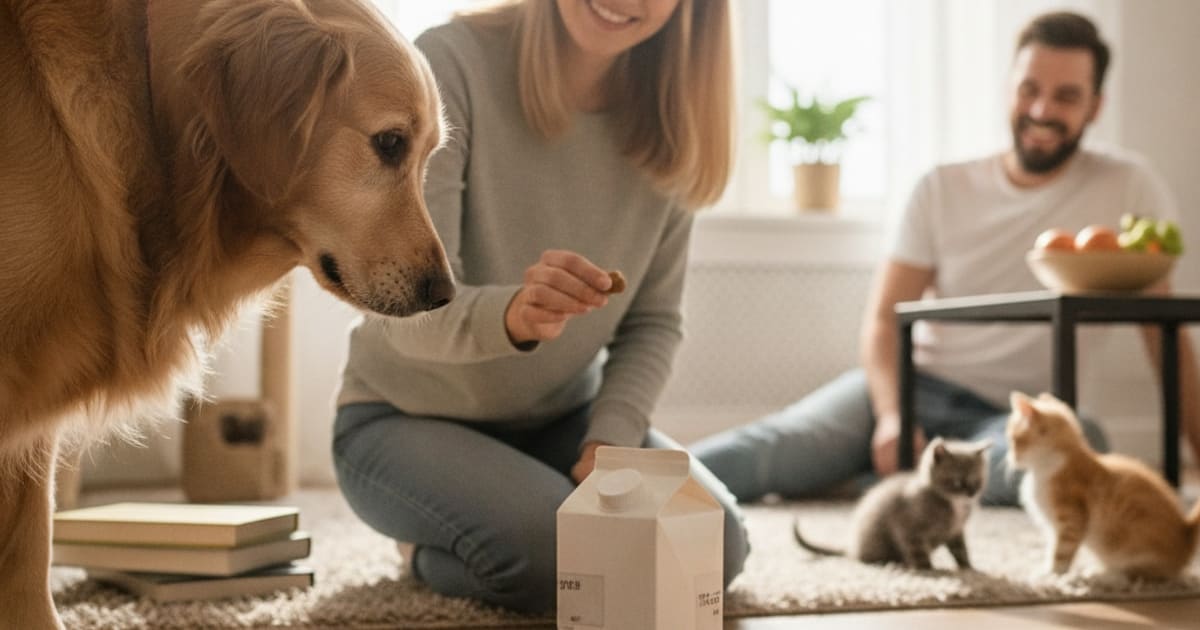
Expired milk is not something to give a dog on purpose, and if your dog has already drunk milk that smelled sour, looked curdled or sat well past its date, call your veterinarian for advice, or an animal poison control service such as the Pet Poison Helpline or the ASPCA Animal Poison Control Center. Spoiled dairy can cause stomach upset or a bacterial infection, and the dogs who tend to run into the most trouble are puppies, older dogs, pregnant or nursing dogs, and any dog already managing a chronic illness.
The honest answer has layers. Milk one day past a best before date, still cold and still smelling like milk, is a different situation from a carton that sat on the counter overnight and separated into curds. Raw, unpasteurised milk is different again, because the concern there has nothing to do with the date on the bottle. This page walks through each version so you know what you are actually dealing with, and where the line sits between watching your dog and calling for help.
What the date printed on the carton actually means
The dates on dairy are not all saying the same thing. A best before date is a quality marker. It is the manufacturer's estimate of how long the milk will taste, smell and pour the way it should. A use by date is a safety marker, and it assumes the carton has stayed sealed and continuously refrigerated from the shop to your fridge.
Neither date is a guarantee once reality gets involved. A carton that was opened, left on the counter during breakfast, carried in a warm car or stored in the door of a fridge that keeps getting opened will spoil faster than the printed date suggests. The reverse is also true: sealed milk kept properly cold can still smell and taste normal slightly past its best before date. The date is a prediction, not a switch that flips.
For a dog, that means the printed date is only part of the picture. What matters more is whether bacteria have had the warmth and time to multiply. Milk spoils because lactic acid bacteria and other organisms grow in it, producing the sour smell, the thickened texture and the separation into curds and watery whey. The sour smell is your warning that bacterial numbers have climbed, and it is not a smell that most dogs find off-putting, which is exactly why they drink the stuff happily and you only find out afterwards.
Why sour, spoiled or curdled milk upsets a dog's stomach
There are three separate problems stacked on top of each other when a dog drinks spoiled milk, and they are worth separating because they behave differently.
The first is spoilage itself. The bacteria that sour milk, along with the by-products they produce, can irritate the stomach and intestines and set off vomiting or diarrhoea. If the milk was contaminated at some point with something less friendly, the picture can be worse than simple irritation, and that is where infection rather than upset becomes the concern.
The second is lactose. Puppies produce plenty of lactase, the enzyme that breaks down milk sugar, because they are built to digest their mother's milk. Many dogs produce far less of it as adults. Undigested lactose draws water into the gut and ferments there, which is why dairy so often produces gas, loose stools and cramping even when the milk is perfectly fresh. Tolerance is individual, and results vary from dog to dog, so the fact that your dog once stole yoghurt without consequence does not predict how a spoiled carton will go.
The third is fat. Milk, and especially the cream layer in unhomogenised milk, is rich. A sudden load of rich food is a recognised trigger for pancreatitis in dogs, which is a painful condition that needs veterinary treatment rather than home observation. Signs such as a hunched posture, repeated vomiting, a tender belly or refusal to settle are reasons to ring your vet rather than wait the night out.
Most mild dairy upset shows up within hours as gas and a soft stool. What you are watching for is anything louder than that.
Raw and unpasteurised milk is a different risk entirely
When owners ask whether dogs can have unpasteurised milk, they are usually asking a question about nutrition. The more important question is about pathogens.
Pasteurisation is a heat treatment designed to kill disease-causing organisms in milk. Raw milk skips that step, so organisms that may be present in the milk at the point of collection are still present when the bottle reaches you. The ones associated with raw dairy include Salmonella, Listeria, Campylobacter, certain strains of E. coli and Brucella. None of these depend on the milk being old. Fresh raw milk straight from the bottle can carry them, which is why a date on raw milk tells you about spoilage but not about safety.
In dogs, infection with these organisms can produce vomiting, diarrhoea that may contain blood, fever, loss of appetite and lethargy. Puppies, older dogs, pregnant or nursing dogs and dogs on medication that suppresses the immune system are less able to shrug off that kind of exposure.
There is a household angle too. A dog who picks up one of these organisms can shed it in their stool and saliva for a period afterwards, which puts young children, pregnant people and anyone immunocompromised in the home at some risk from ordinary contact and cleaning up. If your dog drinks raw milk, whether by accident or as part of a feeding plan, that is a conversation to have openly with your veterinarian, including how to handle hygiene around the dog.
Raw milk is marketed with a long list of claimed benefits. Weighing those claims against the pathogen risk for your particular dog is not a judgement to make from a label or a forum thread. Talk to your vet about it, especially if there is anyone vulnerable in the house.
UHT, unhomogenised and the other cartons in your fridge
UHT milk is heated to a much higher temperature than standard pasteurisation and sealed aseptically, which is why it sits in a cupboard for months. Unopened, it is sterile. That changes the moment you open it. Once air and your kitchen get in, UHT milk spoils on roughly the same terms as any other opened milk and needs refrigeration. So the question of whether dogs can have UHT milk splits into two answers: unopened UHT avoids the spoilage and pathogen issues, but it still contains lactose and fat, so it can still upset a lactose-sensitive dog. Opened and forgotten UHT milk is just old milk.
Unhomogenised milk is usually pasteurised, so it is not the same as raw milk, despite the two often sitting side by side and both being sold as more natural. The difference is that the fat has not been broken up and dispersed, so cream rises to the top. For a dog, that cream layer is the rich part, and richness is the thing to be cautious about.
Here is how the common cartons compare.
| What is in the fridge | What it actually is | Main concern for a dog |
|---|---|---|
| Pasteurised milk just past a best before date, still cold and smelling normal | Heat treated, stored correctly | Quality more than safety, but lactose and fat still apply |
| Sour, curdled or separated milk | Bacteria have multiplied | Stomach upset, with a chance of infection if the milk was contaminated |
| Any milk left out of the fridge for hours | Warm enough for rapid bacterial growth | Treat it as spoiled whatever the printed date says |
| UHT milk, unopened | Ultra heat treated and sealed, shelf stable | Lactose and fat only; no spoilage issue while sealed |
| UHT milk, opened and old | Spoils like ordinary milk once opened | Same spoilage concerns as any sour carton |
| Unhomogenised milk | Usually pasteurised, cream separated on top | Rich cream layer, so fat load is the issue |
| Raw or unpasteurised milk | Never heat treated | Pathogen risk that has nothing to do with the date |
Plant milks are their own topic, and some contain ingredients that are not appropriate for dogs at all, so do not assume a non-dairy carton is a safer substitute.
When milk upset turns into a reason to call your vet
Most owners find this page after the fact, with a dog who has already helped themselves. The useful question then is not what the milk was, but how the dog is doing.
If your dog drank spoiled or raw milk and is vomiting repeatedly, has bloody or black diarrhoea, a fever, a painful or swollen belly, or has become lethargic, wobbly or unresponsive, that is a call to your veterinarian now rather than something to watch overnight.
Other reasons to stop monitoring and get advice include diarrhoea or vomiting that keeps going rather than settling, signs of dehydration such as tacky gums or sunken eyes, visible pain, refusal to eat or drink, or any collapse. Call sooner, not later, if your dog is a puppy, is old, is pregnant or nursing, has kidney, liver, pancreatic or immune problems, or is on medication that your vet has already asked you to be careful with.
When you ring, it helps to be able to say what kind of milk it was, whether it was raw or pasteurised, roughly how long ago it happened and exactly what you are seeing. Do not try to manage a sick dog at home with remedies from the internet. Your vet decides what, if anything, needs doing.
If you are unsure whether what you are looking at counts as an emergency, that uncertainty is itself a good reason to phone. Veterinary teams would far rather field a call that turns out to be nothing.
Key Takeaways
- Expired milk is not a treat to hand out, and spoiled or curdled milk can cause stomach upset or infection in dogs.
- Best before is about quality, use by is about safety, and neither date applies once milk has been opened or left warm.
- Lactose intolerance is widespread in adult dogs, so even fresh milk commonly causes gas and loose stools.
- Raw and unpasteurised milk carries pathogen risk regardless of its date, and those organisms can also reach people in the household.
- Unopened UHT milk avoids spoilage concerns but still contains lactose and fat; once opened it spoils like any other milk.
- Unhomogenised milk is usually pasteurised, but the cream layer makes it rich.
- Vomiting, diarrhoea with blood, fever, belly pain, lethargy or collapse after drinking milk means veterinary care now.
The vet owns this call, not the carton
Dairy is one of those household items that sits in a grey zone, which is exactly why owners end up searching at ten at night with a dog who has already drunk it. The sensible approach is simple. Keep expired and raw milk out of reach rather than trying to use it up on the dog. If an accident happens, describe what happened to your veterinarian and let them tell you whether this is a watch-and-wait or a come-in-now situation, because they can weigh your dog's size, age, history and current medications in a way a general article never can.
Your veterinarian owns the diagnosis and the treatment plan. Everything you do at home, from how you store food to how quickly you pick up the phone, works best inside the plan proper veterinary care creates.
Related reading: Dog Emergency Signs.
Frequently asked questions
- Can dogs eat expired milk?
- No, expired milk should not be given to a dog on purpose. Milk only slightly past a best before date and still properly chilled is mainly a quality issue, but anything sour, curdled or left warm can cause stomach upset or infection. If your dog has drunk some, talk to your vet.
- Can dogs have expired milk?
- Not deliberately. The printed date assumes the carton stayed sealed and cold, so milk that was opened or left out can be spoiled before its date. Lactose and fat also upset many adult dogs even when the milk is fresh. Ask your veterinarian before offering dairy of any kind.
- Can dogs eat sour milk?
- No. A sour smell means bacteria have multiplied in the milk, and those bacteria and their by-products can irritate a dog's stomach and intestines. Dogs rarely refuse it, so the warning smell protects you rather than them. Vomiting, diarrhoea, fever or lethargy afterwards means calling your vet.
- Can dogs eat spoiled milk?
- No. Spoiled milk can cause gastrointestinal upset, and if the carton was contaminated it can also cause a bacterial infection. Rich, fatty dairy may additionally trigger pancreatitis, which needs veterinary treatment. Contact your veterinarian if your dog drank spoiled milk, particularly a puppy, older dog or unwell dog.
- Can dogs have unpasteurized milk?
- Unpasteurised milk carries pathogen risk whatever its date, because it skips the heat step that kills organisms such as Salmonella, Listeria, Campylobacter and certain E. coli strains. Infected dogs can also shed those organisms around the home. Discuss raw dairy with your veterinarian before it goes anywhere near your dog.
- Can dogs have UHT milk?
- Unopened UHT milk is sterile, so it avoids spoilage and pathogen concerns, but it still contains lactose and fat and can still cause gas and loose stools. Once the carton is opened it spoils like ordinary milk and needs refrigerating. Your vet can advise whether dairy suits your dog at all.
- Can dogs have unhomogenised milk?
- Unhomogenised milk is usually pasteurised, so it is not the same as raw milk, but the fat has not been dispersed and a cream layer rises to the top. That richness is the issue for dogs, since sudden fatty foods can upset the gut and trigger pancreatitis.
- My dog drank milk left out overnight. What should I do?
- Treat it as spoiled regardless of the printed date and phone your veterinarian for advice, telling them what type of milk it was and how long ago it happened. Watch for vomiting, diarrhoea, fever, belly pain or lethargy, and do not attempt home remedies.
- How quickly do signs of milk upset appear in dogs?
- Mild dairy upset such as gas and soft stools often shows within hours. Infection from raw or contaminated milk can take longer to declare itself. Because the timing varies, judge by how your dog looks rather than the clock, and ring your vet if anything escalates.
- Is lactose-free milk a safe alternative for dogs?
- Removing lactose addresses only one of the issues; fat content, added ingredients and spoilage once the carton is opened still apply. Dogs do not need milk in their diet at all. If you want to offer anything dairy-based, raise it with your veterinarian first.
Educational content, not veterinary advice. Ask your vet about your dog.